Connect with us

News

House Steps Down Senate bill Seeking Concurrence

Published

on

ADVERTISEMENT
Zoom Ad
ADVERTISEMENT
Zoom Ad
…as Speaker Abbas say 146 bills with Senate yet to get attention
By Gloria Ikibah
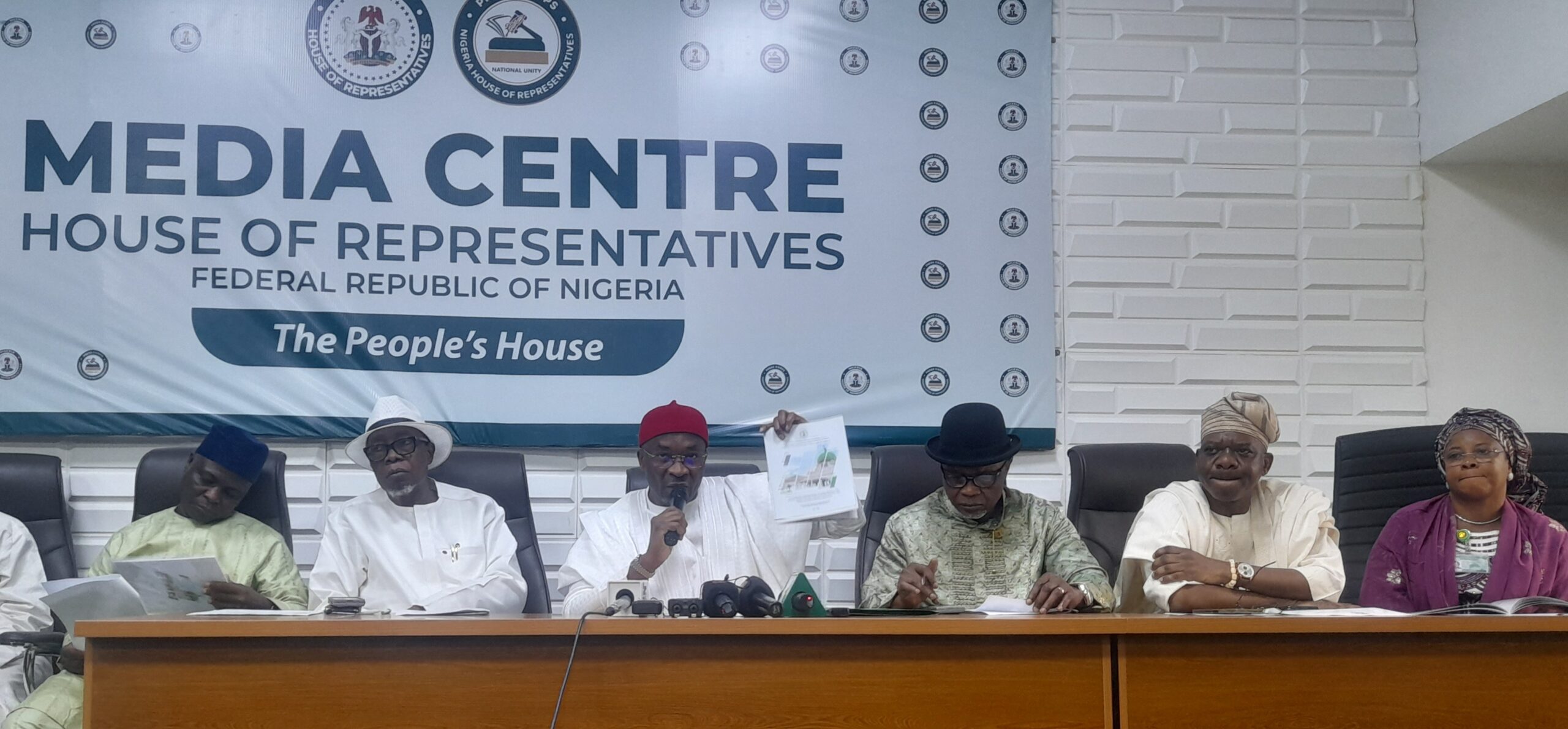
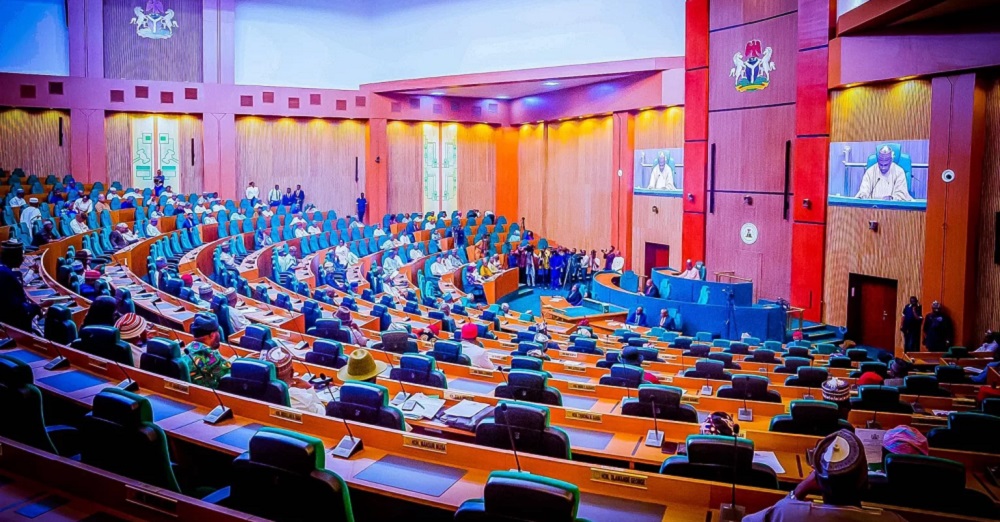
The House of Representatives has stepped down “A Bill for an Act to Amend the Federal Orthopaedic Hospital Management Act, to Establish Federal Orthopaedic Hospital, Obokun, Osun State and for Related Matters” for concurrence from the Senate.
The bill which was for second reading, and introduced by the Leader of the House, Rep. Julius Ihonvbere, was received with mixed feelings when the Minority Leader, Rep. Kingsley Chinda was asked to second the move on Wednesday at plenary.
He said: “When bills come from the Senate for concurrence, we make sure that they progress, but we don’t get that same treatment. Mr. speaker having said so, I will reluctantly second the motion for the second reading of this bill, sir. I so second”.
But some lawmakers who had the same body language as the Minority Leader said the bill should be stepped down until an agreement is reached with the Senate in accordance with the House rule.
Speaking in support of the Minority Leader, member representing Andoni/Opobo Nkoro Federal Constituency of Rivers State, Rep. Awaji-Inombek Abiante said he has 4 bill in Senate waiting concurrence since 2024.
“Mr. speaker just to support what bother Minority Leader has said. I have two bills that have been in the Senate as Earl as 2024, and Mr. Speaker up until now, they have not been listed for concurrence. The same thing happened to my bills in the 9th Assembly, where throughout that Assembly Senate did not consider the bills that we have passed from the House emanating from me, sponsored by me.
“I do not know how we can continue with this kind of relationship, Mr Speaker. We’ll let it not look as if we are slowing down the progress of governance in this country.
“I would support today that we should step down the consideration of this bill, we should step it down, and probably you find out from them what the problems and the challenges have been. Why do they not consider bills coming from the House of Representatives, and if the reasons are not cogent enough, we should reciprocate. My submission, Mr. Speaker”.
Rep. Ahmed Jaha said: “I still maintain the position that the Senate doesn’t, in most cases, consider concurrence from the House of Representatives. I don’t know where the problem lies, but my suggestion is that the rules and business committee of the House should liase with the rules and business committee of the Senate and sign a deal”.
In response to Rep. Jaha, Speaker Tajudeen Abbas said, the committees on Rules and Business of Senate and House have done that severally in the past.
Jaha continued, “So it’s better we make it verbatim that if they don’t do our own in the next sitting, we are not going to do their own. Let there be tit for tat, because the House of Representatives is an institution that can not be compromised with the Senate and vice versa. So this is my position. If we step it down, it will send them a signal.
Speaker Abbas also lamented that over about 146 bills are awaiting concurrence from the senate, out of which 10 bills are sponsored by him.
He said: “From what the Clerk told me, we have 146 bills that are with the Senate and I as a person, I have more than 10 bills, some have been there for more than 6 months with no attention, we don’t know what is really happening”.
Rep. Satomi Ahmed said: “We should even now step down all their bills pending proper resolutions and also to work with our standing order that we should be guided by certain time and period that they must do the concurrence. If not we assume that it has been accepted and passed”.
The Speaker again put it to a voice vote and the lawmakers resolved to step down the bill.
“Since the majority and minority leaders were already taking position, it would be disrespectful for us to step it down, but let us just have a common ground on this issue that henceforth unless we receive reasonable assurance from the Senate concerning the concurrence of our bills we will not proceed further”, Abbas said.
Rep. Chinda in seconding said: “Mr Speaker if I am given the opportunity to review my position, you know that I will not want to support the second reading of this bill.
“For the bill, I will therefore ask that we should step it down and have a meeting with the leadership of the Senate to know how to resolve this issue”.

Continue Reading
Advertisement
Click to comment

Warning: Undefined variable $user_ID in /home/naijuinz/public_html/wp-content/themes/zox-news/comments.php on line 49

You must be logged in to post a comment Login

Leave a Reply

News

“You do for me, I do for you,” no be so, FCT minister Wike tells Kado residents (Video)

Published

on

ADVERTISEMENT
Zoom Ad
ADVERTISEMENT
Zoom Ad

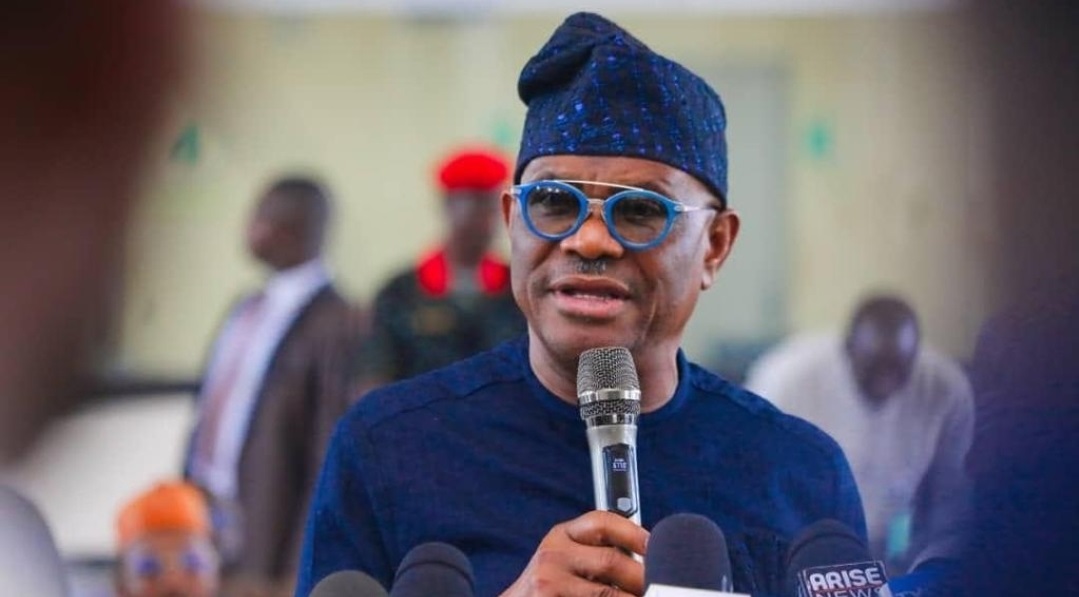
FCT Minister, Nyesom Wike, addressing residents at Kado Fish Market,during his inspection of Deidei to Life Camp Road today.

Watch:

Continue Reading

News

2027: ADC threatens to drag to court Atikui if he withdraws from presidential race

Published

on

ADVERTISEMENT
Zoom Ad
ADVERTISEMENT
Zoom Ad

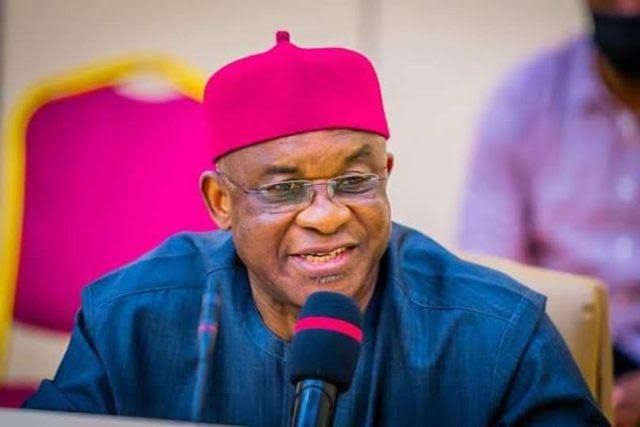
The African Democratic Congress, ADC, in Zamfara State has thrown its weight behind former Vice President Atiku Abubakar ahead of the 2027 presidential election, declaring him the party’s preferred candidate for the race.

Party stakeholders also warned that they would “sue” the Waziri Adamawa if he eventually decides not to contest the election.

The endorsement was made during a stakeholders’ meeting held on Saturday at the International Conference Hall in the Government Reserved Area, Gusau, the Zamfara State capital.

The gathering had in attendance members of the State Executive Committee, National Executive Committee representatives from the state, as well as the party’s governorship, National Assembly and House of Assembly candidates.

Advertisement

In a communique released after the meeting, the party leaders said the decision followed wide consultations and discussions on the country’s current political and economic situation.

According to them, Nigeria needs an experienced leader with a national outlook who can restore stability, improve security and revive public confidence in governance.

The stakeholders described Atiku as a seasoned democrat with years of political experience and commitment to democratic governance and economic reforms.

They noted that his leadership experience places him in a strong position to lead the country at a difficult period.

Advertisement

The meeting also witnessed strong support from party members, many of whom insisted that the former vice president must not withdraw from the race.

“We will sue the Wazirin Adamawa if he refuses to contest,” some members reportedly declared during the session.

Party leaders further stated that Nigerians were becoming more interested in transparent leadership and credible electoral processes ahead of the next general election.

Speaking at the meeting, Alhaji Abubakar Abdullahi, popularly known as Doctor, a former APC Zamfara Central Coordinator for the 2023 presidential election, said the political events that shaped the outcome of the last election in the state would not repeat themselves in 2027.

Advertisement

He expressed confidence that voters would be allowed to freely decide their choice in the next election cycle.

The ADC in Zamfara also pledged full support for Atiku’s possible presidential ambition and promised to begin aggressive grassroots mobilisation across the state.

Continue Reading

News

Nigeria remains World Bank’s third-largest borrower with $18.5bn

Published

on

ADVERTISEMENT
Zoom Ad
ADVERTISEMENT
Zoom Ad

Nigeria has retained its position as the third-largest borrower from the International Development Association (IDA), the concessional lending arm of the World Bank, despite a slight decline in its debt exposure in the first quarter of 2026.

According to the IDA’s March 2026 financial statements, Nigeria’s exposure stood at $18.5 billion as of March 31, 2026, down marginally from $18.7 billion recorded at the end of December 2025.

The $200 million decline represents a 1.1 per cent reduction over the three-month period. However, on a year-on-year basis, Nigeria’s debt exposure increased significantly by $1.2 billion, or 6.9 per cent, from $17.3 billion recorded in March 2025.

The latest ranking places Nigeria behind Bangladesh and Pakistan among the World Bank’s largest IDA borrowers.

Advertisement

Data from the report showed that Bangladesh remained the largest borrower with an exposure of $22.7 billion, followed by Pakistan with $19.2 billion, while Nigeria ranked third with $18.5 billion.

Other major African borrowers include Ethiopia with $14.4 billion, Tanzania with $14.3 billion, and Kenya with $13.2 billion in outstanding exposure.

The report also revealed that the IDA’s total loans outstanding stood at $230.8 billion as of March 31, 2026, slightly below the $231.1 billion recorded at the end of December 2025, reflecting a mild moderation in the institution’s lending portfolio.

According to the IDA, loans classified under non-accrual status represented only 0.4 per cent of the total portfolio, while provisions for potential loan losses amounted to $6.3 billion, equivalent to about 2.0 per cent of underlying exposures.

Advertisement

Nigeria’s exposure accounted for roughly eight per cent of the IDA’s total loan portfolio and approximately 13.3 per cent of the combined exposure represented by the institution’s ten largest borrowing countries.

The IDA noted that its ten largest country exposures collectively accounted for about 60 per cent of total portfolio exposure as of March 2026, highlighting the concentration of concessional lending among a relatively small number of developing economies.

Despite the slight quarter-on-quarter decline, Nigeria’s debt profile with the World Bank continues to trend upward over the longer term.

The report showed that Nigeria’s exposure rose from $17.3 billion in March 2025 to $18.5 billion in March 2026, underscoring the country’s increasing reliance on concessional financing to support development priorities and economic reforms.

Advertisement

Similarly, Ethiopia’s exposure increased from $13.2 billion to $14.4 billion over the same period, while Tanzania’s exposure rose from $12.6 billion to $14.3 billion.

Bangladesh’s debt exposure climbed from $21.2 billion to $22.7 billion, while Pakistan’s increased from $18.3 billion to $19.2 billion. Ghana also recorded an increase from $7.1 billion to $7.4 billion.

Nigeria’s position among the top borrowers reflects the scale of its infrastructure, social investment, and reform financing needs under the World Bank’s concessional lending framework.

The Federal Government is also currently engaging the World Bank for additional financing support.

Advertisement

Recall that Nigeria is seeking a fresh $1.25 billion World Bank facility aimed at expanding access to finance, improving digital services, strengthening electricity supply, and supporting reforms in tax administration, agriculture, and trade.

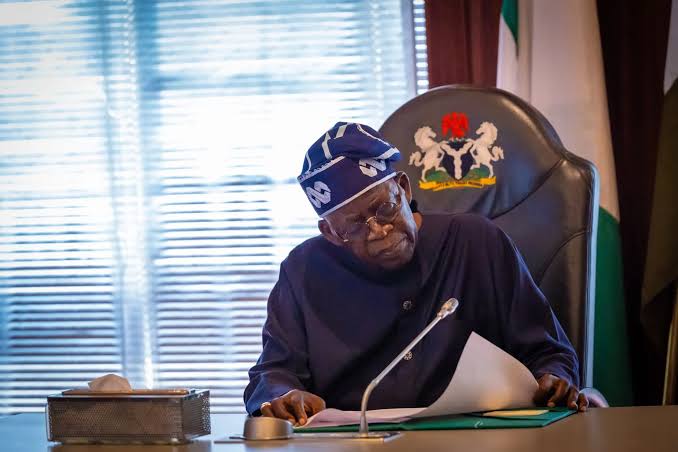
If approved, the proposed facility would raise total World Bank loan approvals secured under the administration of President Bola Ahmed Tinubu to about $10.6 billion in June 2023.

The proposed loan would also rank among the largest World Bank facilities approved for Nigeria in recent years, following the $1.5 billion Reforms for Economic Stabilisation to Enable Transformation Development Policy Financing approved in June 2024.

Experts had cautioned Nigeria against the rising multilateral loans especially amidst rising debt with Nigeria’s debt profile rising to N159 trillion as of 2025.

Advertisement

A finance expert and senior partner at SPM professionals, Dr. Paul Alaje recently noted that the current debt stock of the country is directly owned by Nigerians and will be paid by even citizens not yet born.

“So here is the point, as the volume increases, Nigeria has to pay more, mind you the debt they gave to us is not this year, but as of December 31 2025.

So by the time we look at the one that we have retired and the new loans that have been approved and some that have been collected this year, it is clear that by the time the DMO is reporting that in the first quarter 2026, we would have crossed $160 billion. So it’s more of a burden on the economy. Whether we have the capacity to pay or not is a different kettle of fish,” he added.

Daily Trust

Advertisement
Continue Reading

Trending

Copyright © 2024 Naija Blitz News