
Foreign
Kenyan protesters defy crackdown as police, marchers clash


- /home/naijuinz/public_html/wp-content/plugins/mvp-social-buttons/mvp-social-buttons.php on line 27
https://naijablitznews.com/wp-content/uploads/2025/07/Kenyan-protesters.jpg&description=Kenyan protesters defy crackdown as police, marchers clash', 'pinterestShare', 'width=750,height=350'); return false;" title="Pin This Post">
- Share
- Tweet /home/naijuinz/public_html/wp-content/plugins/mvp-social-buttons/mvp-social-buttons.php on line 72
https://naijablitznews.com/wp-content/uploads/2025/07/Kenyan-protesters.jpg&description=Kenyan protesters defy crackdown as police, marchers clash', 'pinterestShare', 'width=750,height=350'); return false;" title="Pin This Post">


Police blocked roads in a show of force to deter anti-government marchers from the deserted streets of Kenya’s usually bustling capital on Monday, with small groups of protesters clashing with officers on Nairobi’s outskirts.
Many people appeared to be staying home rather than attend the annual so-called Saba Saba Day, meaning Seven Seven, marches to commemorate July 7, 1990 when Kenyans rose up to demand a return to multi-party democracy after years of autocratic rule by then-president Daniel arap Moi.
From around midday, AFP saw running battles with groups of anti-riot police who fired teargas at small gatherings, with some of the crowd throwing rocks at officers and engaging in destructive looting.
Young Kenyans, frustrated over economic stagnation, corruption and police brutality, are once again engaging in protests that last month degenerated into looting and violence, leaving dozens dead and thousands of businesses destroyed.
Protesters accuse the authorities of paying armed vandals to discredit their movement, while the government has compared the demonstrations to an “attempted coup”.
On Monday, the streets of central Nairobi were quiet after police mounted roadblocks on the main roads, restricting entry to areas that were the epicentre of previous rallies.
Many businesses were closed for the day.
“I have never witnessed the city centre like this,” security guard Edmond Khayimba, 29, told AFP.
While the centre remained deserted, groups gathered on the outskirts in the afternoon with AFP reporters witnessing two people wounded, as well as looting and vandalism.
Protesters on a major highway clashed with police blocking their entry into the city, with the small crowds chanting: “Ruto Must Go”, a popular rallying cry against President William Ruto, and “wantam” meaning “one term”.
Again, AFP saw looting and property destruction in the surrounding area.
With much of Nairobi at a standstill, an interactive map showing at least 20 suspected police roadblocks was shared online and through WhatsApp groups.
Local TV stations also showed gatherings, some violent, in several towns across the country.
– ‘Ruto Must Go’ –
Social media and rising economic expectations have fanned anger over inequalities in a country where around 80 percent are trapped in informal, poorly paid jobs.
But a crackdown by the police — at least 80 people have died in protests since June last year while dozens have been detained illegally — has scared many off the streets.
On Sunday, men, some armed with sticks, forced their way into the compound of the Kenyan Human Rights Commission during a press conference calling for an end to “enforced disappearances and extrajudicial killings”.
Nairobi motorbike driver Rogers Onsomu, 32, told AFP that while the town was deserted, he hoped demonstrators would come out later, and criticised Ruto’s government.
“What he has promised the country, (he) is not delivering,” Onsomu said.
“The youths are protesting because of many things, like healthcare.”
“As the constitution say, the power belongs to people,” he said. “So this slogan of ‘Ruto Must Go’. We will not relent and we will keep it going each and every day.”
– ‘The world is different’ –
Since being elected in 2022, Ruto has forged an uneasy alliance with the main opposition leader Raila Odinga, leaving no clear challenger ahead of the next vote in 2027.
But each violent crackdown fuels further unrest, said activist Nerima Wako.
“Every time people organise a protest, they kill more people, so it just continues to feed off itself,” she said.
The previous demonstration on June 25 — intended to mark the peak of last year’s deadly anti-government rallies — turned violent and left 19 people dead, according to rights groups.
Police made hundreds of arrests.
Gabrielle Lynch, an African politics expert at Britain’s University of Warwick, said the government appeared to be recycling tactics from the 1990s.
“But we’re not in the nineties,” she said. “They don’t seem to have realised the world is different.”
AFP

Iran is struggling to import enough petrol to offset weak domestic production, as a US naval blockade cuts off supply routes into the country, a senior Iranian official has said.
Vice President Mohammad Jafar Ghaempanah linked the shortage directly to the blockade, which has left Tehran unable to bridge the gap between local output and demand.
“Petrol production is insufficient, and because of the US naval blockade, we cannot import it,” the official IRNA news agency quoted Ghaempanah as saying on Wednesday.
The shortage has pushed Iranians into long queues outside petrol stations in recent days, deepening the economic strain building on the country as its war with the United States increasingly plays out through financial and supply pressure rather than direct confrontation.
The conflict began on February 28, after which Iran seized control of the strategic Strait of Hormuz, prompting Washington to respond with a naval counter-blockade of Iranian ports.
Amid the fuel crunch, President Mohsen Haji-Mirzaei’s chief of staff said on Monday that petrol quotas would be reviewed, though he gave no further details on what changes might follow.
Ghaempanah also took aim at how Iran distributes its heavily subsidised fuel, arguing that the existing system favours those who own several vehicles over those with none.
“The distribution of petrol in the country is inequitable. Owners of several vehicles benefit from subsidies, unlike those who do not own one,” he said.
Iran remains one of the world’s major oil producers and has long offered some of the cheapest fuel globally, a legacy of decades of heavy subsidies that makes any move to alter pricing a politically delicate issue for the government.
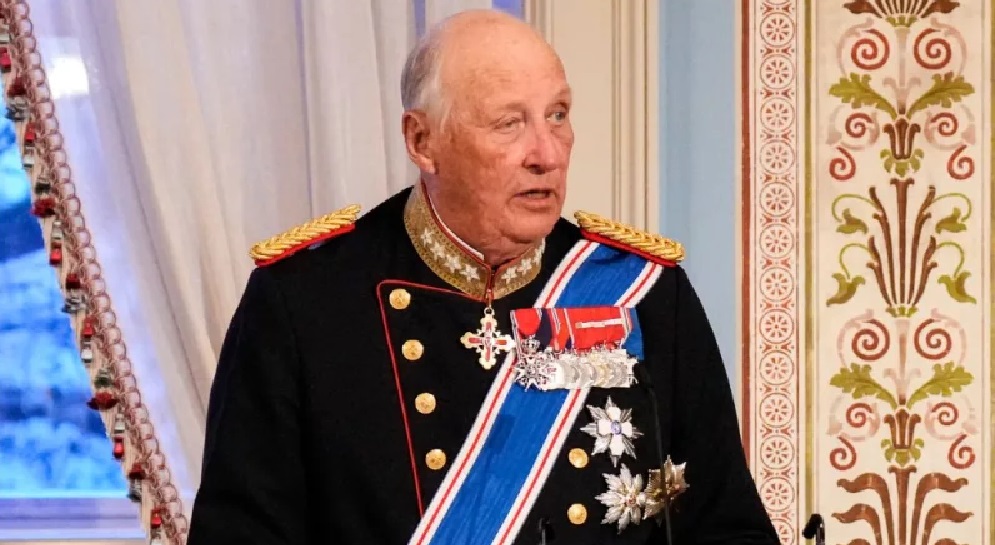
Norway’s King Harald V is in an “extremely serious” condition in hospital, according to the country’s royal household.
The 89-year-old monarch has been receiving treatment at Oslo University Hospital for more than a week after being diagnosed with haemolytic anaemia, a rare blood condition that reduces the number of red blood cells in the body and can cause fatigue and shortness of breath.
King Harald’s wife, Queen Sonja, and his son, Crown Prince Haakon, have cancelled their royal engagements and gathered at his bedside. Other members of the royal family, including Crown Princess Mette-Marit and Princess Astrid, have also reportedly visited the hospital.
Crown Prince Haakon, 53, is the heir to the Norwegian throne and has been serving as regent while his father is on leave.
Norway’s Prime Minister Jonas Gahr Støre also cancelled a planned trip to Germany, where he was due to meet Chancellor Friedrich Merz.
Advertisement
“The whole nation is with us as we send warm thoughts to the king and the rest of the royal family,” Støre said.
Members of the public have begun leaving flowers in Palace Square outside the Royal Palace in Oslo as concerns over the king’s health grow.
King Harald has experienced several health problems in recent years and has had to reduce his royal duties. In 2024, he was fitted with a pacemaker after becoming ill while on holiday in Malaysia.
He has been on the Norwegian throne since 1991 and is Europe’s oldest serving head of state.
The royal family has faced several health and personal challenges this year. Crown Princess Mette-Marit underwent a lung transplant in June after being diagnosed with a rare form of pulmonary fibrosis in 2018.
The transplant came shortly after her son, Marius Borg Høiby, was sentenced to four years in prison after being convicted of two counts of rape. Høiby, who is not a royal figure, has denied the most serious charges and is appealing the sentence.
Earlier this year, documents also revealed Mette-Marit’s frequent contact with the late convicted sex offender Jeffrey Epstein. She later apologised to the king and queen for her three-year friendship with Epstein and said she had shown “poor judgement”.

Newborn babies in England will be tested for spinal muscular atrophy (SMA) as part of a new five-year national trial examining whether the rare genetic condition should be added to routine newborn screening.
The study, led by Professor Laurent Servais, a paediatric neuromuscular disease specialist at the University of Oxford, will examine whether screening for SMA is effective, practical and cost-effective for the NHS.
The programme will begin with a phased rollout in Birmingham, Manchester and London before expanding nationally. It is expected to screen about 400,000 babies initially, with a full national rollout eventually reaching around 600,000 newborns each year.
Researchers expect the screening programme to identify about 60 babies with SMA annually. Children diagnosed through the programme will be followed for five years to assess their development, including when they learn to sit and walk, their quality of life and the level of care they require.
SMA is a rare genetic condition affecting about one in 10,000 people. It damages the motor neurons responsible for controlling movement and can cause muscle weakness.
In its most severe form, babies may initially appear healthy but can develop weakness, difficulty supporting their heads, breathing problems and problems swallowing within their first months of life. Without treatment, some children can die within their first few years.
Professor Servais said early diagnosis is important because once symptoms appear, some of the damage cannot be reversed.
The new screening programme follows a pilot study in the Thames Valley, which identified Teddy, a child from Chesham, with SMA when he was eight weeks old in 2023.
Teddy was diagnosed before he developed symptoms and was able to begin treatment quickly. He now takes the medicine Risdiplam every day and, at two and a half years old, is developing normally.
His parents, Hattie and James, said they had known very little about SMA before Teddy’s diagnosis and described the news as devastating. However, they were relieved that the condition had been detected before symptoms appeared.
The Thames Valley pilot screened more than 30,000 babies and Teddy was the only child identified with SMA.
SMA screening will be carried out using the existing NHS newborn blood spot test, commonly known as the heel-prick test. The test currently checks babies for 10 rare but serious health conditions.
Former Little Mix singer Jesy Nelson has also campaigned for newborns to be tested for SMA after her twin daughters were diagnosed with the condition at six months old.
Nelson said the introduction of newborn screening was a victory for families affected by SMA and could give future children a brighter start.
Researchers hope the national study will provide strong evidence about the medical benefits and potential cost savings of detecting SMA before symptoms develop.

NDLEA starts nationwide training of counselors on standard rehab guidelines(Photos)

Gov Muftwang saddened over demise of Dotun Oladipo condoles with family says he was an outstanding media practitioner

Discovery: ‘True Tomb’ Of Jesus Christ Found After 2,000 Years Matches Biblical Description Account




-

 Sports15 hours ago
BREAKING: Ikpeme takes over NFF as acting General Secretary, resumes today
-

 Foreign20 hours ago
UK’s Newborn Babies To Be Tested For Rare Genetic Condition In National Trial
-
 Metro20 hours ago
Five Traders K!lled As Military Vehicle Crashes Into Taraba Market
-

 Foreign20 hours ago
Four Children Held Captive In Truck For 7 Years By Woman And Her Fiancé
-
 News20 hours ago
State Govt Criminalises Use Of Ambulances To Convey Corpses
-
 Foreign20 hours ago
Iran Unable To Import Petrol Amid US Naval Blockade
-
 Foreign20 hours ago
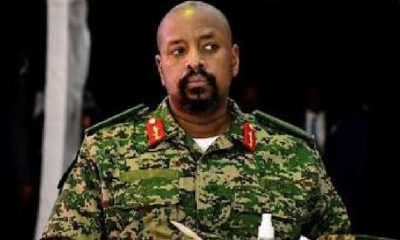
Ugandan President’s Son Announces 2031 Bid To Succeed His Father Who Has Been In Power For Over 40 Years
-

 Opinion20 hours ago
INEC as the Greatest Threat to the 2027 Election and Nigeria’s Democracy
Warning: Undefined variable $user_ID in /home/naijuinz/public_html/wp-content/themes/zox-news/comments.php on line 49
You must be logged in to post a comment Login