
Foreign
Macron Recognizes Palestinian State At Landmark UN Summit


- /home/naijuinz/public_html/wp-content/plugins/mvp-social-buttons/mvp-social-buttons.php on line 27
https://naijablitznews.com/wp-content/uploads/2025/09/Emmanuel-Macron-1000x576.jpg&description=Macron Recognizes Palestinian State At Landmark UN Summit', 'pinterestShare', 'width=750,height=350'); return false;" title="Pin This Post">
- Share
- Tweet /home/naijuinz/public_html/wp-content/plugins/mvp-social-buttons/mvp-social-buttons.php on line 72
https://naijablitznews.com/wp-content/uploads/2025/09/Emmanuel-Macron-1000x576.jpg&description=Macron Recognizes Palestinian State At Landmark UN Summit', 'pinterestShare', 'width=750,height=350'); return false;" title="Pin This Post">


French President Emmanuel Macron on Monday recognized a Palestinian state, leading a UN summit that already spurred other Western governments to take the landmark step that has infuriated Israel.
“The time for peace has come, as we are just moments away from no longer being able to seize it,” Macron told the summit.
“The time has come to free the 48 hostages held by Hamas. The time has come to stop the war, the bombings of Gaza, the massacres and the displacement,” Macron said.
Australia, Britain, Canada and Portugal also took the largely symbolic step of recognition on the eve of the summit called by France and Saudi Arabia, piling pressure on Israel as it intensifies its retaliatory war in Gaza that has killed tens of thousands of people.
Macron earlier said he would make the release of hostages taken by Hamas during its October 7, 2023, attack on Israel a precondition for opening a French embassy to the Palestinian state.
Israel has repeatedly warned France against recognizing a Palestinian state, with far-right members of Prime Minister Benjamin Netanyahu’s government mulling annexation of the West Bank to make any state impossible.
Israel’s ambassador to the United Nations, Danny Danon, warned, “We will take action.”
“It’s easier to come here and give speeches, take pictures, feel like they are doing something. But they are not promoting peace. They are supporting terrorism,” he told reporters.
The United States, Israel’s crucial diplomatic and military supporter, had unsuccessfully urged its allies to drop the recognition plans, with President Donald Trump saying that a state can only come through negotiations.
“Frankly, he believes it’s a reward to Hamas,” White House Press Secretary Karoline Leavitt said of recognizing a Palestinian state.
“So he believes these decisions are just more talk and not enough action from some of our friends and allies,” she told reporters in Washington.
Germany, while more critical than Washington of Israel’s actions in Gaza, also broke with France and Britain and will not recognize a Palestinian state.
German Foreign Minister Johann Wadephul said that “a negotiated two-state solution is the path that can allow Israelis and Palestinians to live in peace, security and dignity.”
Top of UN agenda
More than 140 world leaders will descend on New York but not Palestinian president Mahmud Abbas, who was denied a visa by the US authorities, forcing him to attend virtually.
Israel said it would skip an emergency UN Security Council meeting on Gaza Tuesday because of the Jewish New Year, calling the timing “regrettable.”
Netanyahu reiterated Sunday his position that there would be no Palestinian state and vowed to accelerate the creation of new settlements.
Two far-right Israeli ministers, Itamar Ben Gvir and Bezalel Smotrich, went further, calling for the annexation of the West Bank.
UN Secretary-General Antonio Guterres told AFP Friday “we should not feel intimidated by the risk of retaliation.”
‘Erasure of Palestinian life’
Macron had voiced exasperation at Israel’s prolonged offensive as he decided to recognize a Palestinian state.
Britain, which more than a century ago declared support for a Jewish homeland, held out the possibility of backing down on recognition of a Palestinian state if Israel agreed on a ceasefire in Gaza.
But the historic step also is unlikely to have much effect on the ground.
“Unless backed up by concrete measures, recognizing Palestine as a state risks becoming a distraction from the reality, which is an accelerating erasure of Palestinian life in their homeland,” said the International Crisis Group’s Israel-Palestine project director, Max Rodenbeck.
The October 7, 2023, Hamas attack on Israel resulted in the deaths of 1,219 Israelis, mostly civilians, according to official data.
Israeli military operations since then have killed 65,062 Palestinians, mostly civilians, says the Hamas-run health ministry, figures the UN considers reliable.

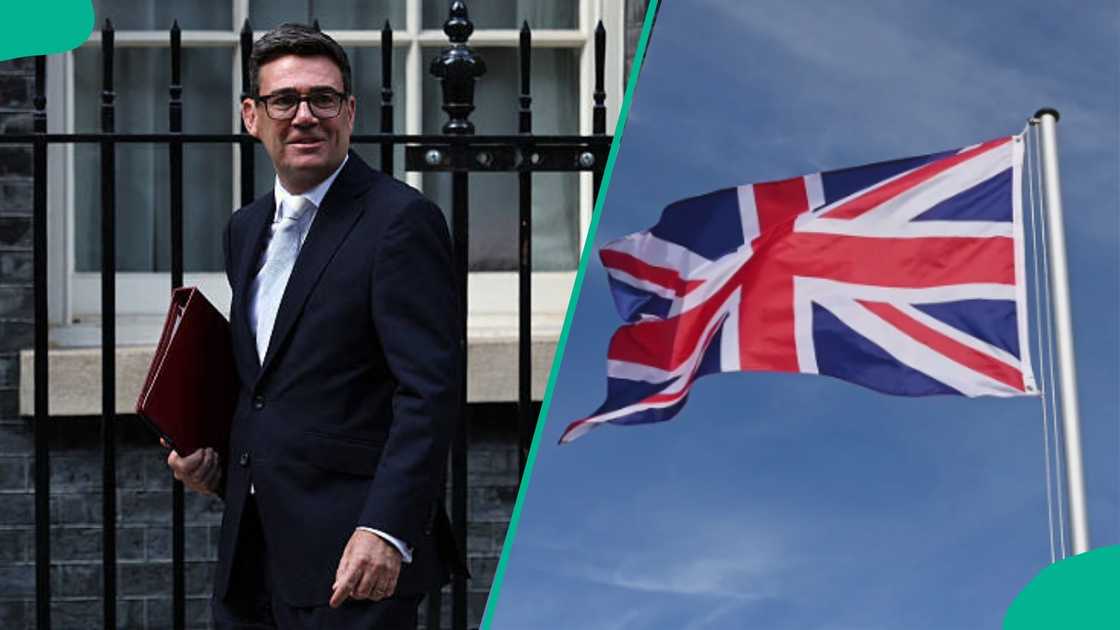
Nigerians and other foreign workers in the UK have welcomed a new immigration policy allowing recognised victims of modern slavery on Skilled Worker visas to leave exploitative employers and take up new jobs without putting their immigration status at risk.
The UK Home Office announced the change on Thursday, saying workers who have been formally recognised as victims of modern slavery should not be forced to remain with abusive employers because of their immigration status.
“No victim of modern slavery should be trapped with an exploitative employer because of their immigration status,” the Home Office said in a post on its official X account.
It added that recognised victims on Skilled Worker visas would now be able to leave abusive employers and work elsewhere without risking their immigration status.
The development has attracted positive reactions online, particularly from Nigerians who work in or are familiar with the UK’s care and support sector.
An X user, @daddyhope, described the announcement as “good news for care workers”, saying the policy could remove the fear of deportation allegedly used by some exploitative employers to control sponsored workers.
“From today, care workers and other Skilled Worker visa holders who are formally recognised as victims of modern slavery will be allowed to leave abusive employers and work elsewhere without risking their immigration status,” the user wrote.
Another user, @JajaPhD, welcomed the policy but sought clarification on who qualifies as a recognised victim.
“Sounds like progress. What’s a recognised victim though?” the user asked, pointing to concerns among some care and support workers who may feel trapped in exploitative workplaces because they fear losing their sponsorship and livelihoods if they report abuse.
Similarly, @MzHorlabc11 described the development as “a step in the right direction”, while calling for more clarity on how the new arrangement would operate in practice.
Other users expressed stronger support for the move.
@Unfilteredxrp8 described the announcement as “fantastic news”, saying it would provide relief to many skilled workers living in the UK.
@Prestigious_Gt also welcomed the development, suggesting that the change could encourage employers to improve their treatment of sponsored workers.
“Some employers deserve this news. They will be calmer and more respectful moving forward,” the user wrote.
Another X user, @RealMrKay, expressed optimism that the policy would encourage employers to treat sponsored workers more fairly.
The user said they knew people who were unhappy with their sponsors over what they considered unfair treatment compared with workers who did not require sponsorship.
The UK Government’s move provides an important safeguard for people who have been formally recognised as victims of modern slavery and whose immigration status is linked to their employment.
However, reactions online also highlighted the need for greater public understanding of the process through which a worker becomes formally recognised as a victim of modern slavery.
The change is particularly relevant to care workers and other sponsored employees, who have previously faced restrictions linked to their employer-sponsored immigration status when attempting to leave abusive or exploitative workplaces.
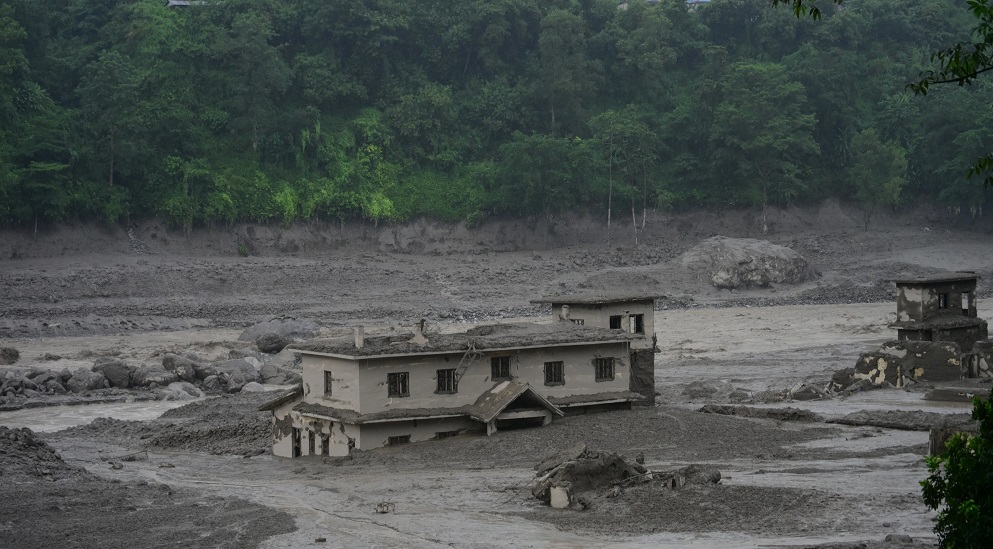
The death toll from last week’s devastating flash floods in Nepal has risen to 1,222, with 4,875 people still missing as rescuers continue to search through debris and isolated communities a week after the disaster.
According to The Hindu, citing Nepal Police and the National Disaster Risk Reduction and Management Authority, bodies have been recovered across eight districts, with Chitawan recording the highest number at 348, followed by Nawalparasi East with 218 and Nawalparasi West with 208.
Nuwakot has recorded 155 deaths, while 127 bodies have been recovered in Rasuwa, 69 in Gorkha, 60 in Dhading and 38 in Tanahu.
The scale of the disaster has also complicated the search for missing people, 583 of whom are foreigners, while thousands remain unaccounted for in areas where roads, bridges and communication networks were swept away.
The joint security operation involving the Nepal Army and other security agencies has so far rescued 11,993 people by helicopter and land routes. About 21,314 security personnel have been deployed for search and rescue operations.
The humanitarian crisis was underscored on Wednesday in Bidur, where survivors were forced to use a temporary cable crossing over the swollen Trishuli River after floodwaters destroyed roads and bridges.
The Nepal Army installed the roughly 250-metre cable, which residents and soldiers have been using to move people across the river, including those needing medical treatment, medicines, food and other essential supplies.
The disaster has also spread across the Nepal-China border. In Tibet’s Gyirong county, where flooding struck near the Nepal border, 21 people have died, and 541 remain missing, according to Chinese authorities cited by The Hindu.
China reopened the highway leading to the Gyirong border crossing on Wednesday after floodwaters destroyed sections of the route, allowing heavy rescue equipment to reach the disaster zone.
Reuters reported that search teams equipped with life-detection devices and dogs were subsequently deployed.
India has also stepped up its response, with a fifth aircraft arriving in Nepal carrying an 11-member rescue team, specialised equipment and 5.5 tonnes of essential medicines, according to India’s Ministry of External Affairs.
The disaster has meanwhile renewed scrutiny of development and environmental practices in the Himalayan region. Environmentalist Sunita Narain said the scale of the flooding was linked to decades of treating rivers and mountains as though they could be continually re-engineered, particularly through extensive hydropower development.
The continuing recovery operation comes as authorities confront the destruction of transport links and the large number of people still missing, leaving the final human cost of the disaster uncertain.
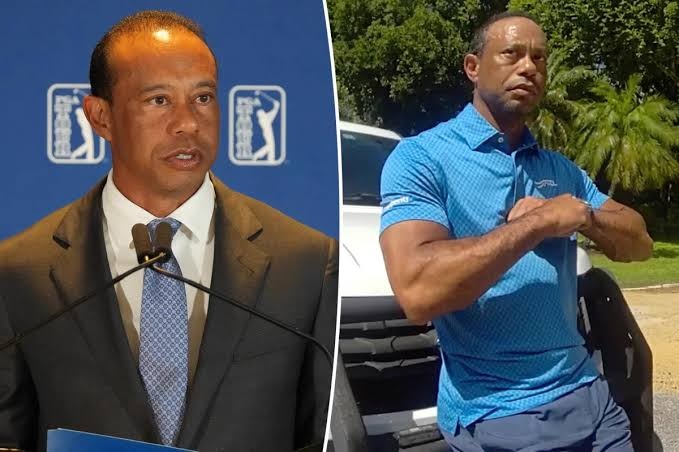
Tiger Woods has been fined and suspended from driving for five years after entering a plea agreement to a reckless driving charge, following March’s rollover car crash in Florida.
The 15-time major champion was arrested in March and spent eight hours in jail before being bailed, after the Land Rover he was driving rolled over in a collision with a pick-up truck towing a trailer.
Woods previously entered a written plea of not guilty via his lawyers to charges of driving under the influence, property damage and a refusal to submit to testing.
The former world No 1 attended a plea conference hearing at Martin County Courthouse in Florida on Wednesday, where he pleaded guilty to a lesser charge of reckless driving and the refusal to submit an unlawful test.
Judge Darren Steele accepted the plea agreement, which amended the original DUI charge and resolved the refusal to submit a test charge, while Woods also entered a plea to a careless driving citation.
On the reckless driving second offence charge, Woods received a $1,000 (£748) fine and a five-year driving suspension.
On the second count, the refusal to submit to a lawful test, he received a $500 (£370) fine.
“There are no exceptions. If you were to drive for any reason at all, you would go immediately back to jail,” Steele told the court.
Woods was ordered to pay the minimum fine for the careless driving citation, which also carries a five-year driving ban to run concurrently with the suspension on the reckless driving charge.
The 50-year-old said little during the hearing. He arrived at the courthouse with Vanessa Trump, his girlfriend and President Donald Trump’s former daughter-in-law, who sat behind him during a hearing that lasted under 10 minutes.
He was also fined court costs, according to court documents. A no-contest plea is not an admission of guilt, but means the accused will offer no defense.
The plea is treated as a conviction in the criminal justice system.
The police report from the March 27 crash said deputies found two hydrocone pills – used to treat pain – in his pocket, and he showed signs of impairment.
It described Woods’ movements as slow and lethargic when speaking to deputies at the scene.
The report also said Woods appeared to be sweating, his eyes looked glassy, and his pupils were dilated.
Woods managed to crawl out of his car without any injuries and told a deputy he was looking down at his phone and changing the radio station when he hit the truck.
Woods has not featured in a professional golf event since missing the cut at The Open in July 2024.
He made his first public appearance since returning from treatment in Switzerland on June 23, when he introduced the PGA Tour’s plans to revamp its schedule for 2028.
Woods remained as chairman of the PGA Tour’s Future Competition Committee after his arrest.

See Black Market Dollar To Naira Exchange Rate Today 5th September 2026
Nigeria’s External Reserves Hit $54bn, Highest Since 2008

Atiku’s camp angry as El-Rufai spends 200 days in prison




-
 News16 hours ago
Just in: Massive Explosion Rocks APC Governorship Candidate’s Convoy in Borno as Terrorists Attack
-

 Politics16 hours ago
Lere Olayinka: Some Presidential Candidates Are Not Contesting To Win 2027 Election But To Make An Impression
-

 News16 hours ago
See Dollar to Naira exchange rate today, September 4, 2026
-

 News16 hours ago
Obi vows to protect 2027 election votes with his life
-

 News16 hours ago
Bandits Kill Five, Abduct Several as Sokoto Community Comes Under Fresh Attack
-

 News15 hours ago
NERD: UNIBEN, ABU, UNICAL, EKSU, Kwara State Poly Lead Nigeria’s Academic Digitisation Drive as Country crosses 400,000 academic submissions
-
 Politics6 hours ago
FBI records: I’m ready for scrutiny, unlike you, Atiku tells Tinubu
-
 Metro6 hours ago
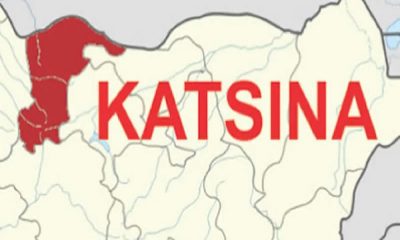
Protesters storm Katsina streets over rising bandit attacks, urge govt to step up action