
News
Police continue to enforce tinted glass permit policy saying “we’ve not seen any order’

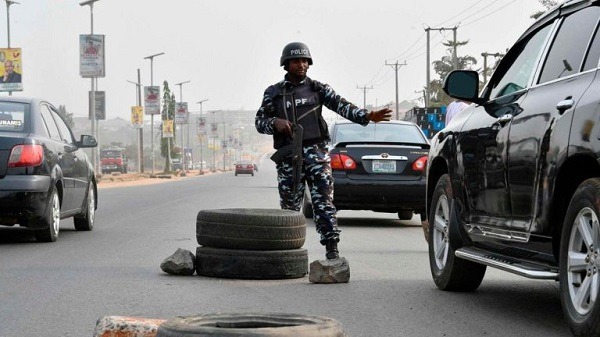


The Nigeria Police Force has declared that it has not been officially served with the court order regarding the enforcement of tinted glass permits.
The Force Public Relations Officer, CSP Benjamin Hundeyin, made this known on Saturday.
Human Rights lawyer, Inibehe Effiong, had posted on X, reports that the court had ordered the Police to maintain the status quo on the tinted glass permit case.
Responding, Hundeyin said the Police had not received any official notification.
He shared excerpts of the court order, noting that the plaintiff’s three main injunctions against the policy were refused, while the court maintained a directive for all parties to preserve the status quo pending the next hearing on October 16.
While we have not been officially served the court order you’re making reference to, let me, in the meantime, show point number eight (of the same order) since you left that part out and focused only on point number six. Nigerians deserve a complete picture, not a skewed one.”
Hundeyin’s comment followed reports that the Federal High Court in Warri had issued an interim order on Friday, directing the Nigeria Police Force and the Inspector-General to maintain the status quo in the ongoing tinted glass permit case.
Delivering the order, the court directed the police authorities to respect judicial processes pending further proceedings in the matter.
Confirming the development, Senior Advocate of Nigeria Kunle Edun, who led the legal team, described the ruling as an important step in upholding the rule of law.


…as APC figures and state leaders rally behind with nomination forms
By Gloria Ikibah
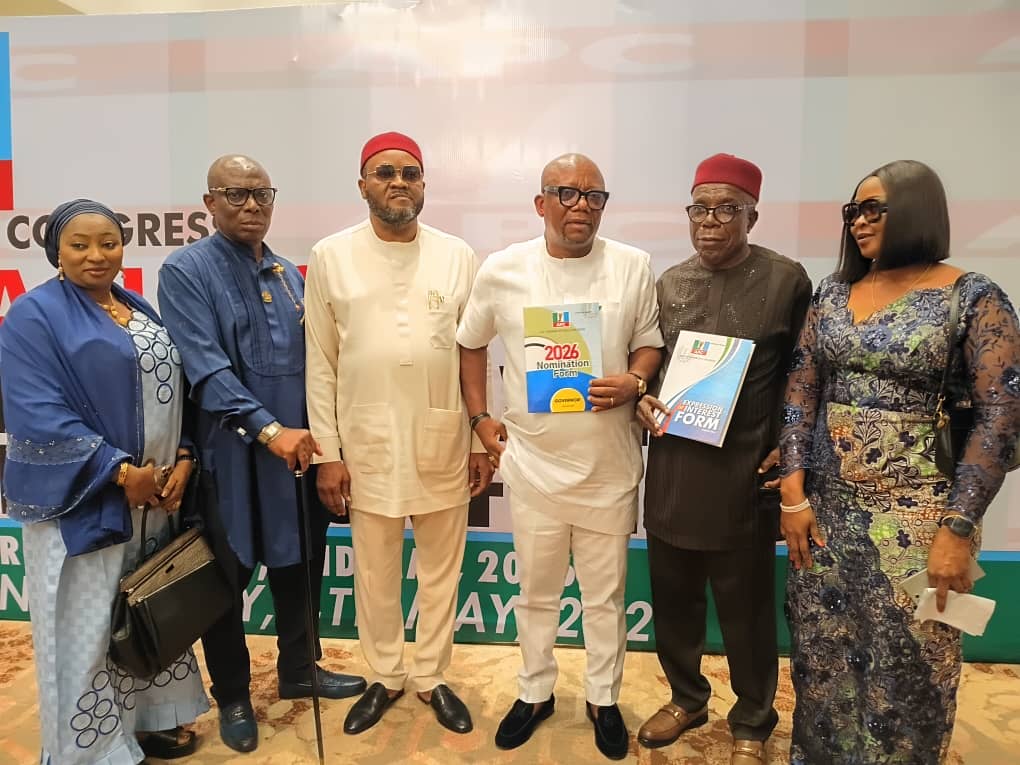
Governor Siminalayi Fubara has received an early political lift in the build-up to the 2027 general elections, following a show of support from prominent figures within the All Progressives Congress and other political stakeholders in Rivers State.
A group of party leaders and elders moved to secure and present the governor’s nomination and expression of interest forms, signalling a broad-based endorsement that cuts across party lines.
The delegation, was led by Hon. Awaji-Inombek Abiante, a serving member of the House of Representatives representing Andoni/Opobo-Nkoro Federal Constituency, indicated that the decision was reached after consultations among influential voices across the state. The move, they suggested, reflects what they see as the wider interest of Rivers people rather than narrow political considerations.
Those behind the initiative also framed the development as consistent with Nigeria’s political traditions, where stakeholders often mobilise support for candidates they believe should continue in office.
“This is not new. Even at the national level, stakeholders have, in the past, procured nomination forms for preferred candidates. It is a democratic tradition rooted in collective will,” he said.
Hon. Abiante said the move reflects widespread confidence in Governor Fubara’s leadership, stressing that it was shaped by public opinion rather than individual ambition or financial strength.
“It is not about how deep your pocket is.
“It is about what the people feel. And the people of Rivers State have made their position clear—they want continuity,” he said.
He also drew attention to what he described as the governor’s record in office, citing ongoing infrastructure development, expanded access to underserved communities and growing economic prospects, particularly across riverine areas.
“In places like Andoni, access was a long-standing challenge. Within months, that narrative changed.
“Communities once cut off are now connected and positioned to contribute meaningfully to the blue economy,” he added.
The lawmaker also cited the rehabilitation of key public infrastructure, including the State Secretariat, and improvements in citizens’ welfare as evidence of purposeful governance.
Beyond projects, Abiante stressed governor Fubara’s leadership style and described him as humble, people-oriented, and deeply attuned to the needs of ordinary citizens.
“This is a leader who understands the pains of his people and responds with action,” he noted.
The lawmaker further revealed that Governor Fubara neither initiated nor influenced the move, insisting it was a spontaneous decision by stakeholders determined to sustain the current trajectory.
“He did not send us. This is the voice of the people speaking through their leaders. We have come on their behalf,” Abiante stated.
According to him, the message from across the state is unequivocal: the governor must heed the call to seek re-election.
“The people have contributed their resources to make this happen. He cannot turn his back on them. Rivers people are firmly behind him,” he declared.
With the nomination forms already obtained, the group is preparing to hand them over to the governor on Friday, 1 May 2026.
The planned presentation is likely to sharpen the emerging political dynamics in Rivers State ahead of the 2027 elections, placing Siminalayi Fubara squarely at the heart of the developing race.

Electricity supply in Lagos has been significantly disrupted following a major shutdown at the Egbin Power Station and a simultaneous fault on a key transmission route feeding the state, according to the Nigerian Independent System Operator.
In a statement issued on Thursday, the operator warned that the combined incidents could lead to prolonged power shortages across Lagos, Nigeria’s largest electricity consumption hub.
The disruption reportedly began late on April 28 when Egbin Power Station experienced a critical operational failure that forced an immediate halt in generation. Power output dropped sharply from about 641 megawatts to zero within a short period.
The system operator explained that the plant’s shutdown was triggered by a failure involving its central compressor unit, alongside a malfunction of the circulating water pump system, necessitating a full safety shutdown of all generating units.
The statement noted: “The Nigerian Independent System Operator wishes to inform the general public of a significant reduction in power generation currently affecting electricity supply across the country, particularly within the Lagos region.
“Egbin Power Station, which is the largest electricity-generating plant on the national grid and a major contributor to daily power supply in Nigeria, experienced a major operational disturbance.
“At approximately 8:21 p.m. on April 28, 2026, Egbin Power Station recorded a total loss of generation, dropping from about 641MW to zero output.
“This incident was caused by the failure of the plant’s central compressor, in addition to a malfunction of the circulating water pump system, which necessitated an immediate shutdown of all generating units to safeguard the facility.”
The agency also noted that the disruption has been compounded by an unrelated fault on the Osogbo–Ikeja West 330kV transmission line, a critical corridor responsible for evacuating electricity into Lagos.
According to the operator, the transmission failure has further limited the volume of power that can be delivered into the Lagos electricity network, worsening the supply shortfall.
“Power supply to the Lagos region is currently further restricted due to the forced outage of the Osogbo–Ikeja West 330kV transmission line, thereby limiting the evacuation of available generation into the Lagos load centre,” the statement added.
With both generation and transmission constraints in place, system operators have begun implementing load-shedding measures to maintain grid stability and avoid a wider system collapse.
Emergency interventions currently underway include redistribution of available power across distribution companies, with priority given to critical infrastructure such as hospitals, security installations and essential services. Operators are also working to optimise output from other generation plants to cushion the impact on consumers.
“Consequently, this loss of generation has created a significant supply shortfall, necessitating immediate load-shedding measures to maintain grid stability and prevent a wider system disturbance.
“System operators have since deployed contingency measures, including the reallocation of available load across distribution companies, with priority given to critical national infrastructure.
“In addition, efforts are ongoing to optimise generation from other available power plants to mitigate the impact of this development on electricity consumers.”
The operator expressed regret over the disruption, particularly its impact on residents of Lagos and surrounding areas, and assured that restoration efforts are ongoing in collaboration with relevant stakeholders.
“We acknowledge the inconvenience this situation has caused electricity consumers, especially within Lagos and surrounding areas, and we assure the public that all relevant stakeholders are working closely to resolve the situation as quickly as possible.”
The Egbin Power Station, located in Ikorodu, is the largest thermal power facility connected to Nigeria’s national grid, with an installed capacity of over 1,300 megawatts.
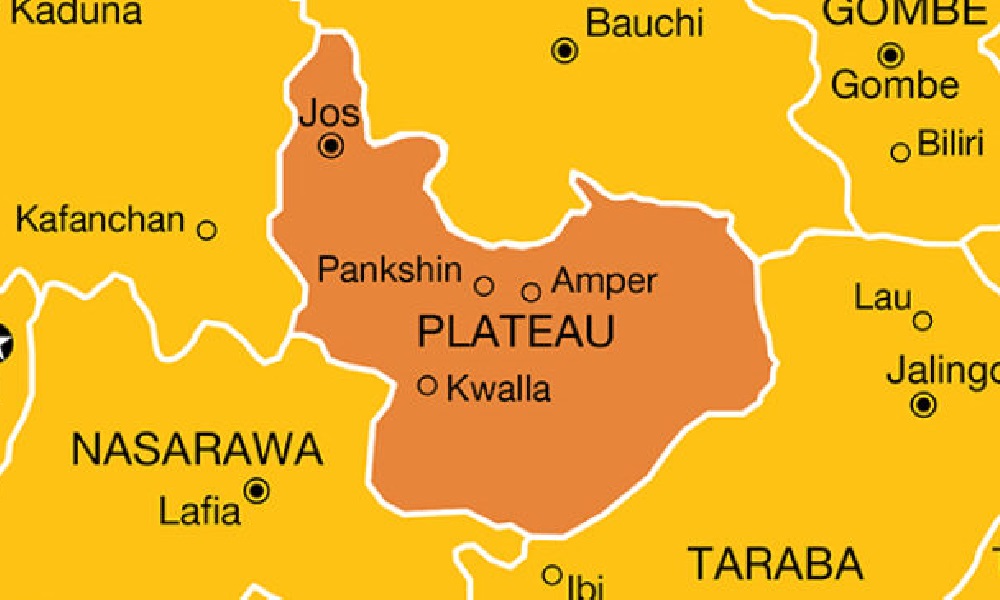
President Bola Ahmed Tinubu’s high-level engagement with Plateau stakeholders in Abuja has begun to yield tangible gains, with fresh commitments on security, relief funding, and, most significantly, a historic political reconciliation among the state’s leadership.
At the heart of the breakthrough was the unprecedented convergence of all living former governors of Plateau State under one roof for the first time, an outcome Governor Caleb Mutfwang described as a major step toward lasting peace in the crisis-prone state.
The meeting, which stretched into the evening at the Presidential Villa, brought together a powerful delegation including former governors Simon Lalong, Jonah Jang, Joshua Dariye, and Fidelis Tapgun, alongside traditional rulers and key political figures.
Beyond the symbolism of unity, the Abuja trip delivered concrete outcomes, including President Tinubu’s approval of N2 billion relief support for victims of the March 29 attack in Angwan Rukuba, Jos North Local Government Area.
The President also took a firm stance on security, vowing to deploy the full weight of federal authority against individuals identified as sponsors or instigators of violence in the state.
“If you identify and you know the name of troublemakers… we will use the instrument of office to deal with them,” Tinubu told the delegation, while charging Plateau leaders to take ownership of the peace process.
A major institutional gain from the meeting was the endorsement of a new peace committee comprising former governors, effectively placing them at the centre of reconciliation efforts. The President directed the committee to review past reports, harmonise recommendations, and drive implementation of sustainable peace strategies.
In what could signal long-term structural reform, Tinubu also renewed his push for the establishment of state police, describing it as critical to addressing Plateau’s unique security challenges.
Governor Mutfwang, reflecting on the outcomes, said the Abuja engagement had helped depoliticise key issues and foster a renewed spirit of unity among Plateau leaders.
“The coming together of the former governors has never happened before. This is the first time it is happening, and I believe that is a step we can build upon,” he said, adding that the state was now better positioned to “rise above all divides of religion and ethnicity.”
Remarkably, the President also directed inclusive governance measures, urging the state to integrate non-indigenes more fully into its political and administrative structure as part of confidence-building efforts.
Traditional rulers at the meeting, including the Gbong Gwom Jos, Da Jacob Gyang Buba, pressed for enhanced security deployment, technological surveillance, and the urgent resettlement of displaced persons—issues the Federal Government signalled readiness to support.
For many observers, the Abuja meeting marked more than a routine consultation—it represented a strategic reset, combining political unity, financial intervention, and a clearer security roadmap, all anchored on a rare consensus among Plateau’s past and present leaders.

Governor Fubara Gains Cross-party Backing Ahead of 2027 Guber Race

Blackout looms in Lagos as Egbin power station shuts down

Plateau Leaders Unite In Abuja As Tinubu Approves N2bn Relief



-
 News23 hours ago
2027: Ogbeide-Ihama Joins Edo South Senatorial Race, Says Upper Chamber Not For Neophytes(Photos)
-
 News23 hours ago
JUST IN: Tinubu Appoints Bianca Ojukwu Foreign Affairs Minister
-
 News23 hours ago
May Day: FG Announces Public Holiday for All Nigerians
-

 Sports23 hours ago
Arsenal Hold Atlético Madrid To 1-1 Draw In UCL Semi-Final
-
 News20 hours ago
Reps probe $4.6bn health grants, demand stricter oversight
-

 News17 hours ago
Watch moment FCT minister Wike being conferred with title of Abuja Hasken, Light of Abuja by FCT Traditional Council led by Ona of Abaji (Video)
-

 News23 hours ago
IGP Disu Fires ASP Nuhu Usman From Police Force Over Killing Of Mene Ogidi In Effurun
-

 News23 hours ago
FG Raises Concern Over Fresh Xenophobic Attacks In South Africa