
News
Former NBC DG Emeka Mba Urges LLBSUK Graduates to Embrace Communication as Core of Leadership


- /home/naijuinz/public_html/wp-content/plugins/mvp-social-buttons/mvp-social-buttons.php on line 27
https://naijablitznews.com/wp-content/uploads/2025/11/IMG-20251129-WA0060-1000x600.jpg&description=Former NBC DG Emeka Mba Urges LLBSUK Graduates to Embrace Communication as Core of Leadership', 'pinterestShare', 'width=750,height=350'); return false;" title="Pin This Post">
- Share
- Tweet /home/naijuinz/public_html/wp-content/plugins/mvp-social-buttons/mvp-social-buttons.php on line 72
https://naijablitznews.com/wp-content/uploads/2025/11/IMG-20251129-WA0060-1000x600.jpg&description=Former NBC DG Emeka Mba Urges LLBSUK Graduates to Embrace Communication as Core of Leadership', 'pinterestShare', 'width=750,height=350'); return false;" title="Pin This Post">


…as Rector call them “Global Problem-Solvers”
…Dean says institution is building a new breed of Media Consultants
By Gloria Ikibah
Former Director-General of the National Broadcasting Commission and MD/CEO of Afia Television, Emeka Mba, has underscored the essential role of communication in leadership, personal growth, and organisational success.
Speaking to graduands, at the convocation ceremony of the School of Communications and Media Studies, Learn To Live Business School UK, held on Saturday in Abuja, the institution celebrated graduates from its first and second Post-Graduate Diploma cohorts alongside the 2025 Master Class group. Together known as the “Titans”, they completed an intensive programme centred on Strategic Communications and Media Management Consultancy.
Mba who emphasised that the modern world demands far more than qualifications, argued that without strong communication skills, no professional, regardless of talent or industry can truly excel.

“That if you lack the tools, the necessary tools
to communicate, you’ve started on the wrong foot,” he began, pointing to the digital environment that connects everyone through mobile phones and online platforms.
“That is the key. It’s your ability to communicate”, he noted.
To illustrate the enduring power of communication, Mba drew on historical examples, asking the audience to imagine how ancient leaders inspired their followers.
“Can you imagine what Alexander the Great must have said to his army? To convince thousands of men to march over 13,000 kilometres to conquer half the world. What did he tell them? How did he tell them to join me in this pursuit to conquer half the world?”, he said.
While ancient leaders relied solely on voice and presence, he noted, today’s communicators have microphones, the internet, and countless digital tools, yet the underlying skill remains the same.
His message to the graduating students was clear: communication grounded in empathy is at the heart of effective leadership.
Mba also touched on the role of artificial intelligence, cautioning students against overestimating its abilities.
“You think you can do everything with AI; the first failure might even be in your prompting.
“That you do not even know how to communicate with the machine in such a way that the machine will even give you what you want”, he said.

Reflecting on the value of learning, he challenged the belief that great communicators are born.
“A lot of people have argued that excellent communicators are born… but the fact is that that is a big fat lie,” he said, invoking examples like Ronaldo, King George VI, Churchill, and the Greek orator Demosthenes.
Using stories of leaders with speech impediments who trained relentlessly, he emphasised that communication is a skill sharpened through practice, not a natural gift.
As he turned to contemporary Nigerian politics, Mba suggested that even leaders at the highest level struggle if they cannot communicate effectively, noting the frustrations citizens often experience when their leaders cannot clearly articulate vision or direction.
He also reminded the audience that communication extends beyond speech and urged graduates to view their certification not as the end of learning, but as the beginning of a deeper, lifelong journey.
“Your learning is not over. This is actually the beginning of a new type of learning,” he said.
While technology is reshaping the world, he warned that emotional connection continues to decline, a gap only human communication can close.
“The value of communicating clearly, emotionally, and contextually becomes even more important.
“I hope that the tools that you have… will give you the opportunity to grow and to benefit whatever organisation you’re in, and most importantly, to benefit humanity,” he told the graduands.
In a powerful charge to graduands, the Rector LLBSUK, Dr Kingsley Nelson, urged them to embrace their training as global solution providers rather than conventional job seekers.
Dr Nelson explained that the essence of the LLBSUK model is not certificates, gowns or photographs, but the ability to step into any society and solve real problems.

He said: “Over the years, we’ve seen graduations from month to month, school to school. But the reality is, how many of them can solve problems? How many of the graduates can Solve problems?
The Rector said the institution’s mission is to raise “global citizens” capable of working anywhere in the world, not as routine employees but as thinkers, strategists and consultants who are recognised for their ability to diagnose and resolve complex issues.
Dr Nelson noted that LLBSUK is deliberately unconventional, designed to train people who lead proactively rather than reactively, describing the institution as an ecosystem preparing individuals to occupy advisory positions at the highest levels of governance and industry.
“Our single focus is to groom global citizens. These are men and women who step into any environment and they solve problems… They are seen as solution providers, business doctors… consulting intelligent leaders.
“We don’t intend to be conventional in the years to come. We want to do things the other way round, top leaders around the world rely heavily on consultants.
“There is no meaningful governor, no meaningful president… who doesn’t have sets of consultants behind the scene,” he said.
To illustrate the impact of LLBSUK’s model, the Rector revealed that the institution had already attracted interest from major global powers.
He told graduates that the world of consulting operates on influence rather than publicity.
“McKinsey is about 100 years as we speak. No signpost anywhere. The world is run through secrecy.
“People that run the affairs of this world may be sitting down on that staircase wearing long sleeves, but you won’t know they are the ones in charge” he added.
Dr Nelson also reminded graduands that the convocation ceremony was not a final exit but a transition into a deeper phase of mentorship and training known as “the Conclave,” a private circle where advanced strategic discussions take place.
He urged them to prepare themselves to “rule the world,” insisting that every LLBSUK product who completes the required phases becomes “a potential universal dominator.”
“When you call yourself a consultant, it means I should come to you for solution.
“As you show up, solutions show up… Be a great ambassador for yourself, for the institute, and a proper representative of your family,” he told them.
The Rector expressed pride in the graduating sets, describing them as elite professionals who will redefine Nigeria’s and the world’s future narratives.
“As you go into the next phase of your life,” he said, “be the solution and not the problem to be solved.”
Earlier in his welcome address, the Dean School of Communications and Media Studies LLBSUK, Dr Sammy Ajufo, celebrated the institution’s latest cohort of graduates, describing them as the “Titans” who will help reshape the strategic communications and media consulting landscape.
Dr Ajufo who reflected on the journey that led to the establishment of the faculty and the successful completion of its second academic cycle, recounted the task he was given in 2024 to build the school’s first communications faculty, noting that the support of his colleagues made the vision achievable.

mde
Dr Ajufo expressed gratitude to his academic team and paid tribute to the resilience of students who remained committed to their studies despite personal and professional challenges. He said the programme was intentionally rigorous because it was designed to prepare consultants who could provide critical insight to organisations across the world.
He said the school’s goal was not to produce certificate holders but graduates who would serve as “business doctors” capable of offering specialised guidance to institutions in need of fresh perspectives.
Dr Ajufo commended the latest cohort for distinguishing themselves professionally, noting that none of them was unemployed and most were already advancing in their careers.
He stressed that the true measure of any institution lies in the impact of its graduates, urging them to uphold the school’s reputation wherever they go.
He assured the alumni that the school would continue to support them and encouraged them to seek guidance whenever needed.
The Dean also informed them that those wishing to advance academically would be required to proceed through the school’s consulting programme before accessing higher qualifications such as the doctorate track.
Dr Ajufo reminded the graduates that LLBSUK would call on them periodically to serve as guest faculty for future cohorts, emphasising their ongoing role in shaping the school’s growth.
The ceremony featured presentations of certificates and awards, as well as interactions among students, faculty members, family and friends.

The West African Examinations Council (WAEC) has appointed Amos Dangut as its new Registrar and Chief Executive Officer, while Suleiman Kum has been named Head of the Nigeria National Office.
Mr Dangut, who previously headed WAEC’s Nigeria National Office, assumed office as Registrar in October 2026, while Mr Kum succeeded him as Head of the Nigeria office.
The appointments were announced in separate statements by WAEC spokesperson, Moyosola Adesina.
According to the council, Mr Dangut succeeds Pateh Bah of The Gambia and will serve a five-year term until September 2031.
WAEC said its International Governing Board ratified Mr Dangut’s appointment at its 74th Annual Meeting held in Accra, Ghana, in March.
As Registrar, he will oversee the council’s operations across its member countries.
Mr Kum, who served in the office of the Head of National Office before his appointment, takes over the Nigeria office following Mr Dangut’s elevation.
About Amos Dangut
Mr Dangut was born on 2 October 1967.
He obtained a Bachelor of Agriculture in Animal Production in 1991, a Master of Science in Animal Science in 1994, a Doctor of Philosophy in Animal Science in 2017 and a Master of Education in Administration and Planning in 2020.
He began his career in education at St Louis College, Jos, in 1994, where he also served as a WAEC examiner before joining the council in 1998.
At WAEC, he served in several capacities, including Assistant Registrar/Subject Officer in the Test Development Division, Head of Examinations Security, Deputy Branch Controller in Uyo and Bauchi, Branch Controller in Yola, Controller of the Post Examinations Department and Zonal Coordinator of the Ikeja Zonal Office.
He served as Deputy Registrar in the office of the Head of National Office between August and October 2023 before becoming Head of the Nigeria National Office on 2 October 2023.
He remained in that position until he was appointed the 14th Registrar of WAEC.
The examination body described Mr Dangut as an experienced test developer and administrator with expertise in test development and administration, branch and zonal office management.
The council said that for more than two decades, he had used information and communications technology to improve processes in test development, post-test activities and test administration.
His career also includes recognition from the Nigeria Examinations Committee for his handling of examination matters between 2000 and 2006. He also received an award for meritorious service from the Ondo State government and Akoko South Local Government during his NYSC service.
About Suleiman Kum
Mr Kum was born on 16 October 1970 in Minna, Niger State, and hails from Langtang North LGA of Plateau State.
He attended Baptist High School, Jos, where he obtained his General Certificate of Education in 1986/1987. He subsequently studied at the University of Agriculture, Makurdi, where he obtained a Bachelor of Agriculture in Animal Production with Second Class Honours, Upper Division, in 1992.
He later obtained a Postgraduate Diploma in Education from the National Open University of Nigeria (NOUN) in 2025 and is currently completing a Master of Education in Educational Administration and Planning at the university.
Mr Kum began his professional career in 1993 during his National Youth Service Corps deployment at the Division of Agricultural Colleges, Ahmadu Bello University, Zaria, where he served as Head of the Animal Production Unit.
Between 1995 and 1998, he worked at Baptist High School, Jos, where he served in various capacities, including Form Master, Labour Master, classroom teacher and Health Master.
He received the Light and Life Staff Merit Award in 1998.
He joined WAEC on 17 July 1998 as Assistant Registrar II and rose through the ranks to become Senior Deputy Registrar in 2024.
His roles at WAEC have included Head of Examinations Security in Awka, Yola and Makurdi; Branch Controller in Gusau and Kano; Head of the Security Printing Department; Zonal Coordinator in Port Harcourt and Ikeja; Director of Administration; and Senior Deputy Registrar/Test Administration.
Before his latest appointment, he served in the office of the Head of the Nigeria National Office.
WAEC described Mr Kum as an experienced test developer and administrator with expertise in examination security, test administration and branch and zonal office management.
The council said he led several administrative and technological initiatives, including enhanced security features in its printing operations, the introduction of facial-recognition biometric attendance systems and the delivery of achievement tests through computer-based examinations.

The National Health Insurance Authority (NHIA) has urged Nigerian women to prioritise early detection of breast cancer, while expanding financial protection for insured patients facing the high cost of oncology treatment.
The call comes as the country joins the global community to mark Breast Cancer Awareness Month, with the latest Nigeria-specific estimates putting annual new breast cancer cases at 32,278 and deaths at 16,332, according to the federal government and Nigerian cancer stakeholders from the Global Cancer Observatory.
Breast cancer remains the most commonly diagnosed cancer among Nigerian women and one of the country’s leading causes of cancer deaths.
The federal government also disclosed in July that Nigeria accounts for about 10.5 per cent of Africa’s cancer burden, placing the country among the three most affected on the continent.
NHIA, under its Director General, Dr. Kelechi Ohiri, is seeking to strengthen the role of health insurance as a buffer against the financial shock associated with serious illnesses.
For many families, the cost of comprehensive cancer care can quickly exceed household income, while treatment abroad remains beyond the reach of most Nigerians.
A key intervention is the expanded partnership between the NHIA and pharmaceutical company Roche, which is designed to reduce the cost of selected oncology medicines for eligible insured patients.
Under the arrangement, Roche absorbs 50 per cent of the cost of selected medicines, the NHIA contributes another 30 per cent, while the patient pays the remaining 20 per cent.
The cost-sharing structure effectively removes 80 per cent of the medicine cost from the patient’s direct financial burden, potentially making the difference between treatment being sustained and being interrupted for households already under economic pressure.
The authority had also introduced additional support for radiotherapy, ranging from up to N400,000 to full coverage for eligible patients, while maintaining benefits covering key cancer-related diagnostics.
These include mammography, CT and MRI scans, bone scans and laboratory investigations, alongside radiotherapy and other elements of cancer care covered under applicable benefit packages.
The broader package also provides for components of screening, surgery, chemotherapy and follow-up care, depending on the patient’s eligibility and the applicable insurance benefits.
For Ohiri, the interventions point to a shift in how the effectiveness of health insurance should be measured — away from enrolment figures alone and towards the extent to which coverage protects families when they face expensive illnesses.
He said, “The critical measure of the insurance system should no longer be the number of Nigerians carrying insurance records, but whether those records provide meaningful protection when illness strikes.”
Over 23 million Nigerians are currently enrolled in the national health insurance system, giving the NHIA a growing platform for scaling financial protection against cancer and other high-cost diseases.
The NHIA measures form part of the wider health reform agenda of the President Bola Tinubu administration, coordinated by the Federal Ministry of Health and Social Welfare under Professor Muhammad Ali Pate.
Cancer prevention and control have been elevated as national priorities under the administration’s health agenda, with the Federal Government implementing the Nigeria National Cancer Control Plan 2026–2030.
The plan covers prevention, early detection, diagnosis and treatment, as well as patient navigation, survivorship, research, data management and expansion of the oncology workforce.
The government is also upgrading six Oncology Centres of Excellence across the country. According to the Federal Ministry of Health, centres at the University College Hospital, Ibadan; University of Benin Teaching Hospital, Benin City; University of Nigeria Teaching Hospital, Enugu; and Ahmadu Bello University Teaching Hospital, Zaria, are already fully operational, with specialised equipment including brachytherapy machines.
Other interventions include the Cancer Access Partnership programme, which provides 27 anti-cancer medicines in 48 formulations across 14 federal tertiary hospitals, as well as the Cancer Health Fund for indigent patients suffering from breast, cervical and prostate cancers.
Together, the measures are aimed at addressing different points along the cancer-care chain — from prevention and early detection to diagnosis, treatment and financial protection.
But the NHIA said the interventions should be viewed as steps towards a broader response rather than a completed solution.
As breast cancer awareness month gets underway, the authority urged women to pay attention to unusual changes in their breasts, seek medical attention promptly and take advantage of screening opportunities where available.
It stressed that reducing Nigeria’s breast cancer burden would ultimately depend on detecting the disease earlier, expanding access to effective treatment and ensuring that the cost of care does not push patients and their families into financial distress.
Beyond the human toll, the disease can impose prolonged financial pressure on households, particularly when diagnosis comes late and treatment requires surgery, chemotherapy, radiotherapy, specialised medicines and repeated diagnostic investigations.
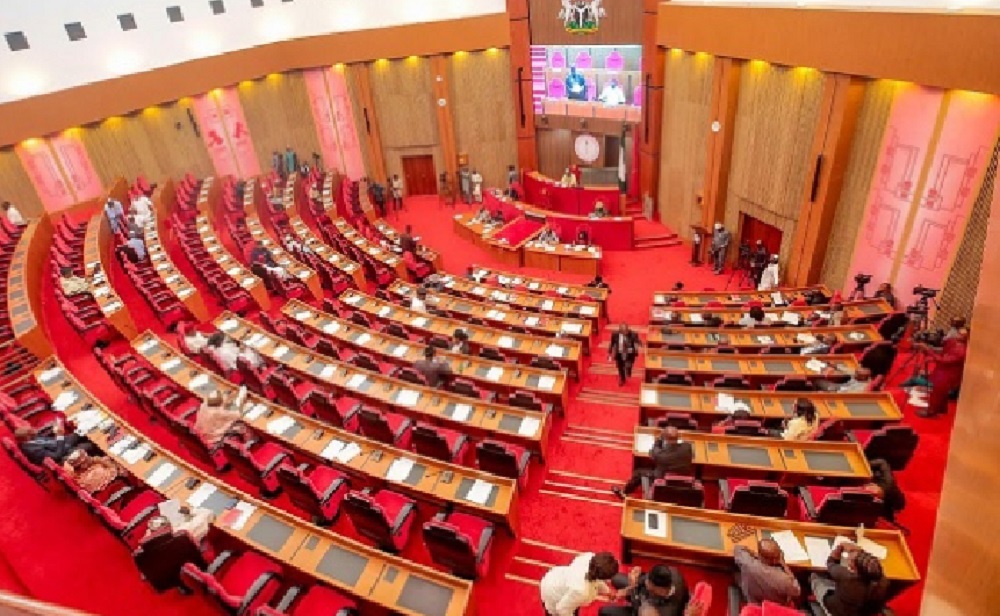
Senators from the 19 northern states and the Federal Capital Territory, under the aegis of the Northern Senators Forum (NSF), have called on the Federal Government and Defence Headquarters to urgently reinforce security presence in the Kopre-Sambisa corridor following reported insurgent attacks in Adamawa State.
The senators also urged the authorities to adopt a unified and proactive strategy to tackle what they described as criminal enclaves in the area.
The call followed attacks which the NSF said occurred between the night of September 30 and October 1, 2026, targeting communities and military outposts in Hong and Gombi Local Government Areas of Adamawa State.
In a statement signed by the Chairman of the forum, Senator Abdulaziz Musa Yar’Adua, APC, Katsina Central, the senators expressed condolences to families who lost loved ones in the attacks.
They specifically mentioned three soldiers of the 232 Battalion in Garaha, a forest guard and civilians among those reportedly killed.
The senators also expressed concern over reports of abductions, destruction of property, burning of places of worship and the displacement of hundreds of residents from communities including Garaha, Dabna, Bangna, Mubang, Zah, Bitirhuya, Kwapre, Mayo Ladde, Gaya-Dlang, Garkida, Boima and Guyaku.
The forum said the reported attacks on the 226 Battalion in Garkida and 232 Battalion in Garaha constituted a serious security concern for Adamawa State and the wider northern region.
The statement said: “The Northern Senators Forum stands in solidarity with the people of Adamawa State. By our collective efforts, you will not be abandoned to terrorists.”
The senators called on the Federal Government and Defence Headquarters to urgently reinforce security presence in the Kopre-Sambisa corridor and adopt a coordinated strategy to address the security situation.
They also urged the National Emergency Management Agency (NEMA), North-East Development Commission (NEDC) and other humanitarian agencies to urgently provide relief materials, medical assistance and trauma support to people displaced by the attacks.
The NSF further called on residents of Hong, Gombi and other parts of the country to remain vigilant and provide security agencies with actionable information.
The senators expressed sympathy to the families of the deceased and prayed for the restoration of peace in Hong, Gombi, Adamawa State and the wider northern region.

FCT police order arrest, prosecution of motorists with concealed number plates

NPFL: Rangers maintain top spot, Rivers United stay unbeaten

Incessant doctors’ strikes expose Makinde’s failure in health sector — APC guber candidate


-

 News15 hours ago
Monarchs in Etche LGA presenting symbolic traditional kola to FCT minister Wike at ongoing interactive meeting with Ogbakor, other stakeholders (Video)
-
 News15 hours ago
Tinubu’s lawyers agree there are errors in U.S. Court filing on 1990s drug probe, demand amendment
-

 News16 hours ago
Watch moment FCT minister Wike arrives Etche in Etche LGA for town hall meeting today (Video)
-
 News16 hours ago
Madonna Varsity rusticates students, suspends 14 others over viral Gen Z nurses video
-
 News15 hours ago
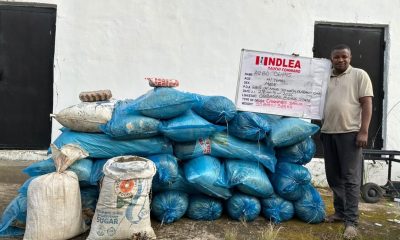
NDLEA intercepts 4.8kg cocaine hidden in shoe soles, travel bags; destroys 20 tonnes of cannabis in Osun, nabs fugitive after six years (Photos)
-

 News14 hours ago
Political Earthquake in Zamfara as Eight APC Lawmakers Quit Party, Reportedly Eye Wike-Backed Rainbow Coalition