Connect with us

News

US endorses $2.1bn health package for Nigerian Christian health based bodies

Published

on

ADVERTISEMENT
Zoom Ad
ADVERTISEMENT
Zoom Ad

The United States has approved a $2.1 billion health funding package for Nigeria, placing strong emphasis on Christian faith-based healthcare providers across the country.


The funding follows the signing of a five-year bilateral agreement between Washington and Abuja aimed at strengthening Nigeria’s health system and expanding access to essential medical services, especially in communities served by Christian institutions.

Under the agreement, the U.S. Department of State, working with Congress, will commit nearly $2.1 billion to support preventive and curative healthcare services.

The focus areas include HIV, tuberculosis, malaria, polio, as well as maternal and child health.

Advertisement

As part of the deal, the Nigerian government has also pledged to significantly raise its own spending on health. Nigeria is expected to increase domestic health funding by close to $3 billion over the five-year period covered by the agreement.

The Memorandum of Understanding (MOU) has been described as the largest co-investment made by any country so far under the America First Global Health Strategy. State Department spokesperson, Thomas Pigott, confirmed that the agreement reflects a deeper health partnership between both countries.

According to U.S. officials, the MOU was negotiated within the context of Nigeria’s ongoing reforms aimed at protecting Christian populations from violence. The agreement includes dedicated funding targeted at strengthening Christian-owned hospitals, clinics, and healthcare programmes.

The investment is designed to complement the work of about 900 faith-based clinics and hospitals operating in Nigeria. These facilities currently provide medical services to millions of Nigerians, particularly in underserved and rural communities.

Advertisement

The U.S. government noted that the funding would also help improve Nigeria’s overall health infrastructure, while encouraging long-term self-reliance and accountability in the health sector.

However, U.S. authorities made it clear that continued funding would depend on alignment with American national interests.

Officials stated that the President and the Secretary of State retain the authority to pause or terminate programmes that fail to meet agreed conditions.

Pigott added that the U.S. expects Nigeria to continue taking concrete steps to combat extremist religious violence, especially attacks targeting vulnerable Christian communities.

Advertisement

The agreement was signed despite Nigeria’s continued designation by the U.S. as a Country of Particular Concern.

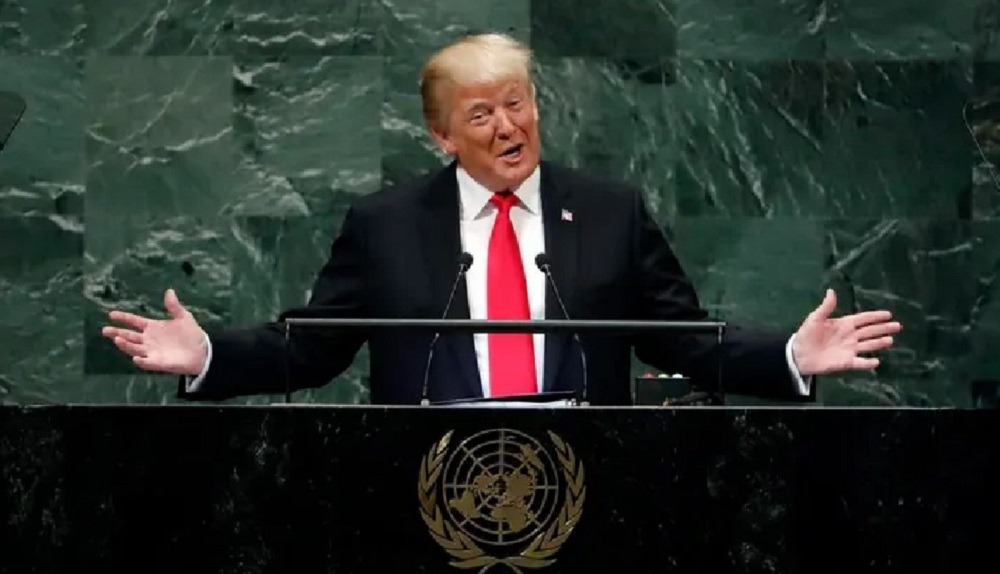
Nigeria was also recently included on a U.S. travel restriction list, a move President Donald Trump linked to terrorism concerns and visa overstay rates.

The America First Global Health Strategy, released in September 2025, applies to several countries worldwide. The policy prioritises self-reliance, data protection, and targeted funding for diseases such as HIV, TB, malaria, and maternal and child health.

The funding follows the signing of a five-year bilateral agreement between Washington and Abuja aimed at strengthening Nigeria’s health system and expanding access to essential medical services, especially in communities served by Christian institutions.

Advertisement

Under the agreement, the U.S. Department of State, working with Congress, will commit nearly $2.1 billion to support preventive and curative healthcare services.

The focus areas include HIV, tuberculosis, malaria, polio, as well as maternal and child health.

As part of the deal, the Nigerian government has also pledged to significantly raise its own spending on health. Nigeria is expected to increase domestic health funding by close to $3 billion over the five-year period covered by the agreement.

The Memorandum of Understanding (MOU) has been described as the largest co-investment made by any country so far under the America First Global Health Strategy. State Department spokesperson, Thomas Pigott, confirmed that the agreement reflects a deeper health partnership between both countries.

Advertisement

According to U.S. officials, the MOU was negotiated within the context of Nigeria’s ongoing reforms aimed at protecting Christian populations from violence. The agreement includes dedicated funding targeted at strengthening Christian-owned hospitals, clinics, and healthcare programmes.

The investment is designed to complement the work of about 900 faith-based clinics and hospitals operating in Nigeria. These facilities currently provide medical services to millions of Nigerians, particularly in underserved and rural communities.

The U.S. government noted that the funding would also help improve Nigeria’s overall health infrastructure, while encouraging long-term self-reliance and accountability in the health sector.

However, U.S. authorities made it clear that continued funding would depend on alignment with American national interests.

Advertisement

Officials stated that the President and the Secretary of State retain the authority to pause or terminate programmes that fail to meet agreed conditions.

Pigott added that the U.S. expects Nigeria to continue taking concrete steps to combat extremist religious violence, especially attacks targeting vulnerable Christian communities.

The agreement was signed despite Nigeria’s continued designation by the U.S. as a Country of Particular Concern.

Nigeria was also recently included on a U.S. travel restriction list, a move President Donald Trump linked to terrorism concerns and visa overstay rates.

Advertisement

The America First Global Health Strategy, released in September 2025, applies to several countries worldwide. The policy prioritises self-reliance, data protection, and targeted funding for diseases such as HIV, TB, malaria, and maternal and child health

Continue Reading
Advertisement

News

Uzodinma Releases N300 Million Support For South Africa Returnees, Imo Law Students

Published

on

By

ADVERTISEMENT
Zoom Ad
ADVERTISEMENT
Zoom Ad

Imo State Governor, Hope Uzodimma, has approved the release of ₦300m to support Imo indigenes studying at the Nigerian Law School and returnees from South Africa.

Under the arrangement, 250 Imo indigenes who returned from South Africa will receive ₦1m each to support their rehabilitation and reintegration into society.

Also, 100 Imo students at the Nigerian Law School will receive ₦500,000 each to help them cope with the rising cost of living.

The state Commissioner for Information, Public Orientation and Strategy, Declan Emelumba, disclosed this in a statement issued in Owerri, the state capital.

Advertisement

Emelumba said the governor approved the intervention after considering the difficult circumstances faced by the beneficiaries.

According to him, the law students had appealed to the governor for support following the rising cost of living and other financial pressures affecting their studies.

“The law students made a passionate appeal to His Excellency to support them to cushion the global inflation as regards the cost of living. As a caring father, he responded promptly,” the commissioner said.

He added that the governor considered the request urgent and necessary because of the importance of supporting young Imo indigenes pursuing professional education.

Advertisement

The commissioner said the support for the South Africa returnees was approved out of empathy for the affected indigenes.

He explained that the governor believed the returnees, who had gone through difficult experiences, needed immediate assistance to help them settle down again.

According to Emelumba, the ₦1m support for each of the 250 returnees was approved as a reintegration fund.

He said Uzodimma was convinced that the returnees needed a helping hand from the state government to enable them to rebuild their lives and reintegrate into society with minimal hardship.

Advertisement

Emelumba said the gesture was in line with the shared prosperity agenda of the Uzodimma administration.

He noted that the governor remained committed to the welfare of Imo citizens, whether within or outside the state.

According to him, the administration’s focus is not limited to infrastructure but also includes social support for citizens facing hardship.

He said the governor had continued to demonstrate that every Imo citizen mattered under his administration’s development plan.

Advertisement

Speaking further, the commissioner said this was not the first time Uzodimma would be supporting Imo students at the Nigerian Law School.

He said many of the students were already beneficiaries of the state government’s scholarship scheme.

“Most of them are on the scholarship list of the state government, and from time to time, the governor extends a helping hand to them,” Emelumba added.

He said the latest approval was another demonstration of the governor’s commitment to education, youth development and the welfare of Imo indigenes in difficult circumstances.

Advertisement
Continue Reading

News

Stone Age lost Atlantis about 8,500 years discovered beneath the waters of Denmark

Published

on

ADVERTISEMENT
Zoom Ad
ADVERTISEMENT
Zoom Ad

By Ojomah Austin.


The mystery of Atlantis has created a city-sized gap in our grasp of history, with archaeologists searching the oceans for any trace of this submerged civilisation.

A prominent theory suggests that Atlantis never actually existed. Nevertheless, as we’re now aware, the notion of a coastal settlement being consumed by the ocean is entirely plausible.

Advertisement

Subsequently, archaeologists in Europe believed they’d discovered the missing piece of the puzzle. You wouldn’t necessarily expect Denmark to be the maritime location of an exotic lost metropolis from ancient times, yet this is precisely where archaeologists unearthed the most compelling proof of Atlantis, according to Global News.

“Europe’s Atlantis”, stretching back to the Stone Age, was discovered beneath the waters of Denmark’s Bay of Aarhus. Researchers unearthed numerous artefacts that paint a picture of a civilised community that inhabited the area nearly 8,500 years ago.

These included stone implements, arrowheads, animal remains, and even fragments of timber that appeared to be rudimentary tools.

Researchers plunged 26 feet beneath the surface of Denmark’s second-largest city, employing specialised suction apparatus, to retrieve the remains of Europe’s Atlantis.

Advertisement

The location dates back to the conclusion of the last Ice Age, when climbing sea levels submerged entire coastal communities, forcing Stone Age hunter-gatherer societies inland.

Because the artefacts have remained underwater for millennia, they are significantly better preserved than they would be inland. “What we actually tried to find out here is how life was at a coastal settlement 8,500 years ago,” archaeologist Peter Moe said.

He added: “Here, we actually have an old coastline. We have a settlement that was positioned directly at the coastline. What we actually try to find out here is how was life at a coastal settlement.

“It’s like a time capsule. When sea level rose, everything was preserved in an oxygen-free environment … time just stops. We find completely well-preserved wood. We find hazelnut. … Everything is well preserved.

Advertisement

“We can say very precisely when these trees died at the coastlines,” Moesgaard Museum dendrochronologist Jonas Ogdal Jensen, according to Fortune.


The specialist explained how this remarkable find has shed considerable light on how sea levels have shifted throughout history.

Stone Age lost Atlantis found is Denmark

He said: “It’s hard to answer exactly what it meant to people,” Moe Astrup said. “But it clearly had a huge impact in the long run because it completely changed the landscape.”

Researchers are keen to press ahead with investigations at a further site off the German coastline, with ambitions to examine locations in the notoriously unforgiving North Sea also in the pipeline.

Advertisement

Yet this is not the first occasion archaeologists have drawn comparisons between a site and Atlantis. Doggerland was a landmass that once extended between Britain, Denmark, and the Netherlands, linking the corners of Europe.

In 1931, evidence of this lost territory began to emerge after a Dutch fishing vessel retrieved artefacts from the seabed. A portrait of a hunter-gatherer community thousands of years old began to take shape. Yet, some 8,200 years ago, rising sea levels and a catastrophic tsunami ultimately swallowed this civilisation whole.

A colossal underwater landslide set off a chain of unstoppable natural disasters that plunged the landmass beneath the waves. Today, all that remains of this lost world lies buried under the North Sea.

Advertisement
Continue Reading

News

Amnesty International condemns attack on Abuja protesters as Sowore lands in hospital

Published

on

ADVERTISEMENT
Zoom Ad
ADVERTISEMENT
Zoom Ad

By Kayode Sanni-Arewa

Condemns his alleged “deliberate targeting”

Amnesty International has condemned what it described as a “reckless attack on peaceful protesters” during a Democracy Day demonstration in Abuja, where activist and African Action Congress 2027 presidential candidate, Omoyele Sowore, reportedly collapsed after security operatives allegedly fired teargas.

In a statement released on Friday, the rights organisation said Sowore was “subsequently taken to a hospital” following the incident at Unity Fountain, Abuja, and called for an immediate investigation into what it described as his “deliberate targeting.”

Advertisement

The Nigerian authorities are clearly using violence to crack down on human rights, including the rights to freedom of expression and peaceful assembly,” the statement said.

Amnesty International also warned that targeting activists for participating in peaceful demonstrations amounted to unlawful conduct and a breach of fundamental rights.

“Such targeting of activists solely for exercising freedom of assembly is unlawful and shows utter disregard for the rule of law,” it said.

The organisation further accused the authorities of failing to demonstrate commitment to constitutional and international human rights obligations, alleging a continued crackdown on civic freedoms under President Bola Tinubu’s administration.

Advertisement

Sowore’s collapse reportedly occurred during a protest in Abuja where security operatives allegedly dispersed demonstrators with teargas in front of the Force Headquarters.

Videos shared online showed him on the ground amid confusion as protesters attempted to assist him.

The protest was part of a nationwide mobilisation by a coalition of civic groups, labour activists, youth organisations and social movements, which had declared June 12 a day of mass action over insecurity, economic hardship and worsening living conditions. (Text, excluding headline:

(The PUNCH)

Advertisement
Continue Reading

Trending

Copyright © 2024 Naija Blitz News