
News
Illicit drugs: Marwa calls for national response, support for alternative development (Photos)

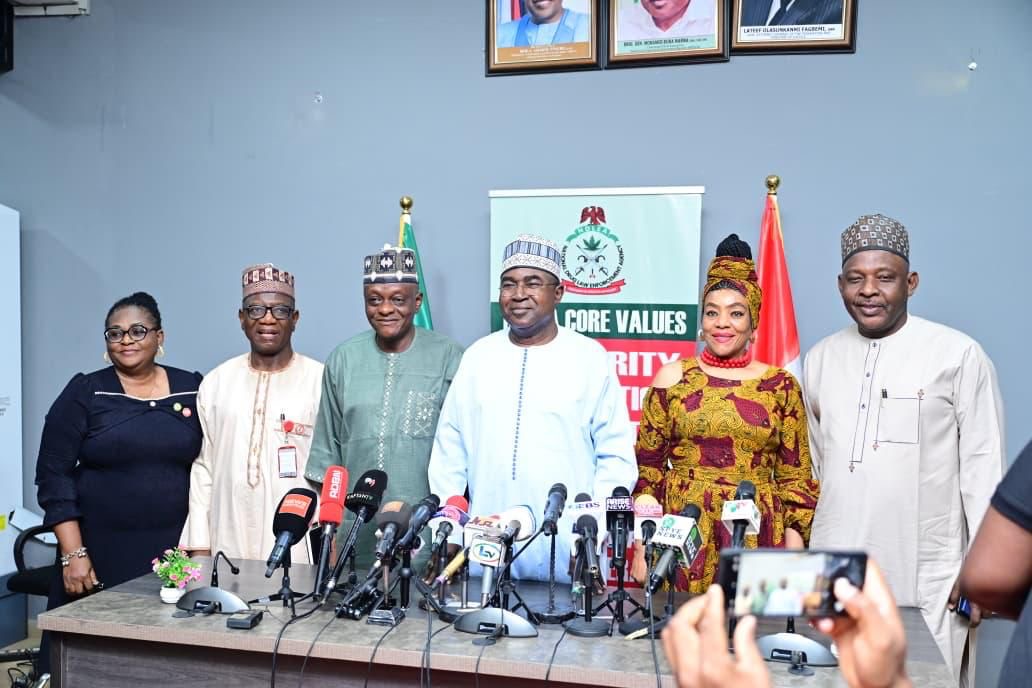


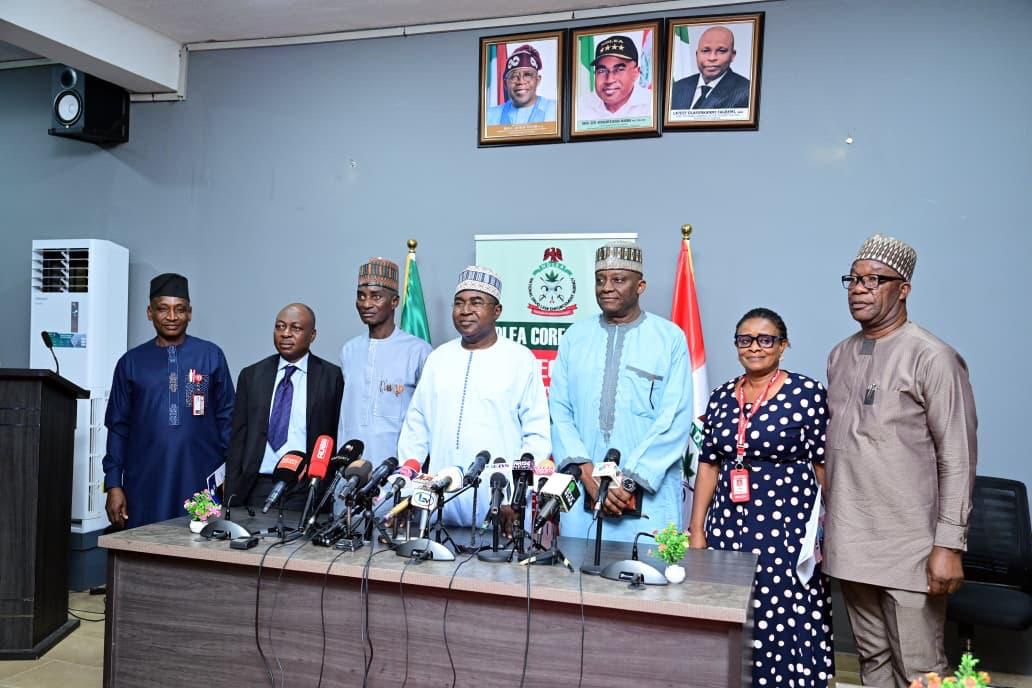
. .says it’s people-centred intervention to uplift communities, strengthen national security, and secure Nigeria’s future
Chairman/Chief Executive Officer of the National Drug Law Enforcement Agency (NDLEA) Brig Gen Mohamed Buba Marwa (rtd) has called for a strong national response and sustained support for the alternative development programme recently initiated to curb illicit cannabis cultivation, uplift rural communities and strengthen national security.
Marwa spoke at a press conference in Abuja on Tuesday 3rd February 2026 to drum support for the first in Africa drug control initiative, which pilot scheme was launched in three cannabis growing communities in Ondo state last week.
While explaining the alternative development strategy of drug control, the NDLEA boss said the concept goes far beyond crop substitution, stressing that “its wider benefits include: strengthening rural economies through value-chain development; reducing the burden on law enforcement and the justice system; promoting peace and social cohesion in previously crime-prone areas; supporting national food production and agricultural diversification; improving Nigeria’s international standing in global drug control and development cooperation.”
According to him, “this approach represents a win-win solution—for communities, for government, and for national security. The successful take off of the pilot scheme in Ilu Abo, Ifon, and Eleyewo in Ondo state last week clearly demonstrates that alternative development works when communities are engaged, supported, and empowered.
We therefore call for a strong national response and sustained support from all stakeholders across all layers of government, traditional rulers and community leaders, development partners and donor agencies, the private sector and agricultural value-chain actors as well as civil society organisations and the media.”
He also urged communities across the country, particularly those affected by illicit drug cultivation, to embrace the model and work with the NDLEA in building lawful, productive, and secure livelihoods. “Let me reiterate that the alternative development programme is not just a drug control initiative; it is a people-centred development intervention designed to uplift communities, strengthen national security, and secure Nigeria’s future.”
He assured that the Agency “remains fully committed to expanding this programme nationwide, in partnership with all stakeholders, as we collectively build a safer, healthier, and more prosperous Nigeria in alignment with the renewed hope agenda of the President Tinubu administration.”
Speaking on the successful flag-off of the scheme in Ondo state, Marwa said “one of the most encouraging outcomes of this pilot project has been the overwhelming acceptance and support expressed by the host communities and their traditional and community leaders. They have openly stated that this programme has renewed their hope in Nigeria and restored their confidence in government. They recognize that Alternative Development offers a dignified and lawful source of income for farmers; reduction in poverty and vulnerability, especially among rural households; improved food security through the introduction of viable alternative crops; enhanced community stability and safety, as illicit drug cultivation often fuels criminal networks and insecurity.”
He noted that replacing cannabis cultivation with sustainable agricultural and economic opportunities, the programme directly tackles the root causes of drug production rather than merely treating the symptoms.
The NDLEA boss said the dire reality of illicit cannabis cultivation and use in Nigeria made the Agency to look beyond law enforcement and consider a United Nations endorsed alternative to solving the cannabis conundrum. “The evidence-based comprehensive data on drug use in Nigeria exposes a bleak and deeply troubling reality. According to the 2018 National Drug Use Survey, conducted by the National Bureau of Statistics with technical support from the United Nations Office on Drugs and Crime (UNODC), an estimated 14.4 per cent of Nigerians aged 15–64 years — or roughly 14.3 million people — reported using at least one psychoactive substance in the past year, a figure that is more than twice the global prevalence of drug use. Cannabis stands starkly at the centre of this crisis, dominating both patterns of consumption and the illicit cultivation landscape.”
He further disclosed that “cannabis is not a marginal issue in Nigeria – it is the most frequently used and widely available illicit drug in the country. An estimated 10.6 million adults – more than one in every ten Nigerians in the prime of life – reported using cannabis in the past year, far outstripping the use of other drugs. The severity of the problem extends beyond consumption into widespread cultivation and organized production. Field assessments focusing on high-risk areas in the South West reveal that nearly 8,900 hectares of land are under cannabis cultivation, often hidden deep within forests and remote regions. These illicit farms are clustered and interconnected, hinting at organized networks that not only supply domestic demand but also facilitate trafficking beyond Nigeria’s borders.”
Painting a grim picture of the challenge, Marwa said “the social and public health implications are stark. With youth and adults alike turning to habitual cannabis use often initiated in late adolescence the nation faces the threat of long-term health consequences, increased dependency, and cascading social harms, including lost productivity, crime, and the burden on overstretched healthcare systems. More revealing is the fact that out of a total of 15 million kilograms of assorted illicit drugs seized by NDLEA in the past five years, over 75 percent of them are cannabis. Just imagine the harm that quantity would have done to our youths, public health and national security.”
He however expressed confidence that the alternative development initiative will reverse the trend if given strong national response and sustained support because it’s fully aligned with the Renewed Hope Agenda of President Bola Ahmed Tinubu administration.
He commended national stakeholders and international partners that have shown support for the initiative.
“This pilot project was flagged off with the invaluable support of several global institutions and partners, including the United Nations Office on Drugs and Crime (UNODC); the International Institute of Tropical Agriculture (IITA), Global Partnership on Drug Policies and Development (GPDPD), Berlin, Germany; Mae Fah Luang Foundation under Royal Patronage (MFLF), Bangkok, Thailand; as well as support from friendly countries and development partners committed to sustainable livelihoods and community resilience, including friends and partners who participated virtually from Nigeria, Ghana, South Africa, Germany, Thailand, Peru, Colombia, Brazil, Mexico, Netherlands, Myanmar, Bhutan, Laos, Afghanistan, Iran, and Guatemala. Also significant was the presence and support of Ondo State Governor, Dr. Lucky Ayedatiwa and the Minister of Agriculture and Food Security, Senator Abubakar Kyariwho was ably represented by the Regional Director Southwest, Mrs. Alao Temitayo.”


By Gloria Ikibah
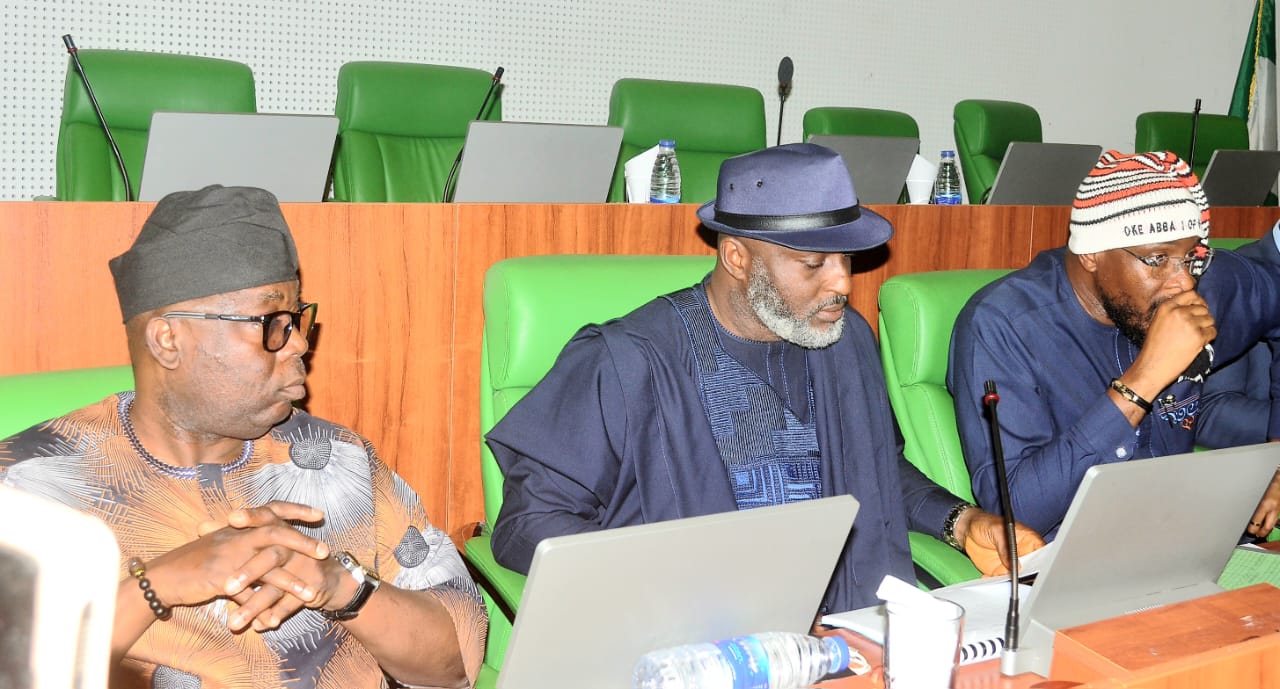
A fresh layer of scrutiny has been placed on billions of dollars in international health funding as the House of Representatives resumed its investigative hearing into grants received by Nigeria for the fight against major infectious diseases.
Chairman House Committee on Infectious Diseases, Rep. Amobi Ogah, in his opening remarks at the hearing on Wednesday in Abuja, called for transparency, cooperation and renewed commitment from all stakeholders involved in managing the funds.
“I want to welcome you all to this resumed hearing on the need to investigate the over $1.8 and $2.8 billion dollars grant received by Nigeria from Global Fund and USAID from 2021–2025,” he said.
Ogah reminded stakeholders that the probe followed a formal mandate by the House in October 2025, adding that earlier sessions had been delayed by public holidays.
He emphasised that the inquiry should not be misconstrued as an attempt to target individuals or organisations.
“You will recall that the House of Representatives… passed the resolution mandating the committee… to investigate this matter and report back.
“After a protracted delay… we are resuming the hearing and the committee is calling for the maximum cooperation of key stakeholders.
“I must reiterate that this exercise is not to witch-hunt anybody, nor a vendetta,.
“Rather it is borne out of the desire to put Nigeria and Nigerians in the epicentre of all our policy thrust, especially on issues of public health threats,” Ogah stated.”
The Committee Chairman explained that the investigation also aimed to reassure international donors of Nigeria’s commitment to proper financial management.
“It is also to restore confidence in our international donor partners… and to ensure that whatever grant we receive must be judiciously expended,” he added.
While acknowledging the contributions of development partners and health actors, Ogah signalled tighter legislative oversight going forward.
“Permit me to remind the Global Fund Country Coordinating Mechanism Nigeria that the National Assembly will request the submission of all implementation plans to the Parliament for approval.
“We also expect quarterly reports of the activities of all recipients and sub-recipients”, he said.
He noted that these measures would become effective as Nigeria prepares for the next phase of Global Fund financing.
Looking ahead, Ogah warned that the country’s ambition to eliminate major infectious diseases by 2030 may be slipping out of reach.
Rep. Ogah called for better coordination across the health sector to avoid waste and duplication.
“I believe we are at a decisive turning point and it is apparent that the target of eliminating all public health threats by the year 2030 may no longer be feasible.
“However, we must not fold our hands… much needs to be done to maximise and efficiently utilise the resources at our disposal.
“There is need to streamline what state actors and non-state actors are doing… so that resources can be efficiently allocated,” Ogah urged.
Reaffirming the committee’s role, he said that the Committee will continue to provide the legislative support to “ensure full implementation of the response against HIV/AIDS, tuberculosis, malaria and other infectious diseases in our country.”
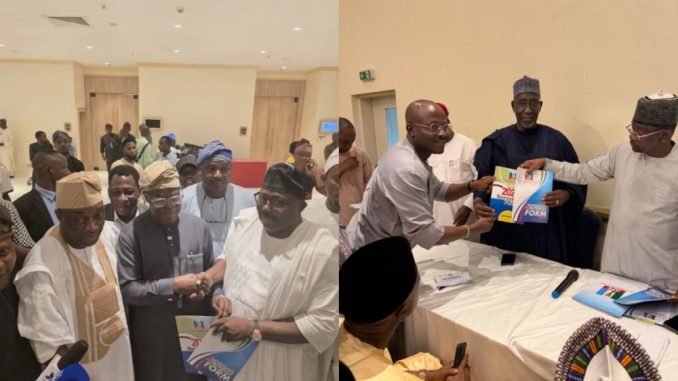
Two major gubernatorial aspirants on the platform of the All Progressives Congress, APC, in Oyo State, Mr Adebayo Adelabu and Barrister Sharafadeen Alli, have picked the party’s Expression of Interest and Nomination forms ahead of the 2027 general elections.
The duo picked the forms on Wednesday in Abuja.
Adelabu is the immediate past Minister of Power and hails from Ibadan.
Alli, on the other hand, currently represents Oyo South Senatorial District on the platform of the APC.
He is also an indigene of Ibadan, the state capital.
Recall that Adelabu’s Personal Assistant, Mr Ajiboye, picked up the form on behalf of his boss at the APC Secretariat in Abuja.
Alli, on his part, collected the form himself in Abuja.
Alli was accompanied by some members of the House of Representatives, among whom were Remi Oseni, Akeem Adeyemi, Olamiju Alao-Akala, and Akin Alabi.

The Nigerians in Diaspora Commission (NIDCOM) has urged the government of South Africa to step up protection for Nigerians and other black immigrants following reports of renewed xenophobic violence.
In a statement issued on Wednesday, April 29, NIDCOM Chairman/CEO Abike Dabiri-Erewa warned that the situation had worsened despite earlier diplomatic engagements between both countries.
According to the commission, recent reports suggest children of Nigerian descent are now afraid to attend school, while business owners are reluctant to open their shops for fear of looting, harassment and targeted attacks. Community leaders have also documented fresh incidents of violence and intimidation within the past 72 hours.
NIDCOM appealed to South African authorities to take “urgent and visible steps” to safeguard foreign nationals, citing obligations under international law and African Union protocols on free movement and human rights.
The commission rejected what it described as the profiling of Nigerians, stressing that crime should be treated as an individual matter. “Crime has no nationality,” the statement said, adding that offenders should be prosecuted under South African law rather than entire communities being stigmatised.
Among its demands, NIDCOM called for increased police patrols in areas where Nigerians live and work, swift arrests and prosecutions of perpetrators, and the creation of a joint Nigeria-South Africa community safety forum involving police, city officials and diaspora leaders.
The commission also urged South African authorities to issue clear public messages condemning xenophobia and stereotyping.
Nigerians living in South Africa were advised to remain law-abiding and avoid high-risk areas after dark. NIDCOM said it is in contact with the Nigerian High Commission in Pretoria, the consulate in Johannesburg, and Nigeria’s Ministry of Foreign Affairs.
While condemning the attacks, the commission praised the majority of South Africans who continue to live peacefully with other Africans, expressing confidence in the longstanding ties between both nations and pledging continued diplomatic engagement to protect Nigerians abroad.

Reps probe $4.6bn health grants, demand stricter oversight

Arsenal Hold Atlético Madrid To 1-1 Draw In UCL Semi-Final

2027: Adelabu, Alli pick APC governorship nomination forms




-
 News21 hours ago
Court bars INEC from recognising ADC congresses conducted by Mark-led C’ttee
-

 News21 hours ago
Police nab suspects over alleged removal of 19-yr-old girl’s womb
-
 News21 hours ago
Unbelievable: Police say officer who publicly executed handcuffed Delta man was under “spiritual attack”
-

 News16 hours ago
BREAKING: Supreme Court fixes date for verdict on ADC, PDP leadership tussles
-
 News16 hours ago
Senate confirms Yuguda as CBN deputy governor
-

 Economy16 hours ago
See Black Market Dollar To Naira Exchange Rate Today 29th April 2026
-
 News17 hours ago
Reps back digital overhaul of election petition procedures
-
News15 hours ago
Lawmakers Move To Establish Military Strategy Hub