Findings by Saturday PUNCH show that the attack was the result of a calculated expansion of a jihadist front that the country’s security architecture failed to halt despite prior warnings.


At the centre of the bloodshed is Abubakar Saidu, popularly known as Sadiku, a terrorist commander whose violent trail spans more than a decade and northern region of the country.
For years, Sadiku remained a shadowy figure within the insurgency landscape. 
But investigations reveal a 12-year evolution that saw him rise from a handpicked lieutenant of the late Boko Haram leader, Abubakar Shekau, in 2014, to what security analysts now describe as the “Shekau of the North-Central” by 2026.
As sustained military pressure weakened Boko Haram’s strongholds in the North-East, Sadiku migrated westward, embedding himself in the vast forest corridors of Niger and Kwara states.
From there, he orchestrated a campaign that crippled farming communities, displaced families, and ultimately culminated in one of the deadliest mass killings recorded in Kwara State.
From Shekau’s lieutenant to ruthless kingpin
Security findings indicate that Sadiku was originally deployed by Boko Haram to Niger State as a trusted operative tasked with expanding the group’s influence beyond its traditional North-East base.
A self-styled counterterrorism analyst on X, MobilisingNigeria, traced Sadiku’s ascent within the insurgency to his close ties with the late Shekau, who personally selected him to represent Boko Haram’s interests in Niger State.
“He later worked with Dogo Gide to expand into the North-Central terrain and also collaborated with the Darul Islam terrorist group before the police dismantled it,” the analyst wrote.
For a period, Sadiku maintained an alliance with notorious bandit kingpin Gide, leveraging the partnership to acquire weapons, intelligence, and local influence.
However, ideological disagreements eventually fractured the alliance, leading to violent clashes that claimed fighters on both sides.
Following the split, Sadiku retreated deeper into the forests, eventually establishing a base within the Kainji Forest Reserve in July 2025.
Observers note that this marked a turning point in his operations, as he abandoned transactional banditry for a more rigid, ideologically driven campaign of terror.
Kainji Forest: The ‘new Sambisa’
Stretching across Niger and Kwara states, the Kainji Forest Reserve has emerged as a strategic hub linking insurgents from the North-East with remnants of bandit groups in the North-West.
Security experts describe the forest as Nigeria’s “new Sambisa,” offering cover for recruitment, weapons movement, and coordinated attacks on rural communities across Niger, Kwara, Kebbi, and parts of Kaduna states.
A Kwara-based security expert, who identified himself as Hassan, confirmed that Sadiku’s relocation to the Kainji corridor signalled a dangerous expansion of Boko Haram-style insurgency into the North-Central region.
“For over a decade, Boko Haram violence was largely concentrated in Borno, Yobe and Adamawa.”
“But splinter factions and allied groups are now exploiting forests, weak security presence and porous borders to push westward,” he said.
Who is Sadiku?
In a separate post on X, MobilisingNigeria described Sadiku as a factional leader of Boko Haram who relocated from the North-East to establish new bases in the North-West and North-Central regions.
“Sadiku is equated to Shekau. Military pressure in the North-East forced him to move toward the North-West and North-Central as new bases,” the analyst wrote.
A West and East Africa security tracker, Brandon Phillips, also linked Sadiku’s faction directly to the Woro massacre.
Phillips revealed that the attack occurred less than four kilometres from Nuku, where fighters of Jama’at Nusrat al-Islam wal-Muslimin, an Al-Qaeda affiliate in the Sahel, claimed their first-ever attack in Nigeria in October 2025.
According to him, the proximity suggests an operational overlap between JNIM and the Sadiku-led Boko Haram faction, pointing to either an opportunistic alliance or a non-aggression pact.
Phillips further noted that the Woro massacre followed a similar pattern to recent attacks in the Papiri area of Niger State, indicating a continued southward push by Sadiku’s faction toward areas of the Kainji Reserve dominated by JNIM.
In another post dated January 11, he disclosed that operational links between JNIM and the Sadiku-led Jama’atu Ahlis Sunna Lidda’adati wal-Jihad faction became increasingly evident between November and December 2025.
During that period, Sadiku reportedly redeployed most of his fighters into JNIM-controlled areas of Kwara, Niger and southern Kebbi states.
Phillips also linked JNIM to the Papiri kidnapping of Catholic children, noting that some abductees were held in a JNIM camp following an operation carried out by Sadiku’s faction.
“These attacks have occurred within established JNIM operational zones, suggesting continued cooperation between the two groups,” he wrote.
Another security researcher, Raheem Mutiu, corroborated these findings, noting that JNIM fighters were spreading across Kaiama, Baruten, Borgu and surrounding areas near the Kainji Forest Reserve.
He added that these territories were initially controlled by the Mahmuda group, whose influence waned sharply after the arrest of its leader in August 2025.
African conflict researcher James Barnett observed that the brutality of the Woro massacre distinguished Sadiku’s group from the Mahmudawa faction, which previously focused on preaching and social issues, with violence largely occurring in response to military operations.
Following the arrest of the Mahmuda leader, Barnett said some fighters joined Sadiku’s faction, while others fled to Benin Republic, consolidating Boko Haram splinter control around the Kainji axis.
The warning letter, the execution
Findings revealed that the Woro community was warned weeks before the attack.
The village head, Salihu Umar, confirmed that a letter written in Hausa and dated 19 Rajab 1447 (January 8) was delivered to him about three weeks before the massacre.
The letter, signed by JAS, stated that the group wished to “secretly” meet with community leaders to preach and would not harm residents.
Umar said he photocopied the letter and submitted it to the Kaiama Emirate, while also forwarding a soft copy to the Department of State Services office in Kaiama.
On the day of the attack, eyewitnesses indicate that the gunmen arrived in Woro around 5pm on motorcycles, armed with AK-47 rifles and explosives.
They surrounded the community, blocking all exit routes.
At about 6pm, the attackers stormed the Emir’s palace, dragged out his family and set the building ablaze. At the same time, sporadic gunfire rang across the town.
Residents reported seeing a white helicopter with markings hovering over the area briefly, but it departed without intervention.
Between 6.30pm and 8pm, the attackers entered what survivors described as an “execution phase,” rounding up men, binding their hands behind their backs, and killing them.
A military aircraft reportedly returned around 8pm, forcing the attackers into nearby bushes. Believing the danger had passed, some residents emerged from hiding around 9pm.
The assailants regrouped, using the call to prayer as a ruse to lure people out before resuming the killings.
The violence subsided around 2am, as the terrorists retreated into the forest with abducted women and children.
Survivors recount horror
Survivors of the assault on Woro community in Kaiama Local Government Area of Kwara State said heavily armed terrorists stormed the town in a coordinated operation that lasted for hours.
A survivor, ZulQharnain Shero Musa, who is the Special Assistant on Media to the Kaiama Local Government Chairman, said, “The assailants, who are believed to be operating from a dense forest area around Kaiama, stormed the community in large numbers. They arrived mostly on motorcycles, with two people on each bike, numbering hundreds.
He said, “They were heavily armed with sophisticated weapons, including AK-47 rifles, pump-action guns and explosive devices. Unfortunately, there was no immediate security presence in the community at the time they arrived.”
He explained that the attackers surrounded the village, moving from house to house, dragging residents out and executing them.
“They also went to the emir’s palace, brought out his wife and children, set the building on fire around 6pm and began shooting sporadically across the town.
“Motorists travelling along the busy federal road passing through the community were also stopped and attacked. It was a coordinated and systematic assault.”
According to him, many residents fled into nearby bushes and farmlands in desperation, but some were shot while attempting to escape.
“There was a brief moment when a white helicopter with markings flew over the area but left without intervening. After it departed, the attackers intensified the killings from about 6pm until around 8pm.
“Later, a suspected military aircraft returned, forcing the attackers to temporarily withdraw. But once it left again, the assailants regrouped and resumed attacks under the guise of calling people for prayers. The violence continued until about 2am,” he added.
Musa said over 200 people were feared dead, with mass burials still ongoing.
“Between Wednesday and Thursday alone, about 170 bodies were buried, while many others were still being searched for. Women were abducted and taken deep into the forest. Bodies are still being recovered from bushes, rivers and farmlands.
“About 95 per cent of those killed were Muslims, while around five per cent were Christians.”
He described the current state of Woro and neighbouring villages as devastating.
“Almost everywhere is deserted. People are terrified and have fled their homes. These forest areas are known to host illegal mining activities and have long been inaccessible to locals. The group has established settlements there with houses and boreholes. Farmers can no longer access their farmlands, and economic activities have completely collapsed.
“As recently as 4:30am on Thursday, fresh gunshots were heard from distant farmlands, suggesting the attackers were still active,” he stated.
Another survivor, Aliyu Abdul Hamid Jogodo, also known as Omo Salka, said the attackers kidnapped his friend’s mother.
“They also killed my boss’s brother, Dr Muhammad Yusuf, who was the officer-in-charge of the Woro Primary Health Care centre. The pain is unbearable,” he said.
Jogodo said he escaped by running into the bush when the shooting started and remained there till morning.
He appealed to the government for urgent assistance, including security deployment and relief materials.
A trader, Ruqqoyat Solihudeen, said the attackers disguised themselves as soldiers.
She said, “They wore full military gear, and one of them was a woman carrying ammunition. She even wore a hijab, which made them look convincing.
“They passed in front of our shop heading towards Woro from the Kaiama direction. We did not suspect anything until gunshots started moments later.”
Solihudeen said she escaped after pretending nothing was happening before running to safety.
“My seven-year-old stepsister who has a chronic illness was kidnapped while attending a family event. Another elder sister was also abducted. We don’t know their condition, and I’m not sure my younger sister can survive in the kidnappers’ den.”
She added that many houses and shops were burnt during the attack.
“A woman popularly known as Iya Bag from the Kishi community lost all her property. The attackers set her house on fire, believing the family was inside, but they escaped through the back window.”
She pleaded for swift government intervention.
Why security agents failed – Intelligence officers
The head of Woro village, Umar Salihu, during an interview on ARISE News on Thursday, said calls were made to authorities immediately the attacks started, but soldiers arrived about 3am, 10 hours after the distress calls.
According to Salihu, the attackers had already fled by the time the military arrived.
A senior officer of one of the intelligence agencies in the country told Saturday PUNCH that the bandits planted explosive devices on the road to the community to prevent the intervention of security personnel.
According to the officer, who was knowledgeable about the rescue operation, a security team was deployed in the communities immediately distress calls were made.
But the rescue team did not gain access to the communities until after the attackers had fled.
“The security was alerted and personnel were deployed immediately. But there was intelligence that the bandits had already planted explosives on the route to the communities. They tactically manoeuvred, but a truck was hit by the explosives. That slowed down the rescue efforts because you have to be safe first before rescuing other people in danger.
“The security is overstretched; while we were attending to emergencies in some areas, the bandits would strike in another area and before deploying personnel there, they would have attacked another area. It is a serious challenge; we (security personnel) cannot be everywhere,” he said.
Similarly, a police officer in Ilorin, who visited Woro last year, said the communities where the attack took place were over an hour’s journey from Kaiama.
He also confirmed that “from available information,” the bandits planted explosives on major roads leading to the communities, making rescue efforts impossible.
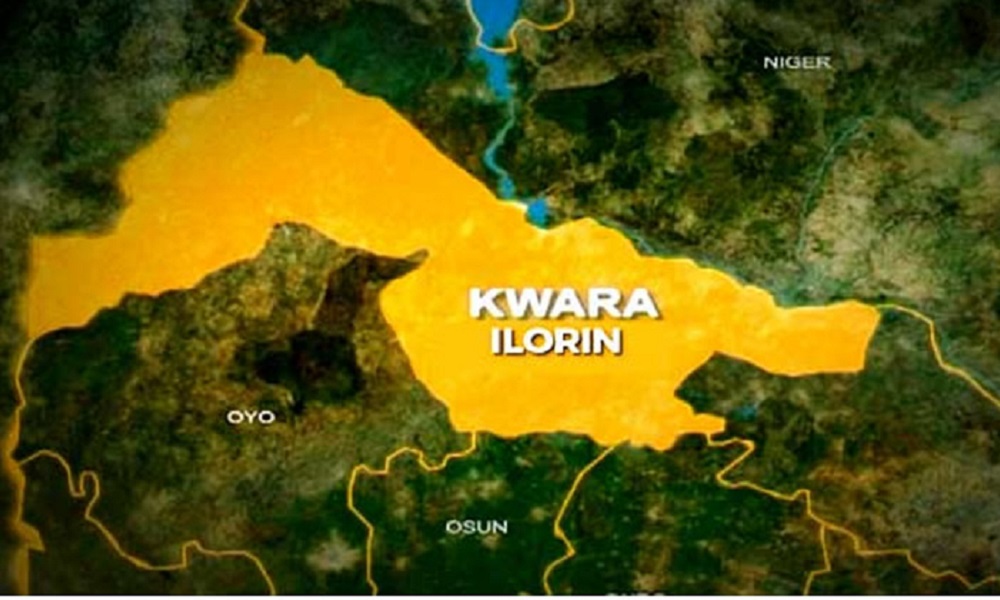
“Kaiama is over six hours’ drive from Ilorin; it will take eight hours if you go with commercial vehicles. Woro and Nuku are over an hour’s drive from Kaiama. They are remote communities, very close to Niger State and the Benin Republic. The area also links Oke-Ogun in Oyo State.
“From available information, the bandits might have come from the Kainji National Park axis in Niger. From what we gathered, the bandits stormed the communities on motorcycles. They had planned the attack for days. They also planted explosives in some areas to prevent rescue operations by security agents.
“They came through the forest around 5pm, camped at a school and started shooting sporadically around 6pm. They did not have a particular target; they were just killing people. They shot road users, including drivers and riders,” he added.
A security expert, Kabiru Adamu, warned that attacks by terrorists would persist unless structural reforms are implemented and agencies are held accountable.
Speaking with Saturday PUNCH, Adamu said the persistence of vulnerabilities within the national security system, weak accountability, porous borders and limited coordination among security institutions would likely sustain the cycle of violence.
He noted that recent attacks across several states reflected a pattern rather than isolated incidents, stressing that security threats would remain as long as systemic weaknesses were left unresolved.
Adamu said, “I foresee these attacks persisting. Anyone who understands security knows that the first step is to identify the security vulnerabilities and block them, that is the best way to prevent threats. But we have not taken adequate measures to address these gaps, so they persist, almost daily.
“Our rural areas remain poor, and security presence there is thin. Our borders are still porous; law enforcement and the justice system remain extremely weak. State governors are not adequately delivering on public security, yet they collect security votes monthly and chair their state security councils. As far as I know, none has abdicated that responsibility, yet little has changed.
“Another problem is the inability to hold security authorities accountable. In the Kwara case, the incident happened on the 3rd and today is the 6th, not a single person has been queried or given an administrative warning, despite over 170 citizens reportedly killed. The same pattern followed incidents in Niger and Kaduna, including the abduction of churchgoers. No public official was held accountable.
“As long as these conditions remain, such incidents will continue. The biggest issue is our failure to decisively go after the perpetrators. We are handling them with kid gloves. They continue operating, raising funds, acquiring weapons, and obtaining motorbikes and fuel. Where, then, is the seriousness?”
Govt sets up committee, 50 survivors hospitalised
Meanwhile, the Kwara State Governor, AbdulRahman AbdulRazaq, has approved the constitution of a seven-member committee to engage the Woro community on the humanitarian intervention earlier announced by the state government.
The move is aimed at providing immediate relief and coordinating rebuilding efforts in the community following the recent deadly attack.
In a statement on Friday, the Chief Press Secretary to the Governor, Rafiu Ajakaye, said the committee would be chaired by a former lawmaker representing Kaiama Local Government Area, Ahmed Kiwozi.
The committee also has a female representative from the Office of the Secretary to the State Government.
According to the statement, the committee has a four-week mandate to interface with community leaders, assess the needs of survivors, coordinate reconstruction of damaged homes, and address other critical humanitarian concerns.
The senator representing Kwara North at the Senate, Sadiq Umar, said more than 50 survivors of the attacks were receiving treatment in hospitals in Ilorin, the state capital.
Sadiq, who visited the victims at the hospitals on Friday, sympathised with them, describing the incident as heartbreaking and prayed for their speedy recovery.
He also reassured the victims of his continued support during their period of recovery.
The senator called for sustained security operations across Kwara North, noting that the district had continued to experience security challenges.
He urged residents to remain united, hopeful, and prayerful, while reaffirming his commitment to the wellbeing of his constituents and praying for lasting peace in the region.
(Credit: PUNCH)