…as Reps say 2026 budget must align with Nigeria’s national security priorities


By Gloria Ikibah
The Chief of Defence Staff (CDS), General Olufemi Oluyede, has called for the urgent need to strengthen of the Nigeria Police Force (NPF) and Nigeria Security and Civil Defence Corps (NSCDC) to consolidate gains recorded by the Armed Forces in the fight against insurgency and banditry across the country. 
General Oluyede who stated this during the 2025 budget appraisal and the 2026 budget defence on Tuesday in Abuja, the police and civil defence corps, has larger personnel strength and wider community reach than the Armed Forces, and should be adequately equipped to take over and secure areas already cleared of criminal elements by the military.
“If these institutions are strengthened, they can effectively hold and secure territories where the Armed Forces have succeeded, ensuring that such areas remain safe,” the CDS said.
Giving an update on the country’s security landscape, Oluyede said plans had been finalised to deploy special forces to Kwara State and parts of Niger State in response to the recent rise in insecurity. He emphasised, however, that the task of restoring safety could not be left to the Armed Forces alone.
He also reassured Nigerians that fresh operations were being intensified to confront persistent security challenges in the Middle Belt, especially in Benue and Plateau states, with troops moving proactively to flush out criminal elements from their strongholds.
“We are doing everything within our capacity to ensure that Nigeria becomes safer.
“As we speak, the situation has improved significantly in the North-East. In the North-West, we still face serious challenges, and the same applies to parts of the North-Central, including Benue, Plateau and even Kwara. But we are evolving modalities to address these challenges within the resources available to us”, the CDS said.
He also said that new special forces had been deployed to Benue and Plateau, while a new Joint Task Force, code-named Operation Savannah Shield, will be inaugurated to specifically cover Kwara State and parts of Niger State.
“We are pulling resources from other theatres to strengthen this operation and ensure improved security in the area,” he added.
The CDS further stated that Nigeria was in partnership with some allied countries to bridge gaps in intelligence gathering, and such partnerships were being streamlined to safeguard the country’s sovereignty.
“Our partners have been quite helpful, particularly in intelligence. But we are careful to streamline these collaborations in line with the guidelines of Mr President, to ensure that Nigeria’s sovereignty is not compromised,” he stated.
Oluyede lamented that the Armed Forces is challenged with adequate manpower and so cannot be deployed everywhere, he added that continuous movement of troops from one theatre to another had placed enormous strain on personnel.
“The soldiers hardly have rest because we don’t have the numbers. Recruiting more personnel comes with other challenges—housing, logistics and welfare. That is why strengthening the police and civil defence is critical. They have more men and better reach to fill the gaps after military operations,” he said.
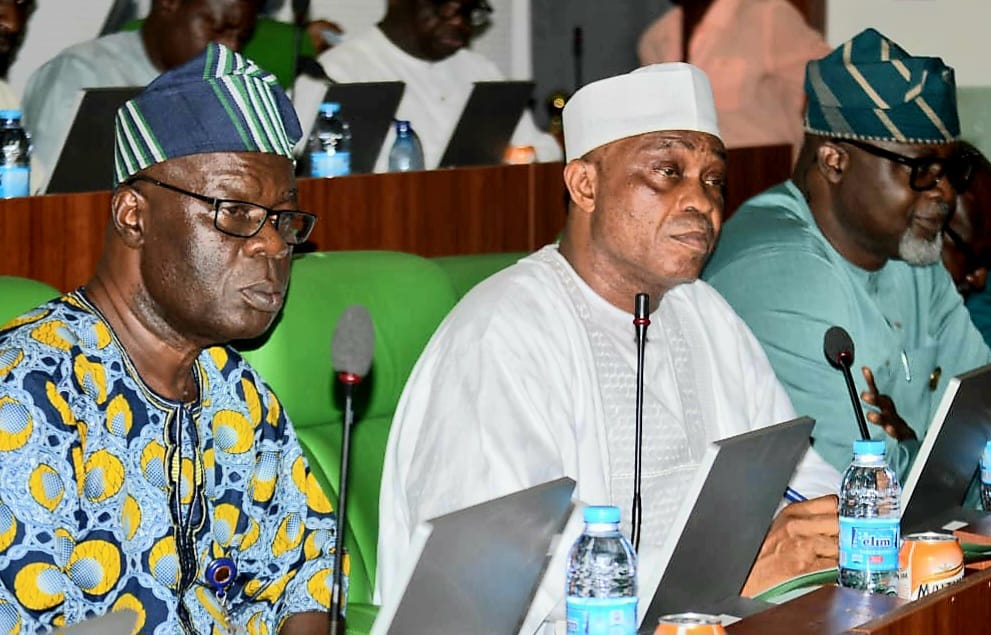
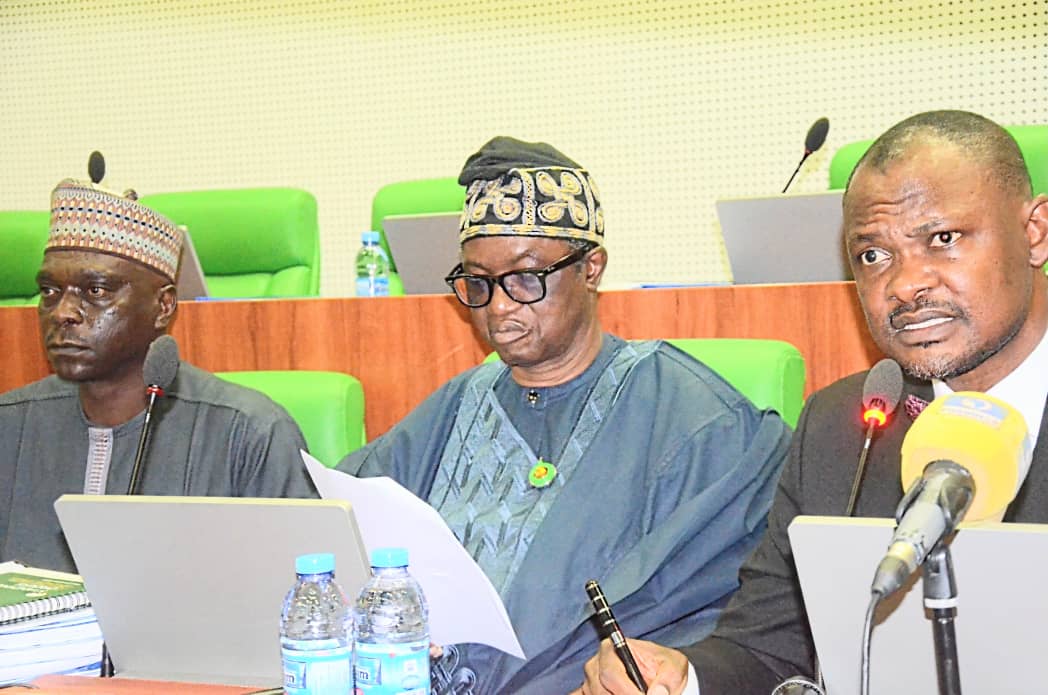
Earlier in his welcome remarks, Chairman House Committee on Defence, Rep. Babajimi Benson said Nigeria’s current security challenges cannot be solved through force alone.
While recognising the progress made by the Armed Forces and other security agencies, Rep. Benson argued that lasting peace would only be achieved by combining military action with well-planned non-kinetic strategies.
“The defence and security sector occupies a central place in Nigeria’s development discourse. No nation can make sustainable progress without guaranteeing the safety of lives, property and critical national assets,” he said.
He pointed out that ongoing security threats highlighted the urgent need for deeper institutional reforms, stronger collaboration among security agencies and more strategic use of limited resources.
Benson noted that higher budgetary allocations must be backed by clear results, value for money, transparency and accountability.
“The era of input-focused budgeting without commensurate impact is no longer acceptable. Nigerians expect results that translate into safer communities, restored livelihoods and renewed confidence in the authority of the state,” he added.
He therefore called for a whole-of-government and whole-of-society approach to security, urging increased investment in strategic communication, community peacebuilding, defence intelligence systems, cyber defence, border security technology, police reforms and inter-agency data fusion centres.
According to him, the 2026 budget proposals must clearly reflect a balance between military capability and the tools required for sustainable peace.
Benson restated the commitmentof the 10th House of Representatives’ to peace, unity and national security, pledging the Committee’s support for initiatives aimed at strengthening Nigeria’s defence framework through local defence production, research and development, improved welfare for personnel and modernisation driven by efficiency, transparency and innovation.
He further emphasised that the 2026 budget must align closely with Nigeria’s national security priorities and ongoing reforms in the defence sector, insisting that submissions before the Committee must be realistic, properly justified and focused on performance.
He added that the Committee will scrutinise closely issues relating to personnel welfare, training and capacity building, equipment maintenance and modernisation, intelligence gathering, logistics support and the sustainability of ongoing military operations.
“Recurring issues such as abandoned projects, procurement inefficiencies and delays in budget implementation must be decisively addressed,” Benson noted.
He reiterated that oversight remained a core constitutional duty of the House Committee on Defence, emphasising that funds approved by the National Assembly are public resources that must be carefully and responsibly used.
“Appropriations approved by the National Assembly are public funds, and we will continue to track their utilisation to ensure strict compliance with the Appropriation Act and extant financial regulations,” he stressed.
Benson explained that accountability should not be seen as punishment, but as a shared responsibility that builds public trust and strengthens institutional credibility.
“Our oversight is not an obstacle but a necessary catalyst for efficiency and effectiveness. We stand ready to advocate for the resources the Armed Forces genuinely require to succeed. However, this partnership is predicated on mutual transparency, a shared vision and an unyielding commitment to measurable results,” he added.
He again affirmed the House of Representatives’ firm commitment to the peace, unity and security of the country, noting that the Committee on Defence will continue to back efforts aimed at expanding local defence production, boosting research and development, improving personnel welfare and modernising Nigeria’s defence architecture.
“These efforts are driven by our conviction that a strong, professional and well-motivated military is indispensable to national stability. This budget defence session should therefore be seen not merely as a routine legislative exercise, but as a collective opportunity to recalibrate our approach to securing Nigeria today and safeguarding her future,” Benson said.