Foreign
Check Out The Top 10 Countries with the Weakest Military in the World In 2026 Rankings
The 2026 Global Firepower Index ranks the 10 weakest militaries in the world, with Bhutan, Belize and the Central African Republic recording the highest PowerIndex scores among 145 nations assessed.
Global military strength remains uneven, with wide gaps between major powers and smaller or conflict-affected states. The 2026 Global Firepower Index ranks 145 countries using more than 60 indicators, including manpower, equipment, defence spending, logistical capacity, geography and resource access.

Under the index methodology, a lower PowerIndex score indicates stronger military capability, while a higher score reflects weaker overall capacity. The following ten countries recorded the highest PowerIndex scores in 2026, placing them at the bottom of the global military strength rankings.
10 Countries with the Weakest Military in the World
10. Moldova
Rank: #136
PowerIndex: 3,6225

Moldova Military Force
Moldova ranks 136th out of 145 countries, with a PowerIndex score of 3.6225. The Eastern European nation maintains a relatively small and lightly equipped military force. Limited defence funding has slowed modernisation efforts, affecting procurement and force expansion. Moldova’s defence posture remains largely defensive, with emphasis on territorial integrity rather than expeditionary capability.
9. Somalia
Rank: #137
PowerIndex: 3.7393

Somalia Military Force
Somalia places 137th with a PowerIndex score of 3.7393. Years of internal conflict have significantly constrained the country’s defence institutions and operational capacity. Although international partnerships and training missions have supported rebuilding efforts, Somalia’s armed forces continue to face structural and resource limitations.
8. Benin
Rank: #138
PowerIndex: 3.8963

Benin Military Force
Benin ranks 138th globally, posting a PowerIndex score of 3.8963. The West African country maintains a modest military establishment focused primarily on internal security and border protection. Rising instability in parts of the Sahel region has influenced greater attention to defence preparedness, though overall capacity remains limited.
7. Kosovo
Rank: #139
PowerIndex: 3.8041
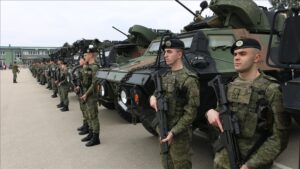
Kosovo Military Force
Kosovo occupies the 139th position with a PowerIndex score of 3.8041. Having formally established its armed forces in 2019, the country remains in the early stages of building a fully structured military institution. Development efforts have focused on training, professionalisation and gradual capability expansion.
6. Sierra Leone
Rank: #140
PowerIndex: 3.9201

Sierra Leone Military Force
Sierra Leone ranks 140th with a PowerIndex score of 3.9201. Its military remains relatively small and constrained by limited funding. More than two decades after the end of its civil war in 2002, the country continues to prioritise stability and institutional rebuilding, with defence capacity evolving gradually.
5. Liberia
Rank: #141
PowerIndex: 3.9275

Liberia Military Force
Liberia stands at 141st globally, recording a PowerIndex score of 3.9275. Similar to neighbouring Sierra Leone, Liberia’s armed forces are modest in size and equipment. The country has focused on rebuilding national institutions following prolonged periods of conflict, resulting in a lean defence structure.
4. Suriname
Rank: #142
PowerIndex: 4.0538

Suriname Military Force
Suriname ranks 142nd with a PowerIndex score of 4.0538. The South American nation maintains a small defence force with limited manpower and equipment inventories. Its relatively stable regional environment reduces immediate external security pressures, shaping a defence model that is compact rather than expansive.
3. Central African Republic
Rank: #143
PowerIndex: 4.2381

Central African Republic Military Force
The Central African Republic places 143rd with a PowerIndex score of 4.2381. Persistent internal security challenges have strained the country’s defence institutions and operational capabilities. External support and partnerships have played a significant role in maintaining security functions amid ongoing instability.
2. Belize
Rank: #144
PowerIndex: 4.3602
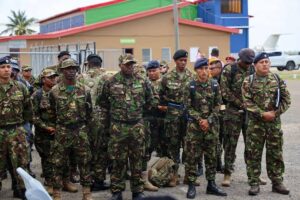
Belize Military Force
Belize ranks 144th globally with a PowerIndex score of 4.3602, making it the second weakest military power in the 2026 index. The Belize Defence Force is one of the smallest in its region, with limited manpower and equipment. However, Belize benefits from relative geopolitical stability and established relationships with larger regional partners.
1. Bhutan
Rank: #145
PowerIndex: 5.7991

Bhutan Military Force
Bhutan occupies the final position at 145th, recording the highest PowerIndex score of 5.7991. The Himalayan kingdom maintains a small volunteer-based army and does not operate a significant air force. Bhutan’s defence posture is shaped by its strategic reliance on close security cooperation with India for external defence support. The gap between Bhutan’s score and that of the next weakest nation reflects a markedly lower overall military capability compared to other ranked states.
Conclusion
Military strength, as measured by the Global Firepower Index, extends beyond troop numbers. Economic resilience, logistics networks, equipment diversity, natural resources and geographic positioning all contribute to overall ranking outcomes. Countries with limited defence budgets or post-conflict rebuilding priorities often score higher on the PowerIndex, reflecting constrained capability rather than immediate vulnerability.
Several of the countries listed operate within relatively stable regional environments or maintain defence partnerships that help offset limited domestic capacity. In some cases, smaller militaries align with national policy choices that prioritise internal stability, diplomacy or economic development over military expansion.
The 2026 Global Firepower Index underscores the wide disparity in global military capability. While Moldova, Somalia, Benin, Kosovo, Sierra Leone, Liberia, Suriname, the Central African Republic, Belize and Bhutan rank at the bottom based on their PowerIndex scores, their security realities differ significantly.
For some, limited military strength reflects economic constraints or post-conflict rebuilding. For others, it aligns with strategic decisions shaped by geography and alliances. The rankings provide a comparative snapshot of defence capacity, but they also highlight that military power is only one dimension of national resilience and security.
Foreign
Iranian Military Warns of $200 Oil Barrel Amid Escalating Gulf Conflict
Iran said the world should be ready for oil at $200 a barrel as its forces hit merchant ships on Wednesday and the International Energy Agency recommended a massive release of strategic reserves to dampen one of the worst oil shocks since the 1970s.
The war unleashed with joint U.S. and Israeli airstrikes nearly two weeks ago has so far killed around 2,000 people, mostly Iranians and Lebanese, as it has spread into Lebanon and thrown global energy markets and transport into chaos.
Despite what the Pentagon has described as the most intense airstrikes since the start of the war, Iran also fired at Israel and targets across the Middle East on Wednesday, demonstrating it can still fight back.
On Wednesday, three vessels were reported to have been hit in Gulf waters as Iran’s Revolutionary Guards said their forces had fired on ships in the Gulf that had disobeyed their orders.
U.S. President Donald Trump, who has not committed to a timeline for military operations, suggested on Wednesday he was not yet ready to call an end to the war.
At a rally in Kentucky, he said “we won” the war, but the United States didn’t want to have to go back every two years.
“We don’t want to leave early, do we?” he said. “We got to finish the job.”
Trump said U.S. forces had knocked out 58 Iranian naval ships and that oil prices would come down and told reporters in Washington that Iran was “pretty much at the end of the line.”
“Doesn’t mean we’re going to end it immediately, but … They’ve got no navy, they’ve got no air force, they’ve got no anti-air traffic anything. They have no systems of control. We’re just riding free range over that country,” he said.
STRATEGIC STRAIT
Trump said the U.S. would now “look very strongly” at the Strait of Hormuz, adding: “The straits are in great shape. We’ve knocked out all of their boats. They have some missiles, but not very many.”
Despite Trump’s words, there has been no sign that ships can safely sail through the strait, a now-blockaded channel along the Iranian coast that serves as a conduit for around a fifth of the world’s oil. An Iranian military spokesperson said the strait was “undoubtedly” under Iran’s control.
Trump said ships “should” transit through the strait but sources said Iran had deployed about a dozen mines in the channel, further complicating the blockade.
On Wednesday, the G7 group of nations – the United States, Canada, Japan, Italy, Britain, Germany and France – agreed to examine the option of providing escort for ships so they can navigate freely in the Gulf.
ABC News said the Federal Bureau of Investigation had warned of Iranian drones potentially striking the U.S. West Coast, although Trump said he was not worried that Iran might launch strikes on U.S. soil.
The State Department also warned that Iran and aligned militias may be planning to target U.S.-owned oil and energy infrastructure in Iraq and warned that militias had previously targeted hotels frequented by Americans.
U.S. and Israeli officials have said their aim is to end Iran’s ability to use force beyond its borders and destroy its nuclear programme.Oil prices, which shot up earlier in the week to nearly $120 a barrel before settling back to around $90, rose nearly 5% on Wednesday amid renewed fears about supply disruption, while Wall Street’s main share indexes fell.
The war has seen ports and cities in the Gulf states, as well as targets in Israel, hit by Iranian drone and missile barrages.
‘LEGITIMATE TARGETS’
The U.S. military told Iranians to stay clear of ports with navy facilities, drawing a warning from Iran’s military that if the ports were threatened, economic and trade centres in the region would be “legitimate targets”.
With prices at the pumps already surging and Trump’s Republican Party trailing badly in the polls ahead of midterm elections in November, oil prices have become an increasingly urgent element in the calculations behind the war.
The International Energy Agency, made up of major oil consuming nations, recommended releasing 400 million barrels from global strategic reserves to stabilise prices, the biggest such intervention in history, which was swiftly endorsed by Washington.
Trump said the IEA decision would “substantially reduce oil prices as we end this threat to America and the world.”
U.S. Energy Secretary Chris Wright said Trump had authorized the release of 172 million barrels from the U.S. Strategic Petroleum Reserve from next week.
The rate at which countries can release strategic reserves will vary and the amount released would account for just a fraction of the supply through the Hormuz Strait.
Iranian officials made clear on Wednesday they intended to impose a prolonged economic shock.
“Get ready for oil to be $200 a barrel, because the oil price depends on regional security, which you have destabilised,” Ebrahim Zolfaqari, spokesperson for Iran’s military command, said in comments addressed to Washington.
After offices of a bank in Tehran were hit overnight, Zolfaqari said Iran would respond with attacks on banks that do business with the U.S. or Israel. People across the Middle East should stay 1,000 metres from banks, he added.
At sea, a Thai-flagged bulk carrier was set ablaze, forcing the evacuation of crew, with three people reported missing and believed trapped in the engine room.
Two other ships, a Japanese-flagged container ship and a Marshall Islands-flagged bulk carrier, were also reported to have sustained damage from projectiles, bringing the number of merchant ships that have been hit since the war began to 14.
IRANIAN OFFICIAL SAYS MOJTABA KHAMENEI LIGHTLY WOUNDED
In Iran, huge crowds took to the streets for funerals for top commanders killed in airstrikes. They carried caskets and brandished flags and portraits of slain Supreme Leader Ayatollah Ali Khamenei and his son and successor, Mojtaba.
An Iranian official told Reuters Mojtaba Khamenei had been lightly wounded early in the war, when airstrikes killed his father, mother, wife and a son. He has not appeared in public or issued any direct message since the war began.
Despite Trump’s calls for Iranians to rise up, U.S. and Israeli hopes that Iran’s system of clerical rule would be overthrown by popular protest have not been borne out.
Iran’s police chief, Ahmadreza Radan, said on Wednesday anyone taking to the streets would be treated “as an enemy, not a protester. All our security forces have their fingers on the trigger”.
Foreign
Iran Is Ready For A Long War With The US – Iranian Official
A top Iranian official has warned that the government is prepared for a long war with the US and signaled that it is willing to continue attacking Gulf countries in an effort to persuade them to convince US President Donald Trump to step back from the conflict.
The warning came in a new CNN interview in Tehran with Kamal Kharazi, foreign policy adviser to the office of the Supreme Leader, who ruled out diplomacy for now and said the war would only end through economic pain, signaling a hardening of the government’s stance on day 10 of the conflict.
“I don’t see any room for diplomacy anymore. Because Donald Trump had been deceiving others and not keeping with his promises, and we experienced this in two times of negotiations – that while we were engaged in negotiation, they struck us,” Kharazi told CNN on Monday.
“There’s no room unless the economic pressure would be built up to the extent that other countries would intervene to guarantee (the) termination of aggression of Americans and Israelis against Iran,” Kharazi said, suggesting that Gulf Arab countries and beyond need to put pressure on the US to end the war.
“This war has been producing a lot of pressure, economic pressure – on others, in terms of inflation, in terms of lack of energy, and so if it will be continued, this pressure will be built up more, and therefore others have no choice (but) to intervene,” he said.
Since the US and Israel launched the war, Iran has struck a slew of countries across the Middle East. Tehran claims it is targeting US interests in Gulf nations but residential buildings and airports have also repeatedly come under attack.
The Iranian strikes have exploited the fragility of the global energy trade including infrastructure and transit routes. Maritime traffic through the Straight of Hormuz has all but collapsed, with crude oil prices surging past $100 a barrel on Monday, rattling wallets and the stock market.
An estimated 20% of world oil supply has been disrupted by the ongoing conflict, roughly twice as big as the record set during the Suez Crisis of 1956-1957, according to historical data from Rapidan Energy Group.
Not only has the war derailed the flow of oil out of the region, it has also effectively wiped out the “spare capacity” that typically serves as a shock absorber in energy markets. Spare capacity measures how much more oil production could quickly get brought back online, if needed.
A spokesperson for the Islamic Revolutionary Guard Corps (IRGC) said Sunday that Iran is using 60% of its firepower to attack US bases and “strategic interests” in the region.
Meanwhile, Mojtaba Khamenei, the second son of former Supreme Leader Ali Khamenei was elevated to the country’s highest post over the weekend, an indication that further escalation is likely.
Asked if the Iranian military and the supreme leadership are as one going forward, Kharazi said: “Yes, exactly.”
“The responsibility of the leader of Islamic Republic of Iran is to lead the defense capability of Iran, and therefore, as Ayatollah Khamenei was doing that, now the new leader would do that,” he said.
Trump said last week that Khamenei’s appointment as his father’s successor would be “unacceptable” to him.
“That is not his business,” Kharazi said.
Foreign
Rocket Attack Intercepted Over US Embassy In Baghdad
Air defence systems intercepted rockets fired at the US embassy in Baghdad, security sources told AFP.
It is the first such attack on the embassy in Baghdad since the start of the war in the Middle East, triggered by a joint US-Israeli attack on Iran, into which Iraq has been dragged.
Loud bangs were heard on Saturday night in Baghdad, AFP journalists said, with a witness near the fortified Green Zone, which houses the US embassy, reporting seeing air defences activated over the area.
“Four rockets were launched… toward the embassy,” a security official said, adding that air defences intercepted three, while one fell in an open area in the embassy’s airbase.
Two other security sources confirmed the attack, with one saying that all rockets were downed, including the one that fell in the airbase.
Prime Minister Mohammed Shia al-Sudani, ordered security forces to find the perpetrators of “the terrorist act” against the US embassy.
He said that “targeting diplomatic missions and embassies operating in Iraq is an act that cannot be justified or accepted under any circumstances.”
Iraq, long a proxy battleground between the US and Iran, had said it did not want to be dragged into the conflict engulfing the Middle East, but it has not been spared.
It was drawn into the war from the outset, with strikes blamed on the United States and Israel targeting Iran-backed groups, which have since claimed attacks on US bases in Iraq and the region.
Drone and rocket attacks have targeted Baghdad International Airport, which houses a military base and a US diplomatic facility, as well as oil fields and facilities.
The northern autonomous Kurdistan region, which hosts US troops, has also been a main target of drone attacks that were largely intercepted.
Late on Saturday, an AFP journalist reported hearing the sound of a drone followed by at least three loud bangs in Kurdistan’s capital Erbil, which also houses a major US consulate complex.
Airstrikes
On Saturday, airstrikes hit military bases belonging to the former paramilitary coalition Hashed al-Shaabi in the northern Nineveh province, the government’s security media cell said.
One fighter was killed and three other wounded.
The Hashed al-Shaabi, or the Popular Mobilisation Forces (PMF), is an alliance of factions now integrated into the regular army, including several Iran-backed groups, which have a reputation for acting on their own.
Bases belonging to Hashed al-Shaabi have been hit several times since the start of the war.
The group’s media cell said Saturday’s strikes were carried out by “unidentified aircraft,” but a PMF official told AFP that “an airstrike, likely American, hit a Hashed base” near the city of Mosul.
Kurdish militants
Iraq’s Kurdistan also hosts camps and rear bases operated by several Iranian Kurdish rebel groups, which Iran has struck repeatedly since the start of the war.
Iran’s Revolutionary Guards said Saturday they have targeted “separatist groups” in Iraqi Kurdistan, after Tehran threatened to target “all the facilities” of Kurdistan if militants were allowed to enter the Islamic republic.
So far, no forces have entered Iran, Iraq’s border guards said.
The Iraqi government and the autonomous region said Friday that Iraq must not be a launchpad for attacks against neighbouring countries.
AFP
-
Economy19 hours agoDollar, Pound, Euro Rates in Nigeria Today – See Full Exchange for March 12, 2026
-
News17 hours agoFormer House Of Reps Speaker Dumps Party, Joins ADC
-
News17 hours agoWoman Writes Billionaire Femi Otedola, Wants Permission to Marry His Son Fewa
-
News15 hours agoCeding oil wells: FG losing 780 hectares of maritime water to corruption -CSOs(Video/Photos)
-
News15 hours agoJust in: Nine senators dump their parties for ADC
-
News17 hours agoPakistan Sends Naval warships to protect commercial ships in Strait of Hormuz
-
News16 hours agoGroup Defends Pipeline Surveillance Contracts
-
News14 hours agoJust in: ADC Wuse Ward suspends FCT Senator, Kingibe