Health
WHO declares Ebola outbreak in DR Congo, Uganda global health emergency
- /home/naijuinz/public_html/wp-content/plugins/mvp-social-buttons/mvp-social-buttons.php on line 27
https://naijablitznews.com/wp-content/uploads/2025/02/Ebola-patients.jpg&description=WHO declares Ebola outbreak in DR Congo, Uganda global health emergency', 'pinterestShare', 'width=750,height=350'); return false;" title="Pin This Post">
- Share
- Tweet /home/naijuinz/public_html/wp-content/plugins/mvp-social-buttons/mvp-social-buttons.php on line 72
https://naijablitznews.com/wp-content/uploads/2025/02/Ebola-patients.jpg&description=WHO declares Ebola outbreak in DR Congo, Uganda global health emergency', 'pinterestShare', 'width=750,height=350'); return false;" title="Pin This Post">
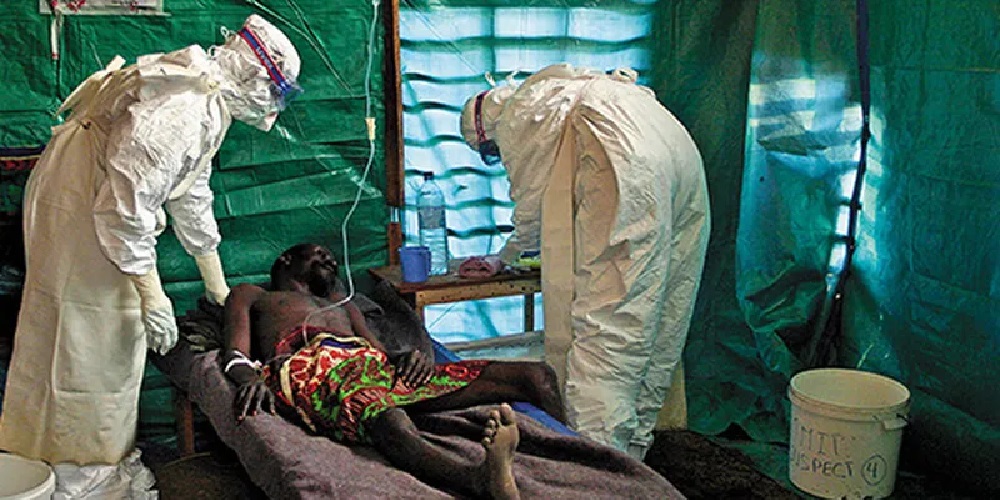
The World Health Organization has declared the Ebola outbreak caused by the Bundibugyo virus strain in the Democratic Republic of the Congo and Uganda a Public Health Emergency of International Concern (PHEIC).

The global health body in a statement said the decision was based on the growing risk of international spread of the disease and the absence of approved vaccines or treatments specifically targeting the Bundibugyo virus strain.
WHO Director-General said the outbreak met the criteria for a global health emergency under the International Health Regulations, although it does not yet qualify as a pandemic emergency.

As of May 16, health authorities had recorded eight laboratory-confirmed cases, 246 suspected cases and 80 suspected deaths in Ituri Province of DR Congo, affecting Bunia, Rwampara and Mongbwalu health zones. Uganda also confirmed two cases in Kampala, including one death, involving travellers from DR Congo.
WHO said unusual clusters of deaths linked to symptoms consistent with Bundibugyo virus disease had also been reported across parts of Ituri and North Kivu provinces, while at least four healthcare workers had died from suspected viral haemorrhagic fever, raising fears of hospital-based transmission.
The agency warned that the true scale of the outbreak remained unclear due to limited epidemiological data, insecurity, population displacement and weak health systems in affected communities.
According to WHO, the high positivity rate from initial laboratory samples, increasing reports of suspected cases and deaths, and the detection of cases in Kampala indicate the outbreak could be significantly larger than currently reported.
WHO noted that unlike the Ebola Zaire strain, there are currently no approved vaccines or therapeutics specifically targeting the Bundibugyo virus strain.
The organisation said neighbouring countries sharing borders with DR Congo face a high risk of further spread because of population movement, trade activities and ongoing humanitarian challenges in the region.
WHO announced plans to convene an Emergency Committee under the International Health Regulations to advise on temporary recommendations for responding countries.
The global health agency urged DR Congo and Uganda to activate emergency response mechanisms, strengthen surveillance and laboratory testing, improve infection prevention measures in hospitals and intensify contact tracing and community engagement.
WHO also advised affected countries to implement screening at airports, seaports and land borders, isolate confirmed and suspected cases, and consider postponing mass gatherings until transmission is interrupted.
The organisation, however, warned countries against closing borders or imposing travel and trade restrictions, saying such measures lack scientific basis and could worsen the spread of the disease through unmonitored routes.
WHO further urged neighbouring countries to strengthen preparedness, establish rapid response teams and improve monitoring for unexplained deaths and suspected cases.
Health
World Hypertension Day: Nigerians living with deadly BP – May&Baker warns
The Managing Director and Chief Executive Officer of May & Baker Nigeria Plc, Pharm. Patrick Ajah, on Friday raised alarm over the growing burden of hypertension in Nigeria, warning that millions of Nigerians are living with dangerously high blood pressure without knowing it.
Ajah, who spoke in Lagos during the Walk for Life 2026 organised by the company to commemorate World Hypertension Day, also lamented that rising energy costs are hurting drug prices, as the company spends N170m monthly on factory power.
The event, themed “Controlling Hypertension Together,” featured a health walk, free blood pressure and blood sugar screening, medical consultations, fitness activities, and health talks in collaboration with the Ikeja 1 NYSC Medical CDS Group and other stakeholders.
Speaking during the exercise, Ajah described hypertension as a “silent killer,” disclosing that many Nigerians discovered during previous screenings had dangerously high blood pressure levels, including readings as high as 200 over 120.
“Many Nigerians are walking the streets every day without knowing that they have hypertension,” he said.
“Some of the results we see are frightening. We have seen cases where people’s blood pressure ranges from 200 over 120, which is almost a killer.”
He said the situation was particularly alarming among low-income earners and market women who rarely go for medical checks because of rising healthcare costs.
“Most market women are very hypertensive, but they don’t check. It is getting worse because many people cannot afford hospital bills anymore,” he stated.
According to him, worsening economic hardship and stress are contributing significantly to the rising cases of hypertension across the country.
“With the condition of the country, stress levels are high, and stress increases the tendency for hypertension. The burden is a lot more than it used to be,” Ajah added.
The May & Baker boss warned that hypertension becomes more dangerous when combined with diabetes, describing both conditions as a dangerous alliance responsible for increasing cases of stroke, kidney failure, and sudden deaths.
“In medical school, we were taught that hypertension and diabetes form a dangerous alliance. When somebody is hypertensive and diabetic, it kills faster,” he said.
“That is why we don’t just check blood pressure here, we also check blood sugar.”
Ajah stressed that hypertension treatment is lifelong and warned patients against abandoning medications once their blood pressure appears stable.
“People need to understand that hypertension is not like malaria that you treat and it disappears. Once diagnosed, especially above 40, you are likely going to be on medication for life,” he explained.
“Many people stop taking their drugs once their blood pressure becomes controlled. That is dangerous.”
He urged Nigerians, especially those aged 35 and above, to regularly monitor their blood pressure and blood sugar levels, reduce salt intake, exercise regularly, and maintain a healthy lifestyle.
Ajah also lamented the rising cost of drug production in Nigeria, revealing that soaring energy costs and infrastructure challenges are affecting pharmaceutical manufacturers and ultimately increasing medicine prices.
“Before 2023, we spent about N65 million monthly on power in our factory. Right now, it is costing about N170 million every month,” he disclosed.
“So whether we like it or not, those costs will affect medicine prices.”
He, however, commended the Federal Government for approving duty-free importation of pharmaceutical raw materials, saying the policy helped manufacturers avoid additional drug price increases.
“When the executive order came, we suspended a planned price increase. It probably saved about 10 to 15 per cent on medicine costs,” he said.
Ajah further called on government to improve healthcare infrastructure, make medicines more affordable and address the worsening brain drain in the health sector.
“These days, people get to hospitals and wait for hours before seeing doctors because many doctors have left the country. Government needs to do more to encourage them to stay.”
Speaking, the Chairman of Ikeja Local Government, Comrade Akeem Olalekan Dauda, commended May & Baker for the initiative and urged stronger collaboration between private organisations and government in promoting public health.
“This is public good governance. What you are doing is part of corporate social responsibility and I encourage you to continue partnering with government so our people can enjoy more healthcare support,” Dauda said.
One of the beneficiaries, Mrs. Bose Ayo, praised the organisers after receiving free medical screening and treatment during the outreach.
“I checked my blood pressure and sugar levels and everything is fine. The doctors also attended to my cough and gave me medication,” she said.
“I pray they continue doing this for people like us who cannot afford hospital bills.”
Health
More Hantavirus cases may emerge in coming weeks — WHO
World Health Organisation (WHO) Director-General Tedros Ghebreyesus says additional cases of Hantavirus may emerge in coming weeks, following the evacuation of passengers from the outbreak-hit cruise ship MV Hondius.
Tedros said at a joint news conference on Tuesday with Spanish Prime Minister Pedro Sanchez held at the Moncloa Palace in Madrid that “global public health risk remains low.
“Given the long incubation period of the virus, it is possible that we may see more cases in the coming weeks.’’
According to Tedros, 11 Hantavirus-related cases have so far been reported, including three deaths, while nine of the 11 cases have been confirmed as Andes virus infections, as the remaining two are considered probable cases.
“Our assessment continues to be that the global public health risk remains low,” he said, adding that there is currently “no sign” of a larger outbreak.
Tedros said the WHO recommends that all evacuated passengers undergo active health monitoring for 42 days from their last exposure date, either in designated quarantine facilities or at home, with the monitoring period lasting until June 21.
“Anyone who becomes symptomatic should be isolated and treated immediately,” he added.
Tedros also thanked the Spanish government for agreeing to receive the ship and lead the evacuation effort, praising Spain for fulfilling “its legal duties under international law” while also demonstrating “solidarity, compassion and kindness” throughout the operation.
The Spanish government agreed on May 5 to receive the MV Hondius after a hantavirus outbreak was reported aboard the vessel.
This came following requests from the World Health Organization (WHO), the European Union and more than 20 governments seeking assistance in evacuating and repatriating those on board.
The vessel arrived off the Spanish island of Tenerife on May 10 and docked at the Port of Granadilla a day later.
During the two-day operation, passengers and some crew members disembarked from the vessel and were transferred under strict protective and sanitary measures before being flown out of Spain.
Sanchez described the evacuation operation as a “success”, saying Spain had coordinated 10 special flights to evacuate more than 120 people of different nationalities who had disembarked from the vessel between May 10 and May 11.
He added that the operation had been conducted under four guiding principles: scientific rigour, absolute transparency of information, institutional coordination, and international cooperation.
Spanish health authorities said all evacuated people from the MV Hondius had left Tenerife by May 11, while the vessel departed for Rotterdam with 28 crew members remaining on board.
The European Commission said it is coordinating closely with Spain, EU member states and other countries participating in the EU Civil Protection Mechanism.
The EU said it’s also working with the European Centre for Disease Prevention and Control (ECDC), the WHO and other partners to coordinate passenger disembarkation, return transfers and follow-up health monitoring.
(Xinhua/NAN)
Health
OF ZAMFARA, GOVERNANCE, AND THE 2027 GENERAL ELECTIONS
BY BOLAJI AFOLABI
For multiple decades, if not centuries, football has been a very popular sport across the world. In Nigeria, given its uniqueness, football has been played and followed passionately from generation to generation. In the 1980s, there were not many football clubs in the Northern axis of the country that participated in the National League, now called the Nigeria Professional Football League, (NPFL). One of such was the Zamfara Tex FC – founded and sponsored by the Zamfara Textiles Limited. Others were the Raccah Rovers, Kano; DIC (now Ranchers) Bees, Kaduna; Jigawa Golden Stars; Mighty Jets of Jos; and United Nigeria Textiles Limited of Kaduna. Though Kaduna had two clubs, Zamfara Tex was special to the writer and his company of friends that they always watched the team’s matches against the Bees and UNTL at the Ahmadu Bello Stadium in Kaduna, as regularly possible.
The realization that the club was domiciled in Gusau – a town outside Sokoto – the capital of the (old) State further endeared it to the writer’s group. From social studies books, we later discovered that Gusau was the economic and industrial hub of the old Sokoto State. Aside from the Textile outlet, there were a few others including candy and confectionaries manufacturing companies. Also, being a railway-town, it was home to people of different tribes and ethnicities. Gusau, was in many ways, a melting pot of convergence of itinerary traders, farmers, and many other people who engage in their various legitimate businesses without fear and worries. The writer, at barely 15 years had a first-hand experience of the convivial, peaceful, and warm nature of the town. Commuting from Kaduna to Sokoto, the commercial vehicle had some issues a few kilometers to Gusau; which led to all the passengers sleeping over in the town. It was pleasant. It brings nostalgic memories all the time.
For many years thereafter, the writer’s affinity with Gusau and Zamfara (the capital and State) has grown in leaps and bounds. As fate will have it, one has built friendship and relationships with a few people who are indigenes or settlers. The average Zamfararian, either in Gusau, Talata Mafara, Kaura Namoda, Maradun, Shinkafi, Bukkuyum, Birnin Magaji, Bakura, or any other community is loving, accommodating, hard working, and compassionate. Aware of these and other attributes of the people, one is always worried about negative reports from the state. Somehow, the writer’s attraction and attachment to the state abhors any unpleasant comments about Zamfara. Like what happened a few weeks ago!
Indeed, public venues such as viewing centres, open-hall restaurants, and some other busy sit-outs are veritable locations to get gists about happenings in the capital city, and by extension the country. The writer was at a popular car-wash point in Gwarimpa which had a few other outlets where patrons can “keep their mouths and hands busy” with hot, spicy assorted meats, drinks, and all. Shortly after taking refuge on a bench within the “sitting area” three middle-aged men were engaged in a discussion; defection of the Zamfara State Governor, Dr. Dauda Lawal to the All Progressives Congress, APC. From their respective comments, it was obvious that, as indigenes, they were not happy about the development – which Lawal said was for the overall interest of the state. Thereafter, they began sectoral review of his administration. Somehow, the writer had to “step in and revolt” when they moved to achievements-deconstruction of Lawal labelling him a non-performer, absentee chief executive who is far from the people and realities in the grassroots.
Disagreeing, the writer had to mention some of the achievements of Lawal – read from the media. It includes intra-city infrastructures; construction of the airport; building and rehabilitation of schools; upgrading health institutions; increase of Internal General Revenue. Others are prompt paying of workers salaries; creation of community security guards; payments of the backlog of debts owed WAEC; youth employment. After listening to what one of them described as ‘a brave defence” they took turns to espouse more on their views, reiterating that, given his background more was expected from Lawal. One of my “panelists” got me confused by throwing some posers. How did Lawal arrive at the choice of these projects? Are they what the people desire? Was any Needs Assessment done? What are the impacts of these projects on the people in the hinterland? What are the real and immediate needs of the people?
Challenged by these posers, one had to dig further to unravel the facts about governance in the state, nexus between the leadership and the people in relation to the 2027 General Elections. There were divergent opinions on the performances of the present administration. Though it was a pot-pourri of kudos and knocks, thumbs-up and thumbs-down, the preponderance of vilification was more. While Lawal’s records in a few sectors were acknowledged, many people had reservations about the importance of these projects to the well-being of the average person. A school of thought argued that people should be the fulcrum of every government policy and programme – which they claim is not the case in Zamfara. Another school of thought believes that having failed to provide responsive security measures; which was the centre-point of his campaigns – it will not be out of place to score Lawal low in terms of deliveries.
Alhaji Sani Abdallah, a fabric seller at the capital city market declared, “The Governor has done well in the beautification of Gusau by providing street lights, traffic lights, and construction of a new stadium but there are little or none of these in other parts of the state.” An educationist, Mr. Ezidoye Ugwu believes that, “Lawal’s score card would have been higher if some of the laudable projects in Gusau are replicated in a few of the other towns across the state.” For Alhaji Suleiman, a media practitioner, “though there are pockets of positives but on the average, Lawal has not met the expectations of many people; he has failed in protecting the lives and properties of the people.”
A grassroot politician who preferred anonymity postulated that, “since he has not realized his core campaign promise – security – many people are not impressed with whatever he is doing in other sectors. Zamfara is largely agrarian, the least expected of him is to provide security for people to go to their farmlands but this has not been possible for years. It will be very difficult for Lawal to get the support and votes of many people in 2027.” A staff member of a federal government agency in the state who craved anonymity advised Lawal, “not to believe in the skewed reports and comments of his aides and hangers-on but go to the grassroots and hinterland where the vast majority of people are not impressed with him. In fact, the possibility of getting the votes of these rural dwellers is extremely low.”
True, politics is local. If these comments can be extrapolated as a precursor to what may play out in next year’s general elections, Lawal’s journey back to the state’s government house will be topsy-turvy and turbulent. When added to the alleged non-interest of the members of the Yari and Matawalle Groups, and a few other factors, he is most likely to encounter many political landmines, booby traps, and uncertainties. Driving the point home, a grassroot female politician admitted that, “many of the Leaders in APC and their followers do not support Lawal whose entry has scuttled the ambitions of their own members. It will take serious work, begging, and cajoling for his second-term aspiration not to hit bad weather. For now, the PDP looks like the newest bride, as the party is gradually gaining groundswell support across the state.”
Politicians believe that 24 hours is a long time in politics. Rightly so. An African proverb says the eyes knows the portion of food that will fill the stomach. Also, that the morning determines how well the night will end. If anything, the forthcoming governorship elections in Zamfara promises to be thrilling and interesting. It will be filled with theatrics, drama, and surprises. No doubt, Lawal has his works cut-out. How he navigates out of the avalanche of roadblocks within the APC; meander through the grassroots whose political consciousness and awareness has increased overtime; as well as the rebounded and rebranded Zamfara PDP will become public knowledge by February 2027.
* BOLAJI AFOLABI, a Development Communications specialist was with the Office of Public Affairs, The Presidency, Abuja.
-
News15 hours ago2027: I didn’t purchase ADC presidential form to be VP – Amaechi
-
News17 hours ago2027 Edo South: Grateful Ogbeide-Ihama thanks Senatorial District says “the journey forward begins together “
-
News15 hours agoLamentations of Desmond Elliot, says “I had no hand in Obasa’s impeachment”
-
News18 hours agoKilling of Oyo Teacher: Obi Demands Accountability, says Nigeria fast losing its humanity
-
News18 hours agoFood inflation spikes above 20% in 11 states
-
News14 hours agoWike Commends Quality, Speed of Abuja Projects, Says Satellite Towns Must Feel Impact of Development(Photos)
-
News21 hours agoAnger as Kano teacher r*pes four siblings aged between 4 to 7
-
Opinion14 hours agoInconclusive APC Primary in Ekiti North I: Stakeholders Await Declaration as Incumbent Rotimi Holds Decisive Margin