News
DETAILS: New Election Law Allows Prisoners to Cast Vote
- /home/naijuinz/public_html/wp-content/plugins/mvp-social-buttons/mvp-social-buttons.php on line 27
https://naijablitznews.com/wp-content/uploads/2025/08/vote.jpg&description=DETAILS: New Election Law Allows Prisoners to Cast Vote', 'pinterestShare', 'width=750,height=350'); return false;" title="Pin This Post">
- Share
- Tweet /home/naijuinz/public_html/wp-content/plugins/mvp-social-buttons/mvp-social-buttons.php on line 72
https://naijablitznews.com/wp-content/uploads/2025/08/vote.jpg&description=DETAILS: New Election Law Allows Prisoners to Cast Vote', 'pinterestShare', 'width=750,height=350'); return false;" title="Pin This Post">
On Wednesday, President Bola Tinubu signed the Election Act Repeal and Amendment Act into law, concluding a reform process that has been in motion since the end of the 2023 general election.

The legislation caused controversy, particularly over the adjustment of key clauses by the Senate. In the original draft, real-time electronic transmission of results was stipulated. During clause-by-clause consideration, however, the Senate moved to make transmission discretionary to the Independent National Electoral Commission (INEC).
The proposal did not sit well with the public. Civil society organisations, election observers and members of the public argued that making transmission optional would weaken one of the transparency safeguards introduced after years of agitation.

Under pressure, the Senate restored the clause mandating electronic transmission, albeit with a caveat.
The qualification allows INEC to resort to manual transmission where it determines that electronic transmission is not practicable. This again generated a new round of protests and debates. Policy advocates argue that the discretion could be abused and would leave the commission with too wide an interpretive latitude.
Another round of opposition followed. Members of the minority caucus in the House of Representatives joined calls for a reversal. But in a surprising turn, the House aligned with the Senate’s adjustments less than 24 hours after a legislative back and forth.
On Tuesday, the National Assembly passed the harmonised bill and, within 24 hours, the President assented to the 100-plus-page law. This It will now regulate the 2027 elections.
Beyond the now widely debated Section 60(3), FIJ has picked out and explained several other provisions in the amended law that will directly affect voter participation, campaign financing and electoral accountability.
Note: The final consolidated version of the Act has not been made publicly available. This analysis relies on the draft version before Senate deliberations, with confirmed amendments incorporated where publicly reported.
VOTER REGISTRATION IS STRICTER
Section 10(2) narrows the documents acceptable for voter registration to three: the National Identity Number, a Nigerian passport or a Nigerian birth certificate.
Under the Electoral Act 2022, there was no express list of acceptable identification documents. The law sets out eligibility conditions, namely that a registrant must be a Nigerian citizen, at least 18 years old, provide personal information and undergo biometric capture.
INEC, in practice, accepted multiple forms of identification, including driver’s licences, national identity cards and NIN slips.
The amended law replaces that administrative flexibility with statutory limitation. Documents outside the three listed will no longer suffice for registration. This change does not affect the act of voting. The Permanent Voter Card remains the only recognised document for casting a vote at the ballot.
Notably, the earlier draft of the bill proposed allowing alternative identification tools for accreditation, including electronic identity cards, QR-coded voter cards, the NIN and passports. The basis for this was technical. The Bimodal Voter Accreditation System verifies fingerprints and facial data instead of reading PVC chips. The Senate deleted that provision, thereby retaining the PVC as the sole voting ticket.
PRISONERS CAN NOW VOTE
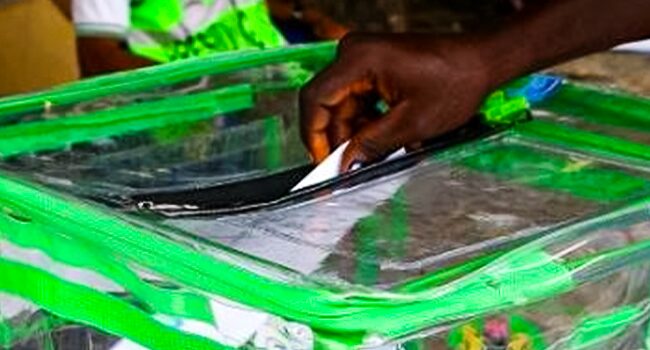
Sections 12(1)(d) and 12(2) expressly recognise the right of inmates to register and vote. Section 12(2) provides that for registration purposes, an inmate shall be regarded as ordinarily resident at the place where he is lawfully imprisoned or incarcerated. This resolves the residency requirement that previously posed a legal brick wall to inmate voting.
INEC will now be required to create a framework for voter registration and voting within correctional facilities ahead of the 2027 elections.
ELECTION FUNDING LIMITS EXPANDED
The amended law significantly increases campaign spending ceilings across all elective offices. Presidential candidates may now spend up to N10 billion, doubling the N5 billion cap under the 2022 Act.
Governorship candidates move from N1 billion to N3 billion. Senatorial candidates move from N70 million to N500 million. For the House of Representatives, the ceiling increases from N30 million to N250 million. State House of Assembly candidates move from N30 million to N100 million.
Individual donation limits increase from N50 million to N500 million. For Area Council elections, the law sets maximum spending at N60 million for chairmanship candidates and N10 million for councillorship candidates.
Unlike the 2022 Act, the amended law expressly prescribes penalties for breaches. Exceeding spending limits attracts a N5 million fine and forfeiture of excess funds to INEC.
ELECTION SANCTIONS RESTRUCTURED
From 2027, vote buying and selling are expressly criminalised. The Electoral Act 2022 addressed bribery and undue influence in broad terms but did not define vote buying as a standalone offence. The amended law does.
Unlawful possession, purchase or sale of PVCs attracts fines of up to N5 million.
The law also criminalises obstruction of voter registration. Any person who uses threats or intimidation to prevent another from registering faces a fine of up to N5 million.
Manipulating the voter register, whether by registering in another person’s name, submitting false information or procuring the registration of a fictitious person, attracts penalties of up to N100,000.
It is important to note that the National Assembly removed custodial sentences proposed in the original draft. Earlier provisions prescribed prison terms for vote trading, intimidation and impersonation, as well as periods of disqualification from contesting elections.
In the original draft, buying or selling PVCs could attract not less than two years in prison and ineligibility to stand for election for 10 years. But NASS removed these provisions. NASS also removed the five-year imprisonment clause for threats and intimidation and the one year for impersonation or false information.
Those sanctions were deleted during deliberations and replaced with steeper financial penalties.
ELECTION TIMETABLE ADJUSTED
The amended law shortens the mandatory notice period INEC must give before conducting elections.
Under the Electoral Act 2022, INEC was required to issue notices at least 360 days before elections. The revised law reduces that timeline to 300 days.
During legislative debates, lawmakers argued that the adjustment would give INEC more flexibility in sequencing primaries, nomination processes and general election logistics.
The reduction forms part of the recalibration of the electoral timetable and shifts more scheduling discretion to the commission.

News
Obi Slams Court Ruling Deregistering ADC, Accord, Three Other Political Parties
By Kayode Sanni-Arewa
Ex-Labour Party presidential candidate, Peter Obi, has condemned the recent judgment of the Federal High Court in Abuja ordering the deregistration of five political parties, including the African Democratic Congress (ADC) and the Accord Party.
Justice Peter Odo Lifu of the Federal High Court reportedly directed the Independent National Electoral Commission (INEC) to immediately deregister the affected parties over alleged constitutional breaches in a ruling delivered on Monday, June 15.
Reacting to the judgment, Obi described the decision as another troubling development that could further erode public confidence in Nigeria’s democratic institutions and the judiciary.
In a statement released on Monday, the former Anambra State governor argued that the court’s decision should be reversed, warning that weakening institutions for political purposes could have far-reaching consequences for the country.
According to Obi, the controversy surrounding the removal of former Chief Justice of Nigeria, Walter Onnoghen, had earlier raised concerns about the independence and sanctity of Nigeria’s institutions.
He noted that while investors can manage security and policy risks, uncertainty in the rule of law and perceptions of judicial vulnerability to political influence remain major deterrents to investment.
Strong economies are built on trust. Investors can manage security risks, policy risks, and even market risks. What they fear most is uncertainty in the rule of law and a judiciary that is perceived to be vulnerable to political pressure,” Obi stated.
The former presidential candidate lamented that many Nigerians have lost faith in institutions meant to protect them, adding that businesses increasingly prefer contracts governed by foreign jurisdictions due to greater confidence in their legal systems
Obi further argued that the judgment ordering the deregistration of the ADC and other political parties would further diminish public trust in the nation’s legal system.
“The Federal High Court judgment ordering the de-registration of the ADC and other political parties is just one of those activities that further reduces the common man’s trust in our legal systems. It should be reversed,” he said.
He pledged to work towards restoring the dignity, independence, and integrity of the judiciary, emphasizing the need for a justice system that is impartial, accessible, and respected by all.
“The common man must have a voice. The business community must be protected from legal uncertainty and intimidation. Justice must be impartial, accessible, and respected by all,” Obi added.
He also called on judges, senior advocates, legal luminaries, and lawyers across the country to defend the rule of law and safeguard Nigeria’s democratic institutions.
“To our judges, legal luminaries, senior advocates, and lawyers: this is your moment. Rise, defend the rule of law, take back your country,” he urged.
Obi concluded his statement with his popular refrain: “A New Nigeria is Possible.”
The ruling has continued to generate debate among legal and political stakeholders, with many awaiting further reactions from the affected parties and the electoral commission.
News
BREAKING: Gunmen storm NIPSS Kuru, kill two soldiers Police Officer
…as elite policy institute fends off night raid
By Kayode Sanni-Arewa
The National Institute for Policy and Strategic Studies, NIPSS, came under heavy attack on Monday night, June 15, 2026, as suspected attackers tried to breach Nigeria’s foremost policy school near Jos.
Two soldiers and one police officer were reportedly killed before security forces repelled the assault.
The attack began around 11:00 p.m.
Armed men attempted to force their way into the institute and reach the residential quarters where course participants were lodged, according to initial report by NewsmakersNG.
Sources said the slain police officer was the orderly attached to a retired Deputy Inspector-General of Police. The two soldiers died in the exchange of fire that followed.
But the attackers were stopped. Security operatives stationed at NIPSS mounted swift resistance and blocked access to the participants’ wing.
“No participant was abducted because the security forces successfully repelled the attackers before they could enter the residential area,” a source familiar with the incident was quoted to have said.
—NIPSS confirms incident, urges calm—
In a press release issued early Tuesday, June 16, the institute confirmed a “security incident occurred in the vicinity of the Institute in the early hours of today.”
Management said the situation was “promptly brought under control through the swift response of security personnel and relevant security agencies.”
“There is currently no threat to the safety of participants, staff, residents, or facilities of the Institute, and normal activities are continuing as scheduled,” said Dr. Osime Samuel, mni, Head of Public Affairs.
The institute stressed that investigations were ongoing and it would be “premature to speculate on the nature, scope, or outcome of the event.”
NIPSS said it could not confirm details circulating on social media.
“We urge members of the public and the media to rely on official communications from the Institute and relevant security agencies,” the statement added.
–Manhunt begins, motive unclear–
As of press time, authorities had not released an official statement on the motive behind the attack.
Security has reportedly been reinforced around the institute as investigations and manhunt operations commenced.
NIPSS Kuru trains Nigeria’s top bureaucrats, military officers, and policy strategists. An attack on the institute is an attack on the country’s policy brain trust. That it was targeted at night, with participants inside, has raised fresh fears about insecurity reaching Nigeria’s elite institutions.
For now, the guns are silent. The participants are safe. But three security men paid with their lives to keep it that way.
News
Dangote Refinery reduces price of fuel
By Ojomah Austin.
The Dangote Petroleum Refinery has announced a reduction in the ex-depot price of Premium Motor Spirit (PMS), also known as petrol, lowering its gantry price by ₦75 per litre amid signs of stability in the global energy market.
In a circular issued to fuel marketers on Monday, the refinery disclosed that the new price adjustment takes effect from midnight, June 16, 2026.
Under the revised pricing structure, the gantry price of petrol has been reduced from ₦1,250 per litre to ₦1,175 per litre, providing some relief to marketers and consumers after months of rising fuel costs.
The refinery also announced a reduction in its coastal supply price, which dropped from ₦1,595,790 per metric tonne to ₦1,495,215 per metric tonne.
According to the company, the decision was influenced by the recent easing of geopolitical tensions in the Middle East, a development that has helped moderate global crude oil and energy prices.
“Following the de-escalation of tensions in the Middle East, which has impacted energy prices, we wish to inform you that we have reviewed our Premium Motor Spirit gantry and coastal prices,” the refinery stated in the notice to marketers.
The company further clarified that all outstanding unloaded gantry volumes would be recalculated using the new rate from the effective date.
“Kindly note that all outstanding unloaded gantry volumes will be repriced at the new rate effective 12:00 a.m., June 16, 2026. We sincerely appreciate your continued patronage and assure you of our unwavering commitment to reliable product supply and excellent service delivery,” the statement added.
Marketers Yet to Reflect New Price
Despite the refinery’s reduction, retail pump prices across many parts of the country remained significantly higher as of Monday.
Industry data from Petroleumprice.ng indicated that several filling stations were still selling petrol at around ₦1,240 per litre, suggesting that consumers may not immediately benefit from the refinery’s latest adjustment until existing stock is exhausted and new supplies enter the market.
The development positions Dangote Refinery as one of the most competitively priced suppliers in the domestic petroleum market.
Global Oil Prices Begin to Retreat
The latest price cut comes as pressure in the international crude oil market begins to ease following reports of renewed diplomatic engagements between the United States and Iran over the reopening of the strategic Strait of Hormuz.
Global oil prices had experienced significant volatility over the past three months due to hostilities involving the two countries.
The development positions Dangote Refinery as one of the most competitively priced suppliers in the domestic petroleum market.
Global Oil Prices Begin to Retreat
The latest price cut comes as pressure in the international crude oil market begins to ease following reports of renewed diplomatic engagements between the United States and Iran over the reopening of the strategic Strait of Hormuz.
Global oil prices had experienced significant volatility over the past three months due to hostilities involving the two countries.
-
News18 hours agoJust in: Kwara traditional ruler reportedly dies in kidnappers hideout after demand of N21m ransom
-
News22 hours ago2025 Capital Budget Gets New Lease of Life as Reps Push Deadline to September
-
Politics17 hours agoHours after Abuja Court ruling, another Court in Owerri rules against deregistration of party
-
News13 hours agoNigerian Ports Record Global Leap as Apapa, Tin Can Gain World Bank Recognition
-
News19 hours agoFinally, US-Iran deal announced with end to military warefare
-
News7 hours agoSokoto under siege as bandits bar farmers from farms impose new levies
-
News7 hours agoSad! Nigerian pilgrim dies in auto crash while returning from Holy Mosque in Saudi Arabia
-
News19 hours agoPrice of petrol expected to drop to N900 per litre as US-Iran opens way for Strait of Hormuz