News
Photos: Appellate Court Advocacy Demands Precision, Discipline — Wike
- /home/naijuinz/public_html/wp-content/plugins/mvp-social-buttons/mvp-social-buttons.php on line 27
https://naijablitznews.com/wp-content/uploads/2026/04/9bceaa19-9cd1-40be-b5a4-1bbdf9fabe99-1000x600.jpeg&description=Photos: Appellate Court Advocacy Demands Precision, Discipline — Wike', 'pinterestShare', 'width=750,height=350'); return false;" title="Pin This Post">
- Share
- Tweet /home/naijuinz/public_html/wp-content/plugins/mvp-social-buttons/mvp-social-buttons.php on line 72
https://naijablitznews.com/wp-content/uploads/2026/04/9bceaa19-9cd1-40be-b5a4-1bbdf9fabe99-1000x600.jpeg&description=Photos: Appellate Court Advocacy Demands Precision, Discipline — Wike', 'pinterestShare', 'width=750,height=350'); return false;" title="Pin This Post">
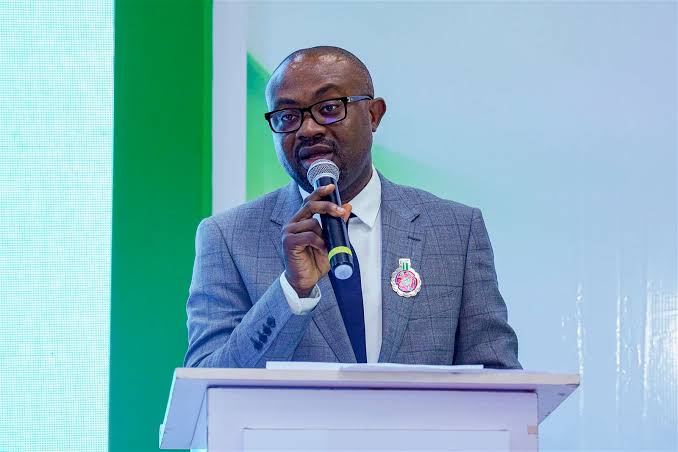
Minister of the Federal Capital Territory (FCT), Barr. Nyesom Wike, on Tuesday, stressed the need for discipline, precision and sound legal reasoning in appellate advocacy, describing appellate practice as a critical pillar for strengthening Nigeria’s justice system.

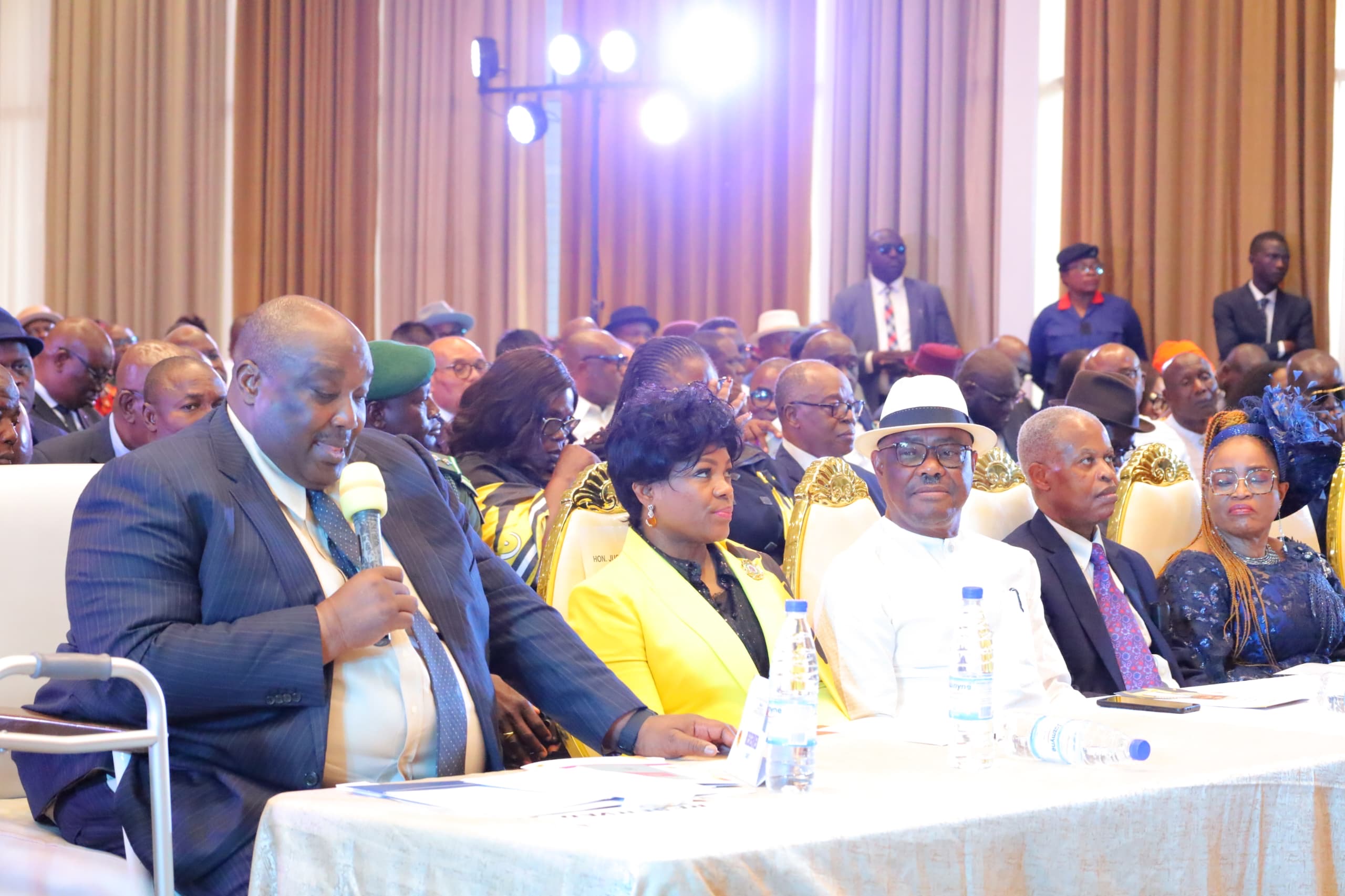
Wike stated this at the public presentation of the book, “Ukala’s Manual on Appellate Practice,” authored by Senior Advocate of Nigeria (SAN), Emmanuel C. Ukala, held at the Bola Ahmed Tinubu International Conference Centre, Abuja.
The former Rivers State governor described the publication as a timely and significant contribution to the legal profession, particularly for young lawyers seeking to develop competence in appellate litigation.

According to him, advocacy at the appellate level differs fundamentally from trial proceedings and requires a higher level of intellectual discipline and mastery of legal procedures.
“We are all aware that advocacy at the appellate level is of a fundamentally different character from proceedings at trial. It calls for a higher degree of discipline, clarity of thought, precision in expression, and a deep, assured command of both substantive law and procedural rules,” Wike said.
He noted that the manual would serve as a practical guide for lawyers and judges by bridging the gap between legal theory and courtroom practice.
“It serves as a vital bridge between legal theory and courtroom practice, offering guidance that is especially beneficial to younger members of the Bar as they develop the confidence and competence required to navigate the demands of appellate litigation,” he added.
Wike, who recalled his background in legal practice, said he personally appreciated the value of appellate adjudication, having prosecuted and defended several cases before appellate courts over the years.
“I myself am a direct beneficiary of the work done at the appellate level, having had the privilege, as a party in numerous disputes, to prosecute and defend many cases before appellate courts,” he stated.
The minister also revealed that he once worked briefly in Ukala’s law firm, noting that the experience shaped his professional values and appreciation for excellence in legal advocacy.
“I cut my teeth in the firm of Mr. Ukala, SAN, albeit for a relatively short time. The exposure and values I imbibed during that period discipline, attention to detail, respect for the craft of advocacy, and an unwavering commitment to excellence have continued to shape my professional outlook to this day,” he said.
Wike described the publication as a “legacy work” that would remain relevant to legal practitioners and judicial officers for years to come.
According to him, the book does not merely seek to impress readers academically but provides practical guidance on critical aspects of appellate litigation, including notices of appeal, compilation of records, interlocutory applications, briefs of argument, and oral advocacy.
“What I particularly appreciate about this manual is its practicality. It does not attempt to impress; it seeks to guide. It brings clarity to areas that many practitioners struggle with but rarely admit,” he said.
The FCT minister urged young lawyers to make effective use of the book in refining their professional skills and pursuit of excellence.
“To my colleagues, especially the younger lawyers, do not just celebrate this book, use it. Let it challenge you. Let it refine you. Let it remind you that excellence in this profession is a deliberate pursuit,” he added.
The event was attended by high-ranking judicial officers, including the President, National Industrial Court, Hon. Justice Benedict Bakwaph Kanyip, other heads of court, former Attorney General of the Federation and Minister of Justice, Chief Kanu Agabi, Justices of the Supreme Court, Justices of the Court of Appeal, Senior Advocates of Nigeria, members of the Body of Benchers, legal practitioners and other dignitaries from across the country, while Joseph B. Daudu (SAN) and Ferdinand O. Orbih (SAN), reviewed the book.
News
PFIPC Never Received Budget Funds Despite N1.32bn Allocation – DG Budget Office
By Gloria Ikibah
The Budget Office of the Federation has told the House of Representatives that although the Presidential Foreign Investment Promotion Council (PFIPC) was allocated N1.32 billion in the 2026 Appropriation Act, not a single kobo was released to the organisation because it failed to meet the legal conditions required for public expenditure.
The clarification came on Friday when the Director-General of the Budget Office, Tanimu Yakubu, appeared before the House of Representatives Ad-Hoc Committee investigating the alleged unlawful establishment and funding of the PFIPC.
The committee is probing how the council found its way into the federal budget despite growing evidence that it was never legally established by the Federal Government.
Defending the Budget Office’s actions, Yakubu maintained that the agency neither created the council nor approved its establishment, recruitment, staffing or salaries. He said its responsibility was limited to assessing the financial implications of approvals forwarded by the relevant government authorities.
He disclosed that although the council requested N3.8 billion for personnel costs, the Budget Office rejected the figure and carried out its own independent assessment using the approved staff strength and the salary structure prescribed for public servants.
He said: “The Budget Office did not create the council. It did not assign its budget code. It did not approve its establishment. It did not grant its recruitment waiver. It received official instruments and did what the law required of it. It measured their fiscal effect.
“That estimate did not form the basis of the Budget Office’s recommendation. The Budget Office rejected it and made an independent calculation. That calculation produced N802,978,783. This was not a concession to the council. It was the Budget Office’s own fiscal proposal.”
Yakubu explained that the proposed personnel allocation never translated into actual spending because the Budget Office did not issue the financial clearance required before recruitment, enrolment on the government payroll and payment of salaries.
He emphasised that although personnel costs accounted for about 61.63 per cent of the council’s total appropriation, the funds remained untouched.
“There was therefore no financial clearance. There was no lawful recruitment. There was no payroll enrolment. There was no salary payment.
“Not one naira of the personnel provision has been drawn. There is no personnel expenditure to recover because no expenditure ever occurred”, he added.
The Director-General also told lawmakers that the N200 million earmarked for overheads was never accessed because treasury warrants and cash backing were not issued.
Similarly, he said the N300 million capital allocation remained on paper as the procurement process never reached the stage where public funds could legally be spent.
According to him, the financial safeguards of government worked exactly as intended by preventing unauthorised expenditure before any money left the treasury.
“No procurement reached the point at which expenditure would arise. No Ministerial Tenders Board approved a transaction. No Certificate of No Objection was issued. No treasury warrant followed. No treasury cash-backing followed.
“The law did not recover money after it had gone. It prevented the expenditure before it began”, Yakubu noted.
During the hearing, members of the committee questioned the legal basis upon which the Budget Office made provisions for the council after examining what they described as a purported Act establishing the PFIPC.
A committee member, Rep. Abubakar Fulata, argued that the document lacked the essential features of a valid Act of Parliament, including a gazette number, the signature of the Clerk to the National Assembly and presidential assent.
He also faulted government agencies for failing to verify the authenticity of the document before acting on it.
“The purported Act is very clear. It is not genuine because it did not carry the gazette number, it did not have the signature of the Clerk of the National Assembly and it did not carry the signature of Mr. President”, he stated.
In response, Yakubu insisted the Budget Office relied solely on official establishment approvals, recruitment waivers and directives from the National Salaries, Incomes and Wages Commission in calculating personnel costs.
“We do not rely on any instrument to calculate personnel costs other than the establishment authorisation and the directives of the National Salaries, Incomes and Wages Commission”, he stressed.
Chairman of the Ad-Hoc Committee, Rep. Yusuf Gagdi, said the evidence before the panel indicated that the Budget Office acted based on documents presented by the appropriate government institutions, which were only later discovered to be forged.
Gagdi said the investigation had now shifted from the Budget Office to uncovering how forged documents entered official government channels.
“The question is whether the Budget Office allocated budget to this agency without the agency satisfying the requirements. The answer, based on the documents before us, is no. I repeat, no.
“The agency satisfied all the requirements the Budget Office needed before allocating a budget. The issue now is whether those documents were genuine. That is what this committee is investigating”, he noted.
He disclosed that the Accountant-General of the Federation has been invited to appear before the committee on Monday to explain how the council obtained its budget code, while other agencies will also be questioned as the investigation enters its final stage.
“By the special grace of God, we will conclude our findings and finish by next week”, he added.
The House constituted the ad-hoc committee following allegations surrounding the operations of the Presidential Foreign Investment Promotion Council, which reportedly appeared in official government records and the 2026 Appropriation Act despite questions over its legal status.
The panel is expected to determine how the council gained official recognition, identify those responsible and recommend measures to prevent similar occurrences within the public service.
News
Just in: Police confirm arrest of officers in viral video threatening to slap, detain driver if he is Igbo
The Ondo State Police Command has confirmed the arrest of officers in a viral video trying to extort money from a motorist along Lagos –Benin Expressway.
In the video, one of the officers said he would have slapped and detained the motorist if he was Igbo.
The circulating footage of the incident had ignited widespread anger across the country with several Nigerians calling for the arrest and prosecution of the officers.
Addressing journalists on the incident on Friday, the Ondo State Police Public Relations Officer, DSP Abayomi Jimoh, said the erring personnel have been identified and arrested.
“The Command wishes to inform the general public that the officers captured in the video have been arrested and identified as AP/No. 207454 ASP Elomore Sodayo, AP/No. 332012 Inspector Adefila Adewale, AP/No. 332449 Inspector Olorunfemi Opeyemi, and AP/No. 332369 Inspector Odusola Peter.
Consequently, the Commissioner of Police, CP Felix Ohagwu, psc, mnips, mspsp, has ordered a comprehensive investigation to unravel the circumstances surrounding the incident and determine the level of culpability of each officer involved,” he said.
News
Nothing was spent on PEAC/PFIPC, Budget Office tells Reps
The Budget Office of the Federation has said no dime was appropriated for the controversial Presidential Economic Advisory Council/Presidential Foreign Intervention Promotion Council (PEAC/PFIPC).
The Director-General of the Budget Office of the Federation, Tanimu Yakubu, said this disclosure while appearing before the House of Representatives ad hoc committee investigating the establishment and budgetary provisions of the PEAC/PFIPC.
“The conclusion is firm. Not one kobo of the personnel provision could lawfully have been drawn, and not one kobo was drawn. The overhead provision never matured into a lawful cash release,” Yakubu said.
“The capital provision never matured into procurement or expenditure.
The conditions required for spending were not met and were not close to being met.
There is therefore no personnel expenditure to recover. The money never moved because the controls held.”
Yakubu said the office withheld financial clearance; no recruitment or payroll was approved, and the Federal Ministry of Finance as well as the Office of the Accountant-General were directed to withhold all payment instruments.
The Budget Office said that the personnel, overhead, and capital provisions never matured into payments or procurement, as the legal and administrative requirements for expenditure were not fulfilled. It added that it would continue to cooperate with the House committee by providing all relevant records and documents to support its position.
The comment came amid the controversy over the PFIPC. Adeniyi Adeyemi had paraded himself as the director-general of the agency for months. Photos of him with diplomats and high-profile Nigerians were circulated on social media. He also had an office space at the Federal Secretariat in Abuja.
Although the presidency issued a rebuttal saying the agency does not exist and has filed charges against him, Adeyemi has insisted that his appointment is legally binding.
He dismissed the presidency’s claims that he forged the appointment letter and accused the Chief of Staff to the President, Femi Gbajabiamila, of collecting money from him through an intermediary for the appointment.
Gbajabiamila has denied the claim and has taken the matter to court. Adeyemi was later arrested in Osun State.
Amid the controversy, the House of Representatives invited officials of the Central Bank of Nigeria (CBN), security agencies, the Head of Service of the Federation, Didi Walson-Jack, and others to appear before it.
During the session on Monday, the Central Bank of Nigeria (CBN) said it opened two accounts for the disputed agency but noted that they never recorded inflows or remittances.
According to CBN”s Director of Banking Services, Abdullahi Hamisu, the apex bank received instructions from the Office of the Accountant-General of the Federation, mandating the CBN to open two accounts for the disputed agency.
“Like I said, the accounts have never been operated. As a result, there have not been any foreign exchange allocations to the council from CBN.
There have not been any remittances into those two accounts. There have not been approvals because the authority has not been established for those who will operate the account,” Hamisu said on Monday.
In her address to the committee, Walson-Jack said her office did not allocate office space at the Federal Secretariat in Abuja nor deploy staff to the PFIPC.
“The request for deployment of officers was received and noted for consideration. However, there was no deployment of officers by the Office of the Head of the Civil Service of the Federation to the council,” she told the lawmakers probing the PFIPC scandal and the N1.3 billion allocated to the agency in the 2026 Appropriation Act.
The Head of Service noted that “while there is speculation that the council occupied office space in the Federal Secretariat Phase Three, we can state categorically that the office of the Head of the Civil Service of the Federation did not allocate any office space to the PFIPC.”
Already, the Independent Corrupt Practices and Other Related Offences Commission (ICPC) has invited Gbajabiamila for questioning over the agency.
ICPC’s move was in line with President Bola Tinubu’s directive to investigate the matter.
-
News22 hours agoAir Mishap: Enugu Air Management speaks, as passengers, crew cheat death
-
News22 hours agoTinubu Approves 12 Divisions For Nigerian Army, Recruitment Of 28,000 Personnel
-
News21 hours agoFull List: 68 Lawyers Elevated To SAN Rank
-
News21 hours agoSoludo’s daughter graduates with First Class from UK university
-
News22 hours agoAtiku-Hired U.S. Lobbying Firm Questions Authenticity Of Purported Trump Letter To Tinubu, Demands Original Document
-
Metro21 hours agoSoldier declared wanted over alleged sale of military uniforms to terrorists
-
News15 hours agoPhoto News: Proud father, FCT minister, Wike hosts friends to dinner in celebration of daughter’s graduation
-
News13 hours agoUS Slams Killing of Rev. Ezekiel Dachomo’s Family in Plateau, Demands Justice