Connect with us

News

NASS Targets Budget Overhaul as Nigeria Eyes $1 Trillion Economy

Published

on

ADVERTISEMENT
Zoom Ad
ADVERTISEMENT
Zoom Ad

By Gloria Ikibah

The National Assembly has set in motion a major push to reform the Nigeria’s planning and budgeting system, signalling a renewed effort to tackle inefficiencies that have long slowed economic progress.

The initiative will take shape through a high-level national policy dialogue aimed at aligning development plans with actual budget implementation—an area widely seen as a weak link in Nigeria’s growth framework.

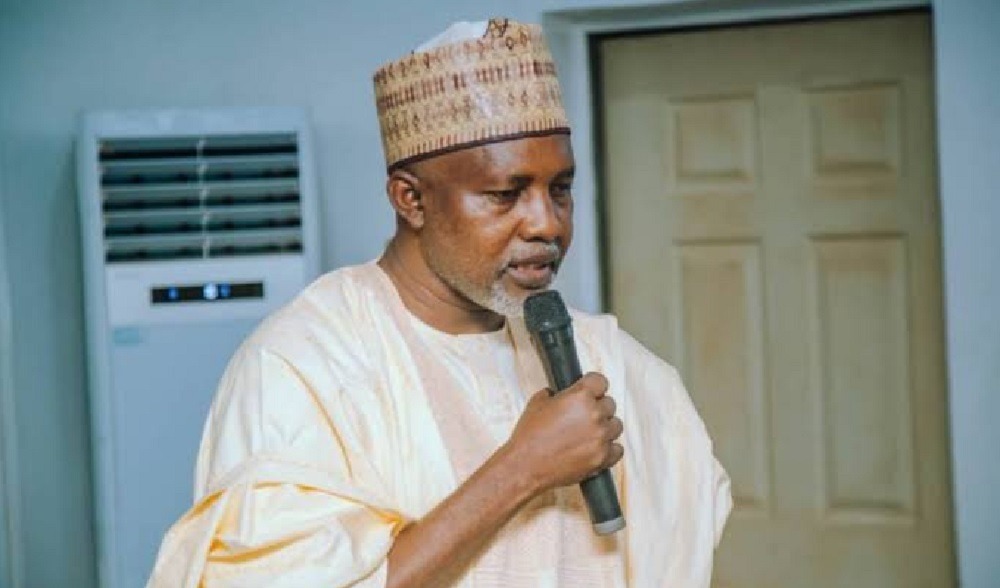
Chairman House Committee on National Planning and Economic Development, Rep. Gboyega Isiaka, disclosed during a briefing at the National Assembly Complex on Monday in Abuja.

Advertisement

Speaking for a joint committee of both legislative chambers, he outlined the scope of the engagement and its expected impact.

The two-day dialogue is scheduled for 14 and 15 April 2026 at the Bola Ahmed Tinubu International Conference Centre, where policymakers, private sector leaders and development experts are expected to converge.

At the heart of the discussions is the need to close the persistent gap between policy formulation and execution—an issue that has repeatedly undermined national development efforts.

The dialogue is being organised in collaboration with key government institutions, including the Office of the Vice President, Ministry of Finance, Ministry of National Planning and Budget Office of the Federation, all of which play central roles in shaping the country’s fiscal direction.

Advertisement

Lawmakers believe that bringing these actors together will help create a more coherent and disciplined approach to economic planning, particularly as Nigeria pursues the ambitious target of becoming a $1 trillion economy.

Despite recent gains, concerns remain over the pace of growth. Current figures hover around 3.54 per cent, a rate considered too modest to deliver transformative change, especially when set against a population growth rate of about 2.7 per cent.

The proposed reforms are therefore seen as a critical step towards accelerating growth, improving fiscal coordination and ensuring that national ambitions translate into tangible outcomes for citizens.

He said: “We cannot continue on a business-as-usual trajectory. Our growth must not only accelerate but must also be deliberately tied to a well-structured and implementable national plan”.

Advertisement

Reflecting on Nigeria’s history of development planning—from pre-independence strategies to Vision 2020 and the Economic Recovery and Growth Plan—he observed that while some frameworks recorded partial successes, many fell short due to structural weaknesses, macroeconomic volatility, and external shocks such as fluctuating oil prices.

Rep. Isiaka further that the forum will also serve as a platform for robust engagement among policymakers, legislators, heads of Ministries, Departments and Agencies (MDAs), and experts in finance, procurement, and economic planning, with the aim of producing actionable outcomes.

“The lessons are clear. Plans alone are not enough; execution, consistency, and adaptability are critical. This dialogue is about getting it right going forward.

“We are bringing everyone to the table to build consensus around a planning and budgeting system that delivers real, measurable results for Nigerians,” he added.

Advertisement

The Deputy Chairman House Committee on Budget and National Planning, Rep. Clement Jimbo, underscored the centrality of strategic planning to national development, as he cautioned that weak planning frameworks can continue to undermine economic progress.

He stressed that even marginal improvements from the dialogue can have far-reaching impacts on Nigeria’s development trajectory.

“If you fail to plan, you are invariably planning to fail,” Jimbo said, as he pointed to global examples such as Singapore’s transformation through disciplined and forward-looking policies.

“Even if we achieve just one percent improvement from the ideas generated here, it will significantly enhance our planning process and outcomes,” he stated.

Advertisement

On Nigeria’s current budgeting model, particularly the envelope system, Rep. Jimbo acknowledged existing concerns but maintained that every system comes with inherent limitations.

He explained that while alternatives such as zero-based budgeting offer advantages, they may be difficult to implement fully given the scale of government operations.

“With over a thousand MDAs, adopting zero-based budgeting wholesale could be time-intensive and impractical. What we need is a system that reflects our realities while improving efficiency and accountability,” he said.

He added that the dialogue will explore a range of options, including performance-based budgeting, with breakout sessions designed to enable MDAs to share experiences and propose reforms tailored to Nigeria’s context.

Advertisement

Fielding questions from journalists on managing potential oil windfalls, Rep. Jimbo said while the responsibility lies primarily with the executive, there are viable strategies to ensure fiscal stability, including saving excess revenues and adjusting budgets to reflect changing economic conditions.

“There are multiple pathways to managing windfalls effectively, and I am confident that with the right framework, Nigeria can better optimise such opportunities,” he said.

The lawmakers expressed optimism that the forthcoming dialogue will be a turning point in Nigeria’s approach to development planning—laying the foundation for a more responsive, coordinated, and results-driven budgeting system capable of delivering sustained economic growth.

Advertisement
Continue Reading
Advertisement

News

C’River: Pastor allegedly beats 14-yr old girl to death over claims of theft

Published

on

By

ADVERTISEMENT
Zoom Ad
ADVERTISEMENT
Zoom Ad

Tragedy truck in Wula, in Eastern Boki, Boki local government area of Cross River state when a pastor allegedly beat a 14-year-old girl, Nancy Peter to death.

The incident sparked outrage after allegations that she was first beaten by her mother and later flogged by a pastor over claims of theft.

In a statement by the Cross River State Police Relations Officer, ASP Sunday Eitokpah, he disclosed that preliminary findings indicate that the victim, identified as Miss Nancy Peter, was first assaulted by her mother, Mrs. Agnes Peter, 45, before being taken to Pastor Samson Roman Dago, 43, who allegedly subjected her to further corporal punishment with a cane.

He said a full-scale investigation has begun to really establish the exact circumstances surrounding the incident and determine the involvement of all those linked to the tragedy.

Advertisement

The command also dismissed, for now, social media claims that the girl was sexually assaulted, saying no evidence had been found to support such allegations.

It added that medical examinations and other investigative steps were ongoing.

Some village sources said the teenager became unconscious after the beating and was rushed to a medical facility in Wula Community, where doctors confirmed her dead on arrival.

Vanguard gathered that the community has now been left in shock, as the death has revived painful concerns about the dangers of corporal punishment and the need for greater child protection.

Advertisement

A child rights advocates, James Ibor esq, and principal Counsel at Basic Rights Counsel Initiative, ( BRCI)said that physical punishment does not correct children; it scars them, deepens fear, and can lead to irreversible harm.

“It is reprehensible and heartbreaking , that in 2026 this kind of barbaric act will still be happening, after the child rights act was passed since 2023.

“I’m calling on the Commissioner for police not to allow this girl’s murder to go unpunished , neither should it be forgotten like other murders of this nature.

“A child should never be disciplined to the point of collapse. This is a tragedy that should never have happened, the police must do everything possible to ensure the girl get’s justice , it is a sad development, ibor said.

Advertisement
Continue Reading

News

Tinubu back to Abuja after Eid-el-Kabir break

Published

on

By

ADVERTISEMENT
Zoom Ad
ADVERTISEMENT
Zoom Ad

President Bola Tinubu returned to Abuja on Tuesday evening after spending the Eid-el-Kabir holiday in Lagos, where he carried out a string of political and official engagements, the Special Adviser on Information and Strategy, Bayo Onanuga, said in a statement.

The President’s aircraft touched down at the Presidential Wing of Nnamdi Azikiwe International Airport at 5:17 p.m., and he was received by senior government officials, including the Minister of the Federal Capital Territory, Nyesom Wike; Chief of Staff, Femi Gbajabiamila; National Security Adviser, Nuhu Ribadu; and Inspector General of Police, Tunji Disu.

During the holiday period, Tinubu received Vice-President Kashim Shettima and other visitors during the traditional Sallah homage from several political leaders. “I thank all those who came to observe the Sallah rites with me,” the President was quoted to have said in the statement, noting the visits by top legislators and party leaders.

The President also hosted the leadership of the Senate, led by Senate President Godswill Akpabio, and welcomed members of the Nigeria Governors’ Forum under the chairmanship of Kwara State Governor, AbdulRahman AbdulRazaq. APC stakeholders from Oyo State—including the party’s governorship candidate, Sharafadeen Alli—and the party’s House of Representatives and State Assembly candidates from Lagos were among those who visited the President during the holiday.

Advertisement

On Monday, Tinubu attended the International Fleet Review at Eko Atlantic City Waterfront, an event marking the 70th anniversary of the Nigerian Navy. There he commissioned three naval vessels—NNS Oloibiri, NNS Mambila, and NNS Gurara—underscoring his administration’s focus on maritime security. “The commissioning of these vessels is a step toward protecting our maritime domain and supporting national security,” the President said.

Also on Monday, President Tinubu met with the President of the Republic of Benin, Romuald Wadagni, in what the statement said “reinforced the longstanding bond of friendship, regional cooperation, and economic partnership between the neighbouring countries.”

The statement added that before the holiday, the President participated in the All Progressives Congress (APC) primaries in Lagos, voting in his own primary and receiving the party’s endorsement.

The statement reiterated that President Tinubu was endorsed nationwide by close to 11 million voters as the APC’s flagbearer for the 2027 presidential election.

Advertisement
Continue Reading

News

Boko Haram: NAF Chief assures of people-centred air operations

Published

on

By

ADVERTISEMENT
Zoom Ad
ADVERTISEMENT
Zoom Ad

The Chief of the Air Staff (CAS), Air Marshal Sunday Aneke, has again reaffirmed the commitment of the Nigerian Air Force (NAF) to conducting professional, responsible, and people-centred air operations in its ongoing counter-terrorism and other security operations across the country.

Aneke also assured that the commitment of the NAF remains steadfast in its resolve to institutionalise Civilian Harm Mitigation and Response (CHMR) across all levels of operations as part of its commitment to global best practices.

The CAS made this known while declaring open the maiden NAF Seminar on Civilian Harm Mitigation and Response for strategic-level officers.

The one-day seminar, which was held at the MD Umar Blue Room, Headquarters Nigerian Air Force in Abuja, brought together an array of senior military officers, security stakeholders, policy experts, civil society representatives, journalists, and subject-matter experts to deepen institutional understanding of civilian protection considerations in contemporary military operations.

Advertisement

In his address at the seminar, Air Marshal Sunday Kelvin Aneke, who described the initiative as a significant milestone in the NAF’s continuous efforts to strengthen professionalism, accountability, and operational effectiveness, noted that the evolving security environment requires military leaders to balance mission accomplishment with the protection of civilian lives and property, stressing that strategic-level officers play a critical role in shaping operational decisions, institutional responses, and public narratives.

While noting that the NAF remains steadfast in its resolve to institutionalise Civilian Harm Mitigation and Response across all levels of operations as part of its commitment to global best practices, the CAS said maintaining public trust and confidence is essential to achieving lasting operational success.

He said, “Civilian Harm Mitigation and Response is not a constraint on our operational effectiveness; rather, it is a framework that enhances precision, improves decision-making, and ultimately preserves strategic legitimacy.”

He further stressed that civilian protection considerations enhance mission effectiveness by promoting informed decision-making, accountability, and operational discipline.

Advertisement

Earlier, in his welcome address, the Chief of Civil-Military Relations (CCMR), Air Vice Marshal Edward Gabkwet, described the seminar as a landmark initiative in the Nigerian Air Force’s ongoing efforts to strengthen professionalism, accountability, and civilian protection in military operations.

He noted that modern military operations demand a careful balance between mission accomplishment and humanitarian considerations, particularly in complex operational environments where civilians are often present.

According to the CCMR, “Operational success is not defined solely by tactical achievements, but by the ability to conduct operations with precision, discipline, restraint, and utmost regard for the safety, dignity, and wellbeing of civilian populations within areas of operation.”

Air Vice Marshal Gabkwet further highlighted the NAF’s deliberate efforts to strengthen Civilian Harm Mitigation and Response through doctrine development, training, and capacity-building initiatives. He noted that the seminar was organised at the directive of the Chief of the Air Staff to enhance strategic-level understanding of CHMR principles and equip senior leaders with practical tools for balanced, objective, and timely decision-making. He added that effective civilian harm mitigation requires collaboration among military, paramilitary, and civilian stakeholders, making the broad participation at the seminar both timely and essential.

Advertisement

The seminar featured presentations and discussions by renowned experts in civilian protection, human rights, and military operations, providing participants with a platform for constructive dialogue on best practices, operational lessons, and practical approaches to minimising civilian harm while maintaining operational effectiveness.

The Chief of the Air Staff expressed confidence that the outcomes of the engagement would further strengthen the Nigerian Air Force’s commitment to professionalism, operational excellence, and accountability while reinforcing its determination to protect civilians and uphold the highest standards in the conduct of air operations.

Continue Reading

Trending

Copyright © 2024 Naija Blitz News