Connect with us

News

West Africa at Crossroads as Sierra Leone Speaker Demands Urgent Action on Street Children

Published

on

ADVERTISEMENT
Zoom Ad
ADVERTISEMENT
Zoom Ad

…as Sesay say no child in ECOWAS region should be left without protection

By Gloria Ikibah

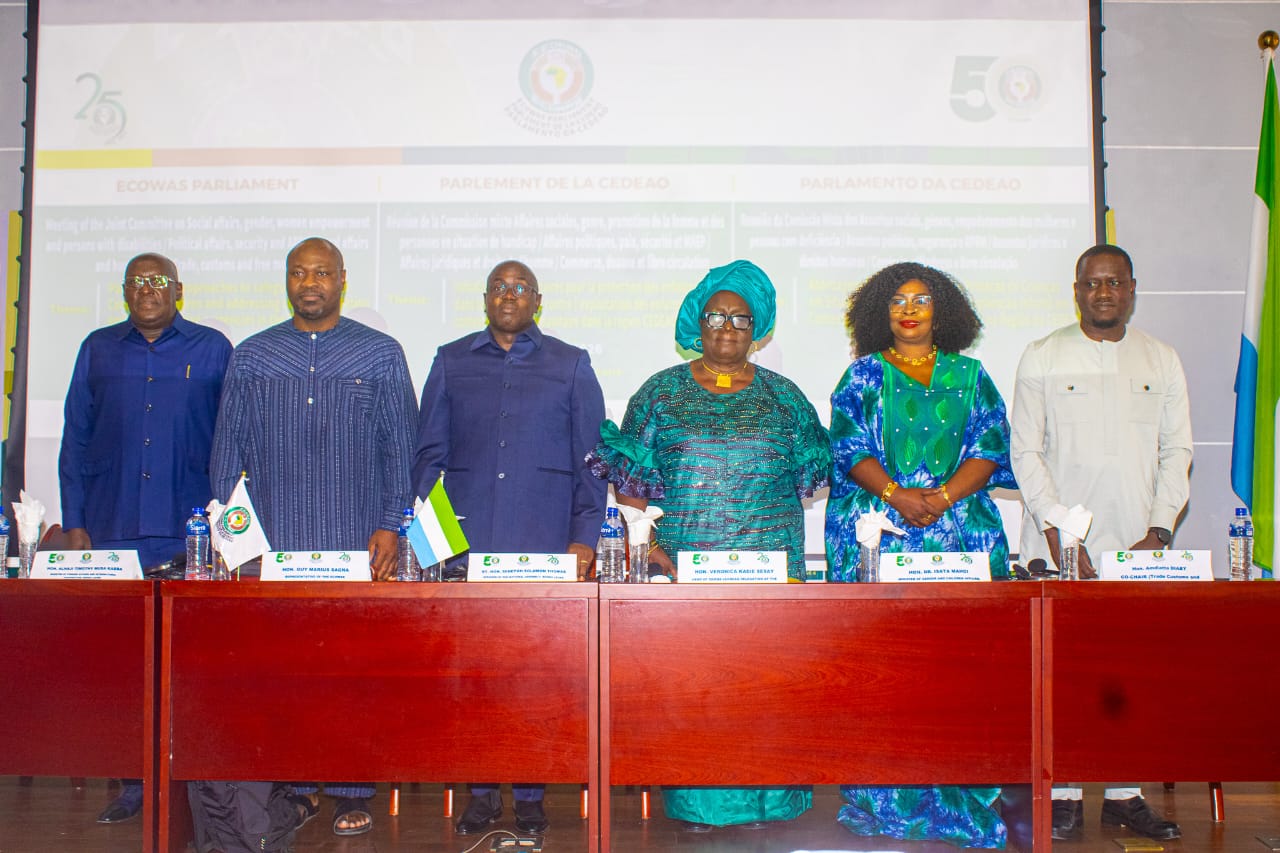
Speaker of Sierra Leone’s  Parliament, Rt. Hon. Segepoh Solomon Thomas, has sounded a stark warning over the rising number of children living on the streets across West Africa, describing the trend as evidence of deep-rooted systemic failures.

Speaking at the ECOWAS Parliament Joint Committee meeting in Freetown, he cast the situation as a defining moment for regional leadership, urging lawmakers to respond with urgency and resolve.

Advertisement

He welcomed the opportunity to take part in the session, which centres on protecting children in street situations, but stressed that the scale of the challenge requires more than routine engagement.

According to him, the region is approaching a critical juncture that calls for decisive, coordinated action from governments and parliaments alike.

He drew attention to the vulnerability of children forced onto the streets, noting that they remain among the most neglected groups, often exposed to exploitation, abuse and limited access to basic services.

The Speaker’s intervention adds to growing concern among policymakers that without stronger systems and sustained commitment, the crisis could deepen further across the sub-region.

Advertisement

He said: “We assemble at a time when our sub-region stands at a critical juncture—one that calls for moral clarity, legislative courage, and coordinated action. The theme of this meeting, ‘Parliamentary Approaches to Safeguarding Children in Street Situations and Addressing Child Exploitation in the ECOWAS Region’, is not only timely but speaks directly to the conscience of our collective humanity.

“The Moral Imperative Children in street situations represent one of the most vulnerable and marginalized populations in our societies. Their presence in our urban and peri-urban spaces is not merely a social anomaly; but a reflection of systemic gaps-economic inequality, family disintegration, weak social protection systems, and, in some cases, the enduring consequences of conflict and instability.

“As legislators and representatives of our people, we must recognize that the plight of these children is not just an isolated welfare issue. It is intrinsically linked to broader questions of human rights, sustainable development, public security, and social justice. Every child forced into the streets is a silent indictment of our governance systems-and a call to action.,” he noted.

Reflecting on Sierra Leone’s experience, he pointed to steady progress while conceding that serious hurdles still lie ahead.
He stressed that tackling the issue requires a well-rounded and coordinated approach, drawing on lessons learned over time.

Advertisement

“In Sierra Leone, we have emerged from a difficult past marked by civil conflict, yet we have remained steadfast in our commitment to rebuilding institutions that protect the dignity and rights of all citizens.

“We have learned that responses must be multidimensional—combining legislative oversight, community engagement, social services expansion, and partnerships”, he said.
Turning to the role of legislators, he made it clear that passing laws alone is not enough, insisting that parliaments must ensure those laws deliver tangible results.

He also called for stricter enforcement of existing legal frameworks and more rigorous monitoring of public spending on social protection programmes.

Advertisement

“The role of Parliament in addressing this challenge cannot be overstated. Our responsibilities extend beyond law-making; they encompass oversight, representation, and advocacy.

“Through Legislative Strengthening, we must ensure that our legal frameworks are robust, harmonized with international conventions, and responsive to emerging forms of exploitation. Laws must not only exist-they must be enforceable and enforced.

“Through Oversight and the effective use of Accountability mechanisms, Parliaments must rigorously oversee the implementation of child protection policies. Budgetary allocations for social welfare, education, and rehabilitation programs must be scrutinized to ensure they meet the scale of the challenge. With strong Advocacy and Public Engagements, we must use our platforms to shift societal attitudes. Children in street situations must not be stigmatized-they must be protected, rehabilitated, and reintegrated.

“Additionally, Regional Cooperation is a critical approach that must be advanced. Child exploitation often transcends national borders. Trafficking networks, for instance, operate across jurisdictions. This necessitates stronger legislative alignment and intelligence-sharing among ECOWAS Member States.,” he said.

Advertisement

Thomas outlined key proposals for a coordinated regional response, including a shared legislative framework, stronger cross-border enforcement, and improved monitoring systems. He also stressed the need for better data to guide policy decisions.

In one of the most striking moments of his address, he sought to reframe the narrative around vulnerable children.

“Children are not the problem; they are the promise,” he declared, adding that their situation reflects failures in governance rather than individual circumstances.
He urged leaders to move from reactive measures to prevention.

“We must therefore move from a paradigm of reaction to one of prevention—addressing the structural drivers that push children onto the streets,” he said.

Advertisement

“The children we speak about today cannot wait for incremental change; they require urgent, decisive, and sustained intervention.

“We have the moral responsibility to act now and address the exploitation of vulnerable children in the street,” he said, invoking Nelson Mandela’s words: “The true character of a society is revealed in how it treats its Children.

“Together, let us build a region where no child is left to survive on the streets, and where every child is afforded the dignity, protection, and opportunity they deserve.”

In her welcome address, Hon. Veronica Sesay described the gathering as both timely and necessary, extending a warm reception on behalf of the country’s leadership and people.

Advertisement

Turning to the substance of the meeting, she warned that the region faces a pressing child protection crisis.

“It is a great honour and a profound privilege for me to warmly welcome you all to Freetown for this important Delocalized Meeting of the Joint Committee of the ECOWAS Parliament,” she said.

Sesay who is also the Chairman of the Committee on Social Affairs, Gender, Women Empowerment and Persons with Disabilities explained that the theme of the meeting “Approaches to Safeguarding Children in Street Situations and Addressing Child Exploitation in the ECOWAS Region” speaks directly to the urgent responsibility placed upon us as legislators and policymakers.

According to her, “It underscores the need for strengthened legal frameworks, effective oversight, and enhanced cooperation among Member States to ensure that the rights and dignity of every child are protected.

Advertisement

“This gathering provides an important platform for reflection, dialogue, and peer learning among our parliaments. Over the coming days, we will examine existing regional and national frameworks, explore the structural and socio-economic factors that contribute to children living in street situations, and identify practical strategies for strengthening child protection systems across the region.

“This meeting comes at a very critical moment for our sub -region. Across ECOWAS Member States, children living and working in street situations remain among the most vulnerable members of our societies. They face heightened exposure to exploitation, violence, hazardous labour, substance abuse, and limited access to essential social protection services. These realities demand our collective attention, strong legislative action, and coordinated regional responses”.

Sesay also pointed to Sierra Leone’s recent legislative strides as evidence of what is possible.

“Our country has, in recent years, demonstrated how a responsive and people-centered legislative process can drive meaningful social transformation. Through the work of Parliament of Sierra Leone from policy conception, stakeholder consultations, committee scrutiny, and plenary debate, to eventual enactment-Parliament continues to serve as a vital instrument for safeguarding the rights of our citizens.

Advertisement

“It is within this legislative tradition that Sierra Leone has enacted landmark laws aimed at protecting children and advancing gender equality. Notably, the Child Rights Act 2025 reinforces the protection framework for children, aligning national standards with international obligations and addressing emerging vulnerabilities, including children in street situations. Similarly, the Prohibition of Child Marriage Act stands as a firm legislative commitment to ending harmful practices and ensuring that every girl child is protected from early and forced marriage, thereby preserving her dignity, health, and future opportunities.

“In further strengthening the protection of women and girls, the Gender Equality and Women’s Empowerment Act represents a progressive step in guaranteeing the freedoms, rights, and inclusive participation of women in governance and national development.

“Together, these legislative measures reflect not only political will, but also the deliberate use of parliamentary processes to expand freedoms and protect the liberties of women and the girl child in Sierra Leone. These achievements remind us that legislation is not merely an exercise in lawmaking, but a powerful tool for social justice, inclusion, and human dignity”, she added.

She urged that the deliberations must translate into concrete recommendations and actionable steps that strengthen protection systems.

Advertisement

Sesay called for unity and resolve across the region, pleading for the meeting to reinforce the Parliament’s collective resolve to ensure that no child in the ECOWAS region is left without protection, opportunity, and hope for a better future.

Continue Reading
Advertisement

News

ECOWAS Parliament Rallies Communities Against Irregular Migration, Modern Slavery

Published

on

ADVERTISEMENT
Zoom Ad
ADVERTISEMENT
Zoom Ad

By Gloria Ikibah

The ECOWAS Parliament will this week launch a major grassroots campaign in The Gambia and Senegal to raise awareness of the dangers of irregular migration and modern slavery, amid growing concern over the increasing number of young West Africans embarking on perilous journeys in search of better opportunities.

In a statement by the Chief Communication Officer of the ECOWAS Parliament, Uchenna Duru-Nwaotule, it stated that the initiative is themed “One Journey, Many Risks. Ask First, Move Safely”,  will be held in Banjul from 6 to 10 July before moving to Dakar from 13 to 17 July.

According to the regional parliament, the exercise will bring lawmakers into direct contact with young people, returnees, community leaders, civil society organisations and other stakeholders to discuss the risks associated with irregular migration and human trafficking.

Advertisement

The parliament said the engagement was designed to deepen public understanding of one of West Africa’s most pressing socio-economic and security challenges.

It noted that worsening unemployment, poverty, insecurity and limited economic opportunities continue to push many young people into dangerous migration routes across land and sea.

“Irregular migration remains one of the most pressing socio-economic and human security challenges confronting West Africa.

“Driven by unemployment, poverty, limited economic opportunities, insecurity and aspirations for better livelihoods, many young people undertake perilous migration journeys through unsafe land and maritime routes, exposing them to exploitation, trafficking in persons, forced labour, sexual exploitation, debt bondage and other forms of modern slavery”, the statement read.

Advertisement

The parliament observed that both The Gambia and Senegal continue to face the consequences of irregular migration as countries of origin, transit and return.

It said the campaign aims to educate vulnerable communities, while giving Members of Parliament a clearer understanding of the factors driving migration and the challenges faced by victims and returnees.

“The engagement seeks to sensitize young people and vulnerable communities on these risks, provide Members of Parliament with first-hand insight into the drivers and consequences of irregular migration, promote dialogue between parliamentarians and citizens, and generate practical recommendations to strengthen national and regional prevention, protection and reintegration efforts”, it added.

Activities in The Gambia will begin with a courtesy visit to the Minister of Interior, followed by a stakeholders’ briefing involving the ECOWAS Resident Representative, the Gambian delegation to the ECOWAS Parliament, the International Organization for Migration and the National Agency Against Trafficking in Persons.

Advertisement

The programme will also feature a series of community town hall meetings in Bakau, Brikama and Barra, where parliamentarians will engage residents through local-language awareness sessions, testimonies from returnees and survivors, and interactive discussions.

As part of efforts to reach young people through sport, organisers will also stage a community football event in Bakau under the campaign slogan, “One Journey, Many Risks. Ask First, Move Safely.”

The Gambian leg will conclude with a debriefing session on 10 July to review key findings and consolidate recommendations.

The second phase of the campaign will take place in Dakar, where lawmakers will engage youth groups, students, returnees, community organisations and public institutions through town hall meetings, public discussions and media outreach.

Advertisement

According to the ECOWAS Parliament, both engagements will rely heavily on interactive dialogue, question-and-answer sessions, as well as radio, television and community media platforms to encourage widespread public participation and strengthen awareness of the dangers associated with irregular migration and modern slavery.

Continue Reading

News

FG Condemns Killing of Two Nigerians in South Africa, Warns ‘All Options Remain on the Table

Published

on

ADVERTISEMENT
Zoom Ad
ADVERTISEMENT
Zoom Ad

By Gloria Ikibah

The Federal Government has strongly condemned the killing of two Nigerian nationals in South Africa, demanding swift investigations and justice for the victims while warning Pretoria that Nigeria may consider stronger measures if attacks on its citizens continue.

In a statement issued on Sunday by the Ministry of Foreign Affairs, the government expressed deep concern over what it described as a disturbing pattern of violence against Nigerians amid rising xenophobic tensions in South Africa.

According to the ministry, one of the victims, Emeka Charles Iroegbu, was allegedly killed by officers of the Tshwane Metro Police in Sunnyside, Pretoria, on 28 June after being subjected to what it described as “gruesome interrogation techniques.”

Advertisement

The ministry also recalled the death of Nnaemeka Mathew Andrew Ekpenyong, who was allegedly killed by the same officers on 20 April.

It said although the identities of the four officers involved were known to the South African Police Service, no arrests had been made.

The second victim, Musa Yunana Joe, popularly known as Big Joe, was reportedly shot dead in front of his shop in Witbank, Mpumalanga, on 28 June by unidentified gunmen.

The Federal Government said the incidents had heightened concerns over the safety of Nigerians and other foreign nationals living in South Africa.

Advertisement

It argued that Nigerians were unfairly being blamed for broader socio-economic problems confronting South Africa.

“These two killings come at a time when foreigners are being unduly targeted in South Africa. This raises questions about deliberate attempt by some elements to wrongfully generalise and tag well-meaning, hard-working, and respectable Nigerians as criminals. It also raises further questions over the general safety of Nigerians and other foreigners in South Africa.

“The continuing pattern of such terrible incidents is clearly evidence of complicity on the part of security operatives, especially officers of the Tshwane Metro Police, which raises the question of state responsibility under International Law.

“It is a fact that South Africa currently has one of the highest rates of crime globally, including the culture of looting and mob action. Nigerians are more civil in our engagements with foreign nationals, and we always uphold the rule of law when dealing with illegalities. It is therefore unfair to target foreigners and make them scapegoats of endemic socio-economic conditions that need to be addressed by the authorities”, the statement read.

Advertisement

The Nigerian government also criticised recent remarks attributed to a spokesperson for the South African government, who reportedly challenged Nigerians leaving the country during the ongoing xenophobic protests to reveal where illegal drugs were hidden.

The ministry described the comments as inflammatory.
It added that groups accused of promoting violence against foreign nationals would also be held accountable.

The unguarded public statements are unacceptable and are strongly condemned. Such derogatory, unprofessional and uncensored  public statements by highly placed government officials constitute hate speech that influences and incites negative and criminal actions against members of the Nigerian community.

“The gang leaders of groups such as March on March and Operation Dudula, who incite violence and hate against fellow Africans, will also be held to account as a matter of regional and international criminal liability”, it added.

Advertisement

Nigeria called on the South African authorities to investigate the latest killings as well as other unresolved cases involving Nigerian citizens.

“The Government of Nigeria, therefore, calls on the South African authorities to conduct urgent investigations into the two killings and several other pending cases of extra-judicial killings of Nigerian nationals in South Africa, and ensure that the perpetrators of the heinous crimes are brought to justice without further delay.

“Our position remains that no matter what the allegations or suspicions may be, there are lawful processes and steps to justice. All must be presumed innocent and granted fair hearing in a court of law”, it stated.

The government extended its condolences to the families of the victims and advised Nigerians living in South Africa to remain vigilant while diplomatic efforts continue.

Advertisement

“With the volatile security situation, we appeal to our nationals to remain calm, law-abiding and security conscious, especially due to the ongoing xenophobic and afrophobic demonstrations in the country. They are advised to move to safer neighbourhoods and avoid areas that are prone to violent activities, while the Government continues to explore diplomatic solutions to address the growing scourge of Afrophobia in South Africa”, the Federal Government stated.

The ministry also stressed that South African citizens and businesses continue to operate freely in Nigeria and urged Pretoria to guarantee similar protection for Nigerians.

“The Government of Nigeria wishes to reiterate the fact that there are numerous South African nationals and businesses operating safely in Nigeria without harassment of any kind. Likewise, it is the responsibility of the South African Government to protect the lives and properties of all foreigners, including Nigerian nationals, living in the country.

“Therefore, the systematic targeting of Nigerian nationals who are legally residing in South Africa is not acceptable, and their safety should be guaranteed.

Advertisement

“We wish to place the Government of South Africa on notice that if the situation continues to persist, all options remain on the table, some of which will be activated if the uncultured and provocative trend of intolerance and apartheid-style behaviour of South Africa against foreigners is not addressed”,it stated.

Despite its strong stance, the Federal Government appealed to Nigerians at home to refrain from reprisals.

“The government calls on the general Nigerian public to remain calm and not take laws into their hands with retaliatory actions. We will continue to pursue dialogue and negotiations in the spirit of African unity, brotherhood and solidarity, which are the cornerstones of Nigeria’s foreign policy in resolving the unfortunate developments”, it pleaded.

The ministry added that the ongoing evacuation of Nigerians who had registered to leave South Africa will continue as planned.

Advertisement
Continue Reading

News

NYSC Reforms Spark Fresh Row as Agbese Urges Tinubu to Suspend Plan

Published

on

ADVERTISEMENT
Zoom Ad
ADVERTISEMENT
Zoom Ad

By Gloria Ikibah

A member of the House of Representatives, Philip Agbese, has urged President Bola Tinubu to suspend the Federal Government’s proposed reformsAggese to the National Youth Service Corps (NYSC), warning that some of the changes could weaken the scheme’s founding purpose and undermine Nigeria’s national defence strategy.

Agbese, who represents Ado/Okpokwu/Ogbadibo Federal Constituency of Benue State and serves on the House Committees on Youth and Defence, made the appeal in a statement issued on Sunday in Abuja.

He argued that although reforms were necessary to keep the NYSC relevant, they should not erode the institution’s core mandate of promoting national unity and preparing young Nigerians for national service.

Advertisement

“Reducing NYSC to a skill acquisition training centre is not healthy for our national life”, Agbese said.

His comments come days after the Minister of Youth Development, Ayodele Olawande, unveiled what the Federal Government described as the first comprehensive review of the NYSC since its establishment in 1973.

The proposed reforms include restructuring the orientation camp into three phases, introducing 11 specialised career streams from which prospective corps members will make their choice during registration, strengthening skills acquisition programmes, replacing the traditional khaki uniform with locally produced attire and appointing a civilian, rather than a military officer, to head the scheme.

The proposals have sparked debate, with supporters describing them as overdue modernisation, while critics fear they could alter the character of the national service programme.

Advertisement

Agbese maintained that the NYSC had evolved into far more than a youth development initiative, saying it had become a strategic national institution that had repeatedly supported the country during periods of national need.

He noted that corps members had over the years played vital roles in education, healthcare, elections and emergency response, making the scheme an important component of Nigeria’s nation-building efforts.

The lawmaker also opposed plans to place the scheme under civilian leadership, arguing that the military culture embedded in the orientation programme helps instil discipline, patriotism and national consciousness among participants.

“Instilling military training in citizens is an international practice that must be sustained”, he added.

Advertisement

According to him, removing that element could diminish one of the NYSC’s defining features and weaken its contribution to national preparedness.

Agbese therefore called on President Tinubu to suspend implementation of the reforms and set up a broader review committee comprising security experts, lawmakers, former NYSC officials, youth organisations and other key stakeholders.

He argued that any restructuring of the scheme should be based on extensive consultation to ensure that its original objectives are preserved while addressing contemporary challenges.

Established on 22 May 1973 by the administration of Yakubu Gowon in the aftermath of the Nigerian Civil War, the NYSC was designed to promote reconciliation, national integration and unity by deploying graduates to states outside their places of origins

Advertisement

Over the past five decades, the scheme has become a key platform for cultural exchange and public service, with corps members contributing to sectors facing manpower shortages while supporting government programmes ranging from healthcare campaigns to election duties and disaster response.

Although successive governments have introduced policy adjustments over the years, the current proposals represent the most extensive attempt to reshape the NYSC since its creation, fuelling a wider national conversation about the future of one of Nigeria’s most enduring institutions.

Continue Reading

Trending

Copyright © 2024 Naija Blitz News