

News
PFIPC Never Received Budget Funds Despite N1.32bn Allocation – DG Budget Office
- /home/naijuinz/public_html/wp-content/plugins/mvp-social-buttons/mvp-social-buttons.php on line 27
https://naijablitznews.com/wp-content/uploads/2026/07/IMG-20260724-WA0014-1000x600.jpg&description=PFIPC Never Received Budget Funds Despite N1.32bn Allocation – DG Budget Office', 'pinterestShare', 'width=750,height=350'); return false;" title="Pin This Post">
- Share
- Tweet /home/naijuinz/public_html/wp-content/plugins/mvp-social-buttons/mvp-social-buttons.php on line 72
https://naijablitznews.com/wp-content/uploads/2026/07/IMG-20260724-WA0014-1000x600.jpg&description=PFIPC Never Received Budget Funds Despite N1.32bn Allocation – DG Budget Office', 'pinterestShare', 'width=750,height=350'); return false;" title="Pin This Post">
By Gloria Ikibah
The Budget Office of the Federation has told the House of Representatives that although the Presidential Foreign Investment Promotion Council (PFIPC) was allocated N1.32 billion in the 2026 Appropriation Act, not a single kobo was released to the organisation because it failed to meet the legal conditions required for public expenditure.
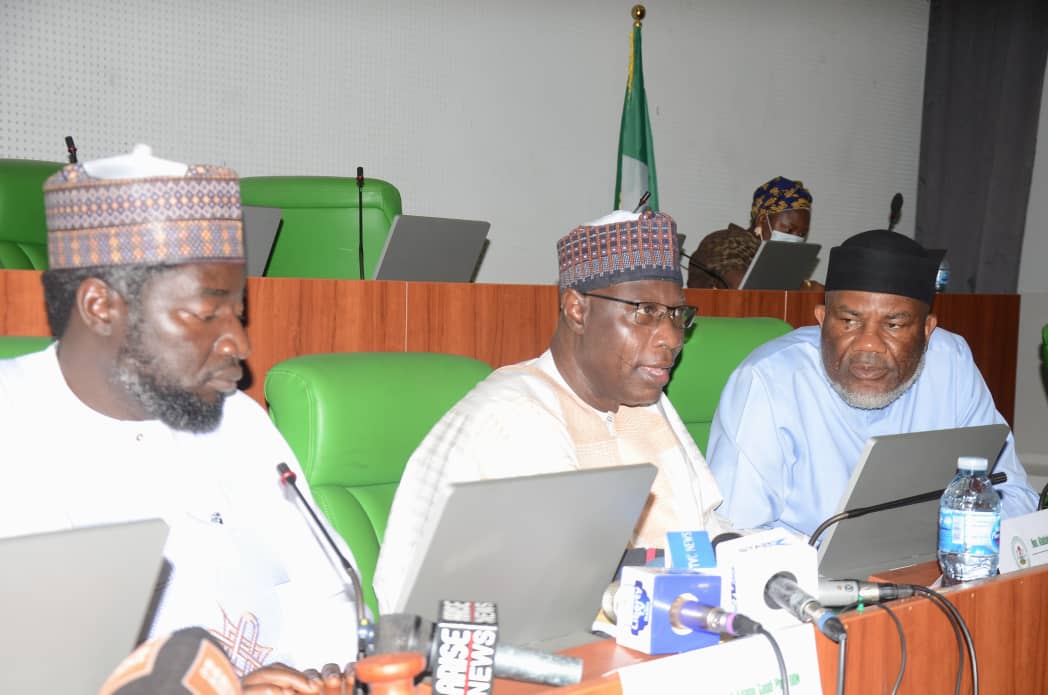
The clarification came on Friday when the Director-General of the Budget Office, Tanimu Yakubu, appeared before the House of Representatives Ad-Hoc Committee investigating the alleged unlawful establishment and funding of the PFIPC.

The committee is probing how the council found its way into the federal budget despite growing evidence that it was never legally established by the Federal Government.
Defending the Budget Office’s actions, Yakubu maintained that the agency neither created the council nor approved its establishment, recruitment, staffing or salaries. He said its responsibility was limited to assessing the financial implications of approvals forwarded by the relevant government authorities.
He disclosed that although the council requested N3.8 billion for personnel costs, the Budget Office rejected the figure and carried out its own independent assessment using the approved staff strength and the salary structure prescribed for public servants.
He said: “The Budget Office did not create the council. It did not assign its budget code. It did not approve its establishment. It did not grant its recruitment waiver. It received official instruments and did what the law required of it. It measured their fiscal effect.
“That estimate did not form the basis of the Budget Office’s recommendation. The Budget Office rejected it and made an independent calculation. That calculation produced N802,978,783. This was not a concession to the council. It was the Budget Office’s own fiscal proposal.”
Yakubu explained that the proposed personnel allocation never translated into actual spending because the Budget Office did not issue the financial clearance required before recruitment, enrolment on the government payroll and payment of salaries.
He emphasised that although personnel costs accounted for about 61.63 per cent of the council’s total appropriation, the funds remained untouched.
“There was therefore no financial clearance. There was no lawful recruitment. There was no payroll enrolment. There was no salary payment.
“Not one naira of the personnel provision has been drawn. There is no personnel expenditure to recover because no expenditure ever occurred”, he added.
The Director-General also told lawmakers that the N200 million earmarked for overheads was never accessed because treasury warrants and cash backing were not issued.
Similarly, he said the N300 million capital allocation remained on paper as the procurement process never reached the stage where public funds could legally be spent.
According to him, the financial safeguards of government worked exactly as intended by preventing unauthorised expenditure before any money left the treasury.
“No procurement reached the point at which expenditure would arise. No Ministerial Tenders Board approved a transaction. No Certificate of No Objection was issued. No treasury warrant followed. No treasury cash-backing followed.
“The law did not recover money after it had gone. It prevented the expenditure before it began”, Yakubu noted.
During the hearing, members of the committee questioned the legal basis upon which the Budget Office made provisions for the council after examining what they described as a purported Act establishing the PFIPC.
A committee member, Rep. Abubakar Fulata, argued that the document lacked the essential features of a valid Act of Parliament, including a gazette number, the signature of the Clerk to the National Assembly and presidential assent.
He also faulted government agencies for failing to verify the authenticity of the document before acting on it.
“The purported Act is very clear. It is not genuine because it did not carry the gazette number, it did not have the signature of the Clerk of the National Assembly and it did not carry the signature of Mr. President”, he stated.
In response, Yakubu insisted the Budget Office relied solely on official establishment approvals, recruitment waivers and directives from the National Salaries, Incomes and Wages Commission in calculating personnel costs.
“We do not rely on any instrument to calculate personnel costs other than the establishment authorisation and the directives of the National Salaries, Incomes and Wages Commission”, he stressed.
Chairman of the Ad-Hoc Committee, Rep. Yusuf Gagdi, said the evidence before the panel indicated that the Budget Office acted based on documents presented by the appropriate government institutions, which were only later discovered to be forged.
Gagdi said the investigation had now shifted from the Budget Office to uncovering how forged documents entered official government channels.
“The question is whether the Budget Office allocated budget to this agency without the agency satisfying the requirements. The answer, based on the documents before us, is no. I repeat, no.
“The agency satisfied all the requirements the Budget Office needed before allocating a budget. The issue now is whether those documents were genuine. That is what this committee is investigating”, he noted.
He disclosed that the Accountant-General of the Federation has been invited to appear before the committee on Monday to explain how the council obtained its budget code, while other agencies will also be questioned as the investigation enters its final stage.
“By the special grace of God, we will conclude our findings and finish by next week”, he added.
The House constituted the ad-hoc committee following allegations surrounding the operations of the Presidential Foreign Investment Promotion Council, which reportedly appeared in official government records and the 2026 Appropriation Act despite questions over its legal status.
The panel is expected to determine how the council gained official recognition, identify those responsible and recommend measures to prevent similar occurrences within the public service.
News
WATCH: Rep OK Chinda displaying what’s he’s best known for, humility
Rep OK Chinda the gubernatorial flag bearer of APC in Rivers State is best known for his humility both at home and in the diaspora.
In this short video clip, he still displays that embodiment of humility.
Watch:
News
Reps Demand Urgent Action Over Bille Gas Seepage, Odidi Oil Spill
By Gloria Ikibah
The House of Representatives Committee on South-South Development Commission has demanded urgent and concrete measures to end the prolonged gas seepage in Bille Community, Rivers State, and the oil spill affecting Odidi Federated Community in Delta State.
Chairman of the committee, Rep. Julius Gbabojor Pondi, gave the directive on Thursday during a stakeholders’ engagement on the Bille gas seepage and a legislative hearing on the Odidi oil spill in Abuja.
Pondi said the two incidents had exposed residents of the oil-producing region to serious environmental and economic challenges, while responses from relevant authorities had failed to provide satisfactory and lasting solutions.
He said the committee became particularly concerned about the Bille incident following its engagement with the Nigerian Upstream Petroleum Regulatory Commission (NUPRC) and the National Oil Spill Detection and Response Agency (NOSDRA) on July 30, 2026.
According to him, the gas seepage had persisted for about nine months, with no clear end in sight.
He noted that Bille, a predominantly fishing community, had suffered losses to livelihoods, food security, household incomes, education and the general wellbeing of residents.
Pondi said: “The implications are serious. Beyond the potential risks to health, safety and the environment, the incident has imposed severe economic hardship on the people of Bille.
“It is unacceptable for an incident of this magnitude to persist for so long without a clear, time-bound and effective resolution strategy”.
The lawmaker said the stakeholders’ meeting was convened to establish the facts surrounding the incident, assess the response so far, identify obstacles and agree on practical and measurable steps towards resolving the crisis.
He said the committee expect detailed briefings from the operating companies, NUPRC, NOSDRA and other relevant agencies on the cause, extent and present status of the seepage.
Pondi also said representatives of Bille will be allowed to present their concerns and explain the relief and interventions required by the community.
“Most importantly, we want to move from prolonged discussion to concrete action and lasting resolution,” he said.
Presenting the agency’s technical findings, a Director of NOSDRA, Dr Yusuf Rigasa, confirmed the presence of several gases, including hydrogen sulphide, methane, volatile organic compounds and carbon dioxide, in parts of Bille, Degema Local Government Area of Rivers State.
Rigasa said investigations had established what he described as “multi-point subsurface gas bubbling” at several locations, including the premises of the Government Primary and Secondary School.
He said the school had subsequently been abandoned, while gas bubbling was also detected around waterways and mangrove areas.
According to him, NOSDRA conducted an air-quality assessment on December 6, 2025, at 19 locations and recorded elevated levels of hydrogen sulphide, methane, volatile organic compounds and carbon dioxide.
He explained that hydrogen sulphide has a characteristic rotten-egg odour, while methane is highly flammable and potentially explosive.
Rigasa said the levels recorded during the assessment exceeded applicable regulatory thresholds.
He added that laboratory analysis of samples collected on December 16, 2025, also revealed elevated levels of total petroleum hydrocarbons in groundwater, surface water and sediment.
The findings, he said, showed that soil, surface water and groundwater in parts of Bille had been affected by pollution.
The NOSDRA official said the agency’s technical presentation to the Minister of Petroleum Resources indicated that the gas seepage was probably biogenic, resulting from the degradation of organic matter.
He stressed, however, that the agency had not established that the gas originated from a hydrocarbon source.
Rigasa said the technical team had compared the situation with the 1986 Lake Nyos gas disaster in Cameroon, where a sudden release of carbon dioxide killed about 1,700 people and large numbers of animals.
He, however, stressed that NOSDRA had not identified any oil and gas operator as the source of the seepage.
According to him, the agency worked with operators including Renaissance, Eroton and New Cross, as well as the Nigerian National Petroleum Company, during the preliminary investigation.
He said NUPRC had also indicated that it had no record of pipelines in the immediate area where the seepage was occurring.
“That also tells us our findings, because we searched for oil and gas assets at the locations. There were none. That is why we are not able to actually pin a certain operator to what is actually happening,” he said.
Rigasa said NOSDRA’s findings had been corroborated by NUPRC, while a reservoir survey was ongoing to determine whether there was any connection to an underground hydrocarbon reservoir.
He explained that NUPRC was responsible for the reservoir investigation, while NOSDRA’s mandate was primarily environmental.
“What we can confirm for the House is that the air, the groundwater, the surface water and the sediment in the swampy areas in that village, they are all polluted,” Rigasa added.
The Bille Kingdom Chiefs Council also used the hearing to raise fresh concerns about the impact of the gas seepage on the community.
Secretary-General of the council, Chief Luckyman Egbila, Opu Gbolo III of Ancient Bille Kingdom, said the incident began on November 6, 2025, in the mangrove area where women had gone to harvest periwinkles.
He explained that Bille was predominantly a fishing community situated on a riverine island and accessible only by water.
Egbila said the community immediately alerted the relevant authorities, leading to an initial visit by NOSDRA and subsequent assessments.
He said although NOSDRA made recommendations, including the excavation of some areas, the community was not given the full reports of the investigations.
According to him, residents were eventually forced to travel to Abuja and write to relevant agencies after failing to receive satisfactory responses from regulators.
Egbila explained that further engagements were later held with operators, during which air quality, soil and water tests were conducted.
However, he said the community again did not receive the results of the tests.
Egbila said the situation had continued to deteriorate, with gas bubbling reported in several mangrove areas.
“Up till now, we are yet to see anything. Just as it happened the first time, they have gone back to sleep.
“Our people cannot go to fishing. Most of the mangroves are bubbling. Particularly, we don’t have water to drink. We don’t have water to eat with,” he said.
The community leader also alleged that dugout wells had become contaminated, while some residents, including children, had developed health problems.
He said the Rivers State Government had provided N100 million in palliative support, part of which was used to provide food and conduct a medical outreach.
However, he maintained that the intervention was inadequate given the length and severity of the crisis.
Egbila said NUPRC had also provided food items to the community, with contributions from operators and other oil and gas companies, but the supplies lasted only a few days.
He called for the immediate provision of potable water.
“Water is life. We can’t exist without potable drinking water,” he said.
The Bille representative also appealed for the permanent resolution of the gas seepage, saying residents needed to return to fishing and other economic activities.
He said the community hosts two major oil mining leases, OML 18 and OML 24, as well as gas infrastructure, and contributes significantly to the national economy.
Egbila said the crisis had also affected education in the community, forcing pupils to leave the primary school because of concerns over exposure to the emissions.
He added that the secondary school was considering reducing teaching hours to limit students’ exposure to the affected air.
He appealed for the upgrading of the community’s primary health centre and the deployment of resident doctors.
According to him, residents face serious difficulties accessing medical care in Port Harcourt because Bille can only be reached by water.
“Most times when people fall sick, by the time you rush them, get the boats and get to Port Harcourt, we keep losing these souls and lives,” he said.
Egbila further raised concerns about the condition of water from boreholes, alleging that some water that initially appeared clear turned black shortly after being pumped.
He urged the Federal Government, regulatory agencies and oil and gas companies to provide safe drinking water, address the health and livelihood consequences and find a lasting solution to the seepage.
Meanwhile, the chairman said the committee will proceed with a legislative hearing into the oil spill affecting Odidi Federated Community in Delta State.
He said the incident had reportedly persisted for more than five months.
According to him, the hearing will establish when the spill occurred and was reported, its cause, the containment measures taken, the extent of the affected environment, the state of remediation and why the spill had continued for so long.
“Our approach will be fair, objective and evidence-based. We are not here to prejudge any party, but to establish the facts, promote accountability and facilitate solutions,” he said.
Pondi described the Bille and Odidi cases as examples of the wider environmental and developmental problems confronting the South-South region.
He said communities in the region continued to bear a heavy environmental burden despite their significant contribution to Nigeria’s oil and gas economy.
“This contradiction must be addressed. The wealth derived from the natural resources of the Niger Delta must not come at the unacceptable cost of the health, livelihoods and future of its people,” he said.
The committee chairman said the House had a constitutional responsibility to ensure effective oversight and accountability, particularly among institutions responsible for environmental protection and resource management.
He warned that the proceedings must not end with expressions of concern without concrete implementation.
“We expect clear resolutions, firm commitments, defined responsibilities and measurable timelines,” he said.
Pondi added that immediate interventions should begin without delay, while technical assessments and remediation should be properly planned, funded and monitored.
He assured residents of Bille and Odidi that the House had heard their concerns and would continue to press for appropriate action.
“You deserve prompt intervention, effective remediation, meaningful relief and a clear pathway towards restoring your environment and livelihoods,” Pondi said.
He said the ultimate objective was to build a South-South region where natural resources could be developed responsibly, host communities protected, environmental incidents addressed promptly and economic development pursued alongside environmental sustainability, social justice and human dignity.
News
We must be resilient, combating drug war is a generational task, Marwa charges NDLEA officers (Photos)
. Honours 274 personnel, 18 Commands, 19 NGOs, media platforms at 12th awards ceremony in Abuja
The Chairman/Chief Executive Officer of the National Drug Law Enforcement Agency (NDLEA), Brig. Gen. Mohamed Buba Marwa (Rtd.) has charged officers, men and women of the anti-narcotics institution to remain resilient in view of the persistent nature of the drug challenge, which he described as a generational responsibility.
He gave the charge on Thursday 13th August 2026 during the 12th Chairman/Chief Executive Officer’s Commendations and Awards ceremony at the Agency’s national headquarters in Abuja where he honoured 274 personnel for outstanding performance in the discharge of their duties, and 18 best-performing commands as well as 19 NGOs and media organisations for their commitment to the war against drug abuse (WADA) advocacy in Nigeria.
According to him, “the war against illicit drugs is not a campaign with an end date. It is a generational responsibility. For every cartel we dismantle, intelligence tells us another will attempt to rise. For every corridor we shut down, traffickers will search for another route.”
He explained that the fight against drug trafficking could never be won by enforcement alone, noting that NGOs work quietly within communities to walk young people back from the edge of addiction, while journalists have told difficult stories on trafficking routes, rehabilitation, and family recovery that are not always easy to tell.
He acknowledged that many more deserving organisations and media platforms across the country exist beyond the honourees, describing the gesture as “the beginning of a tradition, not a closed chapter,” and assuring that subsequent editions of the ceremony will continue to identify and honour more individuals and organisations doing similar work.
“The fight against drug trafficking and substance abuse was never going to be won by enforcement alone. It is won in the communities where NGOs quietly walk young people back from the edge of addiction. It is won in the newsrooms where journalists chose to tell the difficult stories, the stories of trafficking routes, of rehabilitation, of families rebuilding, even when those stories were not the easiest to tell. Our partners in civil society and the media have been the multiplier effect on everything this Agency does. You have taken our message into homes, schools, and communities that our uniforms alone could never reach.”
Marwa highlighted some recent major operations that he said captured the character of the Agency: the dismantling of the Amadi Simon drug cartel; the takedown of two Nigerian-Mexican methamphetamine cartels operating within forests in Ogun and Oyo States; and the disruption of a tramadol cartel exploiting the Togo–Benin Republic–Nigeria corridor, which he described as a route that had for years fed a crisis of opioid abuse among Nigerian youth.
“These were not simple raids. They were the product of patient intelligence-gathering, cross-border cooperation, and officers willing to go where the criminals believed no one would follow”, he noted.
The NDLEA boss charged officers of the Agency to see the honourees as a standard to reach for rather than a ceiling to stop at, and urged partners in civil society and the media to view the recognition as an invitation to do more, not a reward to rest on.
He congratulated all recipients of awards and commendations, and thanked their families as well as Nigerians who continue to place their trust in the Agency.
-
Politics17 hours agoOsun Election : Akpabio, Uzodimma, others arrive Osogbo for APC mega rally
-
Metro17 hours agoKwara Police Arrest Suspected Kidnapper Attempting To Cash Out Ransom At POS Terminal
-
Foreign17 hours agoU.S. Deports 3 Million Foreign Nationals
-
Health17 hours ago5 infections you can still get even if you use a condom during sex
-
News17 hours agoSad! Medical doctor’s lifeless body found with multiple slashes in Port Harcourt
-
News11 hours agoOsun 2026: CCLCA berates INEC over poor mock accreditation, demands arrest of Fadahunsi
-
Sports17 hours agoCristiano Ronaldo Sends Message To Messi Over Father’s Death
-
News6 hours agoIgbere Traditional Rulers Back Deputy Speaker, Kalu’s Bid for Another Term, Describe His Legislative Service as Outstanding