Connect with us

Entertainment

Serena, Venus, Osaka Bring Sport, Style And Statement To 2026 Met Gala

Published

on

ADVERTISEMENT
Zoom Ad
ADVERTISEMENT
Zoom Ad

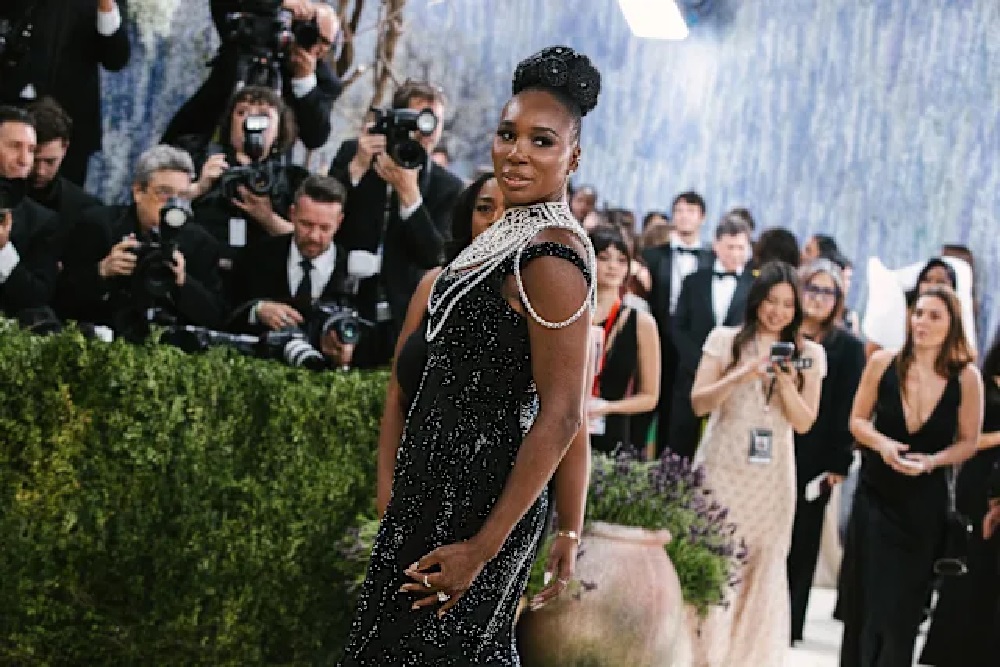
Tennis stars Serena Williams, Venus Williams and Naomi Osaka delivered a combo of athletic prestige and high fashion at the 2026 Met Gala, held at the Metropolitan Museum of Art under the theme “Fashion Is Art”.


Venus, serving as one of the evening’s co-chairs, made history as the third tennis player to take on the role, following Serena in 2019 and Osaka in 2021.

She arrived in a sparkling black Swarovski gown, designed with an off-the-shoulder silhouette and a sculptural, diamond-encrusted neckline that extended across her chest and arms.

The look, paired with her husband Andrea Preti, leaned heavily into the night’s artistic theme.

Advertisement

Beyond fashion, Venus used the platform to spotlight gender disparities in sports science, wearing earrings inscribed with “six percent”, a reference to research indicating that only a small fraction of sports science studies focus on women.

She described the gala as a meaningful moment to draw attention to that imbalance, while also celebrating individuality and body diversity.

Serena, a longtime Met Gala fixture, supported her sister throughout the festivities while generating significant buzz of her own.

Ahead of the main event, she turned heads at a pre-gala party hosted by Jeff Bezos and Lauren Sánchez, wearing a sculptural grey mini dress by Magda Butrym.

Advertisement

At a separate dinner hosted by Anna Wintour, she opted for a bold red sequin gown by LaQuan Smith, a daring look that sparked mixed reactions online but dominated conversation.

On the Met carpet, Serena maintained her commanding presence, reinforcing her reputation for blending athletic strength with high fashion. Her appearances, often alongside her sister, highlighted their enduring influence both on and off the court.

Meanwhile, Osaka embraced avant-garde fashion with a custom white sculptural gown by Robert Wun.

The design featured exaggerated shoulders, red feather detailing and a matching headpiece, with her hands styled to appear dipped in red paint, creating a dramatic, performance-art effect that aligned closely with the exhibition’s theme.

Advertisement

Together, the trio highlighted the growing intersection between sport and fashion, particularly the influence of female athletes on global style conversations.

Beyond the red carpet, the event also raised funds for the Costume Institute, while amplifying conversations around women’s visibility in sport and culture, a message strongly echoed by the presence and voices of these tennis icons.
Continue Reading
Advertisement

Entertainment

Baba Fryo Reflects On ‘Denge Pose’, Galala Culture, And Life & Stardom

Published

on

By

ADVERTISEMENT
Zoom Ad
ADVERTISEMENT
Zoom Ad

Before streaming platforms reshaped global music, before international record deals became a benchmark for success, and before Afrobeats stars began selling out venues like the O2 Arena, there was Ajegunle in Lagos—a dense, vibrant neighbourhood where street culture produced some of Nigeria’s most influential musical voices.

Among those voices was Baba Fryo, born Friday Igwe, a musician who didn’t just entertain but chronicled everyday street life through rhythm and lyrics. His 1996 hit “Denge Pose” became a defining anthem of its era, introducing a dance style and cultural expression that spread far beyond Ajegunle.

But behind the success story lies a more complicated reality. While the streets danced to his music, the music industry struggled to protect him. Piracy eroded his earnings, and the commercial rewards of fame fell far short of expectations.

More than two decades later, Baba Fryo reflects on his journey—the rise, the setbacks, and his continued resilience—in a conversation with TheCable Lifestyle’s Testimony Adebisi.

Advertisement

Explaining the origin of his stage name, Baba Fryo traces it back to everyday life in Ajegunle.

“In Ajegunle in those days, anyone who bears Friday, you’d call him Fryo. You abbreviate the name,” he said, describing how community slang shaped his identity.

Baba Fryo also revisited the era when Galala music and dance dominated the streets, clarifying common misconceptions about its origins and evolution.

According to him, Galala is primarily a dance style, not a genre of music in itself. He credited dancer and performer Daddy Showkey with popularising the movement.

Advertisement

“Galala is a dance. That dance was created by Daddy Showkey,” he explained. “When Father U-Turn released his songs, he said his songs were Galala, but Galala is a dance.”

He added that several street dance styles existed at the time, including “Tear Am,” “Swo,” and “Konto,” all of which influenced performances and music expression in the community.

Baba Fryo noted that his own sound evolved differently from his peers, blending influences rather than strictly aligning with one style.

“For my own style of music, I would say I just chose to create different kinds of music,” he said. “Mine is an Afro Reggae beat because my song has been mixed with Reggae music and Afro music.”

Advertisement

Reflecting on the broader music scene in Ajegunle during his rise, Baba Fryo highlighted the trio that helped define the era: himself, Daddy Fresh, and Daddy Showkey. Each artist, he said, developed a distinct identity while contributing to a shared cultural movement that helped bring street music into national consciousness.

Though the sounds differed—ranging from reggae-infused rhythms to highlife-inspired influences—the impact was collective: a new wave of Nigerian street music that shaped the foundation for later generations.

While “Denge Pose” remains a cultural landmark, Baba Fryo’s story also reflects the challenges faced by many early Nigerian music pioneers, particularly issues of piracy and lack of industry structure at the time.

Yet despite financial setbacks and shifting industry dynamics, his influence endures in Nigeria’s evolving music landscape, where street-inspired sounds have become a global export.

Advertisement

Over twenty years after his breakout moment, Baba Fryo’s story is not just one of fame, but of endurance—an artist still standing, still reflecting, and still part of the cultural conversation.

Continue Reading

Entertainment

Cubana Chief Priest’s Alleged Babymama, Hellen Ati Uses Her ‘Yansh’ To Curse Him

Published

on

By

ADVERTISEMENT
Zoom Ad
ADVERTISEMENT
Zoom Ad

The paternity dispute involving Nigerian socialite Cubana Chief Priest and his alleged Kenyan baby mama, Hellen Ati, has taken a dramatic turn after she appeared in an emotionally charged livestream, hurling curses at the businessman and his supporters.

Visibly distressed, Ati used the broadcast to vent her frustration over what she described as the burden of single-handedly raising their alleged child, vowing that the socialite would face consequences for his alleged neglect.

In a fiery and explicit tirade, she accused Cubana Chief Priest of pursuing her romantically while concealing his marital status, only to distance himself from her once she became pregnant. She lamented being subjected to public mockery and criticism online, with many questioning the legitimacy of her claims and the timing of her pregnancy.

Ati further alleged that the socialite’s wealth and public image had emboldened him to mistreat her, drawing a broader connection between such treatment of women and the pressures that drive some to pursue risky cosmetic procedures out of shame.

Advertisement

She issued a stark warning, declaring that anyone who attempted to shame or humiliate her further would face the consequences of her wrath, threatening to direct her anger at his extended family if provoked.

Visibly emotional throughout the video, Ati admitted to struggling with her mental health amid the saga, citing a previous history of psychological distress, and insisted she had reached a breaking point after persistent attempts to seek acknowledgment and support for the child.

She maintained her resolve to continue speaking out despite public backlash, urging the socialite to take responsibility for the child’s welfare and declaring that she would no longer remain silent or beg for recognition.

The development has since stirred fresh reactions on social media, with the controversy reigniting public debate over accountability, responsibility, and the treatment of women in high-profile relationship disputes.

Advertisement

Watch video below..

https://x.com/RealCeecee/status/2068063985383960705?ref_src=twsrc%5Etfw

Continue Reading

Entertainment

Popular media influencer Peller completes bride price rites for Jarvis ahead of marriage

Published

on

ADVERTISEMENT
Zoom Ad
ADVERTISEMENT
Zoom Ad

Popular Nigerian streamer, Peller has officially completed the traditional marriage rites of his fiancé, Jarvis, after travelling to her hometown in Benin City to officially pay her bride price.

He made this known via his social media handle on Sunday.

He wrote “Today, I proudly paid the bride price of the woman I love.

“A beautiful journey has officially begun, and I’m grateful to both families for their blessings.

Advertisement

“She said “yes” to forever, and now it’s time to build our future together. Officially off the market.”

This comes just weeks after the streamer proposed to his lover, Jarvis on the 3rd of June in Ghana.

Continue Reading

Trending

Copyright © 2024 Naija Blitz News