Connect with us

News

ECOWAS Parliament Charts New Course to Electrify West Africa

Published

on

ADVERTISEMENT
Zoom Ad
ADVERTISEMENT
Zoom Ad

…outline ambitious policies to tackle chronic electricity shortages despite vast energy reserves


By Gloria Ikibah

ECOWAS has unveiled a broad strategy aimed at closing West Africa’s persistent electricity deficit, despite the region possessing some of the world’s most significant untapped energy resources.

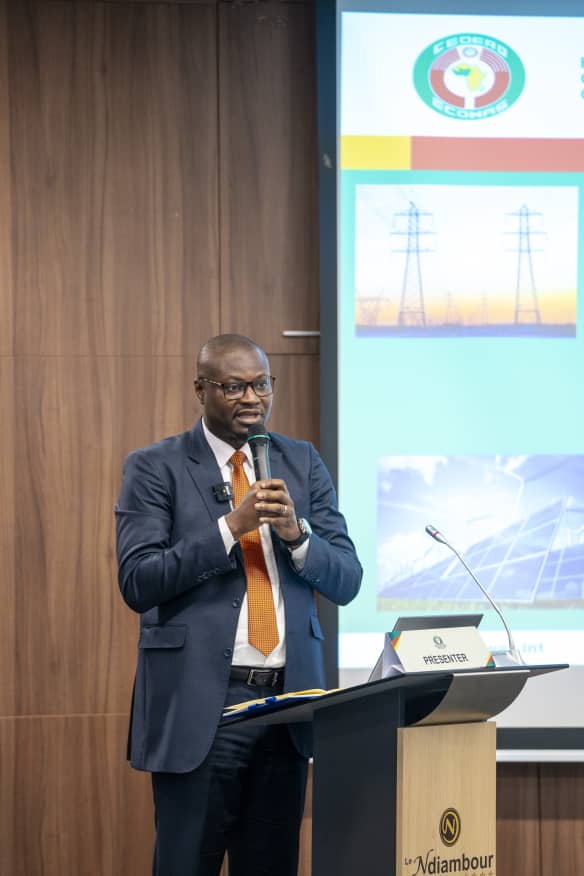
The plan was highlighted during a presentation at the ongoing delocalised joint meeting of the ECOWAS Parliament’s Committees on Energy and Mines; Infrastructure; and Agriculture, Environment and Natural Resources in Dakar, where policymakers and experts are examining pathways to accelerate energy access and rural development across the sub-region.

Advertisement

Delivering a presentation on “ECOWAS Regional Energy Policies and Key Energy Statistics,” the Acting Head of Conventional Energy at the ECOWAS Directorate of Energy and Mines, Mr Koumoin Arbaduis, painted a stark picture of a region blessed with abundant energy resources but still struggling to provide reliable electricity to millions of its citizens.

According to Arbaduis, West Africa possesses extensive reserves of crude oil, natural gas, biomass, uranium and coal, as well as an estimated 25,000 megawatts of hydroelectric potential. However, these advantages have yet to translate into adequate energy access and dependable power supply across the region.

He identified limited electricity generation capacity, poor access rates, costly transmission networks, significant technical and commercial losses, and heavy reliance on petroleum products as some of the key obstacles hindering progress.

Arbaduis explained that ECOWAS has developed a succession of regional policies and frameworks over the decades to address these challenges and build a more integrated and sustainable energy market.

Advertisement

He noted that the first ECOWAS Energy Policy, adopted in 1982 in the aftermath of the global oil crises of the 1970s, established the foundation for regional cooperation in energy production, petroleum exploration and electricity grid integration.

He said that the 2003 ECOWAS Energy Protocol subsequently provided a legal framework for investment, trade and long-term collaboration in the sector while laying the groundwork for the West African Power Pool initiative.

He also highlighted the significance of the 2006 ECOWAS/UEMOA White Paper on Access to Energy Services for Rural and Peri-urban Populations, which was designed to expand electricity access and modern energy services to underserved communities.

According to Arbaduis, major policy reforms introduced in 2013, including the ECOWAS Renewable Energy Policy and the Energy Efficiency Policy, were aimed at increasing the contribution of renewable energy to the region’s power mix, reducing energy losses and improving access to cleaner cooking technologies.

Advertisement

The ECOWAS official further pointed to the adoption of the ECOWAS Bioenergy Policy and the Policy for Gender Mainstreaming in Energy Access in 2017, noting that sustainable energy development must be inclusive and ensure equal opportunities for both women and men.

On emerging technologies, Arbaduis said the regional bloc had begun positioning itself for the future through the ECOWAS Green Hydrogen Policy Framework and Strategy, adopted in 2023. The initiative seeks to make West Africa one of the world’s most competitive producers and exporters of green hydrogen, with a production target of at least 500,000 tonnes by 2030.

He explained that the updated ECOWAS Energy Policy, adopted in July 2023, reflects changing economic conditions, technological advancements and climate realities. The revised framework prioritises improved governance, universal access to affordable and reliable electricity, energy diversification, efficiency improvements and wider access to clean cooking solutions.

Summarising the region’s long-term ambition, Arbaduis said the goal is to build “a community with access to modern, reliable and sustainable energy services for improved living standards and socio-economic development.”

Advertisement

At the end of the five-day parliamentary meeting, which started on June 15, with the theme, “Harnessing Renewable Energy for Rural Electrification and Empowerment of Rural Economies in the ECOWAS Region: The Role of the ECOWAS Parliament” , participants are expected to develop recommendations aimed at strengthening energy access, promoting investment and accelerating sustainable development throughout West Africa.
Continue Reading
Advertisement

News

ICPC arrests El-Rufai’s doctor over alleged abuse of court approved medical visit

Published

on

By

ADVERTISEMENT
Zoom Ad
ADVERTISEMENT
Zoom Ad

The Independent Corrupt Practices and Other Related Offences Commission (ICPC) has arrested Prof. Bello Abubakar, personal physician to former Kaduna State governor Nasir El-Rufai, over alleged abuse of a court-approved medical visit.

The commission’s spokesperson, John Odey, announced this in a statement on Tuesday in Abuja.

Mr Odey said Mr El-Rufai’s personal physician was arrested for allegedly making false statements in connection with a court-approved medical visit.

He said the visit was granted to Mr El-Rufai at the private wing of the National Hospital, Abuja, with the understanding that he was to receive medical attention.

Advertisement

”However, photos later posted online by a political associate, Isa Kudan, showed El-Rufai meeting with Prof. Abubakar and others at the same time.”

He said this indicated the medical visit was used for activities outside the scope approved by the court, which the ICPC described as an abuse of its goodwill and a violation of the court order.

He explained that the Kaduna State High Court had fixed July 6, 7 and 8 for accelerated hearing of criminal charges pending against Mr El-Rufai, who is currently in the commission’s custody.

”However, on the first day of the hearing, the former governor did not appear before the court.

Advertisement

”The prosecution told the court that El-Rufai refused to be conveyed, insisting he wanted to see his personal doctor.

”The prosecution further stated that no prior request for medical consultation was made to the Commission. When asked by the ICPC medical doctor, El-Rufai reportedly said he had no immediate complaint,” he said.

He allegedly said his wife, Asia El-Rufai, who is also one of his lawyers, requested that he see Mr Abubakar, his personal physician.

According to him, following arguments by counsel, the court adjourned proceedings to July 15.

Advertisement

”The adjournment was to hear an application for the trial judge’s recusal and to await the chief judge’s directive on a transfer petition.

”In spite of this, the ICPC facilitated the medical visit in compliance with court directives and its obligation to respect the rights and welfare of persons in custody.

“The hospital visit took place on Tuesday, July 7, 2026, at the private wing of the National Hospital, FCT. ICPC’s medical and security team conducted themselves professionally and respected the defendant’s privacy,” he said.

Mr Odey said at the family’s request, the ICPC officers remained outside the consultation room, while the attending oncologist was supposedly examining El-Rufai.

Advertisement

”The commission was later confronted with Facebook photos posted at 2:00 pm by Isa Ashiru Kudan, a political associate of El-Rufai, showing a meeting with the former governor.

”The pictures showed Prof. Abubakar, Isa Kudan and three others with El-Rufai at the same time he was supposed to be having a medical consultation.

”The images indicated the medical visit was used for activities outside the scope approved by the court and the Commission, describing it as a clear violation of the court order,” he said.

While noting that the commission had remained patient, professional and courteous in handling Mr El-Rufai and other suspects, Mr Odey warned that such courtesies had been abused and the commission will no longer tolerate it.

Advertisement

He added that Mr Abubakar had been taken into custody for making false statements and for further investigation.

He said the commission would bring the alleged disobedience to the attention of the court and reiterated its commitment to operating within the law.

(NAN)

Advertisement
Continue Reading

News

EFCC transfers over 1,440 recovered assets to education ministry

Published

on

By

ADVERTISEMENT
Zoom Ad
ADVERTISEMENT
Zoom Ad

The Federal Government has redirected more than 1,440 assets recovered by the Economic and Financial Crimes Commission (EFCC) to the education sector, in a move aimed at transforming proceeds of corruption into investments that enhance teaching and learning across the country.

The assets, comprising 501 double-decker bed frames, 939 mattresses and 12 wooden beds with mattresses, were formally handed over to the Federal Ministry of Education during a restitution ceremony in Abuja.

Speaking at the ceremony, the Minister of Education, Dr Tunji Alausa, said the deployment of recovered assets to the education sector reflects President Bola Tinubu’s determination to ensure that resources reclaimed on behalf of Nigerians are channelled into projects that have a direct impact on citizens, especially children and young people.

Dr Alausa said education remains at the heart of the President’s ambition to build a $1 trillion economy through sustained investment in human capital. He explained that redirecting assets recovered from corrupt practices to schools is part of a deliberate policy to convert the proceeds of crime into opportunities that enhance learning, improve educational outcomes and secure a brighter future for Nigerian students.

Advertisement

The Minister noted that education has emerged as one of the major beneficiaries of the Federal Government’s asset recovery programme. He recalled that President Tinubu had previously approved the conversion of a forfeited university facility into the Federal University of Applied Sciences, Kachia, instead of disposing of the property through sale.

According to him, the institution has already enrolled more than 3,000 students in programmes covering applied sciences, engineering, nursing, health sciences and other strategic fields, thereby expanding access to quality education and equipping young Nigerians with skills required for national development.

Alausa added that the latest tranche of recovered assets would substantially improve student accommodation and welfare in colleges and other educational institutions nationwide.

He also hailed the EFCC Chairman, Ola Olukoyede, for enhancing public confidence in the Commission through professionalism, adherence to the rule of law and sustained efforts to tackle corruption, procurement fraud and cybercrime.

Advertisement

The transfer of the recovered assets was formalised through the signing of a Deed of Release by representatives of the EFCC and the Federal Ministry of Education, including the Ministry’s Permanent Secretary, Abel Enitan.

The recovered assets will be deployed to educational institutions across the country to improve student accommodation and strengthen learning infrastructure.

Alausa assured Nigerians that the recovered assets would be deployed transparently and equitably to Unity Schools across the country where they would directly improve student welfare, strengthen learning infrastructure and support the Federal Government’s commitment to providing accessible, inclusive and quality education for every Nigerian child.

Earlier, the anti-graft Chairman, Olukoyede, said the assets were recovered during Operation Eagle Flush, one of the largest cybercrime operations undertaken by the Commission.

Advertisement

He explained that the operation, conducted towards the end of 2024, led to the arrest of about 792 suspects, including foreign nationals, who were investigated, prosecuted, convicted and repatriated after serving their prison terms.

According to him, the restitution was carried out in line with the provisions of the Proceeds of Crime Act and the Federal Government’s commitment to ensuring that recovered assets are transparently deployed for national development.

Olukoyede said children and young people are among the greatest victims of corruption and financial crimes, making it appropriate that they should also benefit from assets recovered from criminal activities.

The EFCC Chairman also highlighted previous interventions in the education sector, including the transfer of the forfeited university facility that now operates as the Federal University of Applied Sciences, Kachia, and the deployment of recovered proceeds of crime to provide part of the seed funding for the Nigerian Education Loan Fund.

Advertisement

According to him, about 1.4 million students have already benefited from the education loan programme through tuition support and monthly upkeep allowances, easing financial burdens that often expose vulnerable young people to cybercrime and other financial offences.

Continue Reading

News

PSC Dismisses Four Senior Police Officers, Sanctions 31 Others

Published

on

By

ADVERTISEMENT
Zoom Ad
ADVERTISEMENT
Zoom Ad

The Police Service Commission (PSC) has dismissed four senior police officers and imposed various disciplinary sanctions on 31 others over acts of misconduct, reaffirming its commitment to strengthening discipline and accountability within the Nigeria Police Force.

The decisions were taken at the commission’s plenary meeting held at its corporate headquarters in Abuja, according to a statement by the Head of Protocol and Public Relations, Mr Torty Njoku Kalu.

The commission said the four officers were dismissed after they were found guilty of gross misconduct, unprofessional conduct and acts unbecoming of public officers.

“It also approved a range of disciplinary measures affecting several other officers. Ten senior officers were reduced in rank, comprising three Superintendents of Police demoted to Deputy Superintendents of Police, two Deputy Superintendents of Police reduced to Assistant Superintendents of Police, and five Assistant Superintendents of Police demoted to the rank of Inspector. Two other officers were compulsorily retired in the public interest.

Advertisement

“The disciplinary actions also included severe reprimands for 10 officers, reprimands for five officers, warning letters for three officers and a letter of advice to one officer. The commission, however, exonerated seven officers after clearing them of any wrongdoing,” the statement revealed.

Chairman of the Commission, DIG Hashimu Salihu Argungu (rtd), reiterated the board’s zero-tolerance policy towards indiscipline in the Nigeria Police Force.

“The current Board of the PSC under my watch will not condone any form of misconduct by police officers,” DIG Argungu stated.

“The commission will continue to uphold discipline in the Force and match all forms of misconduct with commensurate disciplinary actions. We would also continue to encourage and motivate hard work for deserving officers through our established reward system.”

Advertisement

The commission reaffirmed its commitment to entrenching accountability, professionalism and public trust in the Nigeria Police Force.

Continue Reading

Trending

Copyright © 2024 Naija Blitz News