Connect with us

News

IMF: Tinubu’s govt dismisses report on alleged missing N8trn

Published

on

ADVERTISEMENT
Zoom Ad
ADVERTISEMENT
Zoom Ad

The Federal Government has rubbished claims that over ₦8 trillion was spent outside the 2025 budget, insisting that all public expenditures were made within Nigeria’s constitutional and legal framework.


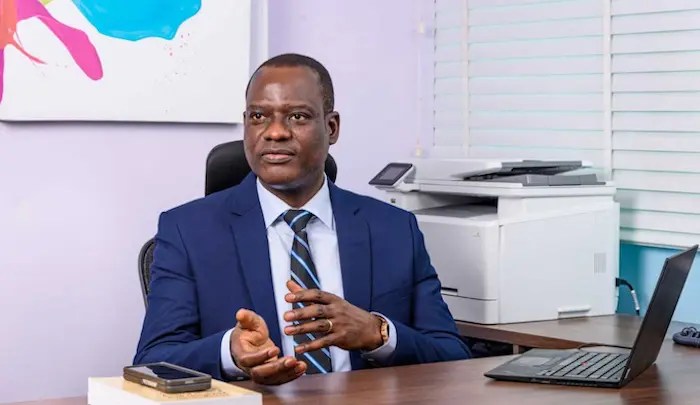
In a statement issued on Sunday by Taiwo Oyedele, Minister of Finance, the government said reports alleging that about two percent of Nigeria’s Gross Domestic Product, GDP, estimated at over ₦8 trillion, was spent outside the approved budget were based on a misrepresentation of the International Monetary Fund’s, IMF, 2026 Article IV Consultation Report.

The ministry maintained that the Federal Government does not operate a “shadow budget” or spend public funds without legislative approval.

It explained that under Sections 80 to 83 and 162 of the 1999 Constitution, all public funds can only be withdrawn and spent in accordance with the Constitution and laws passed by the National Assembly. According to the ministry, government expenditure is undertaken through duly enacted Appropriation Acts, Supplementary Appropriation Acts and other statutory authorisations.

Advertisement

The ministry added that multi-year capital projects are implemented under existing laws and approved capital rollovers where applicable, stressing that such projects should not be interpreted as spending outside the budget.

It further argued that allegations of secret spending lacked evidence, saying anyone making such claims should identify specific projects allegedly executed without appropriation or legal authority.

“It is inaccurate to suggest that trillions of naira have been secretly spent outside legislative approval. Such allegations should have identified the specific projects purportedly executed without appropriation or legal authority and present credible evidence in support of the claim. To be meaningful, assertions of this magnitude must be supported by verifiable facts rather than conjecture,” Oyedele said.

The ministry also clarified that Nigeria’s public finance system includes statutory transfers, first-line charges and intervention mechanisms established by Acts of the National Assembly. These include statutory allocations to development commissions and agencies, revenue collection costs retained by designated agencies, separate capital budgets for some agencies and the Federal Capital Territory, special interventions for national priorities such as security and infrastructure, as well as debt servicing obligations.

Advertisement

According to the ministry, these expenditures are lawful, publicly disclosed and subject to oversight, audit and accountability mechanisms, although their presentation in fiscal reports may differ from their appearance in the annual Appropriation Act due to international reporting standards.

The government also rejected suggestions that the reported ₦8 trillion represented an increase in the country’s fiscal deficit, explaining that fiscal deficits are determined by the relationship between total government revenue and expenditure rather than the financing mechanism used for approved projects.

It stated that the IMF’s observations were primarily about the comprehensiveness, timing and presentation of fiscal reporting rather than the legality of government spending.

The ministry noted that President Bola Tinubu had already asked the National Assembly to harmonise multiple and overlapping budgets into a single framework while presenting the 2026 Appropriation Bill on December 19, 2025.

Advertisement

It added that the administration remained committed to prudent fiscal management, transparency and accountability, citing ongoing reforms in budget credibility, revenue administration, digitalisation of government financial processes and treasury management.

The statement urged Nigerians to base public debate on verified facts and an accurate understanding of the country’s fiscal framework, warning against misrepresenting technical observations as evidence of unlawful expenditure.
Continue Reading
Advertisement

News

Emir of Gumel dies in Egypt

Published

on

ADVERTISEMENT
Zoom Ad
ADVERTISEMENT
Zoom Ad


The Emir of Gumel in Jigawa State, Alhaji Dr. Ahmed Muhammad Sani II, has died.

The monarch passed away on Thursday in Egypt.

His death has thrown the people of the Gumel Emirate and residents of Jigawa State into mourning, with tributes expected to continue to pour in from across the state and beyond.

Advertisement

The death of the respected traditional ruler is a significant loss to his family, associates and the entire Gumel community. Prayers have been offered for Almighty Allah to forgive his shortcomings and grant him eternal rest in Aljannatul Firdaus.

Prayers were also offered for Allah to grant his family, loved ones and the people of Gumel the strength and patience to bear the loss.

The death of the Emir represents a major loss to the Gumel Emirate, given the important role traditional institutions play in promoting peace, unity, cultural values and community development.

The Gumel Emirate is one of the historic traditional institutions in northern Nigeria, with a rich heritage and longstanding influence in the social and cultural affairs of its people.

Advertisement

As Emir, the late Alhaji Dr. Ahmed Muhammad Sani II, CON, served as custodian of the traditional institution and provided leadership to the people of the emirate.

His passing is expected to be deeply felt by members of the royal family, traditional title holders, community leaders and residents across the emirate.

Continue Reading

News

US Federal agents nab Podcaster Azariah over alleged threats to Kill Trump

Published

on

ADVERTISEMENT
Zoom Ad
ADVERTISEMENT
Zoom Ad

United States federal agents have nabbed a podcaster, Azariah Southworth, in Los Angeles over allegations that he threatened to kill US President Donald Trump.

According to New York Post on Thursday, Southworth was taken into federal custody in Los Angeles following an investigation into the alleged threats against Trump.

Southworth is known for hosting the Yass, Jesus podcast and previously hosted the Christian television programme, The Remix. His arrest has brought federal authorities’ attention to statements allegedly made by him concerning the president.

The allegations against Southworth have not been established in court, and details of any criminal charges filed against him were not immediately available in the report. Federal authorities typically investigate threats against the president as potential federal offences.

Advertisement

US law prohibits knowingly and willfully threatening to kill, kidnap or inflict bodily harm on the president. Such cases can result in federal prosecution if investigators determine that a statement meets the legal threshold for a criminal threat.

Federal authorities have pursued similar cases involving alleged threats against Trump in recent years.

The US Department of Justice has previously announced charges and convictions involving people accused of making threats against the president online and through other forms of communication.

Authorities have also stressed in previous cases that an arrest or criminal charge does not establish guilt. Prosecutors are required to prove the allegations in court, while defendants are presumed innocent unless convicted.

Advertisement

Southworth’s arrest comes amid continued security concerns surrounding threats against Trump and other US public officials. Further details about the allegations, possible charges and Southworth’s next court appearance are expected to emerge as the federal case proceeds.

Continue Reading

News

Flooding: FCTA begins desilting of drains, warns against vandalism, illegal structures

Published

on

ADVERTISEMENT
Zoom Ad
ADVERTISEMENT
Zoom Ad

The Federal Capital Territory Administration (FCTA) has commenced a city-wide desilting of drainage channels following heavy torrential rainfalls that triggered flash floods across parts of the nation’s capital.

Inspecting the ongoing clearance operations along the Airport Expressway on Thursday, Mr Richard Dauda, acting Executive Secretary of the Federal Capital Development Authority (FCDA), said the exercise was directed by the FCT Minister, Mr Nyesom Wike.

The directive followed a flash flood that flooded the Airport Expressway on Tuesday.

According to Dauda, the effort is to mitigate flood risks during the peak of the rainy season.

Advertisement

Dauda noted that while recent downpours align with earlier meteorological warnings and climate change trends, the Abuja Master Plan inherently recognises certain areas, including the Airport Expressway axis as flood plains.

He assured residents that while resilient infrastructure was originally built to handle high water volumes, human activities have severely compromised its efficiency.

“Some of these drainage facilities over time have been silted. Part of the cause is residents dumping refuse into drainage channels.

“When rain falls, it washes down polythene bags, waste, and even large objects that block the outlets,” he said.

Advertisement

Dauda highlighted two major human factors aggravating the flash floods: illegal development and widespread infrastructure vandalism.

Exposing a major choke point along the expressway, Dauda pointed to a triple-cell box culvert meant to discharge a powerful stream flowing from the Galadima Roundabout.

He explained that a private developer had illegally constricted the waterway further downstream by constructing retaining walls to expand a personal plot.

“What that causes is that the volume of water that ought to pass no longer passes, causing detention, backflow, and eventual flooding.

Advertisement

“To restore adequate discharge capacity, we must remove the structures built by this developer,” he said.

Dauda also decried the theft of metal gully inlet covers by vandals, which allows large debris to flow directly into underground drains instead of being sieved at the surface.

“When vandals steal these covers, it’s like stealing from yourself as a taxpayer,” he remarked.

To permanently curb the theft, he revealed that the FCDA is exploring replacement materials made from non-recyclable compounds rather than steel or cast iron.

Advertisement

The FCDA boss confirmed that workers were already desilting trapezoidal drains, U-channels, and culvert outlets along the Airport Expressway, with plans to reconstruct damaged points where necessary.

Dauda urged Abuja residents to stop dumping refuse into waterways, warning that government infrastructure can only protect the city if public cooperation is guaranteed.

Continue Reading

Trending

Copyright © 2024 Naija Blitz News