News
Speaker Abbas Pledges Sweeping Business Law Reforms, Vows to Scrap Obsolete Legislation Hindering Investment
- /home/naijuinz/public_html/wp-content/plugins/mvp-social-buttons/mvp-social-buttons.php on line 27
https://naijablitznews.com/wp-content/uploads/2026/07/IMG-20260716-WA0012-1000x600.jpg&description=Speaker Abbas Pledges Sweeping Business Law Reforms, Vows to Scrap Obsolete Legislation Hindering Investment', 'pinterestShare', 'width=750,height=350'); return false;" title="Pin This Post">
- Share
- Tweet /home/naijuinz/public_html/wp-content/plugins/mvp-social-buttons/mvp-social-buttons.php on line 72
https://naijablitznews.com/wp-content/uploads/2026/07/IMG-20260716-WA0012-1000x600.jpg&description=Speaker Abbas Pledges Sweeping Business Law Reforms, Vows to Scrap Obsolete Legislation Hindering Investment', 'pinterestShare', 'width=750,height=350'); return false;" title="Pin This Post">
…promise regulatory certainty, lower cost of doing business, stronger support for enterprises

By Gloria Ikibah
Speaker of the House of Representatives, Rt. Hon. Abbas Tajudeen, has pledged that the National Assembly will repeal outdated laws that impede enterprise, while pursuing far-reaching legislative reforms aimed at improving Nigeria’s competitiveness, attracting investment and accelerating economic growth.

He also promised greater regulatory certainty, reduced cost of doing business, expanded access to finance for businesses and stronger legislative oversight to ensure government agencies faithfully implement economic reforms.
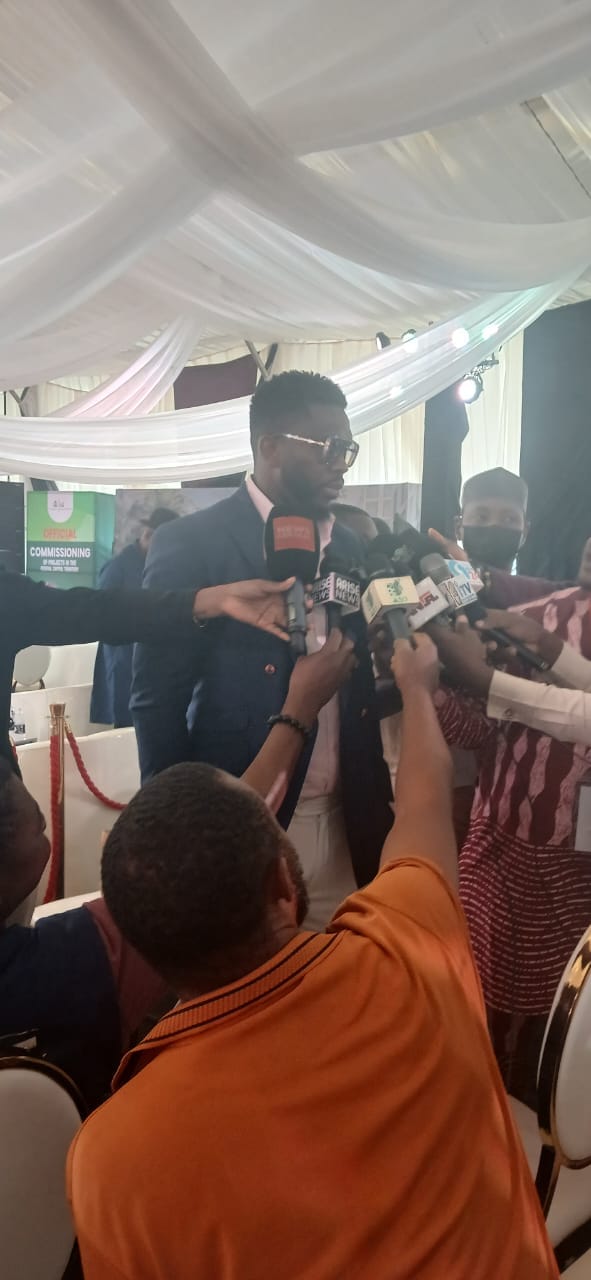
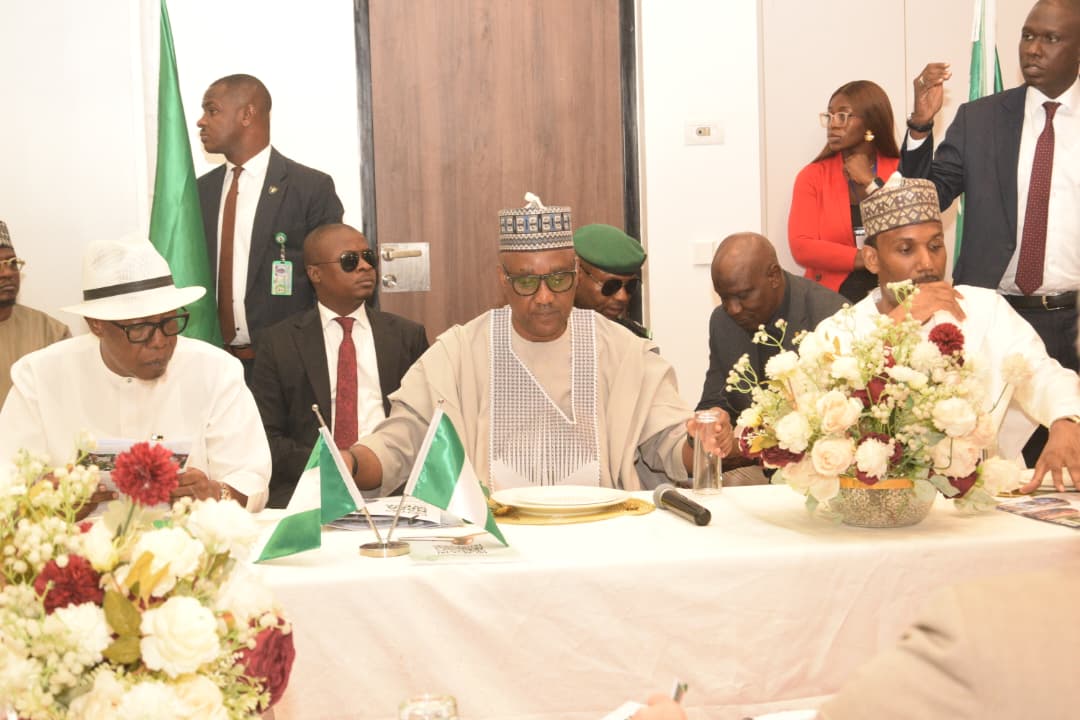
Speaker Abbas made the commitments on Thursday at the Legislative Business Breakfast Meeting held at the National Assembly as part of activities marking the 2026 National Assembly Open Week. The meeting was themed: “The Business of Growth: Legislative Priorities for Investment, Competitiveness and Economic Transformation.”
Setting out what he described as the House legislative priorities for the private sector, the Speaker unveiled five major commitments.
He said: “First, on regulatory clarity and legislative predictability, we commit that laws affecting business will be stable, transparent, and made with your input, so that no investor is ever ambushed by a rule they could not foresee.
“Second, on the cost of doing business, we will build on the tax reforms to harmonise levies across all tiers of government, so that one enterprise is not taxed to exhaustion by federal, state and local authorities at the same time.
“Third, on access to finance, we will strengthen, through law and through oversight, the institutions that lend to the real economy, and press for financing that actually reaches the small and medium enterprises that employ most of our people.
“Fourth, on competitiveness, we will repeal the obsolete laws that frustrate enterprise, and legislate to support local manufacturing, agriculture, and our readiness for the continental market.
“And fifth, on delivery, we will use our oversight not to harass the private sector, but to hold public agencies to account for implementing these reforms faithfully and courteously.”
Abbas said the commitments were informed by extensive consultations with business leaders and reflected the House’s determination to respond to the concerns of the organised private sector.
Explaining why he chose to speak after other participants, the Speaker said Parliament must first listen before legislating.
“I thank you for the candour of this morning’s conversation. I chose to speak last, and deliberately so, because a legislature that wishes to serve the economy must first learn to listen to it. I have heard your presentations and followed the agenda set for us by the Nigerian Economic Summit Group. I speak to you not with the usual assurances but with a considered response and firm commitments”, he said.
He argued that President Bola Ahmed Tinubu’s economic reforms were fundamentally designed to unlock private sector growth rather than expand government.
“Let me begin with a truth that must anchor everything else I say this morning. The reforms of President Bola Ahmed Tinubu, GCFR, were not undertaken for the benefit of government. They were undertaken for you. Governments do not create wealth. They create the conditions in which wealth can be created, and it is you, the entrepreneurs, the manufacturers, the farmers, the traders and the investors of Nigeria, who turn those conditions into factories, into harvests, into exports and into jobs.
“The President has made it plain that his agenda is private-sector-led. That places you not at the margins of the Renewed Hope Agenda, but at its very centre. And a Parliament that understands this will measure its own success by one test above all, whether the laws it makes help you to invest, to grow and to employ”, Abbas added.
The Speaker acknowledged the mounting pressures confronting businesses, saying manufacturers and investors had consistently raised concerns over high borrowing costs, shrinking access to credit, foreign exchange volatility, multiple taxation, poor electricity supply, insecurity, policy uncertainty and port inefficiencies.
“Let me first prove to you that we heard you clearly. You told us, as the Manufacturers Association of Nigeria has told the whole nation, that borrowing has become prohibitively expensive, and that credit to the manufacturing sector actually shrank by close to two trillion Naira last year, starving industry of the money it needs to grow.
“You told us that the liberalisation of the exchange rate, though necessary, has raised the cost of the machinery and raw materials you must import. You spoke of power that remains unstable despite higher tariffs, forcing factory after factory to run on costly diesel. You spoke of multiple taxation, of too many agencies collecting too many levies at the same gate despite the recently passed tax laws. And you spoke of the difficulty of clearing goods through our ports, the drag of insecurity on farms and supply lines, and the uncertainty that comes when policy shifts without warning.
“These are not idle complaints. They are the honest testimony of the men and women who create our jobs, and this House has heard them”, he noted.
Although he admitted that recent reforms had imposed hardship on Nigerians, Abbas maintained they were unavoidable.
He insisted that Parliament had not merely supported the administration’s reforms but had actively driven them through legislation.
“Permit me to place these concerns within the larger picture. The decisions this country took, to remove the costly fuel subsidy, to stop the reckless printing of money to cover deficits, and to unify our fractured exchange rates, were long avoided but could no longer be postponed. They have been hard, and I will not pretend otherwise.
“But the world’s most sober observers now tell us the direction is right. The International Monetary Fund, in its most recent assessment, has commended these reforms for rebuilding confidence and reducing our vulnerabilities, and projects that our economy will grow by more than four per cent this year.
“Yet that same assessment carries a warning we dare not ignore, that poverty and food insecurity in our country remain painfully high. This is precisely the point the Nigerian Economic Summit Group has pressed upon us all: that we must stay the course on reform, but we must now turn these economic gains into visible social progress. Stability at the top means little until it is felt on the factory floor, in the market, and on the family table.
“And let me be clear that this Parliament has not been a bystander to reform. We have been its legislative engine, and our record is one of concrete action”, he stated.
Abbas highlighted key legislative milestones, including the new tax reform laws, the Electricity Act, the Investments and Securities Act, the establishment of six regional development commissions, the recovery of over N60 billion through legislative oversight, the approval of a new national minimum wage, and expanded access to student loans and consumer credit.
“This is what our Legislative Agenda promised, an economy placed at the very centre of our work”, he said.
Looking beyond Nigeria’s immediate economic challenges, Abbas said the country must position itself to benefit fully from the African Continental Free Trade Area (AfCFTA).
“We also see the opportunities that lie just beyond our present difficulties. The African Continental Free Trade Area has opened a single market of more than a billion people, and Nigeria, as the largest economy on the continent, must be equipped to sell into it and not merely to buy from it.
“Our young people are building a digital and creative economy that already earns this nation global respect, our farmland can feed the region if we add value at home, and our abundant gas can power a fresh wave of industry. The Nigerian Economic Summit Group speaks of a trillion-dollar economy within our reach, and this House intends to legislate deliberately for that ambition”, Abbas said.
The Speaker challenged business leaders to move beyond annual engagements by maintaining continuous dialogue with Parliament.
“Yet the law can do only so much from a distance. If we are to get this right, we need you as partners, and not merely as petitioners.
“So I ask four things of you. Do not allow this Communiqué to gather dust. Bring it to our relevant committees, on commerce, on trade and investment, on industry, on finance and on banking, as a living working document.
“Come to our public hearings, and come with data, because sound law is built on evidence and not on anecdote. Tell us honestly when a law we have made is not working as intended, so that we can move quickly to amend it.
“And let us, from today, institutionalise this engagement, so that the conversation between Nigerian business and its Parliament no longer waits for an annual breakfast, but becomes a permanent and structured partnership”, he asserted.
Drawing lessons from South Africa, Kenya, the United Kingdom and India, Abbas argued that sustained dialogue between lawmakers and investors was a hallmark of successful economies.
To entrench that relationship, he proposed the establishment of a standing National Assembly and Business Executive Roundtable (NABER), to meet twice annually.
“So let me move us from lesson to action. I propose, here and now, that we institutionalise this gathering. Let us establish a standing National Assembly and Business Executive Roundtable (NABER), convened twice every year, that brings the leadership of both chambers and our economic committees together with the organised private sector, the Nigerian Economic Summit Group, organised labour and our development partners.
“Its mission would be simple and serious, to keep the conversation between Parliament and the productive economy continuous, structured and grounded in evidence, rather than occasional and reactive. Its purpose would be fourfold: to review, each half-year, the true state of our business environment; to track the implementation of our reforms and the fate of the commitments we make to one another; to shape a shared, pro-growth legislative calendar for the year ahead; and to surface the obstacles to investment early enough for us to remove them by law.
“The Roundtable should have a permanent home here at the National Assembly Library, so that it endures as an institution and does not depend on the goodwill of any single session”, he said.
Abbas reaffirmed the commitment of the House to supporting enterprise.
“Let me close with a commitment. The commitment is that this House, in step with the Renewed Hope Agenda of Mr President, will remain pro-growth and pro-business, because every job you create is a family lifted, and every investment you make is a vote of confidence in Nigeria”, he noted.
House Leader Rep. Julius Ihonvbere also advocated more frequent engagement between Parliament and the organised private sector, arguing that stronger collaboration was essential to promoting economic growth, strengthening democratic institutions and creating a more favourable business climate.
Chairman House Committee on Commerce, Rep. Ahmed Munir, said the legislature was aligning its agenda with the needs of businesses by pursuing reforms to improve regulatory certainty, reduce bureaucratic bottlenecks and modernise Nigeria’s commercial laws.
He disclosed that several key bills, including the African Continental Free Trade Area (AfCFTA) Bill, the Climate Resilience Commerce Bill, the Sale of Goods Act Amendment Bill, the Digital Economy Mainstreaming Bill, the Sustainable Finance Bill, amendments to the Bankruptcy Act and reforms to the Nigerian Export Promotion Council Act, were designed to strengthen investment, boost innovation and improve Nigeria’s competitiveness.
Minister of Industry, Trade and Investment, Dr Jumoke Oduwole, stressed that legislative backing remained critical to sustaining Nigeria’s economic reforms.
I
She said the drive of the Federal Government to promote industrialisation, expand exports and build a $1 trillion economy by 2030 is dependent on strong collaboration between the executive and the legislature.
According to the minister, recent data from the Nigerian Economic Summit Group’s Business Confidence Monitor showed that the country’s business environment remained in expansion territory for the sixth consecutive month, reflecting growing investor confidence in ongoing reforms.
Executive Secretary of the Policy and Legal Advocacy Centre (PLAC), Clement Nwankwo, identified insecurity and excessive taxation as two of the greatest obstacles to investment in Nigeria.
He warned that insecurity continued to undermine agriculture and economic activity, while multiple taxes and levies imposed by government agencies discouraged investment despite ongoing tax reforms.
Nwankwo urged the House Committee on Commerce and other relevant committees to intensify oversight of regulatory agencies to ensure businesses were protected from excessive taxation and practices that stifle enterprise, stressing that a more business-friendly environment was essential for sustainable economic growth.

News
Fadahunsi, Osun and the Price of Political Rhetoric
By Dr Willie Adegbite
A video clip has placed Senator Francis Fadahunsi at the centre of a political firestorm. In it, he appears to use language that many have interpreted as a call to violence against members of the Accord Party. The senator insists the footage was edited and that his words were metaphorical, but the controversy has already taken hold. His political opponents have demanded his arrest, while the National Human Rights Commission has called for his suspension, arrest and investigation.
But in the rough-and-tumble of Nigerian politics, context matters. This controversy is about more than an incautious word. It also raises questions about the political environment in which the remarks were made and the allegations of violence that Fadahunsi says prompted them.
It is important to state clearly that Senator Fadahunsi’s remarks do not reflect the position of the All Progressives Congress or its governorship candidate in Osun State. The APC has never subscribed to do-or-die politics. Its candidate is not an advocate of violence or political thuggery. The party believes in competitive elections conducted within the boundaries of law and civility. That distinction matters because the temptation in partisan politics is to treat the words of one member as the doctrine of the entire party. That is not the case here.
Let us first deal with the offending word.
In the language of Nigerian political campaigning, “kill” can sometimes be used as visceral hyperbole for “overwhelm”, “defeat” or “send packing”. It is hardly elegant, but it is not invariably literal. In Yoruba political speech especially, vivid language is often used to describe electoral domination.
The danger is that such language can be heard differently when the political atmosphere is already tense.
Fadahunsi’s defence is that his words were taken out of context and that he was speaking metaphorically about defeating his opponents at the polls. That explanation deserves to be heard and tested against the full recording. But even if his intention was entirely political, the choice of words was reckless in an environment where allegations of violence are already circulating.
That is the uncomfortable middle ground in this controversy.
We should neither assume that the senator intended physical violence simply because a word was used, nor pretend that the word was harmless because it may have been metaphorical.
The more important question is what prompted the outburst.
Fadahunsi has alleged that as many as 30 APC members were killed in Osun within a month, while other reports have put his broader claim at more than 40 people killed in Osun East over the past year. These are serious allegations, not established facts, and they require verification.
But they should not be dismissed because they come from a politician currently facing scrutiny.
If even a fraction of these allegations is substantiated, Osun has a serious security problem that deserves the attention of the police and other relevant authorities. The families of anyone killed in political violence deserve investigation and justice, irrespective of party affiliation.
This is where the controversy risks becoming distorted. The attention devoted to Fadahunsi’s words should not prevent the authorities from examining the allegations of violence that he says formed their backdrop.
The two issues can be addressed at the same time.
The senator’s language can be investigated, while the alleged killings can also be investigated. One does not cancel out the other.
Indeed, this is precisely where responsible governance matters. When security agencies fail to provide timely and credible information about incidents of violence, suspicion grows and political narratives quickly fill the vacuum. Viral videos then become evidence, arguments become accusations and every incident is interpreted through partisan lenses.
Fadahunsi’s outburst is therefore not necessarily the cause of the tension in Osun. It may also be a symptom of a political environment in which fear and recrimination have become increasingly prominent.
That does not excuse his language.
Public office carries a responsibility to choose words carefully, particularly during an election. A politician who knows that his supporters are agitated should be cooling tempers rather than giving opponents reason to believe that violence has been sanctioned. The APC and its candidate have consistently demonstrated that they understand this responsibility. They reject the language of violence and have called for peaceful engagement.
Fadahunsi must therefore face the consequences of his words. The police investigation should run its course, and if it establishes that he genuinely incited violence, the law should take its course.
But fairness requires the authorities to follow the same principle in examining the allegations he has raised.
If people have been killed, their families deserve more than a political argument over a viral video. They deserve to know what happened and who was responsible.
This is also where Fadahunsi himself has an opportunity to help de-escalate the situation.
He should make it unequivocally clear that whatever metaphor he intended, he does not support physical violence against Accord members or anybody else. He should urge his supporters to settle the contest at the ballot box and cooperate fully with the authorities investigating both his remarks and the incidents he has cited.
That would be more than damage control.
It would be responsible leadership.
The same standard should apply across the political divide. Nobody should be allowed to use the language of violence as political mobilisation, just as nobody should be allowed to use allegations of violence selectively for partisan advantage. For the APC and its candidate, the path is clear. The party must continue to demonstrate through its conduct and messaging that it rejects violence and upholds the principles of democratic contestation.
Osun does not need competing narratives of victimhood. It needs credible facts.
The coming election is too important for the state to become trapped in a cycle in which every inflammatory statement produces another accusation, every accusation produces another counter-accusation and the underlying violence remains insufficiently investigated.
Fadahunsi may have chosen the wrong words. He should own that responsibility. But the controversy should not end there.
The real test is whether Osun’s political leaders and institutions can look beyond the viral clip and address the conditions that made such language possible in the first place.
An election should settle political disagreements with votes. It should not leave citizens wondering whether the people seeking their mandate are prepared to protect them from the consequences of their own rhetoric.
That is the responsibility Fadahunsi now carries.
And it is a responsibility that extends far beyond him.
● Dr Adegbite contributed this piece from Abuja.
News
Osun 2026: CCLCA berates INEC over poor mock accreditation, demands arrest of Fadahunsi
…warns that glitches during Saturday poll could ignite violence
…hails umpire over improved CVR from 1,954,800 to 2,339,233 registered
…urges security operatives to be at red alert on Saturday
The Centre for Credible Leadership and Citizens Awareness CCLCA has alerted security agencies on the need to beef up security during Osun 2026 governorship election on Saturday.
Director General of CCLCA Dr Gabriel Nwambu made these revelations during a press briefing on Wednesday in Osun State tagged:’Urgent Security Concerns, Inflammatory Rhetoric, Technical Glitches, and Pre-Election Violations Ahead of the August 15, 2026 Osun State Governorship Election’, addressed to security agencies and INEC .
Dr Nwambu in the briefing did not mince words as he urged security agencies to be at red alert to contain any unrest as the signals so far are not encouraging.
Hear him: “The Centre for Credible Leadership and Citizens Awareness, an accredited Civil Rights Organization observing the upcoming Osun State Governorship Election slated for August 15, 2026, has been actively observing pre-election developments across the thirty (30) Local Government Areas (LGAs) of the state.
“We note with satisfaction that at the conclusion of the Continuous Voter Registration (CVR) exercise, the number of registered voters in Osun State increased from 1,954,800 to 2,339,233.
“This addition of 384,000 new registrants is a resounding indicator of heightened civic consciousness and growing public interest in democratic participation. However, this positive trajectory is currently being threatened by rising political tensions, inflammatory hate speech, electoral violence, and technological uncertainties.
INEC’S MOCK ACCREDITATION EXERCISE
“Preceding the main election, INEC conducted a mock accreditation exercise across 12 LGAs spanning the three Senatorial Districts to simulate Election Day procedures and evaluate the functionality of the Bimodal Voter Accreditation System (BVAS).
“Unfortunately, our observers noted critical technical failures:
● BVAS Malfunctions: The devices abruptly stopped recognizing voters’ fingerprints, facial features, and Permanent Voter Card (PVC) details.
● Public Anxiety: Despite prior assurances from INEC regarding the resolution of disparities between old and new PVCs, these technical glitches have sparked widespread concern.
“Our Stance: We reiterate that the electorate is intolerant of any technical failures. The mock exercise was meant to build confidence and assure voters that their choices will count—not act as a source of discouragement. INEC must act immediately to guarantee the integrity and flawless operation of the BVAS.
” Furthermore, the Commission must not only remain non-partisan but must be seen unequivocally as non-partisan.
ESCALATION OF PRE-ELECTION VIOLENCE
“Our pre-election monitoring reveals a deeply alarming security landscape:
● Casualties: Approximately 40 persons have been killed in pre-election-related violence across Osun State.
● Political Rhetoric: The political atmosphere is heavily charged. Politicians have largely abandoned issue-based campaigns in favor of personal attacks, insults, and inciting language capable of fracturing public peace.
A. Reckless Utterances by Public Office Holders
Public office holders must lead by example. We strongly condemn the unguarded, reckless, and despicable remarks made by a prominent South South Governor, whose utterances were entirely unbefitting of his office and capable of inciting a breakdown of law and order.
“Such careless statements overheat the polity and must be reined in immediately.
B. Direct Incitement to Violence in Ijeshaland by Senator Francis Adenigba Fadahunsi.
“Most disturbing is the conduct of the serving Senator representing Osun East Senatorial District, Senator Francis Adenigba Fadahunsi.
● Incitement to Murder: Senator Fadahunsi was captured on a verified video openly inciting members of his party (APC) to kill members of the Accord Party and their supporters wherever they are found in Ijeshaland.
● Importation of Thugs and Fake Police: Credible intelligence confirms that the senator has imported thugs, hoodlums, and fake policemen into Ilase (his hometown) as well as towns across Obokun, Oriade, Ilesa East, Ilesa West, Atakumosa East, and Atakumosa West LGAs.
● Abuse of Federal Might: Senator Fadahunsi boasted using “federal might” to intimidate voters, threatening that even if Accord Party members present their PVCs at polling units on Saturday, August 15, his thugs will prevent them from voting.
● Harassment via Security Units: The Senator has also continuously boasted of using the Inspector-General of Police Intelligence Response Team (IRT) to harass, arrest, and intimidate opposition leaders.
” Notably, an aide to the senator named ASP Wemimo has been leading IRT personnel to the homes of Accord Party leaders, including the continued unlawful abduction and detention of a House of Representatives candidate, Alaba Popoola.
CALL TO ACTION
“Given these grave threats to human life and the sanctity of the ballot, the Centre for Credible Leadership and Citizens Awareness urgently demands the following:
1. Immediate Arrest and Prosecution: We call on the Inspector-General of Police (IGP) and the Director-General of the Department of State Services (DSS) to order the immediate arrest and thorough prosecution of Senator Francis Adenigba Fadahunsi and all individuals masterminding pre-election violence in Osun State, in accordance with domestic and international laws.
2. Special Security Attention for Ijeshaland: All security formations deployed for Saturday’s election must pay hyper-vigilant attention to the six LGAs in Ijeshaland to safeguard the lives of law-abiding citizens.
3. Flushing Out Thugs: Security agencies must immediately comb and flush out armed thugs and fake policemen quartered in Ilase-Ijesha and other enclaves by political actors.
4. Accountability: Let it be unequivocally recorded that Senator Francis Adenigba Fadahunsi would be directly responsible for any act of violence or loss of life targeting Accord Party members or any citizen in Ijeshaland and across Osun State.
5. Release of Abducted Candidates: The IGP must immediately probe the operations of the IRT unit in Osun State and order the immediate and unconditional release of the House of Reps candidate of the Accord Party, Alaba Popoola, alongside other illegally detained political actors.
6. Caution to Leaders: Political leaders across regional divides, including the aforementioned South South Governor, must be called to order to halt incendiary rhetoric.
The August 15, 2026, governorship election must be a contest of ballots, not bullets. The security of lives and property before, during, and after the polls remains non-negotiable.
News
Sad! Medical doctor’s lifeless body found with multiple slashes in Port Harcourt
A medical doctor, Stephen Vanman has been reportedly found d3ad three days after he was declared missing in Port Harcourt, Rivers State.
Dr. vanman was reportedly found d3ad with multiple st@b wounds Tuesday, August 11, 2026.
It was gathered that the doctor went missing on Saturday, August 8, while heading to a temporary locum shift after mentioning he was headed for Spar supermarket at Old GRA.
The circumstances surrounding the incident remain unclear, while further details are awaited.
Authorities are yet to confirm the incident at the time of filing this report.
-
Politics11 hours agoOsun Election : Akpabio, Uzodimma, others arrive Osogbo for APC mega rally
-
Metro11 hours agoKwara Police Arrest Suspected Kidnapper Attempting To Cash Out Ransom At POS Terminal
-
Foreign11 hours agoU.S. Deports 3 Million Foreign Nationals
-
News11 hours agoSad! Medical doctor’s lifeless body found with multiple slashes in Port Harcourt
-
Politics20 hours agoOsun guber: ADC raises alarm over plot to arrest Aregbesola
-
News20 hours agoJust in: Finally, Fadahunsi leaves police CID after hours of grilling over k!ll Accord party members outburst
-
Sports11 hours agoCristiano Ronaldo Sends Message To Messi Over Father’s Death
-
News23 hours agoFG plans digital registration of cattle to tackle rustling