News
Soldiers Reject Fresh Move To Deploy ‘Repentant’ Terrorists In Military Operations, Fear Sabotage, Intelligence Leaks
- /home/naijuinz/public_html/wp-content/plugins/mvp-social-buttons/mvp-social-buttons.php on line 27
https://naijablitznews.com/wp-content/uploads/2026/06/IMG_8435.jpeg&description=Soldiers Reject Fresh Move To Deploy ‘Repentant’ Terrorists In Military Operations, Fear Sabotage, Intelligence Leaks', 'pinterestShare', 'width=750,height=350'); return false;" title="Pin This Post">
- Share
- Tweet /home/naijuinz/public_html/wp-content/plugins/mvp-social-buttons/mvp-social-buttons.php on line 72
https://naijablitznews.com/wp-content/uploads/2026/06/IMG_8435.jpeg&description=Soldiers Reject Fresh Move To Deploy ‘Repentant’ Terrorists In Military Operations, Fear Sabotage, Intelligence Leaks', 'pinterestShare', 'width=750,height=350'); return false;" title="Pin This Post">
Nigerian soldiers battling Boko Haram insurgents in the North-East have accused the Borno State government of issuing a fresh directive compelling them to work alongside ‘repentant’ terrorists who were recently reintegrated into society under the state’s controversial deradicalisation programme.

The development, according to serving military personnel who spoke to SaharaReporters, has triggered unease within frontline formations, with many soldiers expressing fears that the arrangement could expose military operations to renewed sabotage and intelligence leaks.
Sources told the media that some of the former Boko Haram fighters who publicly pledged loyalty to the Nigerian state during recent reintegration exercises have now been mobilised and attached to local security groups that support military operations against insurgents across parts of Borno State.

The soldiers alleged that the move was part of efforts by the state government to justify its rehabilitation and reintegration programme, which has come under criticism from members of the public, including victims of insurgency and some security personnel.
According to the sources, military authorities and troops on the ground remain sceptical about the sincerity of several former insurgents despite undergoing rehabilitation programmes.
“The government wants to prove that the reintegration programme is working, so some of these ‘repentant’ Boko Haram members are being attached to security groups that work with troops in operations,” one soldier told SaharaReporters.
“But many of us are uncomfortable with the arrangement because there have been cases in the past where information leaked and operations were compromised. Trust is a major issue.”
Another source said soldiers have deliberately kept some of the former insurgents at separate locations within military facilities because of fears that they could still maintain links with active terrorist cells operating in the region.
“We don’t trust them completely. There have been too many incidents in the past. That is why they are often given separate accommodation. Yet now there is pressure for us to work closely with them during our missions,” the source said.
“You can see how these Boko Haram fighters have been killing our ogas (commanders). That should tell you there is a leak in information about their movements. Yet the government is asking us to trust these people and work with them. It won’t work,” the source said.
The soldiers argued that instead of compelling troops to collaborate with former Boko Haram fighters, the Nigerian government should focus on providing better equipment, intelligence support and welfare packages for personnel risking their lives in the fight against terrorism.
According to them, the latest directive has generated anxiety among troops who fear that operational details could once again find their way to insurgent groups still active in parts of Borno and neighbouring states.
The concerns come barely two weeks after the Borno State government reintegrated 720 ‘repentant’ insurgents, alongside 992 spouses and 2,050 children, into various communities under its “Borno Model” deradicalisation and rehabilitation programme.
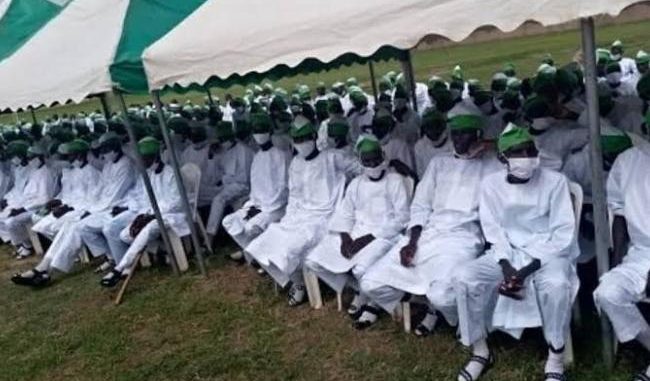
The beneficiaries were among former insurgents who surrendered to security forces and subsequently underwent rehabilitation at the Hajj Camp in Maiduguri before being formally returned to society.
Speaking during the reintegration ceremony, the Special Adviser to Governor Babagana Zulum on Security and member of the state’s Deradicalisation, Rehabilitation and Reintegration Committee, retired Brigadier General Abdullahi Ishaq, described the programme as a critical component of Borno’s non-kinetic strategy against insurgency.
He said the initiative, which began in July 2021, was founded on forgiveness, rehabilitation and community acceptance of former insurgents willing to renounce violence.
According to Ishaq, more than 350,000 individuals have reportedly left insurgent camps and surrendered since the programme commenced, while a total of 9,680 persons have been reintegrated through nine batches.
The official maintained that those processed through the programme underwent vocational training, religious and behavioural reorientation, counselling and skills acquisition before being returned to their communities.
However, the programme has remained controversial, with critics questioning whether former insurgents can be fully trusted and whether adequate safeguards exist to prevent them from returning to extremist activities.
The latest concerns raised by soldiers suggest that those reservations persist even among security personnel directly engaged in counter-insurgency operations across the North-East.
Efforts to obtain a reaction from the Nigerian Army were unsuccessful as of the time of filing this report.
Several calls placed to the Director of Army Public Relations, Colonel Appolonia Anele, went unanswered. A text message seeking the Army’s response to the allegations was also sent to her and successfully delivered, but she had not responded at the time of filing.
Sahara Reporters
News
NCDC Raises Red Flag Over Proposed Health Institute, Cautions Lawmakers on Overlapping Roles
By Gloria Ikibah
The Nigeria Centre for Disease Control and Prevention (NCDC) has expressed strong reservations about a proposed bill seeking to establish a National Institute for Public Health and Infectious Diseases, warning that the move could create institutional overlap and undermine the country’s disease control system.
The agency’s concerns were presented during a public hearing on the National Institute for Public Health and Infectious Diseases (Establishment) Bill, 2025 (HB 2629), organised by the House of Representatives Committee on Infectious Diseases at the National Assembly in Abuja on Thursday.
In its submission to lawmakers, the Director-General of NCDC, Dr. Jide Idris acknowledged the need to continually strengthen Nigeria’s health security architecture, including disease surveillance, epidemic preparedness and outbreak response. However, it maintained that the proposed institute will replicate responsibilities already assigned to the agency under existing legislation.
According to him, establishing another body with similar mandates risks creating administrative conflicts, duplicating public resources and blurring lines of authority during public health emergencies.
The NCDC boss argued that Nigeria already has a statutory institution responsible for coordinating infectious disease surveillance, prevention and emergency response, and that efforts should focus on strengthening existing structures rather than creating parallel agencies with potentially competing functions.
The development comes as lawmakers consider measures aimed at reinforcing the country’s capacity to prevent, detect and respond to emerging health threats. Supporters of the bill believe a dedicated public health institute could enhance research, coordination and preparedness for future disease outbreaks.
However, Idris insists that any reform intended to improve Nigeria’s public health system must avoid weakening existing institutions or creating uncertainty over leadership and accountability during health crises.
He urged lawmakers to carefully review the provisions of the bill to ensure that any new framework complements, rather than duplicates, the functions currently performed by the nation’s foremost disease control authority.
“The core responsibilities proposed for the new institute are substantially the same as those currently assigned to the NCDC,” Idris said, warning that the Bill raises serious concerns over duplication of mandates, institutional overlap, governance conflicts and fiscal sustainability.
He argued that public health emergencies require a single, clearly recognised national authority, stressing that creating another federal institution with overlapping responsibilities would generate uncertainty over leadership, accountability and operational command during disease outbreaks.
The NCDC further noted that the Bill designates the proposed institute as Nigeria’s National Focal Point for the International Health Regulations (IHR) and empowers it to coordinate national responses to infectious disease outbreaks functions that are already assigned to the NCDC under the NCDC Act and recognised by the World Health Organization (WHO).
According to the agency, such overlapping mandates could create confusion among state governments, development partners and international organisations that currently work through the NCDC as Nigeria’s official public health authority.
Drawing lessons from Nigeria’s successful response to Ebola, COVID-19, Lassa fever, cholera, meningitis, diphtheria, Mpox and other disease outbreaks, Idris maintained that the country’s public health system has evolved around a unified command structure, warning that introducing parallel institutions could fragment emergency response efforts when coordination is most critical.
The Director-General also questioned the financial implications of establishing a new federal institution with headquarters, zonal offices, state structures, governing councils and extensive staffing requirements at a time of competing national priorities.
He expressed concern over proposals to allocate part of the Basic Health Care Provision Fund to the proposed institute, warning that such a move would further stretch an already limited funding mechanism and reduce resources available for existing health priorities.
Idris noted that the Federal Government has invested significantly over the years in building the NCDC’s laboratory network, surveillance systems, emergency operations centres, genomic sequencing capacity, workforce development programmes and outbreak response infrastructure.
According to him, creating another institution with similar responsibilities would duplicate existing investments and undermine the Federal Government’s ongoing policy of streamlining public institutions.
He added that international best practice supports the existence of a single national public health institute responsible for disease surveillance, preparedness and emergency response, noting that Nigeria adopted the same model through the establishment of the NCDC.
The agency therefore urged the National Assembly to strengthen existing public health structures instead of creating parallel institutions.
While reiterating its support for upgrading the National Tuberculosis and Leprosy Training Centre, Saye, Zaria, into a tertiary institution dedicated to teaching, clinical services and research, the NCDC urged lawmakers to review provisions of the Bill that establish what it described as a parallel public health command structure.
The Director-General disclosed that the agency had submitted a detailed clause-by-clause analysis identifying areas of conflict between the proposed legislation and the NCDC Act, 2018, noting that several provisions of the Bill appeared to have been reproduced almost verbatim from the existing law.
He concluded that the issue before lawmakers was not whether Nigeria should strengthen its public health capacity, but whether that objective would be better achieved by strengthening the National Public Health Institute already established by law or by creating another institution with substantially overlapping responsibilities.
Earlier, Speaker of the House of Representatives, Rt. Hon. Tajudeen Abbas, described the proposed institute as a strategic investment in Nigeria’s health security and preparedness against future disease outbreaks.
Represented by Hon. Bashir Zubair, the Speaker said Nigeria’s experiences with Ebola, COVID-19, Lassa fever and other infectious disease outbreaks exposed significant vulnerabilities within the country’s health system and demonstrated the urgent need for stronger institutions capable of anticipating, preventing and responding effectively to emerging public health threats.
He stressed that a country of Nigeria’s population and strategic importance could no longer afford a reactive approach to disease outbreaks but must invest in scientific innovation, research, surveillance and sustainable preparedness.
According to Abbas, the proposed institute would provide a comprehensive framework for integrating disease prevention, surveillance, diagnosis, research, control and management within a coordinated national system while empowering Nigerian scientists to develop home-grown solutions to infectious diseases.
He maintained that the objective of the legislation was not simply to establish another government institution but to build a functional, agile and world-class institute capable of delivering measurable health outcomes for Nigerians and contributing to global public health.
In his opening remarks, Chairman of the House Committee on Infectious Diseases, Rep. Amobi Godwin Ogah, represented by Hon. Mark Esset, said the public hearing was organised to gather views and recommendations from stakeholders on two key pieces of legislation currently before the Committee — the National Institute for Public Health and Infectious Diseases (Establishment) Bill and the Tuberculosis Anti-Discrimination Bill.
Ogah explained that the proposal to establish a national public health institute was informed by findings from an oversight visit by members of the Committee to the National Tuberculosis and Leprosy Training Centre in Saye, Zaria, in October 2025. During the visit, lawmakers observed what he described as vast but underutilised human and infrastructural resources within the facility.
According to him, the discovery prompted the Committee to recommend the transformation of the centre into a national public health institute. It also influenced the decision to expand the Committee’s scope of responsibilities, leading to its renaming from the House Committee on HIV/AIDS, Tuberculosis and Malaria Control to the House Committee on Infectious Diseases.
The lawmaker disclosed that the Presidency had already granted approval for the upgrade of the Zaria-based training centre into a public health institute, expressing confidence that the proposed legislation would enhance Nigeria’s ability to prevent, detect, diagnose, treat and manage infectious diseases more effectively.
Speaking on the Tuberculosis Anti-Discrimination Bill, Ogah said the proposed law is designed to safeguard the rights and dignity of people living with or affected by tuberculosis. He noted that the legislation seeks to tackle stigma and discrimination, while promoting early testing, prompt diagnosis and access to treatment as part of broader efforts to reduce the burden of the disease across the country.
The hearing also featured submissions from representatives of the Federal Ministry of Health and Social Welfare, development partners, civil society groups, professional associations and public health institutions, as lawmakers continue deliberations on the two proposed laws.
News
Wike Slams David Mark Over ADC Claims On FCT Roads Construction, Defends Tinubu’s Development Agenda
Minister of the Federal Capital Territory (FCT), Barr. Nyesom Wike, on Thursday took a swipe at former Senate President David Mark over what he described as his poor infrastructure record while in office, arguing that the achievements of President Bola Tinubu’s administration in road infrastructure within three years had surpassed what was accomplished during Mark’s tenure in leadership positions.
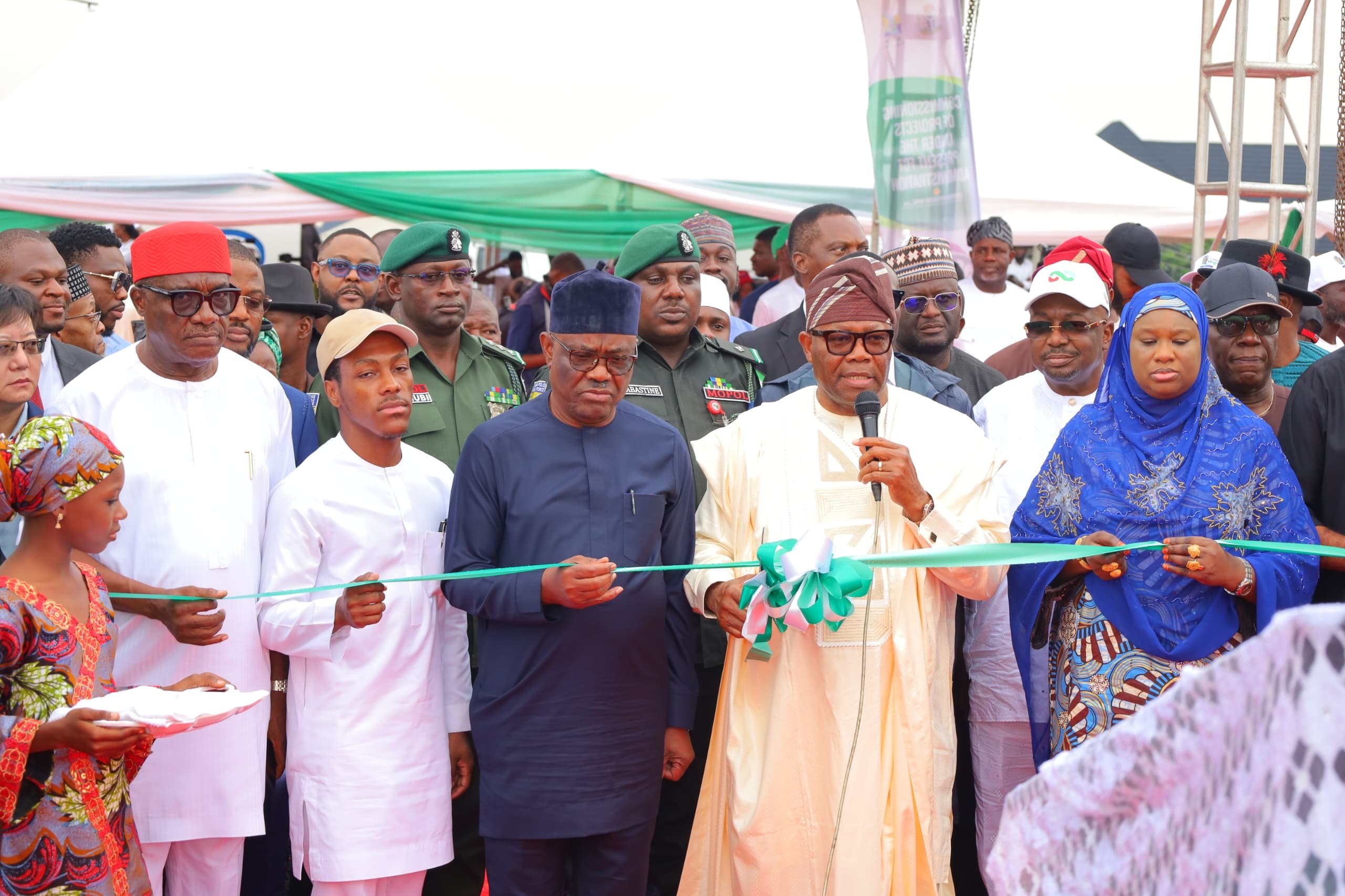
Wike spoke at the commissioning of the Interchange at Arterial Road N16–Ring Road II Junction linking Jahi and Gwarimpa districts in Abuja, where President Bola Ahmed Tinubu was represented by Senate President Godswill Akpabio.
The minister’s remarks came in response to recent criticisms from the African Democratic Congress (ADC), which he said had nonetheless acknowledged the administration’s achievements in road infrastructure.
“ADC has conceded that in terms of road infrastructure, Mr. President has done very, very well,” Wike said. “Without roads, you cannot go to hospital, you cannot go to school, and you cannot go to farm. Roads are the bedrock of development in any society.”
Turning his attention to David Mark, whom he identified as chairman of a faction of a ADC, Wike questioned the former Senate President’s record on infrastructure delivery during his eight years in office.
According to him, the Akwanga-Makurdi road remained in deplorable condition despite being awarded during Mark’s tenure as Senate President under a ruling party’s government.
“The poor people could not afford to travel to Makurdi because there was no road. But David Mark, as Senate President then was flying helicopters,” Wike said.
“Today, because of the intervention of this administration, people can drive freely to Makurdi and Otukpo. The same David Mark, who once relied on helicopters can now travel by road too.”
The minister argued that the Tinubu administration had demonstrated what could be achieved through political will and commitment to continuity in governance.
He noted that the Jahi-Gwarimpa interchange project, commissioned on Thursday, was awarded before the current administration took office but had received no mobilisation or significant progress until the present government intervened.
“One of the problems of development in Nigeria is that new administrations often abandon projects initiated by their predecessors.
“But President Tinubu has shown that government is a continuum. What matters is completing projects for the benefit of the people, regardless of who awarded them,” he said.
Wike disclosed that residents of the area had long doubted the project would ever be completed, describing its delivery as a significant milestone in the ongoing transformation of the Federal Capital Territory.
He also rejected claims that the administration’s development efforts were limited to road construction, citing investments in water infrastructure across satellite towns.
The minister recalled the recent commissioning of water projects in Karu and announced that a similar project in Bwari would be inaugurated on July 14.
“It is not correct to say we are only doing roads,” he said.
“In Karu, we commissioned water supply infrastructure, and by July 14 we will commission another major water project in Bwari. These are projects designed to improve the lives of ordinary people.”
Wike challenged critics to point to comparable investments in satellite towns during previous administrations, insisting that the Renewed Hope Agenda was delivering tangible benefits across the FCT.
News
FG ready to review N70k Minimum Wage-Gbajabiamila reveals
The presidency has officially confirmed that plans are underway to alter the current national minimum wage configuration because the current economic situation has made the baseline salary unsustainable.
Chief of Staff to the President, Femi Gbajabiamila, made this disclosure while speaking in Abuja on Thursday during an event organized by a group called Working People United.
According to the former Speaker of the House of Representatives, the present N70,000 threshold established under President Bola Tinubu’s administration in 2024 is no longer capable of meeting the practical economic demands faced by citizens across the nation.
Addressing the gathering, the president’s representative pointed out that the current fiscal environment necessitates a thorough re-evaluation of what constitutes a living baseline for Nigerian workers.
He noted that the “N70,000 wage, which was a milestone in 2024 must be honestly reassessed against today’s realities,” signaling a strong commitment from the executive arm to reopen discussions surrounding statutory labor compensation.
Gbajabiamila assured organized labor groups that the administration does not view workers as adversaries but rather as key contributors to the progress of the country.
He emphasized that the government plans to approach the upcoming negotiations with a high level of empathy and cooperation.
“I can confirm to you that when the time comes to begin the process of reviewing the national minimum wage, this administration will approach that endeavor not as an adversary of Labour, but as a partner,” he said.
He further re-iterated the commitment of the president to human capital development and fair treatment of the workforce.
“President Tinubu has said time and again that the custodians of the nation’s machinery deserve a fair and commensurate wage, and as you all well know by now, this is the president who means precisely what he says and does exactly what he means,” Gbajabiamila stated, defending the president’s record on labor issues.
While urging trade unions and workers to maintain a peaceful posture, the Chief of Staff maintained that sustainable national growth requires an ongoing collaboration rather than perpetual conflict.
He mentioned that “It must be said that good governance is not a performance stage by government for the benefit of a passive audience, it’s a partnership between those who govern and those who are governed.”
He also emphasized that the relationship between the ruling political class and the working population remains the most crucial foundation for industrial harmony.
“No where is that partnership more vital than the relationship between government and the working people of Nigeria,” he added.
Concluding his address, the former lawmaker appealed directly to union leaders to choose the path of dialogue over strikes and industrial actions, which often cripple the national economy.
“It is with this understanding in mind that I ask the leaders of organized labour and the members of working people united to remain what you have so often been at your finest, partners in progress rather than antagonist in perpetuity, let us choose to dialog over disruption, because as we have proved again and again, we achieve far more when we visit together than when we retreat, retreat to our separate corners,” Gbajabiamila remarked.
-
News15 hours ago2027: Be Prepared to struggle for power, Wike tells PDP candidates
-
News7 hours agoViral ‘Sign-Out’ Video: Ondo Govt Withholds WAEC Results of 17 Students
-
News7 hours agoXenophobic attacks: FG evacuates another 66 citizens from South Africa
-
News4 hours agoDAY 12 of Projects Commissioning in the FCT: Watch Arterial Road N16 – Ring Road Il Intersection linking Jahi to Gwarimpa District
-
News23 hours agoSokoto High Court slams death sentence on 3 men, including foreign national for terrorism , arms trafficking
-
Metro15 hours agoArmed Men Are Vigilantes And Hunters – Police Dismiss Viral Katsina Video
-
News7 hours agoICPC arraigns El-Rufai, six others over alleged N8.68bn CCTV contract fraud
-
News15 hours agoSenate passes bill to double police trust fund allocation to 1%