Connect with us

Economy

Nigeria orders oil marketers to open CNG pumps in filling stations

Published

on

ADVERTISEMENT
Zoom Ad
ADVERTISEMENT
Zoom Ad

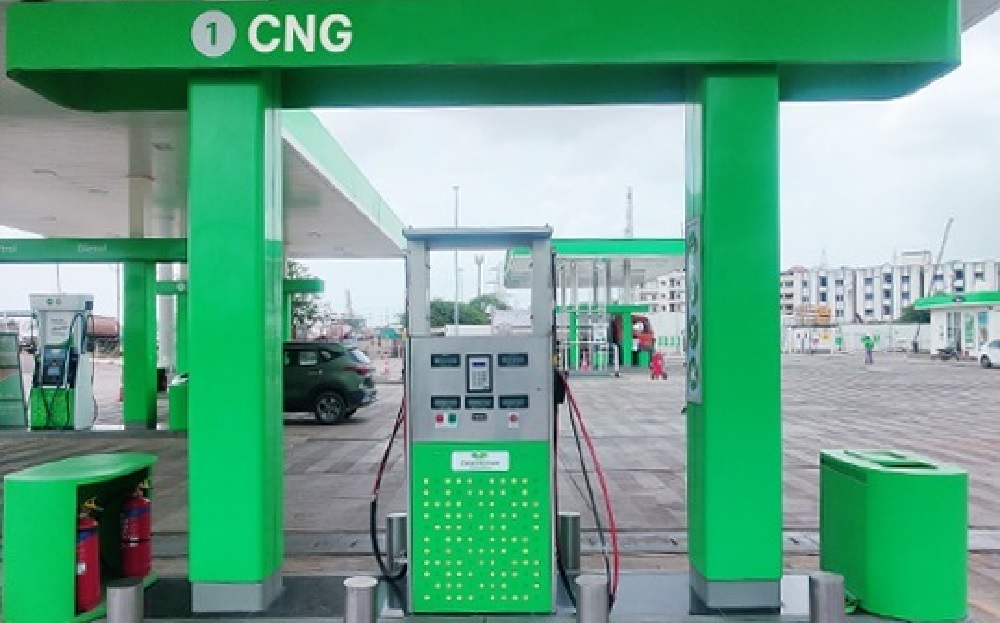
The Nigerian government has concluded plans to ensure marketers open Compressed Natural Gas pumps in filling stations across the country.

For that, the government said intending retail licensees would be now required to establish a CNG point in their filling stations before getting final government approval.

The government asked oil marketers to commence the process of establishing Compressed Natural Gas points at their filling stations to increase consumer accessibility.

The Chief Executive of the Nigerian Midstream and Downstream Petroleum Regulatory Authority, Farouk Ahmed, disclosed this during a meeting with key oil marketing companies on Tuesday in Abuja.

Advertisement

The discussion was to address the issues of incessant scarcity of petroleum products in the country and propose alternative solutions.

Ahmed also disclosed that a major conversation they had was in the area of the Compressed Natural Gas initiative of the Federal Government.

He implored the major marketers to explore the availability of CNG in their gas stations as President Bola Tinubu has directed that government vehicles to be purchased henceforth must be CNG-powered.

He said new applications for retail licences would no longer be approved without CNG points.

Advertisement

Ahmed, who described the push by the federal government to encourage the use of CNG as an alternative to petrol as a revolution, said the government was determined to reduce the burden of petrol on the economy.

He added, “We also discussed the CNG revolution and our collective effort to ensure that we reduce the burden on the economy by having an alternative by having an alternative to PMS which is very costly especially due to exchange rate fluctuations and instability. we are looking at gas because we have it in abundance, we have over 200 trillion cubic feet of gas. All we need is to harness the industry to produce, invest and be good for the consumer and CNG is the way to go.

“We discussed our plans and collective responsibility to add CNG in our petrol stations very soon just like we have PMS, diesel and kerosene, we also want to have CNG so that it would provide easy access to the consumers but of course, we have to address the supply side and we are working with the producing companies, our sister agency, NUPRC and NNPC Limited as well as Gas Aggregation Company of Nigeria to ensure that the product is also available at a competitive cost to the consumers.

“Secondly, we want to reduce the burden of the importation and consumption of PMS. we explored the possibility of converting the energy requirement of retail outlets and depot by the stakeholders here going into solar but of course there is a high entry cost and we have discussed that and it is going to be in phases.

Advertisement

By doing so, we will reduce the demand for diesel in terms of powering our generators by utilising solar options. Once we are done with consultations, we will require that CNG add-ons be put in petrol stations and for new applications, one of the requirements will be that you must have CNG add-on in the petrol station”, he said.

Speaking to journalists after the meeting, the chief executive stated that authority will not dictate the price band of the products but assured that stopgaps like the Dangote Refinery would bring succour to the local industry.

He said the government would not set the price of petroleum products from the Dangote refinery upon its full operation.

He stressed that though the government was encouraging local refining of petroleum products to reduce imports, it would not compel oil marketers to buy from Dangote Refinery as the decision was commercial.

Advertisement

The authority had recently stated that it would soon issue a fully valid operating licence to the 650,000 barrels per day capacity petroleum refinery. The facility started releasing Automotive Gas Oil, popularly called diesel to the domestic market in April this year. It has yet to release Premium Motor Spirit, popularly called petrol.

He said, “There are concerns about the ability to import petroleum products especially diesel and aviation fuel and the advent of the Dangote refinery. We allayed the fears of the marketers and told them that the Dangote refinery is a major achievement in our country because the past we were importing every litre of petroleum products we required except those supplied by modular refineries. And as an oil-producing country, we believe at NMDPRA that we should support our local industry. And that is why we encourage our marketers to patronise our local refineries.

“But, at the same time, it is a commercial decision that they have to make between the suppliers and the clients. NMDPRA will not determine how much it is sold or how much you are buying. It is their own decision to go to Dangote refinery and purchase, and for Dangote refinery to determine the price they sell. As a regulator, we will not determine the price, we are only interested that the nation is well supplied.”

On the recent shortage of petrol across the country, Farouk blamed it on the logistics problem faced by NNPC Limited in moving products from offshore to onshore depots.

Advertisement

He also hinted at plans to equip retail outlets and trucks with trackers to oversee product movement, dispensing, and volume accounting to obtain a precise estimate of our national consumption.

“We also talked about our national consumption, the requirement for our national consumption for petrol stations, retail outlets and trucking industries to put some trackers that monitor the movement of the product as well as the dispensing and accounting for the volume sold or transported so that we can have a very good estimate of our national consumption. Because currently what we do is rely on trucking information rather than the actual delivery into retail outlets or other consumption areas.”

Speaking on behalf of the companies, the CEO, Matrix Energy, Mr Abdukabir Adisa Aliu said the companies were ready to support the government in its effort to increase energy sources for Nigerians.

“It is the country first and it is when you have a good country that the marketers will be able to operate and the consumers would be able to buy. I think the decision of the Federal Government supersedes all other decisions that we have. We are all in alignment with the decisions of the government and plead with Nigerians to be patient”, he stated.
Advertisement
Continue Reading
Advertisement
Click to comment

Warning: Undefined variable $user_ID in /home/naijuinz/public_html/wp-content/themes/zox-news/comments.php on line 49

You must be logged in to post a comment Login

Leave a Reply

Economy

Naira depreciates to N1,397/$ in parallel market

Published

on

By

ADVERTISEMENT
Zoom Ad
ADVERTISEMENT
Zoom Ad

The naira on Friday depreciated to N1,397 per dollar in the parallel market from N1,390 per dollar on Thursday.

Likewise, the naira depreciated to N1,365 per dollar in the Nigerian Foreign Exchange Market, NFEM.

Data from the Central Bank of Nigeria, CBN, showed that the indicative exchange rate for the market rose to N1,365 per dollar from N1,359.75 per dollar on Thursday, reflecting N5.25 depreciation for the naira.

Consequently, the margin between the parallel and official markets widened to N32 per dollar from N30.25 per dollar on Thursday.

Advertisement

The turnover in the interbank foreign exchange market recorded its fourth daily decline by 42.5 per cent to $73.6 million from $128.2 million on Thursday.

This week, the naira strengthened by N1 per dollar in the official market, with turnover in the interbank foreign exchange market climbing to N683.2 million, representing a 76.7 per cent rise compared to N386.54 million recorded the previous week.

However, the local currency weakened in the parallel by N2 against the greenback.

Advertisement
Continue Reading

Economy

See Dollar to Naira exchange rate today, June 5, 2026

Published

on

ADVERTISEMENT
Zoom Ad
ADVERTISEMENT
Zoom Ad

The Nigerian naira maintained a relatively stable performance against the United States dollar at both the official and parallel foreign exchange markets as traders monitored liquidity conditions and demand pressures.

Data from the Central Bank of Nigeria’s Nigerian Foreign Exchange Market (NFEM) showed the naira trading around ₦1,361 to the dollar, reflecting a largely steady trend compared to recent sessions. The most recent NFEM rate published by the apex bank stood at approximately ₦1,361.05/$, while trading during the week remained within the ₦1,359–₦1,365 range.

Market data from recent official trading sessions also indicated that the naira had strengthened modestly in early June, supported by improved foreign exchange supply and sustained interventions aimed at enhancing market liquidity.

At the parallel market, commonly referred to as the black market, the dollar traded at between ₦1,390 and ₦1,405 on Friday, depending on location and transaction size. Several market trackers reported buying rates around ₦1,380–₦1,395 and selling rates between ₦1,393 and ₦1,405 per dollar.

Advertisement

The gap between the official and parallel market rates remained relatively narrow compared with previous months, reflecting ongoing efforts to improve transparency and liquidity in the foreign exchange market.

Currency dealers said market participants continue to watch foreign portfolio inflows, crude oil earnings, and Central Bank policies, all of which remain key factors influencing the naira’s direction in the coming weeks.

As of June 5, 2026, the dollar exchanged at about ₦1,361 in the official NFEM market, while parallel market transactions ranged from approximately ₦1,390 to ₦1,405 per dollar.

Advertisement
Continue Reading

Economy

Nigeria Tops Global Crypto Transfer Rankings as Adoption Hits 40%

Published

on

By

ADVERTISEMENT
Zoom Ad
ADVERTISEMENT
Zoom Ad

Nigeria has emerged as the world’s leading market for cryptocurrency transfers, with adoption reaching about 40 per cent of the population, underscoring the growing role of digital assets in addressing foreign exchange constraints, inflationary pressures and cross-border payment challenges.

The development highlights how millions of Nigerians are increasingly turning to cryptocurrencies and stablecoins as alternatives to conventional financial channels amid persistent economic uncertainties and difficulties accessing foreign currency.

According to industry data, Nigeria now ranks among the most active cryptocurrency markets globally, with digital assets becoming a mainstream tool for remittances, savings, payments and international transfers.

The country’s growing influence in the digital asset ecosystem comes despite years of regulatory uncertainty and crackdowns on some cryptocurrency platforms. Yet, market activity has remained resilient, driven largely by retail users seeking faster and cheaper alternatives to traditional financial services.

Advertisement

Meanwhile, data from blockchain analytics firm Chainalysis shows that Nigeria recorded approximately $59 billion in cryptocurrency transactions between July 2023 and June 2024, placing it among the world’s largest crypto markets.

Around 85 per cent of those transactions were valued below $1 million, indicating strong participation by individuals and small businesses rather than institutional investors.

Analysts say the trend reflects broader economic realities, including the depreciation of the naira, high inflation and rising demand for efficient cross-border payment solutions.

Industry operators argue that cryptocurrencies are increasingly being used for practical purposes rather than speculation.

Advertisement

Chief Operating Officer and co-founder of Busha, Moyo Sodipo, said users are beginning to recognise the everyday utility of digital assets.

“People are starting to see the real-world utility of cryptocurrency, especially in day-to-day transactions,” he said.

He further noted that crypto is increasingly being used for bill payments, mobile airtime purchases and retail transactions.

Stablecoins which are pegged to major currencies such as the US dollar, have emerged as a key driver of adoption. Chainalysis estimates that stablecoins account for roughly 40 per cent of Nigeria’s crypto inflows, making the country the largest stablecoin market in Sub-Saharan Africa.

Advertisement

The growing use of stablecoins has been linked to persistent foreign exchange shortages and the need by businesses and individuals to preserve value in the face of currency volatility.

Chief Executive Officer of Yellow Card, Chris Maurice, said stablecoins provide businesses with access to dollar-denominated assets when conventional channels are constrained.

“About 70 per cent of African countries are facing an FX shortage, and businesses are struggling to get access to the dollars they need to operate,” Maurice said.

Prior to retail payments, digital assets are also becoming increasingly important for remittances and cross-border trade. Industry stakeholders say cryptocurrency-based transfers offer faster settlement times and lower transaction costs compared to traditional channels.

Advertisement

The surge in adoption comes as Nigeria gradually moves towards a more structured regulatory framework for digital assets. The country has shifted from an era of restrictions to one focused on licensing and oversight, with authorities seeking to balance innovation with consumer protection.

Experts believe that regulatory clarity, combined with growing digital literacy and widespread smartphone adoption, could further accelerate cryptocurrency usage across the country.

However, they also caution that issues relating to consumer protection, fraud prevention, taxation and market stability will remain critical as the sector continues to expand.

For policymakers, Nigeria’s leadership in global crypto transfers presents both an opportunity and a challenge: harnessing innovation to deepen financial inclusion while ensuring adequate safeguards in an increasingly digital financial system.

Advertisement
Continue Reading

Trending

Copyright © 2024 Naija Blitz News