
News
Gowon urges ECOWAS to lift sanctions on Mali, Burkina Faso, Niger

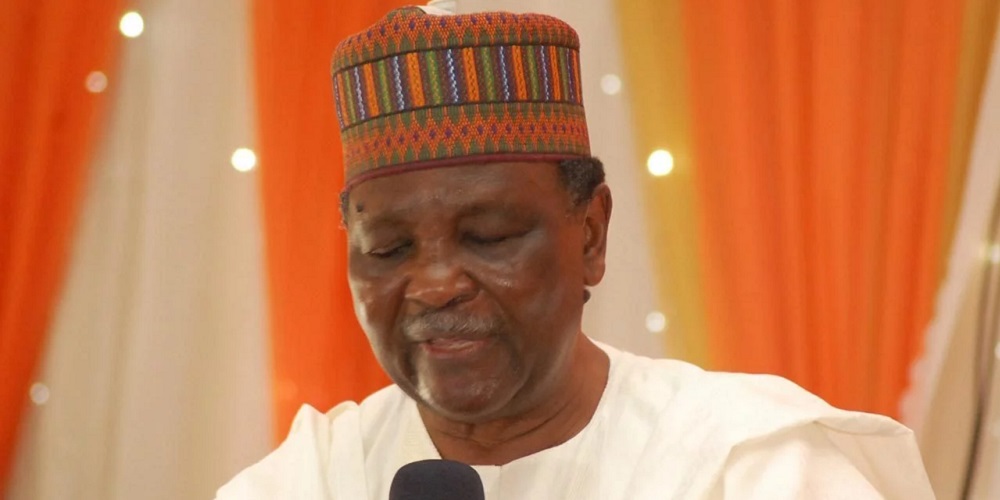


Former Nigerian head of state and one of the founding fathers of the Economic Community of West African States, Yakubu Gowon, has urged the regional political and economic union to lift sanctions on Mali, Burkina Faso and Niger Republic.
Gowon made the call in an open letter to the Heads of State and the ECOWAS member states on Wednesday.
Widely seen as West Africa’s top political and regional authority, the 15-nation bloc of ECOWAS – formed in 1975 to promote economic integration in member states – has struggled in recent years to reverse a wave of military takeovers in the region, including Mali in 2020 and 2021, Burkina Faso in 2022 and Niger last year.
Members of the fifteen-nation bloc (excluding the four members suspended since falling under military rule – Burkina Faso, Guinea, Mali and Niger), along with the eight-member West African Economic and Monetary Union, agreed to close all borders with Niger, suspend financial transactions and freeze the country’s assets in external banks.
The three countries, which mulled a counterforce, the Alliance of Sahel States, against the regional bloc after the overthrow of the democratically elected government in Niger, announced their exit from ECOWAS on Sunday, January 28, 2023.
In a joint statement by their military leaders, Capt. Ibrahim Traoré (Burkina Faso), Col. Assimi Goita (Mali), and Brig. Gen. Abdourahamane Tiani (Niger Republic), the three countries announced their withdrawal from ECOWAS with immediate effect.
The three countries, which are currently under military rule, said they ceased to be members of ECOWAS as the regional body had allegedly “moved away from the ideals of its founding fathers and pan-Africanism.”
They claimed that ECOWAS had become a threat to its member states.
Gowon, who presented the letter to the President of the ECOWAS Commission, Omar Touray, in Abuja at a press conference, expressed concern that the pronouncement by Burkina Faso, Mali and Niger Republic to exit from ECOWAS threatens the unity of the bloc and has far-reaching implications for ordinary citizens.
He said, “It saddens me to learn that ECOWAS is threatened with disunity following the announcement by Burkina Faso, Mali and Niger, three important Member States, of their intention to leave the Community.
“The impact of such a decision will have far-reaching implications for the ordinary citizens who have been the major beneficiaries of regional integration.”
Gowon called on the ECOWAS authorities to immediately consider the implementation of the “lifting of all sanctions that have been imposed on Burkina Faso, Guinea, Mali and Niger.”
He appealed to the ECOWAS Authority of Heads of State and Government, including leaders of Burkina Faso, Mali and Niger, to re-unite for peace and stability in the region.
“Therefore, on behalf of all the founding fathers of the Community and myself, I urge the ECOWAS Authority of Heads of State and Government, including the leaders of Burkina Faso, Mali and Niger, to put aside their differences and reunite for the peace, stability and prosperity of our sub-region,” Gowon said.

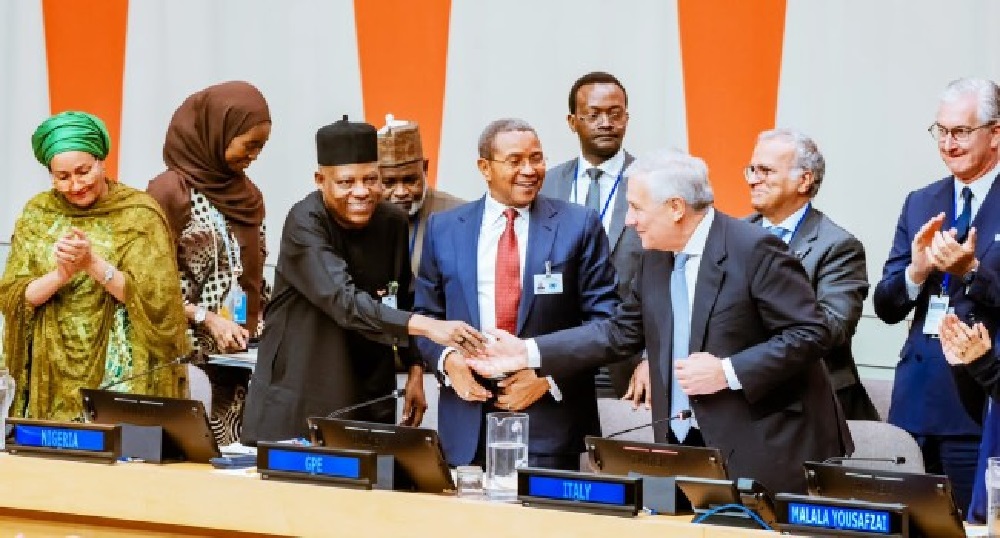
Nigeria and Italy have strengthened collaboration on a campaign to mobilise $5bn for education financing worldwide through the Global Partnership for Education.
The Senior Special Assistant to the President on Media and Communications, Office of the Vice President, Stanley Nkwocha, disclosed this in a statement issued on Wednesday.
According to the statement, the collaboration was highlighted at the “Multiply Possibility: A New Era for Education Financing” high-level event held in New York, United States, on the sidelines of the 81st Session of the United Nations General Assembly.
The statement said President Bola Tinubu, in a video message to the event, noted that the GPE vision aligned with his administration’s agenda of improving educational outcomes by investing in access and capacity building for teachers.
The President also commended stakeholders in the GPE for their efforts towards accelerating education financing globally. Representing the President at the gathering, Vice President Kashim Shettima said education was an investment in Nigeria’s economic future, productivity, prosperity and stability.
He said, “For Nigeria, education is not an expenditure at the margins of our development agenda. It is an investment in our economic future, national productivity, and the prosperity and stability of our people.
“Since President Bola Ahmed Tinubu assumed office in 2023, our Administration has substantially increased resources devoted to education, while pursuing reforms to strengthen basic education financing, expand foundational learning, and improve access to tertiary and technical education.
“Through the Nigerian Education Loan Fund, we are widening access to higher education, while strengthening the link between education, skills, employment and enterprise.”
Shettima said Nigeria was looking beyond traditional budgetary allocations, noting that Tinubu had directed that liquid funds recovered by the Economic and Financial Crimes Commission, once legally cleared and free from litigation, be channelled to the Nigerian Education Loan Fund.
The VP said the Federal Executive Council had also recently approved the consideration of unclaimed dividends and dormant funds for the same purpose, subject to relevant legal requirements.
He said this demonstrated Nigeria’s commitment to mobilising every responsible and lawful domestic source to finance education.
Citing Nigeria’s partnership with the World Bank and GPE through HOPE-EDU, Shettima said, “The programme is expected to reach approximately 29 million children and 500,000 teachers across Nigeria.”
He added: “This is precisely why GPE matters. GPE does not replace national investment; it multiplies it. The ambition before us is to mobilise US$5 billion for GPE and, through that investment, unlock additional financing for education in partner countries.
“Domestic resources must remain the anchor, complemented by development assistance, concessional finance, philanthropy and innovative financing.”
The Vice President said Nigeria’s growing population could become one of its greatest economic assets if its “young people have access to quality education, relevant skills and meaningful opportunities.”
He said the response to declining global aid “must therefore be smarter multilateralism: using scarce international resources to leverage much larger investments.”
Shettima urged participants to ensure that the initiative was not merely a fundraising exercise but “a renewed compact for human capital, bringing together national leadership, international partnership and responsible financing so that every child has the opportunity to learn, thrive and contribute to their country’s future.”
He also expressed Nigeria’s appreciation to the Italian government and GPE for joining the campaign, stressing that Nigeria was participating not merely to seek greater international investment but “to demonstrate that we are investing in education ourselves.”
Earlier, Italian Prime Minister, Giorgia Meloni, praised Tinubu’s leadership and Nigeria’s determination to improve educational outcomes across all levels.
She urged partners in the global alliance to show greater commitment to reversing the trend in developing countries.
The UN Deputy Secretary-General, Amina Mohammed, thanked partners for their interest in improving education financing in developing countries.
She called on international financial institutions to support committed countries in finding the fiscal space needed to improve educational outcomes, including capacity building for teachers.
Also speaking, the Chair of the Board of Directors of GPE, Jakaya Kikwete, underscored the need to accelerate education financing, noting that education remained central to human rights, security and peace.
Girls’ education activist, Malala Yousafzai, also called for greater collaboration in ideas and resources, urging governments and multilateral organisations to commit more resources towards gender equality in education.
The statement said governments and donors at the event made contributions towards the education of at least 370 million children globally, while the Italian government pledged €50m for GPE programmes and interventions.
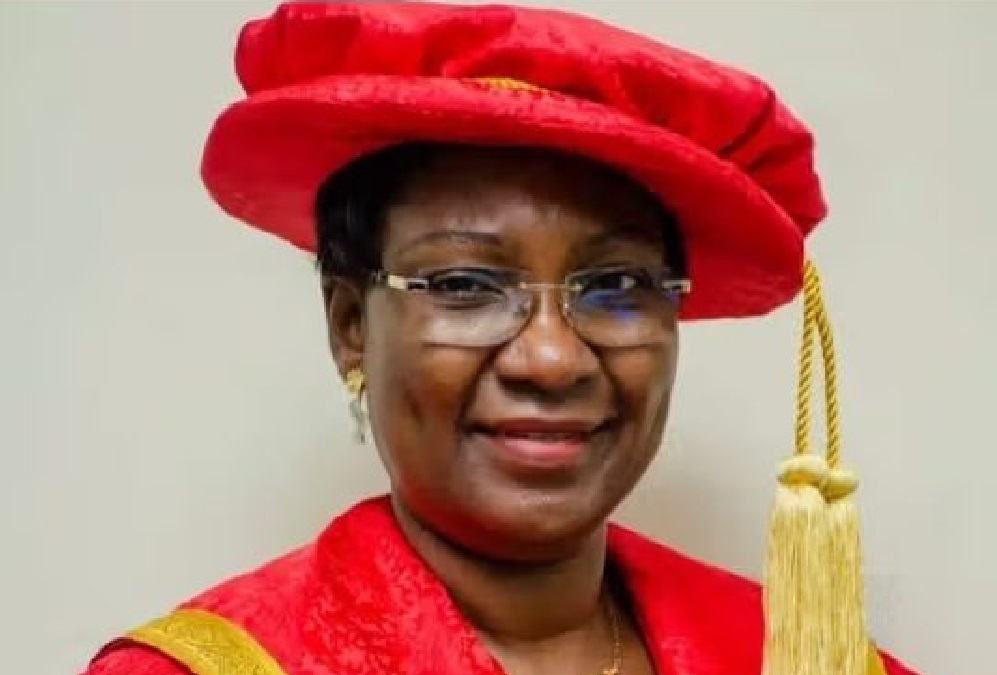
Emmanuel Adeyemi, media aide to the immediate-past Vice-Chancellor of Lagos State University, Prof Ibiyemi Olatunji-Bello, has faulted the misinterpretation of his principal’s remarks on the payment of N1m fees by students of public universities in The PUNCH interview on Tuesday.
A flurry of reactions has trailed excerpts of the interview widely circulated across social media.
In a statement on Wednesday, Adeyemi said Olatunji-Bello did not suggest that students or their parents must pay N1m annually for university education.
He urged the public, media and education stakeholders to consider Olatunji-Bello’s complete remarks rather than isolated portions that, he said, could give a different impression of her position.
He explained that the former VC was speaking about the estimated cost of providing quality undergraduate education, while advocating innovative and diversified funding sources for universities.
According to Adeyemi, Olatunji-Bello’s remarks were made against the backdrop of the desire of Nigerians for university education comparable in quality to what is obtainable in other parts of the world.
He said the former VC had noted that delivering such quality education costs approximately N1m per student annually.
Adeyemi, however, stressed that Olatunji-Bello did not suggest that the entire cost should be transferred to students or their parents.
He said, “The immediate-past Vice-Chancellor of Lagos State University, Prof. Ibiyemi Olatunji-Bello, has been widely quoted across social media as saying that students must pay N1m in fees for public universities to achieve self-sustainability.
“Distinguished Professor Olatunji-Bello’s remarks were made against the backdrop of Nigerians’ legitimate aspiration for university education that is genuinely comparable in quality to what is obtainable in other parts of the world, a standard that stands in sharp contrast to the comparatively low tuition fees currently charged by public universities in Nigeria.
“Her central argument was that delivering the quality of undergraduate education Nigerians rightly desire costs, on average, approximately N1m per student annually.
“Crucially, however, she did not suggest that this cost must necessarily be transferred wholesale onto students or their parents.”
Adeyemi said the remarks, when read in their entirety, reflected Olatunji-Bello’s call for universities to pursue innovation and develop diversified revenue streams to achieve financial sustainability.
He added, “This is precisely why, in response to the interview question on institutional self-sustainability, she began by stating: ‘Universities can achieve financial self-sustainability. If they can innovate and ensure improvements in the institution, money will come in.
“She went on to add: ‘I enjoin parents to ensure their children are well-educated by prioritising their fees. Good quality education needs money.’”
Adeyemi said the ex-VC’s position reflected a broader call for universities to pursue innovation and diversified revenue streams as the primary pathway to financial sustainability, while also reminding parents of the genuine cost implications of quality education and encouraging shared responsibility rather than assigning that burden to any single party.
He said the former VC sought to remind parents of the cost implications of quality education and encourage shared responsibility for funding university education.
“We urge members of the public, the media, and stakeholders in the education sector to engage with Distinguished Professor Olatunji-Bello’s complete remarks in their proper context, rather than isolated soundbites that do not accurately reflect the full weight and intent of her position,” he added.
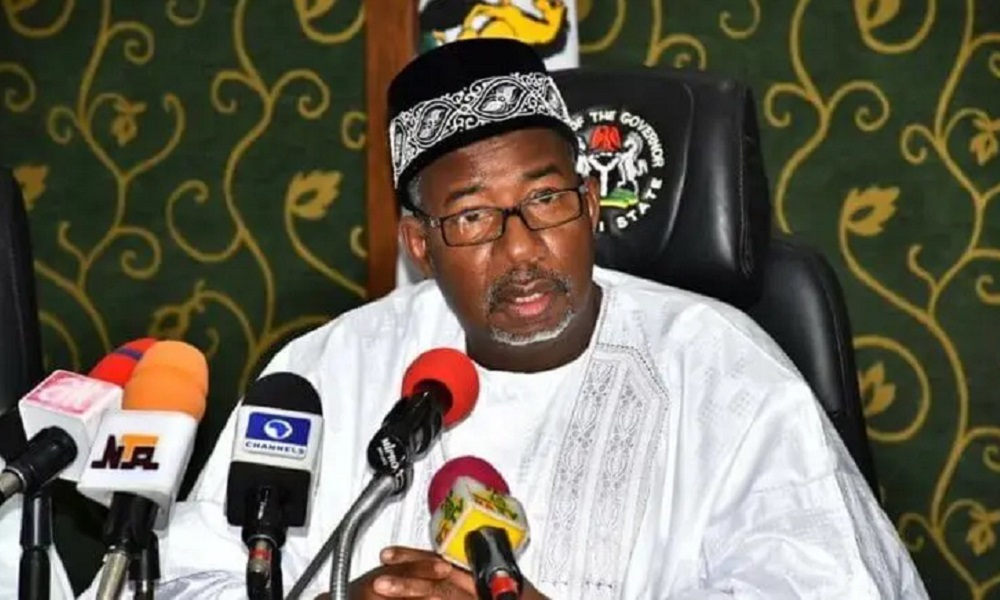
Bauchi State Governor, Bala Mohammed, has directed the commencement of payment of outstanding gratuity to retired civil servants from 2012 to 2016.
The governor, who was represented by his deputy, Auwal Jatau, announced this on Wednesday, saying the exercise would commence with the first batch of beneficiaries, while subsequent payments would be made until all eligible retirees had received their entitlements.
Mohammed said the state government had committed N10bn towards addressing the accumulated gratuity obligations owed to retirees.
He explained that the validated historical records showed that the total outstanding obligations for the period amounted to N11.71bn, comprising liabilities owed to state and local government retirees.
According to him, the state component involves 3,570 beneficiaries with obligations amounting to N6.13bn, while the local government component covers 2,262 beneficiaries with outstanding obligations of N5.58bn.
The governor said the payment would be implemented progressively based on the chronology of outstanding obligations, completeness of supporting records, validation and reconciliation processes, as well as the resources approved for each phase.
He said, “No eligible pensioner should interpret this first phase as an exclusion. We are beginning from defined historical brackets so that government can process systematically and transparently.
“We are starting here, but we are not stopping here. The validated historical records before government cover the accumulated obligations.”
Mohammed noted that many retired workers had waited for more than a decade to receive their gratuity, describing the backlog as one of the most challenging issues inherited by his administration.
He said, “Today, we say to you, your wait is finally coming to an end. Acknowledging the plight of our senior citizens, when we talk about monthly living, there should be dignity.
“It is a systemic injustice when, after finishing years of service, you are unable to receive your hard-earned entitlement. Sadly, we have lost some of our colleagues along the way without them tasting the fruit of their labour.”
The governor said the government recognised the contributions of retirees who spent decades building the state’s infrastructure, schools, healthcare system and administrative machinery.
He added that the government had established the Bauchi State Contributory Pension Scheme to strengthen the management of pension-related matters, including data validation, verification and reconciliation.
Mohammed directed the relevant committee and officials overseeing the exercise to ensure transparency, speed and fairness in the disbursement.
He said there should be no bureaucratic bottlenecks during the verification process and directed that senior citizens should be given priority and treated with dignity.
The governor said the payment was not merely a financial intervention but a demonstration of the government’s commitment to addressing inherited obligations and improving the welfare of retirees.
He urged beneficiaries to provide the necessary documentation, cooperate with the verification process and use the payments prudently to support themselves and their families.
The Speaker of the state House of Assembly, Abubakar Sulaiman, said the legislature unanimously approved the release of funds for the payment of the outstanding gratuity.
Sulaiman said the House had remained concerned about the hardship faced by retirees as a result of the accumulated backlog.
He said, “The commencement of this month’s payment of gratuity is an important step towards addressing a long-standing obligation to the men and women who devoted their productive years to the service and development of our dear state.
“The House has demonstrated its commitment through concrete legislative action by approving the request of the government to secure the necessary financing for the settlement of outstanding gratuity.”
The Speaker said the House approved the measure because gratuity was an entitlement earned through years of dedicated service and should not be regarded as a favour to retired workers.
He commended Governor Bala Mohammed for responding to the resolutions of the House and demonstrating political will towards addressing the longstanding liability.
Sulaiman said the exercise was expected to commence with about 1,700 retirees across the state.
He assured retirees that the House would continue to provide legislative support and oversight to ensure that the welfare and legitimate entitlements of workers and pensioners received adequate attention.

Nigeria, Italy lead $5bn global education financing campaign

Ex-LASU VC’s N1m fee remark misinterpreted – Spokesperson

Bauchi begins N10bn gratuity backlog payment





-
 News20 hours ago
Gov Kefas, Olotu Akpodiete, others Bag ISSS Awards for Excellence in Security Management
-
 News16 hours ago
Fuel price: Lokpobiri asks NNPCL to explain to Nigerians why PH, Warri, Kaduna refineries are not working
-
 News12 hours ago
Photos: Tinubu has redefined infrastructure delivery in FCT – Wike
-
 News18 hours ago
SEDC Launches 200-hectare Farm in Enugu, Targets 1000 Jobs
-
 News21 hours ago
Oyedele Calls for Affordable Capital to Finance Africa’s Infrastructure
-

 News13 hours ago
Police Officer Allegedly Caught on Video Making Ethnic Remarks Against Peter Obi