Connect with us

News

Nigeria to earn $100 billion annually from music, culture by 2030 – Musawa

Published

on

ADVERTISEMENT
Zoom Ad
ADVERTISEMENT
Zoom Ad

…Joins forces with Recording Academy to empower African musicians

….Salutes Afro beat stars, Burna Boy, Whiz Kid, Don Jazzy, others

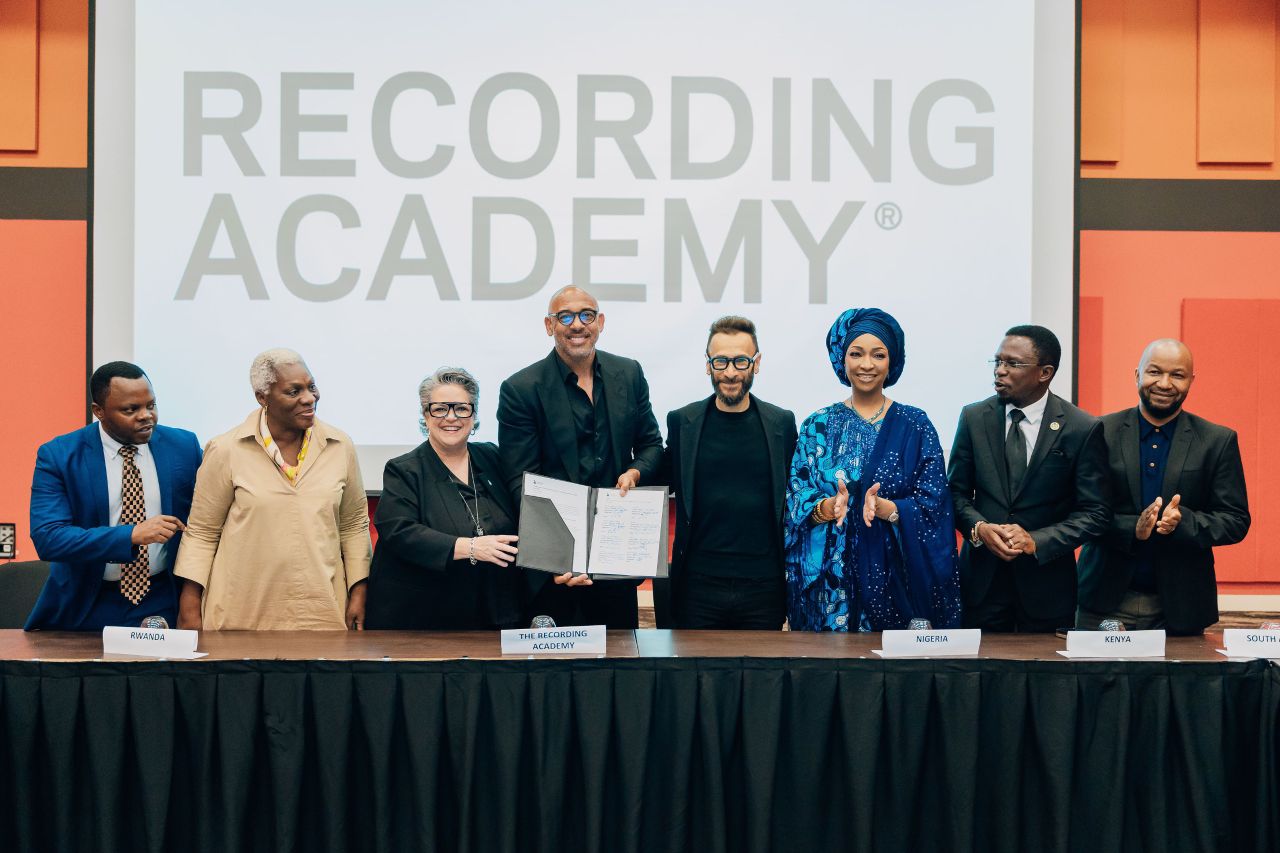
L-R: Minister of Youth and Arts in Rwanda, Hon. Utumatwishima Jean, Representative of AFREXIM, Recording Academy’s Chair, Tammy Hurt, President of the Recording Academy Harvey Mason Jr., Co-President Panos A. Panay, Minister of Art, Culture and Creative Economy Nigeria, Barr. Hannatu Musa Musawa, Minister of Sports and Culture in Kenya Hon. Ababu
Namwamba, Representative of Minister of Sports, Art, and Culture in South Africa Tsholofelo Lejaka at the inaugural PAN African Steering Committee Meeting with the Recording Academy held in Kigali, Rwanda on the 18th of June 2024

Minister of Art, Culture and Creative Economy, Hannatu Musa Musawa has said that Nigeria is diversifying from oil to music, culture and entertainment which will fetch the country, $100billion by 2030.

Advertisement

The minister who spoke at a strategic roundtable meeting with organizers of the Grammy Awards, Recording Academy, and four other countries at the Convention Centre in Kigali, Rwanda, said Africa is the future of the boom in the music industry.

The meeting which was convened to set modalities for a global upscale of African Music was geared towards elevating the vibrant music and culture of Africa unto the global stage.

The steering committee consisting of Ministers of Art, Culture and the Creative Economy of Kenya, Rwanda, a delegation from South Africa representing the Ministry in South Africa, the CEO of the Latin Recording Academy, and representatives of Afrexim bank and the Recording Academy, resolved to advance the creative industries across the continent and support the diverse artistic heritage.

In her remarks at the meeting,
Musawa called on member countries to support one another and embrace the African music project which will not only serve as a platform for global economic expansion but also as a tool for national reconciliation, unity and progress in Africa’s entertainment industry.

Advertisement

“I must salute our Afrobeat superstars as their globalization and emergence into global pop culture has brought the Grammies to Africa. I will first thank the legends of the Nigerian Music industry that brought us here; Burna Boy, WIzkid, Don Jazzy, Dbanj, Davido, P-Square, 2Face, Asake, Tiwa Savage, and others too numerous to mention.

“Nigeria was invited to this meeting by the Recording Academy following the global success of Nigeria’s Afro beats movement. As Africans, we are the future. We are undeniable and have a voice which must be used to propel the unity and progress of not only Africans but the black race all over the world.

“The music industry provides alternative source of revenue for Nigeria as well as other African countries, thus reducing dependency on traditional sectors like oil. The Nigerian music industry is enjoyed across Africa and the globe, providing employment opportunities for millions of young people in Africa, while promoting the African culture and generating foreign currency to the country’s gdp.

“We have a responsibility to use this collaboration with the Recording Academy and all the founding members, to give Africa the strength and identity they have always yearned for. The President and Commander in Chief of the Armed Forces, Asiwaju Bola Ahmed Tinubu has directed me to ensure that we create an enabling environment for this collaboration to thrive and to see how can all work together as equal partners,” Musawa said.

Advertisement

The steering committee discussed issues affecting the African music industry including Intellectual Property Rights, Piracy, and poor funding.

Member countries also committed to supporting economic policies for creative industries which involve working with governments and policymakers to create favorable environments for artists and creators, fostering a cohesive Pan-African vision for the music industry, promoting intellectual property rights and creative innovation, facilitating artistic mobility of music creators through unhindered access to performance venues across continents, access to global opportunities through joint programs and cross collaborations to ensure that African creators share their talents on the world stage as well as provision of educational resources, training and global elevation of African music and cultural excellence.

Key stakeholders at the meeting included the Recording Academy’s Chair, Tammy Hurt, the CEO of the Recording Academy Harvey Mason Jr., Co-President Panos A. Panay, and the Special Advisor to the CEO and President of the Recording Academy Joe Phelan. Others include the Minister of Youth and Arts in Rwanda, Hon. Utumatwishima Jean Nepo Abdallah, Minister of Sports and Culture in Kenya Hon. Ababu Namwamba, Acting Minister of Sports, Art, Tsholofelo Lejaka who represented the Ministry from South Africa and the representative of Afrexim Bank Temwa Gondwe.

The Recording Academy had earlier announced agreements with Nigeria, Rwanda, Kenya, the United Arab Emirates, and South Africa to extend its efforts to support music creators on a global scale.
Nigeria embraces this vision of partnering with other creative minds on the continent, to explore advanced strategies and road maps aimed at promoting the country’s talents through world stage performances.


Advertisement
Continue Reading
Advertisement
Click to comment

Warning: Undefined variable $user_ID in /home/naijuinz/public_html/wp-content/themes/zox-news/comments.php on line 49

You must be logged in to post a comment Login

Leave a Reply

News

NCWS Declares Seven-Day National Prayer Against Kidnappings, Seeks Safe Return of Abducted Children

Published

on

ADVERTISEMENT
Zoom Ad
ADVERTISEMENT
Zoom Ad

…mobilise eight million members as concern grows over rising insecurity

By Gloria Ikibah

The National Council of Women Societies (NCWS) has announced a seven-day nationwide prayer programme in response to the rising wave of kidnappings across the country, particularly the recent abductions of schoolchildren in Oyo State, Borno State and other affected communities.

The initiative, which is expected to involve more than eight million women across Nigeria, was unveiled by the President of the council, Princess Edna Azura, who expressed deep concern over the worsening security situation and the growing number of children and other citizens being held in captivity.

Advertisement

In a statement issued on behalf of the organisation, Princess Azura said the prayer exercise will focus on seeking divine intervention for the safe release of abducted victims, as well as peace, security and stability across the country.

The NCWS President, alongside Hajia Aisha Ringo and other national officers of the council, said the current security challenges confronting Nigeria require collective action and spiritual support from citizens, especially women and mothers.

She said: “As mothers, we owe it to our nation and to the children whose lives have been disrupted by these unfortunate incidents to pray fervently for their safe return. We must continue to support all efforts aimed at restoring peace, security and stability across Nigeria.”

Princess Azura therefore urged women, religious organisations, traditional rulers and community leaders to remain steadfast in prayers for the affected families, security agencies and government institutions working to tackle insecurity.

Advertisement

She also commended the efforts of President Bola Ahmed Tinubu in addressing security concerns, stressing that the fight against insecurity requires the support and cooperation of all Nigerians.

According to her, the decision to organise the nationwide prayer programme was informed by the urgent need to seek God’s intervention in the nation’s affairs at a critical time.

“We see the commitment and sleepless nights being invested in tackling the nation’s security concerns. As women and mothers, we are lending our support through sustained prayers because we believe that divine intervention, alongside ongoing security measures, will strengthen efforts to protect lives and property across the country.

“As mothers, it has become necessary for us to rise and pray for Nigeria. NCWS remains committed to supporting government efforts through prayers and advocacy. We believe that with unity of purpose and faith, our nation will overcome its present challenges and emerge stronger,” she added.

Advertisement

The council reaffirmed its commitment to promoting peace, protecting children and advancing the welfare of women and families across Nigeria.

It also called on Nigerians from all walks of life to participate in the seven-day prayer exercise and remain hopeful that all kidnapped children and other victims of abduction would return safely to their families.

In separate remarks, other leaders of the organisation stressed the importance of parental responsibility in addressing some of the social challenges facing the country.

They urged parents and guardians, particularly mothers, to pay closer attention to the upbringing of their children by monitoring their associations and providing proper guidance from an early age.

Advertisement

According to the council’s leaders, strong family values, moral discipline and active parental involvement remain essential to raising responsible citizens and building a safer society.

The prayer initiative comes amid growing public concern over recurring cases of kidnappings and attacks in parts of the country, with calls intensifying for both community action and stronger security measures to protect lives and restore public confidence.

Continue Reading

News

Reps Push Fresh Statistics Law to Drive Digital Economy, Scrap 2007 Act

Published

on

ADVERTISEMENT
Zoom Ad
ADVERTISEMENT
Zoom Ad

…Nigeria cannot build a $1trn economy on guesswork – Abbas

By Gloria Ikibah

The House of Representatives has begun moves to repeal the Statistics Act of 2007 and replace it with a new legal framework designed to modernise Nigeria’s data and statistical system for the digital era.

The move formed the focus of discussions at a public hearing on the Statistics Bill, 2025, held at the National Assembly on Monday, where lawmakers, government officials, academics, civil society groups and private sector stakeholders examined proposals aimed at strengthening the country’s statistical architecture.

Advertisement

Addressing participants, Speaker of the House of Representatives, Rt. Hon. Tajudeen Abbas, said the proposed legislation goes far beyond amending the existing law, describing it as a far-reaching reform intended to reposition Nigeria’s statistical system to meet the demands of a rapidly changing global economy.

According to Abbas, the Statistics Act currently in force was enacted nearly two decades ago under circumstances that bear little resemblance to today’s technology-driven environment.

He emphasised that credible and timely data remain indispensable for national planning, economic growth, budgeting, policy implementation and governance.

The Speaker said: “Today, we live in a fast-evolving digital age where data is generated at a velocity, veracity, volume and variety never seen before. The Statistics Bill, 2025 is not a minor amendment; it is a complete structural overhaul.

Advertisement

“To plan without accurate data is to build a house on quicksand. Delivering on this mandate is impossible without giving the National Bureau of Statistics timely and adequate resources, which highlights why the sustainable funding provisions in this Bill are so critical.”

Abbas argued that Nigeria’s aspiration to build a one-trillion-dollar economy will depend heavily on the availability of accurate, reliable and accessible data.

He noted that decisions on public spending, infrastructure development, social interventions and economic policies must be guided by evidence rather than assumptions.

The Speaker further explained that the proposed legislation seeks to strengthen coordination among agencies responsible for data generation, improve quality assurance mechanisms, promote digital data collection and dissemination, and provide sustainable funding for the National Bureau of Statistics (NBS).

Advertisement

He added that the reforms will bring Nigeria’s statistical system closer to international best practices, improve investor confidence, enhance public service delivery and deepen accountability in governance.

Abbas therefore called on stakeholders to actively contribute to the legislative process, as he said broad consultations are necessary to ensure the final law protects data privacy while promoting accessibility, transparency and credibility.

Also speaking at the hearing, the Statistician-General of the Federation and Chief Executive Officer of the National Bureau of Statistics, Adeyemi Adeniran, described the bill as a necessary response to the dramatic changes taking place in the global data ecosystem.

He noted that while the 2007 Act had served the country over the years, advances in technology have transformed how data is generated, analysed and utilised.

Advertisement

According to him: “The increasing use of digital technologies, administrative data systems, geospatial information, Big Data, Machine Learning, Artificial Intelligence and other emerging data sources requires a modern legal framework capable of supporting the evolving needs of the National Statistical System.”

Adeniran explained that the proposed legislation contains eight sections and 42 clauses covering key areas such as statistical governance, institutional development, data collection and management, confidentiality, accountability, funding arrangements and coordination among stakeholders.

He said the reforms will significantly improve the capacity of the National Statistical System to generate reliable and timely information required for planning, policy formulation, implementation, monitoring and evaluation of government programmes.

The Statistician-General also commended Speaker Abbas and the House Committee on National Planning and Economic Development, chaired by Rep. Gboyega Nasir Isiaka, for driving the legislative initiative.

Advertisement

Participants at the hearing, drawn from government ministries, departments and agencies, academia, civil society organisations and the private sector, are expected to submit recommendations that will shape the final version of the bill before it returns to the House for further consideration.

If passed, the Statistics Bill, 2025 is expected to provide Nigeria with a modern, technology-driven statistical framework capable of supporting national development goals and strengthening the country’s position in an increasingly data-driven global economy.

Continue Reading

News

Finally, Federal Ministry of Finance Approves Payments to 1,240 Local Contractors

Published

on

ADVERTISEMENT
Zoom Ad
ADVERTISEMENT
Zoom Ad

The Federal Ministry of Finance has approved payments to more than 1,240 contractors, providing immediate liquidity support to businesses across the country and reinforcing the Federal Government’s commitment to meeting its financial obligations.

The approval, granted by the Honourable Minister of Finance and Coordinating Minister of the Economy, Mr. Taiwo Oyedele, follows a diligent verification and reconciliation undertaken by the Ministry to ensure that only duly validated obligations qualify for payment.

The payments cover contractors across various Ministries, Departments and Agencies (MDAs) and represent a significant step in addressing long-standing payment obligations, particularly those affecting indigenous businesses and small and medium-sized enterprises (SMEs).

Contractors prioritised for payment in the most recent batch are those with verified claims in the region of ₦100 million or less. The release of funds is expected to provide immediate relief to hundreds of businesses, enabling them to return to project sites, pay workers, settle suppliers, meet financial commitments, and support economic activity across the country.

Advertisement

This development reflects the Ministry’s commitment to translating policy objectives into tangible outcomes by resolving inherited obligations in a transparent and fiscally responsible manner.

Over the past few months, the Federal Government has processed payments exceeding ₦700 billion across various categories of verified obligations owed to local contractors. Within the month of May alone, approximately ₦436.6 billion in transactions were processed, demonstrating a significant acceleration in payment activity aimed at unlocking liquidity and supporting economic growth.

By prioritising a large number of smaller contractors rather than concentrating payments among a few large beneficiaries, the Government is broadening the economic impact of these disbursements, supporting businesses across different sectors and regions of the country.

The latest payments are expected to strengthen confidence among contractors, suppliers, and service providers doing business with government by demonstrating the Government’s commitment to honouring duly verified obligations.

Advertisement

For many beneficiaries, the release of funds represents more than a financial transaction. It provides the certainty needed to sustain operations, preserve jobs, complete ongoing projects, and contribute to economic recovery and growth.

The Ministry remains committed to maintaining fiscal discipline while ensuring that legitimate obligations are settled in a timely manner going forward to substantially reduce outstanding liabilities over time, strengthen confidence in public financial management, and support the effective delivery of public services and infrastructure.

Continue Reading

Trending

Copyright © 2024 Naija Blitz News