Economy
Dangote Refinery To Sell Remaining NNPC 12.7% Stake – Fitch
- /home/naijuinz/public_html/wp-content/plugins/mvp-social-buttons/mvp-social-buttons.php on line 27
https://naijablitznews.com/wp-content/uploads/2024/04/images-8.jpeg&description=Dangote Refinery To Sell Remaining NNPC 12.7% Stake – Fitch', 'pinterestShare', 'width=750,height=350'); return false;" title="Pin This Post">
- Share
- Tweet /home/naijuinz/public_html/wp-content/plugins/mvp-social-buttons/mvp-social-buttons.php on line 72
https://naijablitznews.com/wp-content/uploads/2024/04/images-8.jpeg&description=Dangote Refinery To Sell Remaining NNPC 12.7% Stake – Fitch', 'pinterestShare', 'width=750,height=350'); return false;" title="Pin This Post">
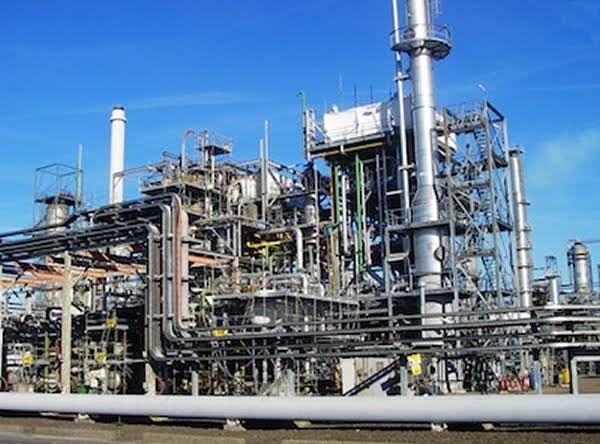
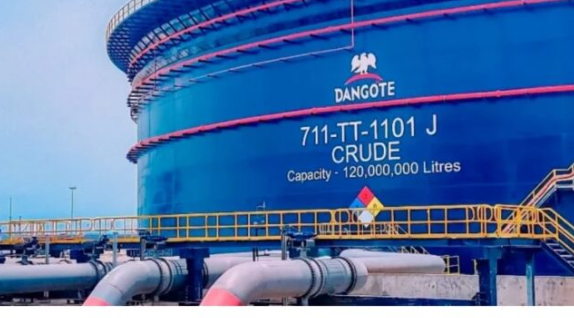
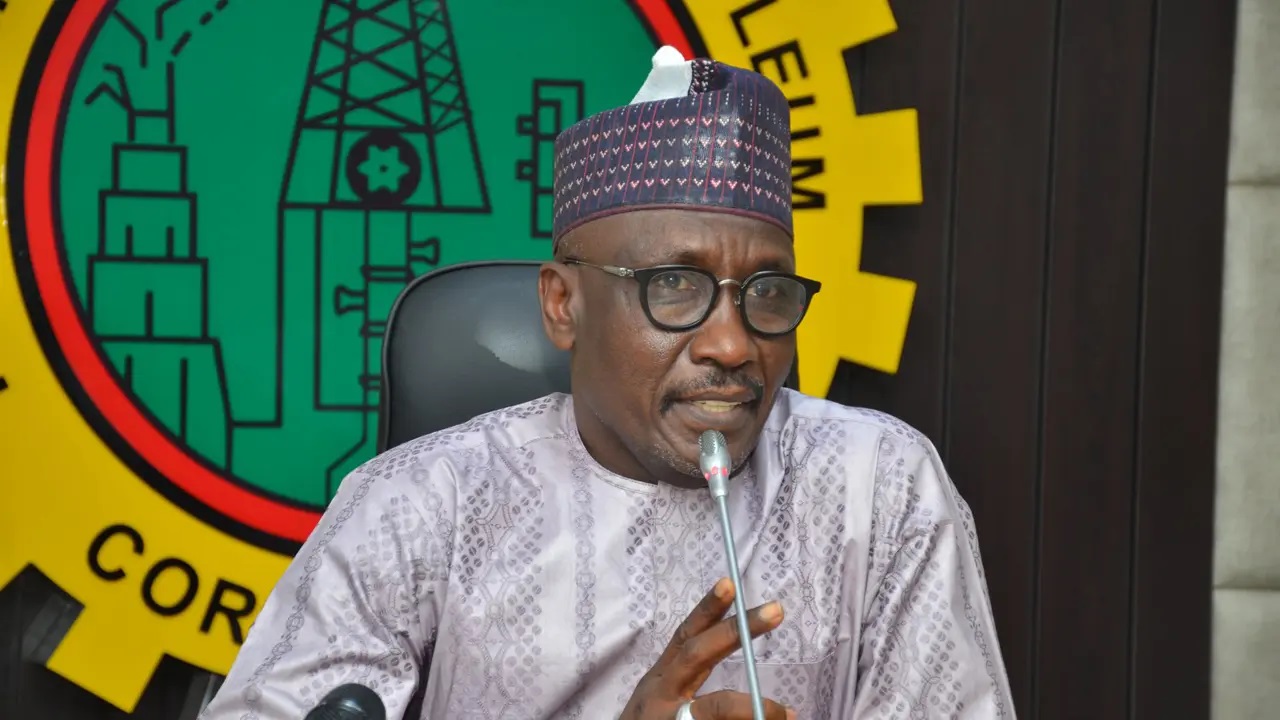
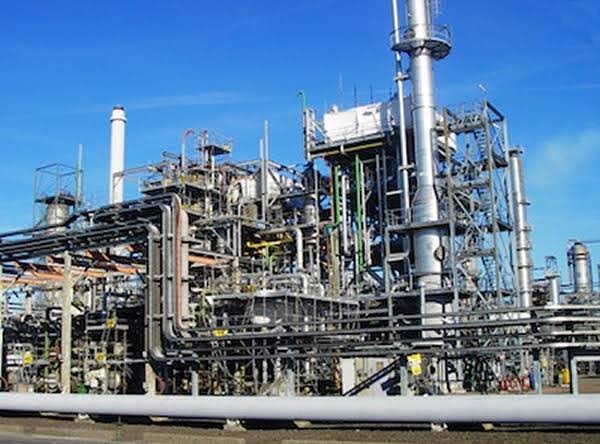
The Dangote Refinery is planning to sell a 12.7 per cent stake in 2024 for loan servicing, Fitch Ratings, a credit rating agency says in a report released on Monday.

Fitch recalled that the Nigerian National Petroleum Company Limited had earlier planned to acquire a 20 per cent stake in the refinery.
However, the rating agency indicated that the decision of the national oil firm not to exercise its option of acquiring an additional 12.75 per cent as of June 2024 may impact the group’s ability to service loans.

In 2021, the NNPC acquired a 7.25 per cent stake in the refinery for $1.0bn, with an option to purchase the remaining 12.75 per cent stake by June 2024. But the national oil firm has since reneged on its decision.
“Since the option has not been exercised, the group plans to divest a 12.75 per cent stake in DORC in 2024.
“The group intends to service its significant syndicated loan maturing in August 2024 from the equity divestment. However, timely divestment and meeting the imminent maturity are highly uncertain in our view,” Fitch said.
It could be recalled that the President of the Dangote Group, Alhaji Aliko Dangote, opened up in July that the NNPC has only a 7.2 per cent stake in the refinery and not 20 per cent as most Nigerians used to think.
“The agreement was actually 20 per cent which we had with NNPC, and they did not pay the balance of the money up till last year; then we gave them another extension up till June (2024), and they said that they would remain where they have already paid, which is 7.2 per cent. So NNPC owns only 7.2 per cent, not 20 per cent.” Dangote stated.
NNPC confirmed this, saying it decided not to invest further in the refinery.
“NNPC Limited periodically assesses its investment portfolio to ensure alignment with the company’s strategic goals.
“The decision to cap its equity participation at the paid-up sum was made and communicated to Dangote Refinery several months ago,” the NNPC said in a statement by its spokesperson, Olufemi Soneye.
Meanwhile, a former Minister of Education, Oby Ezekwesili, called for an independent audit of why the Nigerian National Petroleum Company Limited capped its investment in the Dangote Petroleum Refinery at 7.2 per cent instead of the planned 20 per cent.
“Did the Nigerian government not tell us it borrowed $3.3bn from Afriexim-Bank to take a stake in the Dangote refinery?” Ezekwesili asked, calling on President Bola Tinubu to immediately launch an independent audit of the Dangote refinery-NNPC transaction to offer the public the true state of play.
Economy
OPEC+ approves fourth oil output increase since Hormuz closure
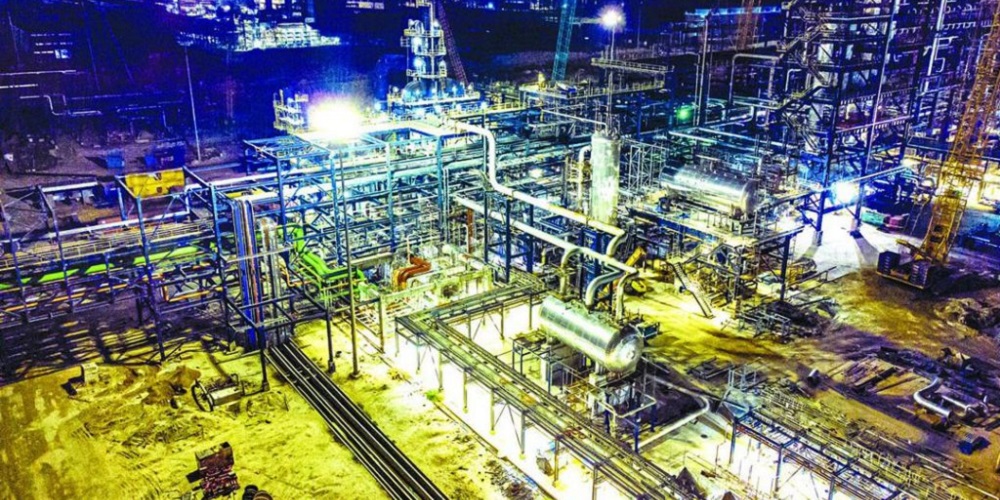
The Organisation of Petroleum Exporting Countries and its allies, also known as OPEC+, has approved the fourth oil output increase since the Hormuz closure crisis.
The decision followed renewed commitments by Saudi Arabia, Russia, Iraq, Kuwait, Kazakhstan, Algeria and Oman to support market stability.
In a statement issued at the weekend, OPEC stated: “The seven OPEC+ countries, which previously announced additional voluntary adjustments in April and November 2023, namely Saudi Arabia, Russia, Iraq, Kuwait, Kazakhstan, Algeria and Oman, met virtually on June 7, 2026, to review global market conditions and outlook.
“In their collective commitment to support oil market stability, the seven participating countries decided to implement a production adjustment of 188,000 barrels per day from the additional voluntary adjustments announced in April 2023.
“This adjustment will be implemented in July 2026. The additional voluntary adjustments announced in April 2023 may be returned in part or in full, subject to evolving market conditions and in a gradual manner.
“The countries will continue to closely monitor and assess market conditions and, in their continuous efforts to support market stability, reaffirmed the importance of adopting a cautious approach and retaining full flexibility to increase, pause or reverse the phase-out of the voluntary production adjustments, including reversing the previously implemented voluntary adjustments announced in November 2023.
“The seven OPEC+ countries also noted that this measure will provide an opportunity for the participating countries to accelerate their compensation.
“The seven countries reiterated their collective commitment to achieving full conformity with the Declaration of Cooperation, including the voluntary production adjustments, which will be monitored by the Joint Ministerial Monitoring Committee (JMMC).
“They also confirmed their intention to fully compensate for any overproduced volumes since January 2024. The compensation period will be extended until the end of December 2026.”
It added: “The seven OPEC+ countries will hold monthly meetings to review market conditions, conformity and compensation. The seven countries will meet on July 5, 2026.”
Economy
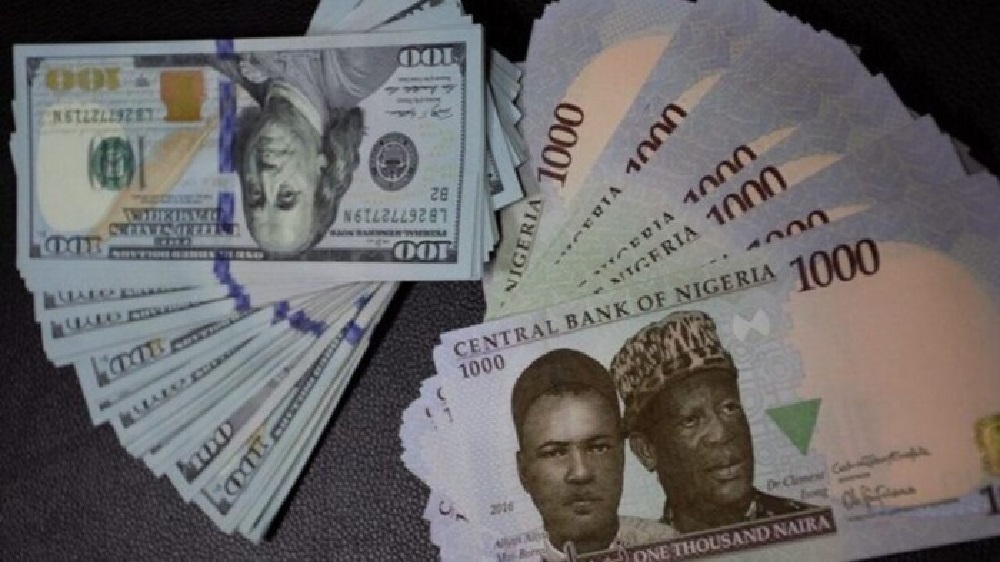
Naira depreciates to N1,397/$ in parallel market
The naira on Friday depreciated to N1,397 per dollar in the parallel market from N1,390 per dollar on Thursday.
Likewise, the naira depreciated to N1,365 per dollar in the Nigerian Foreign Exchange Market, NFEM.
Data from the Central Bank of Nigeria, CBN, showed that the indicative exchange rate for the market rose to N1,365 per dollar from N1,359.75 per dollar on Thursday, reflecting N5.25 depreciation for the naira.
Consequently, the margin between the parallel and official markets widened to N32 per dollar from N30.25 per dollar on Thursday.
The turnover in the interbank foreign exchange market recorded its fourth daily decline by 42.5 per cent to $73.6 million from $128.2 million on Thursday.
This week, the naira strengthened by N1 per dollar in the official market, with turnover in the interbank foreign exchange market climbing to N683.2 million, representing a 76.7 per cent rise compared to N386.54 million recorded the previous week.
However, the local currency weakened in the parallel by N2 against the greenback.
Economy
See Dollar to Naira exchange rate today, June 5, 2026
The Nigerian naira maintained a relatively stable performance against the United States dollar at both the official and parallel foreign exchange markets as traders monitored liquidity conditions and demand pressures.
Data from the Central Bank of Nigeria’s Nigerian Foreign Exchange Market (NFEM) showed the naira trading around ₦1,361 to the dollar, reflecting a largely steady trend compared to recent sessions. The most recent NFEM rate published by the apex bank stood at approximately ₦1,361.05/$, while trading during the week remained within the ₦1,359–₦1,365 range.
Market data from recent official trading sessions also indicated that the naira had strengthened modestly in early June, supported by improved foreign exchange supply and sustained interventions aimed at enhancing market liquidity.
At the parallel market, commonly referred to as the black market, the dollar traded at between ₦1,390 and ₦1,405 on Friday, depending on location and transaction size. Several market trackers reported buying rates around ₦1,380–₦1,395 and selling rates between ₦1,393 and ₦1,405 per dollar.
The gap between the official and parallel market rates remained relatively narrow compared with previous months, reflecting ongoing efforts to improve transparency and liquidity in the foreign exchange market.
Currency dealers said market participants continue to watch foreign portfolio inflows, crude oil earnings, and Central Bank policies, all of which remain key factors influencing the naira’s direction in the coming weeks.
As of June 5, 2026, the dollar exchanged at about ₦1,361 in the official NFEM market, while parallel market transactions ranged from approximately ₦1,390 to ₦1,405 per dollar.
-
News15 hours ago‘It’s out of place’ , don’t compare Ogbomoso and Adelabu kidnaps – Presidency tells Nigerians
-
News24 hours agoCBN Imposes N100M Penalty On Inadequate Processing Of Forex Documents
-
Health24 hours agoNARD Issues 21-Day Ultimatum To FG Over Attacks On Doctors
-
Opinion15 hours agoThree years after: “People First” Paradigm: Why Governor Bassey Otu’s Transformative Governance Demands Consolidation and 2nd Term
-
Opinion21 hours agoThe Betrayal of a Movement: How Political Interests Undermined Peter Obi’s Stronghold
-
News20 hours agoReal reason why we banned night vigils – MFM
-
News18 hours agoLarge quantity of opioids intercepted in Taraba as NDLEA nabs 75-year-old in Ebonyi(Photos)
-
News13 hours agoReps Recover N521.8m VAT From CBN, Targets Additional ₦33bn in Outstanding Liabilities

Warning: Undefined variable $user_ID in /home/naijuinz/public_html/wp-content/themes/zox-news/comments.php on line 49
You must be logged in to post a comment Login