
News
7 African countries on the U.S. govt’s ‘Do Not Travel’ List


- /home/naijuinz/public_html/wp-content/plugins/mvp-social-buttons/mvp-social-buttons.php on line 27
https://naijablitznews.com/wp-content/uploads/2025/01/USA.jpg&description=7 African countries on the U.S. govt’s ‘Do Not Travel’ List', 'pinterestShare', 'width=750,height=350'); return false;" title="Pin This Post">
- Share
- Tweet /home/naijuinz/public_html/wp-content/plugins/mvp-social-buttons/mvp-social-buttons.php on line 72
https://naijablitznews.com/wp-content/uploads/2025/01/USA.jpg&description=7 African countries on the U.S. govt’s ‘Do Not Travel’ List', 'pinterestShare', 'width=750,height=350'); return false;" title="Pin This Post">


As of December 2024, the U.S. Department of State has categorised 21 nations under its Level 4 “Do Not Travel” advisory, including seven African countries.
This designation shows extreme risks such as armed conflict, terrorism, crime, and civil unrest, making these destinations unsafe for travel.
These advisories are updated regularly to reflect current conditions and are based on factors like crime rates, political instability, natural disasters, and health crises.
The travel advisory system is divided into four levels:
Level 1: Exercise Normal Precautions: The country is generally safe, but standard vigilance is advised.
Level 2: Exercise Increased Caution: Specific safety concerns exist, requiring increased vigilance.
Level 3: Reconsider Travel: Significant risks are present, urging travelers to postpone or reconsider.
Level 4: Do Not Travel: Severe risks necessitate avoiding travel altogether or departing immediately if already present.
For Level 3 and Level 4 advisories, reviews are conducted every six months, while Level 1 and Level 2 countries are reviewed annually.
Here are the seven African countries currently under the U.S Level 4 “Do Not Travel” advisories.
Libya — Last Updated: August 1, 2024
Reasons: Crime, terrorism, unexploded landmines, civil unrest, kidnapping, and armed conflict
Libya faces high levels of crime, including kidnapping for ransom, with foreigners often targeted. Armed groups frequently clash, causing violence that can erupt without warning. Terrorist groups remain active, and unexploded ordnance poses hazards throughout the country. Travellers face risks from arbitrary detentions, restricted movement, and limited access to consular support since the U.S. Embassy in Tripoli suspended operations in 2014. Departing Libya via commercial means is strongly recommended.
Mali – Last Updated: July 31, 2023
Reasons: Crime, terrorism, and kidnapping
Mali experiences frequent attacks by terrorists and armed groups targeting locations frequented by foreigners, including hotels and restaurants. Violent crimes such as armed robbery and kidnappings are common, particularly during holidays. Travel outside the capital, Bamako, is heavily restricted for U.S. personnel. The U.S. government’s ability to provide emergency services is severely limited.
Somalia — Last Updated: July 23, 2024
Reasons: Crime, terrorism, civil unrest, health risks, kidnapping, and piracy
Somalia faces widespread violent crime, including murder and kidnappings. Terrorist attacks targeting public spaces and government facilities are frequent, while piracy remains a threat in coastal waters. U.S. government assistance is minimal, and medical facilities are scarce. Civil unrest and illegal roadblocks compound the dangers.
South Sudan — Last Updated: July 31, 2023
Reasons: Crime, kidnapping, and armed conflict
South Sudan is plagued by violent crime, including carjackings, robberies, and kidnappings. Armed conflict and intercommunal violence destabilise the country, while weapons are widely available. The U.S. Embassy in Juba operates under strict security protocols, limiting consular services. Journalists face additional risks of harassment and violence.
Sudan — Last Updated: April 22, 2023
Reasons: Armed conflict, civil unrest, crime, terrorism, and kidnapping
Since April 2023, armed conflict has engulfed Sudan, particularly in Khartoum. Communication and transportation systems are often disrupted, with airports and border crossings frequently closed. Violent clashes and intercommunal violence occur throughout the country, making travel extremely hazardous. U.S. Embassy operations in Khartoum are suspended, further limiting assistance to U.S. citizens.
Burkina Faso — Last Updated: June 31, 2023
Reasons: Terrorism, crime, and kidnapping
Burkina Faso faces persistent threats from terrorist groups targeting hotels, schools, and places of worship. States of emergency are in effect in several regions due to ongoing violence. The U.S. government restricts travel for its personnel and cannot provide emergency services in many areas.
Central African Republic (CAR) — Last Updated: December 26, 2024
Reasons: Armed conflict, crime, civil unrest, and kidnapping
Large parts of the Central African Republic are controlled by armed groups engaging in violent crime and kidnappings. Medical services are inadequate, and civil unrest can disrupt travel at any moment. The U.S. government imposes strict travel restrictions on its personnel, limiting their ability to assist U.S. citizens.










News
Youths Flood Ondo City to Honour Akinlaja’s Birthday, Hail Him as Visionary Leader and True Democrat

By Kayode Sanni-Arewa
Ondo City came alive on Monday, June 1, 2026, as a sea of jubilant youths converged on Adoc Events Centre and the residence of Hon. Joseph Iranola Akinlaja, former representative of Ondo East and West Federal Constituency, to celebrate his birthday.
Under the banner of the End Miscreants Movement, the gathering was more than a festivity—it was a tribute to Akinlaja’s enduring legacy and his contributions to the socio-economic growth of Ondo.
The youths described the septuagenarian and former General Secretary of NUPENG as a peace-loving icon, a consummate democrat, and a leader committed to youth empowerment, human capital development, and sustainable innovation.
They emphasized that the “End Miscreants Movement” reflects Akinlaja’s role as a stabilizing force whose interventions have curbed cultism, violent clashes, land grabbing, and other social vices in the community.
The event drew prominent figures, including former Governor Dr. Olusegun Mimiko, who praised Akinlaja as a symbol of peace, unity, and progress. Mimiko lauded his maturity and sacrifice in advancing excellence.
Other dignitaries present were Speaker of the Ondo State House of Assembly Rt. Hon. Olamide Adesanmi Oladiji, Hon. Biola Makinde, Hon. Moyinoluwa Ogunwunmiju, and Hon. Abiola Oladapo, Akin Akinbobola, Eni Akinshola, editor in chief and publisher of Veracity Desk (veracitydesk.com), Emmanuel Ajibulu etc, all of whom extolled Akinlaja’s virtues.
The Chairman of Lagos Zone of Petroleum Tanker Drivers (PTD) Branch of NUPENG, Comrade Gbolahan Saheed Adigun who was unavoidably absent was represented by Israel Okougbo, Comrade Samuel Owolabi, Adekunle Akinlaja and Comrade Timothy Iseoluwa.
The atmosphere was electrified by live music from five different professional musicians, with youths chanting solidarity slogans and dancing in contagious but peaceful jubilation.
In his remarks, Akinlaja thanked the youths for their support, urging them to prepare for a prosperous future. He highlighted the achievements of Dr. Mimiko (fondly called Iroko), noting his enduring legacies in governance and innovation.
“Our youths must remain steadfast as ambassadors of excellence, shaping a brighter future for Nigeria,” Akinlaja declared, challenging them to actively participate in the electoral process to ensure credible and peaceful elections.
Speaking on behalf of the youths, Aseyege Ayoola, popularly known as Spender, hailed Akinlaja as a unifying figure whose temperament and experience are vital for Nigeria’s progress.
He commended fellow youths for making the event successful and acknowledged contributors such as Kayode Folajogun, Adijath Wonuola, Akin Fadayomi, Lawrence Adefolaju, Lukas Famakinwa, and Akinpelumi.

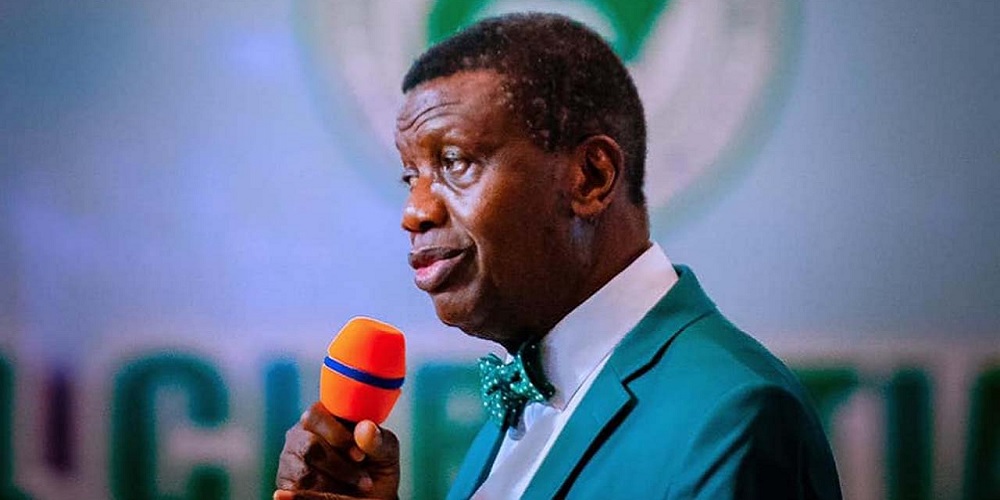
The General Overseer of the Redeemed Christian Church of God, Pastor Enoch Adeboye, has advised the federal government to give Nigeria’s security chiefs a 90-day deadline to eliminate terrorists across the country or resign from office.
Adeboye made the call in a video shared on X on Tuesday where he expressed concern over the country’s security situation and urged authorities to act swiftly against those responsible for the violence.
Addressing the government, the cleric said security chiefs should be held accountable for delivering results in the fight against terrorism.
“If I were asked to make suggestions, I would say quietly to our government, ‘Move fast and tell our security chiefs, get rid of these terrorists within 90 days or resign,” he said.
The cleric also called on the government to go beyond targeting terrorists and focus on those financing and supporting their activities.
“When giving orders to the service chiefs this time around, we should make it clear to them that they are not only to eliminate the terrorists; they should eliminate their sponsors, no matter how influential they may be,” he added.
Adeboye recalled advising a former Nigerian president to issue a similar ultimatum to security chiefs in the past, noting that although the directive was given, it was not fully enforced when the deadline elapsed.
According to him, the experience underscored the need for stronger political will and strict enforcement of directives aimed at ending insecurity.
The cleric’s remarks come amid renewed concerns over terrorist attacks, banditry and kidnappings in several parts of the country, with calls mounting for more decisive measures to tackle the security challenges.

…seek tougher protection measures for schools in high-risk communities
By Gloria Ikibah
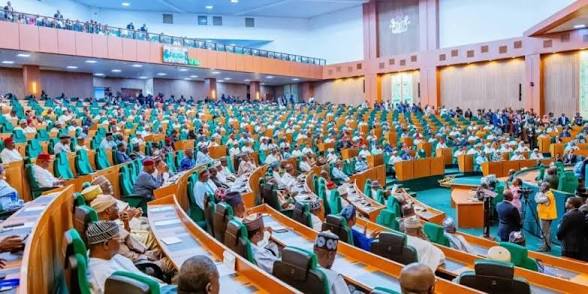
The House of Representatives has called for the immediate rescue of 42 schoolchildren abducted from Mussa Ward in Askira-Uba Local Government Area of Borno State, as lawmakers renewed demands for stronger security around schools across Nigeria.
The resolution was sequel to the adoption of a Motion of Urgent Public Importance sponsored by Rep. Midala Balami during Tuesday’s plenary session.
Debating the motion, Rep. Balami described the abduction as a disturbing reminder of the persistent insecurity confronting communities in Borno State and other parts of the country. He emphasised that safeguarding students, teachers and educational institutions remains a core responsibility of government and warned that repeated attacks on schools continue to threaten access to education and undermine public confidence in security efforts.
The lawmaker recalled a series of high-profile abductions in the state, including the Chibok schoolgirls kidnapping, in which many of the victims are yet to be reunited with their families. He also referenced the mass abduction of more than 400 adults and children from Ngoshe, as well as several kidnappings reported along the Biu-Buratai Road and surrounding communities.
According to Balami, the recurring attacks have left families traumatised, disrupted livelihoods and contributed to declining school enrolment and attendance in vulnerable areas, as many parents fear for the safety of their children.
He argued that urgent and coordinated action is needed to secure the release of those still in captivity, restore public confidence and reassure communities that their safety remains a priority.
The lawmaker also noted growing frustration among residents who increasingly expect concrete results in the fight against insecurity rather than repeated promises.
Following deliberations, the House urged the Federal Government and security agencies to intensify efforts to rescue the 42 abducted pupils and all other victims currently being held by kidnappers or insurgents, with a view to reuniting them with their families as quickly as possible.
Lawmakers further called for enhanced protection of schools in Borno State and other vulnerable regions through increased deployment of security personnel, improved intelligence gathering and more effective rapid-response mechanisms.
The House maintained that ensuring the safety of children and protecting access to education must remain a national priority, particularly in communities that continue to face threats from criminal and insurgent groups.
In addition, the House encouraged the expansion of school protection initiatives, including early warning systems, community-based security arrangements, security awareness programmes and improved surveillance infrastructure around educational institutions.
The House further mandated its Committees on National Security, Defence, Basic Education and Legislative Compliance to engage with relevant security agencies and report back on measures being taken to secure the release of abductees and improve security around schools nationwide.
Lawmakers also urged the Federal Government to develop and implement a comprehensive Safe Schools Security Framework aimed at protecting students, teachers and educational institutions from future attacks.

Political Aide got Sacked for Calling on Tinubu’s Resignation

Youths Flood Ondo City to Honour Akinlaja’s Birthday, Hail Him as Visionary Leader and True Democrat

Supercomputer reveals unpopular Team as topper ahead of 2026 World Cup




-

 News22 hours ago
Kano lawmaker rejoins APC after losing return ticket in NDC
-

 News21 hours ago
2022 train attack: FG re-arraigns Tukur Mamu on amended terrorism charge
-
 News22 hours ago
Major Border Offensive: Over 200 Terrorists Killed as Troops Crush Camps Along Nigeria-Benin Corridor
-
 News22 hours ago
Oyo Abduction: Tinubu inherited security challenges from PDP govt, says Nuhu Ribadu
-
 News12 hours ago
Wike Assures Protesting Teachers of Rescue Efforts, Warns Against Politicising Insecurity
-
 Metro22 hours ago
Panic in Ayegunle Bunu After Armed Bandits Launch Deadly Night Raid
-

 News17 hours ago
Six members of same family shot dead during domestic dispute in US
-

 Economy21 hours ago
Middle East Tensions: Oil Prices Jump as Iran Suspends Peace Talks with US
Warning: Undefined variable $user_ID in /home/naijuinz/public_html/wp-content/themes/zox-news/comments.php on line 49
You must be logged in to post a comment Login