
News
FEC approves N1.04t for Works, FCT projects

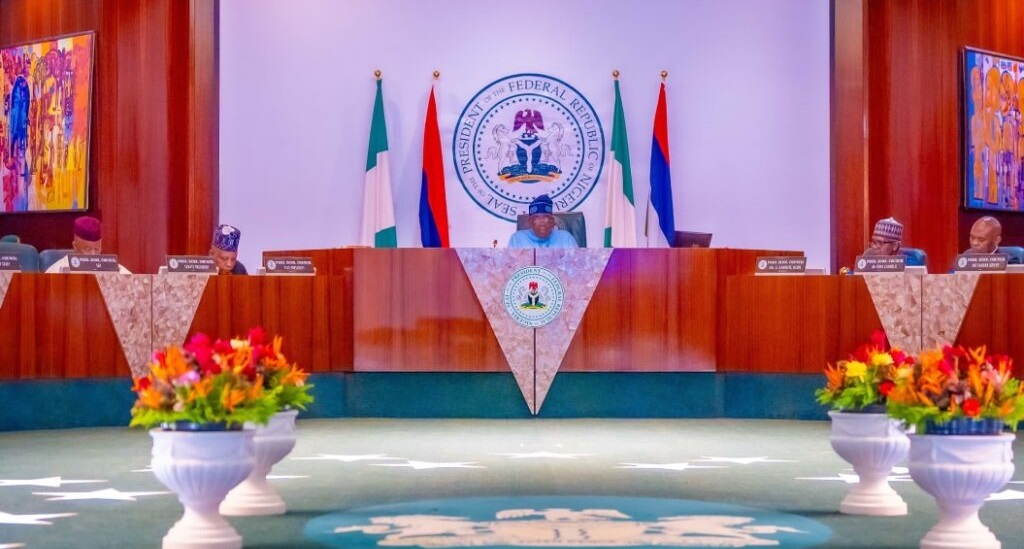


The Federal Executive Council (FEC) has approved N1.04 trillion for critical infrastructure projects nationwide, including major roads and bridges across states and key developments in the Federal Capital Territory (FCT), Abuja.
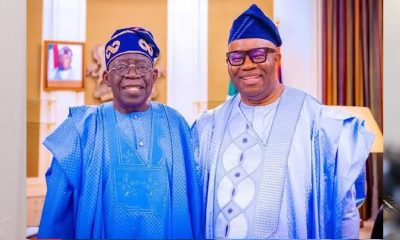
The approvals, granted during the FEC meeting presided over by President Bola Ahmed Tinubu at the State House, Abuja, yesterday, cover 10 major projects under the Federal Ministry of Works and five significant others in the FCT.
For the Federal Ministry of Works, Council allocated N885 billion for the building and rehabilitation of key highways and bridges across the country.
Minister of Works, David Umahi, announced the approvals, highlighting the government’s commitment to durable road infrastructure, particularly through concrete construction.
One of the largest projects approved is the rebuilding of three sections of the Lokoja-Benin Road, a crucial trade corridor.
The project will be executed in concrete, with Section I (Obajana to Benin) costing N64 billion, Section II (Auchi to Edo) at N110 billion, and Section III (Benin Airport to Edo) at N131 billion.
The total cost for this projects stands at over N305 billion.
Another major project is the Lagos-Calabar Coastal Highway, which will span 130 kilometers of dual carriageway from Calabar through Akwa Ibom.
The highway, valued at N1.334 trillion, has been divided into multiple sections for phased construction, with ongoing work already progressing in Lagos and Ogun states.
The minister also said the Abuja-Kano Highway has been restructured, with N252 billion allocated to its development.
Section 1 extends from the FCT boundary to Niger State with an additional 5.71 kilometers, while Section 3 in Kano State has an expanded scope of 17 kilometers.
The 118-kilometer road will be built using concrete and will feature solar lighting installations.
FEC also approved the reconstruction of access roads to the Second Niger Bridge in Delta and Anambra states.
The Delta section will be constructed in concrete for N470.9 billion, while the Anambra section will cost N148 billion.
Other key approvals include N22 billion for the Onitsha-Owerri Expressway, N18 billion for the Musasa-Jos-Kaduna Road, and N12.75 billion for the rehabilitation of the Abia-Enugu road.
In Lagos, N3.571 billion has been approved for a comprehensive structural evaluation of the Third Mainland Bridge and Carter Bridge.
The assessment will focus on examining underwater piles and determining solutions to prevent deterioration.
Another crucial approval is the continuation of the Lagos-Ibadan Expressway (Phase II, Section I), with a budget of N195 billion.
Umahi reaffirmed the government’s commitment to cost-effective infrastructure, emphasising that transitioning major roads to concrete construction will ensure greater durability and long-term savings.
“By adopting concrete for key sections, we have saved significant costs compared to previous projections,” he said.
He also addressed concerns over delays and road quality, particularly on the Abuja-Lokoja Road, saying that contractors have been directed to fix faulty sections.
“We are not accepting excuses such as high temperatures for road failures. The affected sections are being redone with proper oversight,” he added.
Council has also approved N159.5 billion for five major infrastructure projects aimed at improving road networks, transportation, and estate access across the FCT.
Minister of State for the FCT, Dr Mariya Mahmoud Bunkure, broke the news after the FEC meeting. She emphasised the government’s commitment to enhancing mobility and socio-economic activities in the capital city.
Among the key projects approved is the construction of a bus terminal at Mabushi, located in Cadastral Zone Plot B06, Phase II of the Federal Capital City.
The N30.97 billion contract was awarded to Setraco Nigeria Limited and is expected to be completed in 18 months.
The government has also allocated N62.5 billion for the construction of Arterial Road N1, which will connect Wuye District to Ring Road II.
The project, awarded to Arab Contractors Nigeria Limited, is expected to be completed within 20 months.
Another major approval is the construction of the Kuje-Gwagwalada dual carriageway, a key route connecting satellite towns.
The contract, valued at N7.5 billion, was awarded to Gilmo Engineering Nigeria Limited.
The Council also approved N26.87 billion for the rehabilitation of the Old Keffi Road, a 15-kilometer stretch linking Kado Village to Dei-Dei and connecting to the Outer Northern Expressway Junction.
The contract was awarded to Lubric Construction Company Limited and is expected to be completed in 18 months.
Additionally, FEC approved N31.66 billion for the building of an access road to the Renewed Hope Cities and Estate Project in Karsana West District, Abuja.
Lubric Construction Company Limited will handle the project, which is also scheduled for completion within 18 months.
Bunkure emphasized that these projects will significantly improve connectivity and ease transportation within the FCT, benefiting both residential and commercial areas.
“The projects will enhance mobility, boost socio-economic activities, and provide improved access to residential and commercial developments within the FCT,” she said.
She added that the contracts would be closely monitored to ensure timely completion and adherence to quality standards.







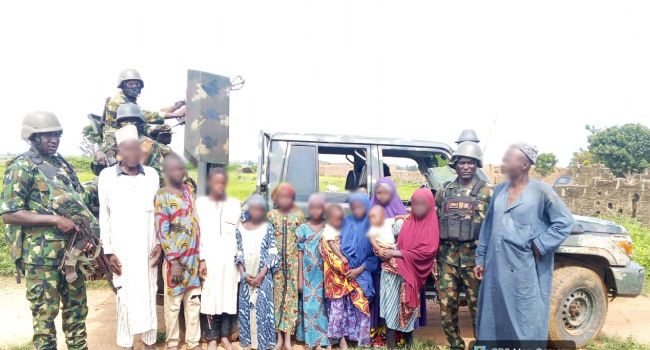
Troops of the Joint Task Force North West, Operation FANSAN YAMMA, have rescued 31 abductees and neutralized two terrorists, including a suspected kingpin, during separate operations in Katsina and Kebbi states.
The military also arrested two suspected terrorists and recovered ammunition, a motorcycle, camouflage clothing and other items during the operations conducted on September 14 and 15, 2026.
The Media Information Officer of the Joint Task Force North West, Lieutenant Colonel Aliyu Danja, disclosed this in a statement issued on Wednesday, September 16.
According to the statement, troops in Katsina rescued 10 kidnap victims, comprising three males and seven females, after responding to distress reports from Unguwan Daudu and Unguwan Chibauna communities in Funtua Local Government Area.
The troops reportedly launched a hot pursuit of the fleeing terrorists and engaged them in a gun battle, forcing them to abandon the victims.
Among those rescued was an infant.
The victims were subsequently taken into military custody for necessary assistance and further action.
21 Victims Rescued in Kebbi
Also on September 14, troops operating in Kebbi State responded to a distress call following the abduction of civilians from Fafala Village in Kangiwa Local Government Area.
Acting on intelligence, the troops launched a fighting patrol towards Fafala and Dandikwa, where they reportedly engaged the terrorists in a heavy exchange of gunfire.
The terrorists were forced to withdraw from the area, allowing the troops to continue their operation and rescue 21 kidnapped victims.
The rescued civilians were later reunited with their families.
Terrorist Kingpin Killed in Katsina
The following day, September 15, troops in Katsina reportedly foiled an attempted terrorist attack on communities in Matazu and Kankara local government areas.
Acting on intelligence, the troops moved towards a suspected terrorist hideout and engaged the group with superior firepower.
The military said two terrorists were killed during the encounter, including Abbah Alhassan, whom it identified as a known terrorist kingpin.
Other terrorists reportedly escaped into the surrounding bush.
Troops recovered 10 rounds of ammunition, a motorcycle, a cutlass, camouflage clothing and suspected Indian hemp from the area.
Two Suspects Arrested
In another operation on September 15, troops arrested two suspected terrorists around the Yantumaki general area of Dan Musa Local Government Area of Katsina State.
Preliminary interrogation reportedly indicated that the suspects were associated with a suspected terrorist kingpin identified as Mannori.
The suspects remain in military custody while investigations continue.
The Joint Task Force said the operations demonstrate its continued efforts to rescue kidnapped civilians, disrupt terrorist networks and restrict the movement and operational freedom of armed groups across its area of responsibility.
The task force also commended residents for providing security-related information and urged members of the public to remain vigilant and promptly report suspicious movements and activities to the nearest security agency.
By Gloria Ikibah
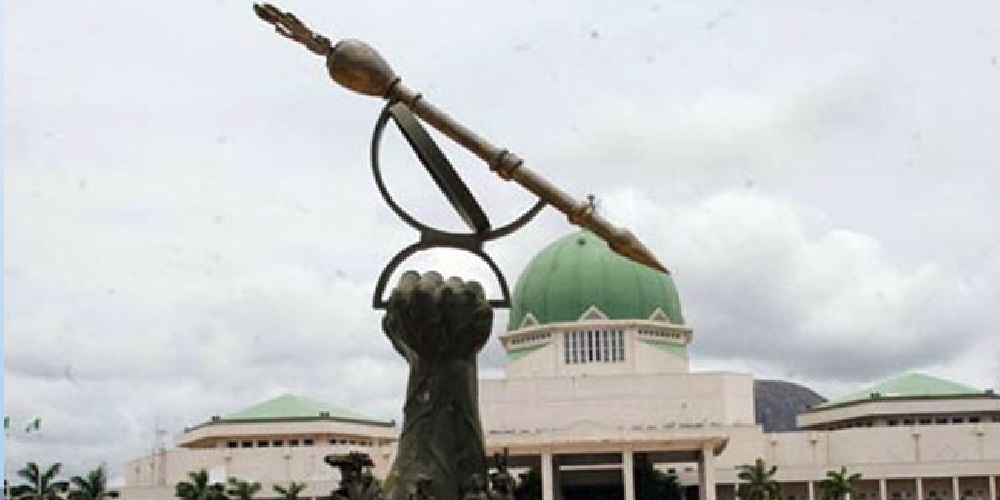
The National Assembly has transmitted the Constitution of the Federal Republic of Nigeria, 1999 (Sixth Alteration) Bill, 2026 to the Houses of Assembly of the 36 states for consideration and approval.
The transmission, carried out on Wednesday, September 16, 2026, marks the next stage in the ongoing constitutional alteration process and was undertaken pursuant to a directive from the leadership of the National Assembly.
The Clerk to the National Assembly, Kamoru Ogunlana, Esq., said the Bill was transmitted to the state legislatures in compliance with the provisions of Section 9 of the 1999 Constitution, as amended.
Under Section 9, a bill seeking to alter the Constitution cannot be passed by either chamber of the National Assembly unless it is approved by resolutions of not less than two-thirds of the Houses of Assembly of the 36 states.
The state legislatures are therefore required to consider the proposed constitutional amendments in accordance with their respective legislative procedures and communicate their resolutions to the National Assembly after completing their deliberations.
Although the Constitution does not stipulate a specific timeframe within which state Houses of Assembly must respond to a constitutional alteration bill, the National Assembly said the state legislatures are expected to communicate their decisions within 30 days of receiving the Bill.
The National Assembly, however, stressed that the 30-day period is an administrative timeframe and not a constitutional deadline.
According to the Clerk, the timeframe is intended to promote an orderly, coordinated and timely conclusion of the constitutional amendment process while respecting the constitutional independence of the state legislatures.
What the Constitution Requires
Nigeria’s Constitution sets a deliberately high threshold for constitutional amendments because changes to the country’s supreme law require approval beyond the National Assembly alone.
In addition to the required approval by at least two-thirds of the state Houses of Assembly, Section 9 prescribes other legislative requirements depending on the particular constitutional provisions being altered.
The process generally involves the introduction and passage of the alteration Bill by the National Assembly before it is transmitted to the state legislatures for consideration. The resolutions of the state assemblies are subsequently communicated to the National Assembly for the next stage of the process.
The requirement for state-level approval gives the 36 Houses of Assembly a constitutionally recognised role in determining whether proposed amendments can proceed.
The National Assembly said it recognises this responsibility and respects the independence of the state legislatures in considering the Bill.
National Assembly Seeks Coordinated Process
In the statement, the Clerk said the transmission was intended to facilitate the orderly discharge of the state assemblies’ constitutional responsibilities rather than interfere with their legislative processes.
“The National Assembly remains committed to ensuring that the constitutional alteration process is conducted in strict compliance with the Constitution,” the statement said.
It added that the process would be guided by due process, institutional cooperation and respect for the legislative responsibilities of all tiers of the legislature.
The National Assembly will await the resolutions of the 36 state Houses of Assembly before taking the subsequent steps required under the Constitution.
The transmission of the Sixth Alteration Bill comes amid continued efforts to amend aspects of Nigeria’s 1999 Constitution, a process that requires cooperation between the federal and state legislatures because of the constitutional threshold for altering the nation’s supreme law.
The statement was signed by Kamoru Ogunlana, Esq., Clerk to the National Assembly.
News
REVEALED: 11 Nigerian-Born Lawyers Hit by U.S. Disciplinary Actions Over Professional Violations

At least 11 Nigerian-born lawyers practising or based in the United States have faced suspension or other disciplinary measures over alleged or established professional violations, according to disciplinary records cited in a report by The Peoples Gazette.
The cases span several years and involve different jurisdictions and regulatory bodies, including state bar authorities, U.S. immigration authorities and the Board of Immigration Appeals.
The disciplinary matters range from unauthorised practice of law and failure to meet professional obligations to alleged misrepresentation, neglect of clients’ cases and mishandling of client funds.
The sanctions are not identical, and the grounds for disciplinary action vary from one case to another. Some of the lawyers have also reportedly been reinstated, while others remain suspended or have not been reinstated.
Below is a summary of the lawyers and the disciplinary actions reported against them.
1. Aloysius O. Ejimakor
Aloysius O. Ejimakor was suspended from practising law in New York for nine months in 2004 following disciplinary proceedings over alleged false claims concerning his professional qualifications.
According to a U.S. Department of Justice document, the Office of General Counsel for the Executive Office for Immigration Review commenced proceedings against him in July 2003.
The proceedings alleged that Ejimakor violated federal regulations by making false statements concerning his qualifications.
The report states that he had not been reinstated following the suspension.
2. Abiola O. Adesioye
Abiola O. Adesioye, based in the District of Columbia, was suspended in July 2025 by the Board of Immigration Appeals from practising before the board, U.S. immigration courts and the Department of Homeland Security.
The suspension followed an order issued by the District of Columbia Court of Appeals on March 25, 2025.
According to the report, disciplinary counsel for the Executive Office for Immigration Review and the Department of Homeland Security jointly petitioned for her immediate suspension under applicable federal regulations.
The Board of Immigration Appeals granted the petition pending the final resolution of the disciplinary proceedings.
3. Emelike Nwosuocha
Emelike Nwosuocha, who died on July 21, 2024, aged 64, faced disciplinary proceedings before his death.
According to the report, he was posthumously suspended for three years in 2024 over professional misconduct.
The disciplinary matter included an alleged failure to provide an affidavit required under an earlier suspension and failure to pay attorney fees owed to a defendant in a medical negligence lawsuit.
In 2023, Nwosuocha had reportedly received a six-month suspension after failing to respond to a disciplinary grievance.
The relevant disciplinary authorities subsequently affirmed the suspension.
4. Michael Ozulumba
Michael Ozulumba, who is based in Massachusetts, was reportedly suspended from practising before the Internal Revenue Service and the Executive Office for Immigration Review for two years.
The reported disciplinary findings involved professional misconduct, neglect of client cases and misrepresentations.
However, the supplied material contains a reference to a 2027 board decision. Since that date is still in the future as of September 16, 2026, that portion requires independent verification and has therefore not been treated here as an established past event.
5. Michael Imevbore Ojo
Michael Imevbore Ojo, based in Houston, Texas, was suspended from practising law for 12 months by the Evidentiary Panel of the District 4C05 Grievance Committee of the State Bar of Texas.
The disciplinary action reportedly involved alleged violations of Texas professional conduct rules, including neglect, failure to communicate with clients and failure to cooperate with a State Bar investigation.

Troops rescue 31 abductees, neutralize terrorist kingpin in Katsina, Kebbi

NASS Transmits 2026 Constitution Amendment Bill to 36 State Assemblies

REVEALED: 11 Nigerian-Born Lawyers Hit by U.S. Disciplinary Actions Over Professional Violations




-

 Metro23 hours ago
Nigerian Army Speaks of Possible Attacks on Churches, Schools
-
 News23 hours ago
Suspected Fulani Militias K!ll Christian Leader In Plateau
-
 News20 hours ago
PDP Warns APC Governors: ‘Ignore Wike at Your Own Peril’
-
 News19 hours ago
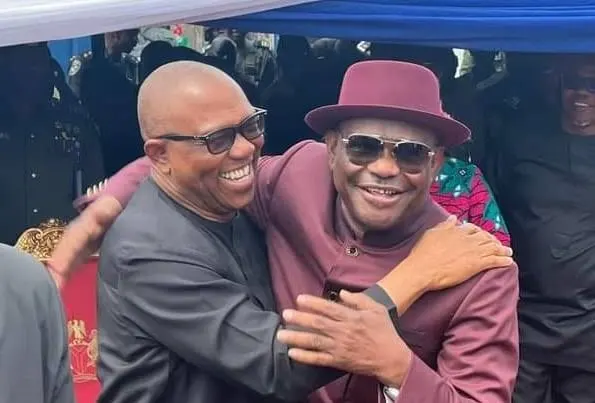
Obi: Wike Was Happier, Healthier When We Worked Together
-
 Economy22 hours ago
Nigeria’s inflation falls to 15.39% as food inflation slows – NBS
-

 Opinion20 hours ago
Surging Energy demands and challenges of Ai
Warning: Undefined variable $user_ID in /home/naijuinz/public_html/wp-content/themes/zox-news/comments.php on line 49
You must be logged in to post a comment Login