
News
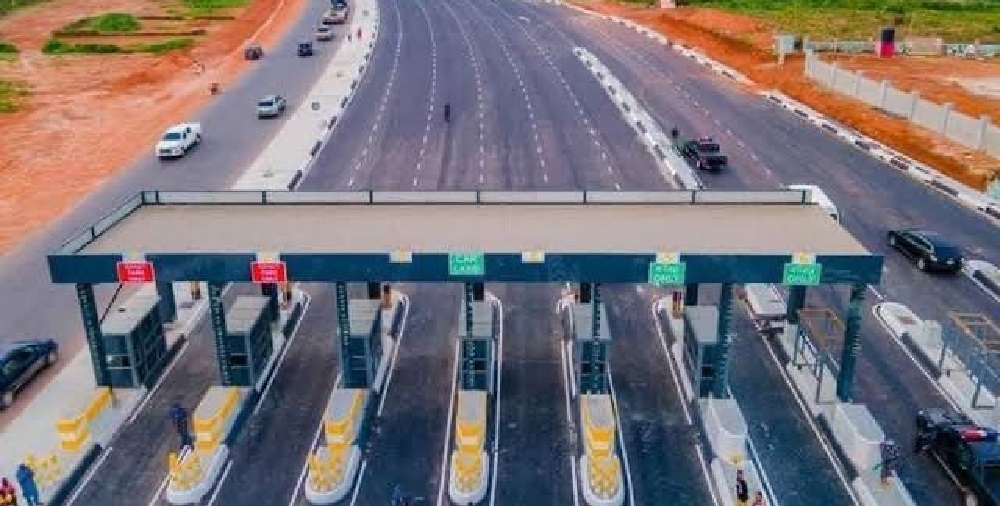
FG unveils toll gates on Abuja–Makurdi road, charges N500, N1,600

- /home/naijuinz/public_html/wp-content/plugins/mvp-social-buttons/mvp-social-buttons.php on line 27
https://naijablitznews.com/wp-content/uploads/2025/02/toll-gates.jpg&description=FG unveils toll gates on Abuja–Makurdi road, charges N500, N1,600', 'pinterestShare', 'width=750,height=350'); return false;" title="Pin This Post">
- Share
- Tweet /home/naijuinz/public_html/wp-content/plugins/mvp-social-buttons/mvp-social-buttons.php on line 72
https://naijablitznews.com/wp-content/uploads/2025/02/toll-gates.jpg&description=FG unveils toll gates on Abuja–Makurdi road, charges N500, N1,600', 'pinterestShare', 'width=750,height=350'); return false;" title="Pin This Post">


The Federal Government on Tuesday officially launched toll operations on the Abuja–Akwanga–Lafia–Makurdi Road corridor to repay the $460.8 million loan obtained from the China Exim Bank for the road’s rehabilitation and upgrade.
It also announced that motorists using the highway would begin paying tolls ranging from N500 for saloon cars to N1,600 for multi-axle vehicles.
However, police and military vehicles are exempt from toll fees to facilitate their operations.
The toll gates on the route are divided into four sections: Keffi, Akwanga, Lafia, and Makurdi.
The 227.2km road was rehabilitated and upgraded through a preferential credit loan from the China Exim Bank. The last administration secured a $460.8 million loan from the bank, covering 85 per cent of the project’s $542 million total cost.
As part of the loan agreement, the Federal Government committed to tolling the road upon completion, with revenue collected from toll operations prioritised for loan repayment.
Speaking at the official commissioning of toll operations at the Garaku Toll Station in Nasarawa State, the Minister of Works, David Umahi, reiterated the government’s commitment to ensuring the proper maintenance of Nigeria’s federal roads through sustainable funding mechanisms.
Represented by the Minister of State for Works, Bello Goronyo, Umahi stated that the road was rehabilitated and upgraded through a preferential credit loan from the China Exim Bank.
According to him, funds generated from tolls would also be used for the maintenance of federal roads nationwide, adding that toll operations would help sustain road networks across the country.
He explained that in 2023, the previous administration executed a 25-year “Operate and Maintain” concession agreement with Messrs China Harbour Operations and Maintenance Company Limited in partnership with Messrs Catamaran Nigeria Limited.
He said, “It is with great pride and optimism that I stand before you today, on behalf of the Federal Government of Nigeria, as we officially launch toll operations on our federal roads, beginning with the 227.2km Abuja–Keffi–Akwanga–Lafia–Makurdi Road corridor.
“As you are aware, this road corridor is a vital infrastructure route in Nigeria, serving as a key highway for economic and social activities in the central and northern regions of the country.
“It is crucial for Nigeria’s economic, social, and strategic development, serving as an essential artery for trade, mobility, and national security while contributing to infrastructure growth, urbanisation, and national cohesion.
“It is worth recalling that the Federal Government rehabilitated and upgraded the road through a preferential credit loan from the China Exim Bank.
“Toll operations mark a pivotal step towards achieving our vision for a more efficient, sustainable, and well-maintained road transport system.
“Today, we embark on a journey to ensure that our infrastructure is preserved for the benefit of present and future generations. The collection of tolls will generate much-needed revenue for road maintenance and expansion.”
The minister stated that the project aligns with the priorities of President Bola Tinubu’s Renewed Hope Agenda, which aims to build a robust and interconnected infrastructure network.
“It is important to state that the Toll Order/Fee Schedule has been gazetted as follows: saloon cars will be tolled at N500, SUVs/jeeps at N800, minibuses at N1,000, and multi-axle vehicles at N1,600.
“However, frequent road users, such as commercial light vehicles defined under the Federal Highway Act, will enjoy a 50 per cent discount,” he added.
Additionally, tricycles, pedal vehicles, motorcycles, and other two- or three-wheeled transport modes primarily used by disadvantaged populations will be exempt from toll charges.
Also speaking, the Nasarawa State Governor, Abdullahi Sule, represented by his deputy, Dr Emmanuel Akabe, commended the President for completing the road and urged Nigerians to cooperate to ensure the project’s success.
On his part, the Permanent Secretary of the Federal Ministry of Works, Folorunsho Adebiyi, emphasised the importance of roads and the need for their proper management.
Adebiyi noted that less than one per cent of Nigerians travel by air.
He said, “In Nigeria today, we have four major modes of transport: air, rail, water, and road.
“The most accessible, affordable, and realistic means of transport remains the road. Air travel is faster and preferable for those who value time, but the reality is that less than one per cent of Nigerians travel by air.”
He further stressed the need to generate sufficient revenue for effective road maintenance.
“When you examine the statistics, domestic air travel in Nigeria records about 13 million passengers annually, with approximately 12 million travelling internationally. However, when adjusted to exclude duplicate names, the actual number drops to less than 250,000.
“This is why our roads appear extremely stressed. As traffic volume increases daily, the average load on our roads also rises,” he stated.








By Gloria Ikibah
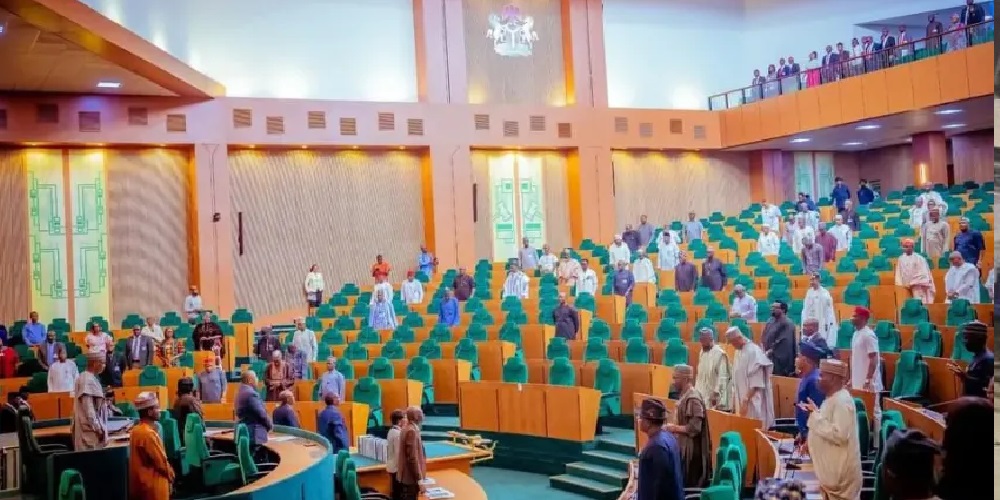
The House of Representatives has called for the development of a National Drone Industrialisation Policy aimed at strengthening Nigeria’s indigenous defence manufacturing capacity and improving the country’s ability to respond to rising security threats.
The lawmakers also urged the Federal Government to provide targeted financial support to local drone manufacturers, including Beirech UAS, Terra Industries, Elites Group, Pro-force and the Air Force Institute of Technology (AFIT), through the Bank of Industry, the Defence Industries Corporation of Nigeria (DICON) and other financing platforms to help them expand production and meet military procurement standards.
The resolution was sequel to the adoption of a motion sponsored by Rep. Ademorin Kuye on Wednesday during plenary.
Nigeria has continued to battle terrorism, banditry, kidnapping, oil theft and other forms of violent crime, prompting increasing calls for the deployment of advanced technology to support military and security operations. Globally, unmanned aerial vehicles (UAVs), commonly known as drones, have become indispensable tools for intelligence gathering, surveillance, reconnaissance and precision operations. In recent years, security experts have also warned that non-state actors, including terrorist organisations, are increasingly deploying commercial drones during attacks, underscoring the need for Nigeria to strengthen its domestic production capacity.
Debating the motion, Rep. Kuye said the country’s worsening security situation had placed enormous pressure on the Armed Forces and other security agencies.
He noted that drones have become vital assets in modern military operations, adding that terrorist groups such as Boko Haram and the Islamic State West Africa Province (ISWAP) have already incorporated commercial drones into their operations against Nigerian troops.
The lawmaker, however, said Nigeria has made notable progress in indigenous drone development, pointing to the successful production of the Tsaigumi Unmanned Aerial Vehicle by the Air Force Institute of Technology in 2018 as evidence of the country’s growing technological capability.
He argued that Nigeria possesses the resources needed to become Africa’s leading drone technology hub if supported by deliberate government policies.
He said: “The House is concerned that Nigeria, with a pool of engineering talent, a growing technology entrepreneurship ecosystem, existing military-industrial partnerships and the largest economy in Africa, possesses the foundational conditions to become the hub for drone technology, provided there is structured government policy, capital and legislative support.”
Kuye expressed concern that despite the country’s potential, local drone manufacturing remains largely driven by private investors who face limited access to financing, inadequate government support and weak technology transfer arrangements.
Following the adoption of the motion, the House mandated its Committees on Defence; National Security and Intelligence; Science and Technology; and Industry and Commerce to develop a comprehensive National Drone Industrialisation Policy that would serve as a roadmap for transforming Nigeria’s drone manufacturing sector into a strategic, government-backed industry.
Lawmakers also directed the Committees on Defence and National Security and Intelligence to work with the military and relevant government agencies to negotiate technology transfer agreements with reputable international drone manufacturers. The proposed agreements are expected to facilitate the training of Nigerian engineers, encourage local production and gradually reduce the country’s dependence on imported drone components.
The House further tasked its Committees on Defence; Industry and Commerce to collaborate with relevant agencies in establishing specialised Defence Industrial Zones dedicated to drone manufacturing, research and maintenance. The zones are expected to benefit from fiscal incentives, improved infrastructure and supportive regulatory frameworks capable of attracting both local and foreign investors.
The house unanimously adopted the motion and mandated its Committees on Defence; National Security and Intelligence; Industry and Commerce; Air Force; and Science and Technology to review existing laws governing defence procurement, local content, aviation and investment incentives with a view to introducing amendments that would promote drone industrialisation, including tax incentives and stronger protection for intellectual property developed by Nigerian innovators.
The committees were given four weeks to submit their report for further legislative consideration.

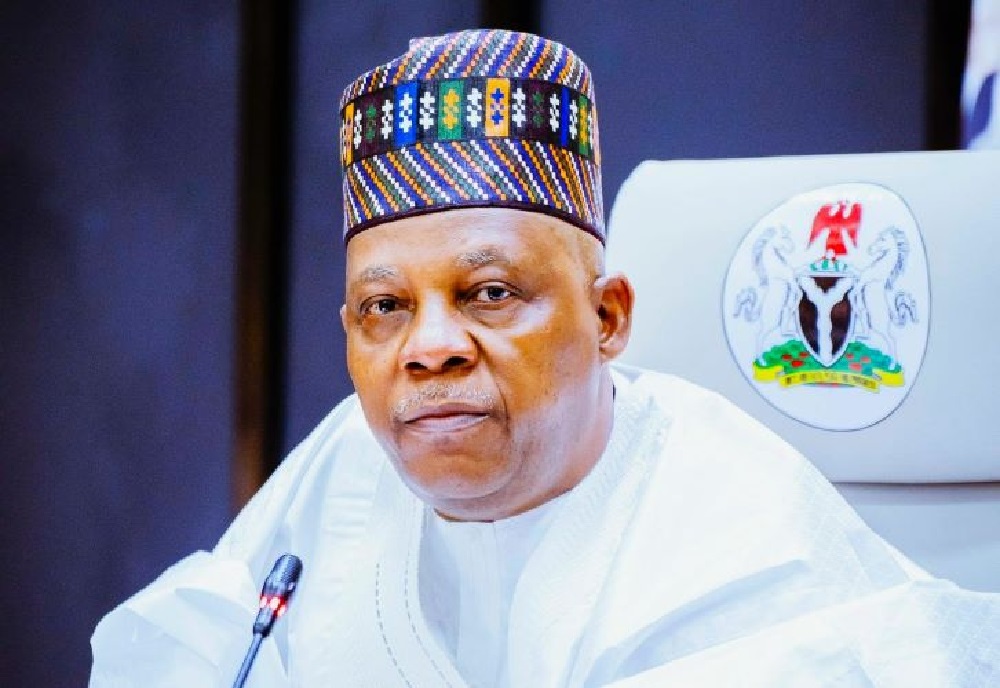
The Federal Government has received the final report of the National Technical Working Group on the World Bank-supported $500 million Sustainable Agricultural Value Chains for Growth Programme (AGROW).
This was disclosed by Vice President Kashim Shettima at the Presidential Villa, Abuja, on Tuesday.
Mr Shettima noted that the receipt of the final report marks the conclusion of the programme’s design phase and its transition to implementation.
He said the government, through the AGROW programme, is bridging the gap between farmers and national planning and policy-making decisions at the centre.
The VP noted that while the challenge in the agricultural sector had been the distance between farmers who till the earth and the systems that determine what their labour is worth, the government is set to implement the process of shortening that distance.
The US$500 million World Bank-supported programme was developed through seven zonal consultations involving 32 states, reflecting the increasing commitment of subnational governments to agricultural development.
It also reflected the state’s readiness to assume greater responsibility for productivity, infrastructure, extension services and market development.
The Vice President described the AGROW programme report as the conclusion of a design process that restores the farmer to the centre of our national economic reasoning, where he has always belonged.
“Today marks the transition of AGROW from programme design to implementation,” he added.
Mr Shettima maintained that the World Bank US$500 million Nigerian agriculture programme is targeted at developing a programme rooted in the realities of farmers, delivered through Nigeria’s states, and capable of attracting the private investment required to move agriculture from subsistence to scale.
The Vice President noted that agriculture, a sector that accounts for 23 per cent of the nation’s GDP and sustains 34 per cent of its workforce, must not be treated as a negligible sector, attended to at leisure and financed at the margins.
He said no other sector carries as many livelihoods or touches as many households as the agriculture sector, noting that most Nigerians earn a living from the tilling of the soil.
“When yields rise, food prices ease, rural incomes recover, industries receive raw materials, and the pressure on our cities and foreign reserves begins to relax. When yields fall, the entire economy discovers the price of hunger.
“Productivity on the farm is therefore a question of growth, employment, food security and poverty reduction. What we do to the farm, we do to the nation,” Mr Shettima stated.
The Vice President expressed satisfaction with the response from states, saying it reveals the scale of the opportunity before the nation.
He stressed that the participation of 32 states in seven consultations to shape AGROW reflects “both the urgency of the challenges confronting agriculture and the growing appetite across Nigeria for agricultural development and investment.”


The Federal Government has clarified reports surrounding a budgetary provision for churches in Abia State, stating that the allocation is not a ₦1 billion expenditure solely for the purchase of musical instruments but part of a broader youth re-orientation and community support initiative.News In a statement issued on Wednesday by the Office of the Deputy Speaker of the House of Representatives, Rt. Hon. Benjamin Kalu, the office explained that the actual allocation stands at ₦780 million after Value Added Tax (VAT) and other statutory deductions.
According to the statement signed by the Deputy Speaker’s Chief Press Secretary, Levinus Nwabughiogu, the funds are earmarked for a Youth Re-orientation and Social Support Programme to be implemented through faith-based organisations across Bende Federal Constituency in Abia State.
The office said the programme will benefit more than 130 churches, with each expected to receive between ₦5 million and ₦6 million in the first phase of implementation. It explained that Bende Federal Constituency has 13 electoral wards and over 200 churches, adding that about 10 churches will be selected from each ward to participate in the initial phase.
According to the statement, the funds will be used to procure evangelical musical instruments and public address systems to strengthen church-led youth engagement initiatives aimed at tackling social vices, including drug abuse, sexual offences and violent crime, while promoting discipline, peace, moral values and character development among young people.
The Deputy Speaker’s office stressed that the intervention should not be viewed as an expenditure on musical instruments alone but as part of the government’s broader non-kinetic approach to addressing insecurity and promoting national unity through trusted community institutions. It argued that nation-building involves not only physical infrastructure but also investment in the moral and value systems of citizens, noting that faith-based organisations have long played critical roles in community development and youth mentorship.
The statement also pointed out that traditional institutions have similarly received government support through the provision of town halls and community engagement centres to preserve cultural values.
Responding to criticism generated by earlier reports, the office said claims that ₦1 billion was budgeted exclusively for church musical instruments misrepresented the purpose of the allocation.
It further disclosed that a technical error was identified in the procurement description contained in the budget, adding that a letter of corrigendum had already been initiated to correct the description through the appropriate budgetary process before implementation. The office also clarified that no funds have been released for the programme because the 2026 budget has not yet been funded or implemented.
It noted that Nigeria is currently operating under the 2024 and 2025 budgets and that procurement will only begin after the necessary releases are made.
The Deputy Speaker’s office urged the media and members of the public to disregard what it described as sensational reports and support initiatives aimed at promoting youth development, peace and moral values across communities.

Reps Push National Drone Policy to Strengthen Defence Industry, Combat Insecurity
2027: Gov Fubara declares support for Chinda, backs Rainbow Coalition, TInubu

Middle East: Trump vows to hit Iranian infrastructure, if ships in Hormuz are attacked




-

 News21 hours ago
NNPCL jerks up fuel price by N115 per liter
-
 News14 hours ago
Ondo Assembly Crisis Deepens As Lawmakers Reportedly Secure 21 Signatures To Impeach Speaker Over OSOPADEC Funds Scandal
-
 Metro14 hours ago
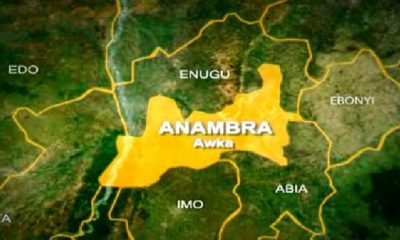
Four Killed as Gunmen Attack Settlement in Anambra, Police Launch Manhunt
-

 News14 hours ago
FCTA Threatens To Sue AEDC Over Defamatory Claims
-

 News14 hours ago
‘Drug-free certificate should become mandatory for couples’ — NDLEA boss Marwa
-
 News14 hours ago
How Abacha Died During Intercourse With Girlfriend’s Sister – Ex-DSS Operative Amachree
-
 Sports14 hours ago
World Cup: FIFA president, Infantino told to resign after Spain won trophy
-

 News14 hours ago
Tinubu approves new army battalion for Kwara to strengthen security
Warning: Undefined variable $user_ID in /home/naijuinz/public_html/wp-content/themes/zox-news/comments.php on line 49
You must be logged in to post a comment Login