By Sonny Aragba-Akpore.


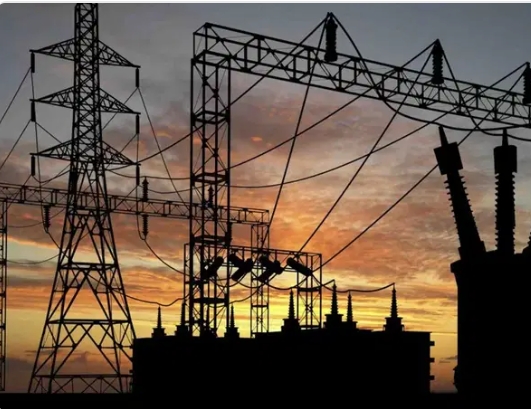
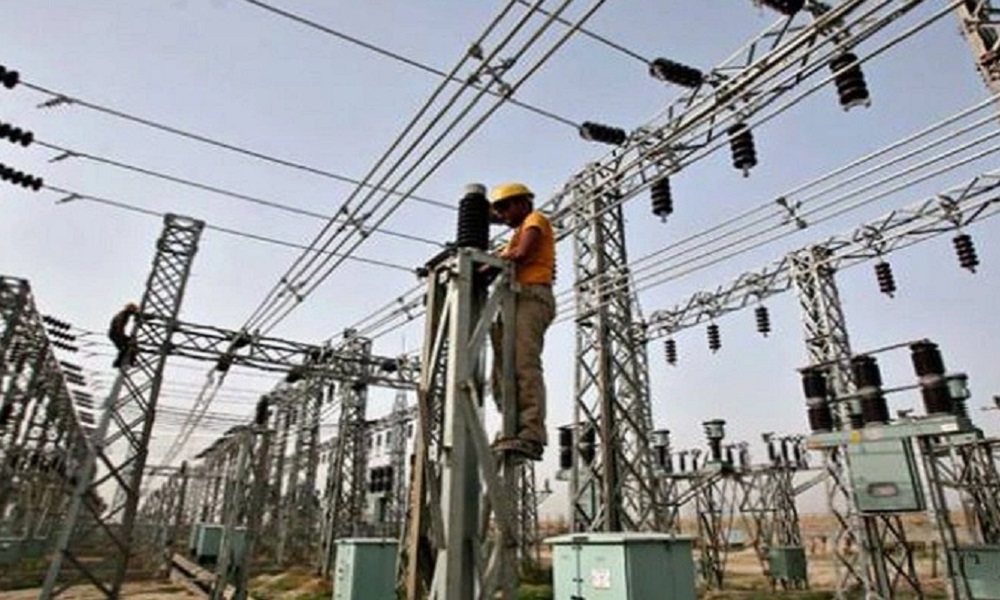
By Wednesday December 11,2024 the National electricity grid had recorded 12 collapses within the year thus accounting for an average of one per month. 
Apart from millions of customers whose homes and offices were cut off electricity supplies, many corporate organizations including telecommunications network providers, manufacturers among others had to cope with the situation making do with their more reliable alternatives which had become more regular than the national grid.
With a paltry 5,000 megawatts of electricity supply by the generating companies (gencos), for the nearly 250 million population, millions of people including corporate bodies have resigned to fate.
Resort to alternative sources of power supplies including renewable energy, solar and heavy duty generators have become a way of life.
Only recently, government officials announced that a tariff hike of upto 65% was underway,a situation the Manufacturing Association of Nigeria (MAN) frowns at saying this will further compound costs of doing business in general.
Director-General of MAN, Mr Segun Ajayi-Kadir, expressed serious concern in a statement issued in Lagos saying the frequent increases do not meet quality of service.
Ajayi-Kadir stressed that electricity is a crucial input in manufacturing, significantly affecting production costs and product prices.
He emphasised that no nation could achieve substantial industrial development without ensuring energy security.
According to him, any increase in tariff will harm the competitiveness of Nigerian products and businesses.
He warned that the such would worsen production costs, intensify inflationary pressure, and further reduce consumers’ disposable income.
Ajayi-Kadir added that it would increase manufacturers’ unsold inventory, erode profit margins, raise unemployment, and force more private businesses to shut down.
“It was due to the critical role of energy security in Nigeria’s industrial aspirations that the power sector was privatised in 2013. Unfortunately, this privatisation has not delivered the expected results.
But for telecommunications operators,it’s a tale of woes as power supplies account for about 40% of the operating expenditure (OPEX) as critical as equipment because even if equipment is available and no electricity supply to power them,quality of service suffers especially when there is down time.
Nigeria’s unstable electricity grid significantly contributes to telcos’ need for backup diesel generators, further increasing their energy expenses.
Recent reports indicate that Nigerian telecommunication companies (telcos) spend a significant amount on electricity, with estimates suggesting their monthly energy bill can reach up to N56 billion primarily due to reliance on diesel generators to power their network towers, as they often face unreliable grid access; many telcos are now actively exploring renewable energy options to reduce costs.
A major portion of telco electricity expenses is attributed to diesel consumption to power their base stations, with some reports stating that large operators like MTN can spend over N30 billion per month on diesel alone.
To mitigate high energy costs, many telcos are actively investigating and implementing renewable energy solutions like solar and wind power to reduce their reliance on diesel.
For telcos to be Successful and profitable there should be operational efficiency especially of the infrastructure companies or owned infrastructure.
About 40%, if not more , of the operational challenges of the infrastructure companies or operator owned and managed infrastructure is in the cost of energy : diesel or gas, or renewables.
Analysts reason that how the industry is able to survive the cost and access to energy supply, especially for the infracos in a safe and sustainable manner, is the solution that must be tackled in the long run for sustainability of the industry in its oprations, user experience and profitability.
One analyst said there are several generic intervention initiatives by government, local and foreign development agencies and financial institutions, including some commercial banks in the energy sector, especially aimed at promoting renewable energy supply and usage in support of the operational and cost efficiencies of the target sectors.
“These well-intentioned initiatives have been customised in some instances
such as the government policy of energy for the health sector (energise health) or energy for education (energise education) initiatives.”
“These commendable policies work to provide renewable energy solutions to institutions such as primary health centres, Universities, University Teaching Hospitals and Federal Medical Centres that are generally limited, discretionary, tied to yearly budgets of government, most times apply to federal institutions, and lack maintainance and sustainability instruments.”
Telecommunications sector contributes more than 15% to Nigeria’s GDP and is entirely private sector driven but has an impact on all growth and development direction of the country and because it is perceived as a private sector commercially profitable business there has never been any deliberate intervention to address the critical component of the cost and quality of energy supply to the sector.
Perhaps because of its ubiquitous nature and lack of knowledge of the structure of the sector, there was never an attempt to isolate and address this subject.
Yet the ability of the sector to continue its impact on national growth and development is tied to availability and affordability of energy sustainably.
The country’s telecoms sector, with around 154 mobile subscribers, needs a significant amount of energy. It relies on over 40 million litres of diesel per month, and 34,862 towers in 2022 were dependent on diesel generators due to unreliable grid power.
As more people come online, telcos need more power. Monthly internet usage increased by 579.39 percent from 125,149.86 terabytes (TB) in December 2019 to 850,249.09 TB in September 2024. The amount of energy needed to power data traffic is around 0.17 kWh globally.
However, GSMA noted that it is 0.24 kWh per GB, reflecting the lower energy efficiency of networks on the continent.
According to the Association of Licensed Telecommunications Operators of Nigeria (ALTON), diesel accounts for 35 percent of telecoms’ operating expenses. In October, the average cost of a litre of diesel was N1441.28, meaning telcos spent at least N57.65 billion.
As of the end of 2022, the Nigerian Communications Commission (NCC) said there were 34,862 towers and 127,294 base stations in the country. According to industry sources, each base station has two generators. The telecoms industry spent N2.09 trillion on operational costs in 2022, based on the last data uploaded by the NCC.
Gbenga Adebayo, Chairman of ALTON, confirmed the current diesel consumption, stating, “It will be over that now.” According to Harmanpreet Dhillon, Airtel Nigeria’s chief technical officer, the telco spent N28 billion on diesel in May 2024.
During a media roundtable, Dhillon said that the company was exploring hybrid solutions—lithium batteries and solar—to lower its energy bill.
Experts recently noted that companies could save up to 30 percent on energy costs by adopting renewable energy solutions and other technologies.
“The biggest constraint in the telecom industry is high energy cost. If the government had continued to fulfill its part of the bargain it made in the early 2,000s to provide 18 hours of electricity, the heavy logistics and the capital we spend today from powering sites would not be there,” said Adebayo of ALTON.
By January 13, 2025, Nigeria could boast of 23 power-generating plants that are connected to the national grid. These plants are known as generation companies (GenCos).
Some examples of GenCos in Nigeria include Egbin Power Plc: Located at Egbin Power Station, Egbin Town, Ikorodu, Lagos State
First Independent Power Limited: Located in Trans-Amadi Port-Harcourt, Afam, Omoku, and Eleme
Geregu Power Plc: Located on Itobe Ajaokuta expressway, Kogi State
Other power companies in Nigeria are Mainstream Energy Solutions Limited, Sapele Power Plc (SPP), and Transcorp Power Limited.
They are managed by the Transmission Company of Nigeria (TCN) a body responsible for managing the electricity transmission network in Nigeria. The TCN is fully owned and operated by the government.
In 2024, the power generation capacity in Nigeria was 5,528 megawatts (MW). This was an increase of 30% from the average generation capacity of 4,100 MW in 2023.
There are 11 distribution companies in Nigeria.These include Enugu Electricity Distribution Plc. (EEDC): One of the 11 distribution companies in Nigeria
Jos Electricity Distribution Company Plc: An indigenous electricity company that distributes and sells electricity ,
Kano Electricity Distribution Plc (KEDCO): A distribution company in the north-western geopolitical zone of Nigeria ,
Yola Electricity Distribution Company Plc (YEDC): A distribution company that supplies energy to Adamawa, Taraba, Borno, and Yobe states
BEDC Electricity PLC is a distribution company that supplies electricity to a wide range of customers in Southern Nigeria
These companies are supplied with electric energy by the transmission companies on a daily basis.