By Kassim Afegbua


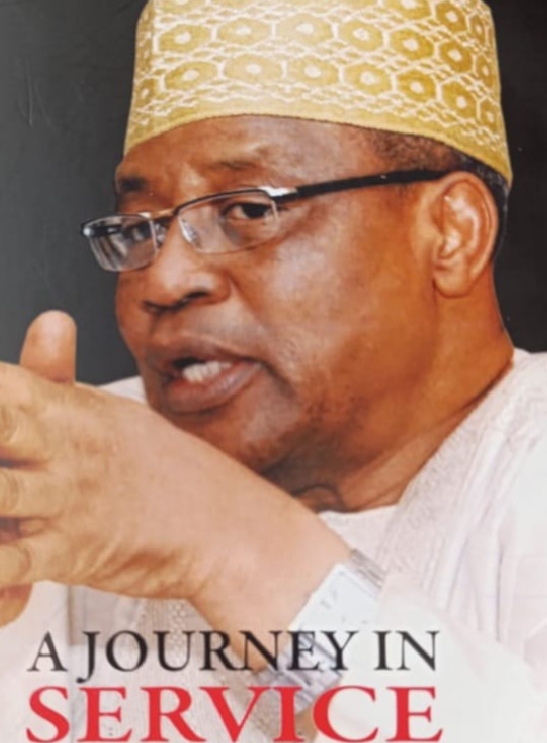
The at-long-last-decision to write his memoirs, was quite a daunting one for General Babangida, who has over the years, refused to capitulate to pressure demands for him to write one. His reason was predicated on the fact that some people, and especially his itinerant critics would accuse him of writing at a time that some of the dramatis personae have exited this putrid plane; he wanted to let sleeping dogs lie. He said to me, “Prince, your colleagues in the media and civil society would ask pointedly, why now?”
And, I told him his response should be why not now? Either way, nobody can take away his authorial stamp from his impressions, for telling stories that elucidate his trajectory in life’s bramble forest- stories that are essentially first hand accounts, and not innuendos. Those who accuse him of not telling the whole truth can pick up from where he stopped, and to add to what he has written; that we all may know the whole truth. Indeed, what is written in his 420-page memoirs are snippets of who IBB truly is, what he actually represents, and the totality of his roles in the leadership of Nigeria, dictated by his career in the military throughout his military presidency of Nigeria for eight years. Babangida is a colossus; an encyclopaedia of ideas and knowledge; and he applied these, when he called the shots. 
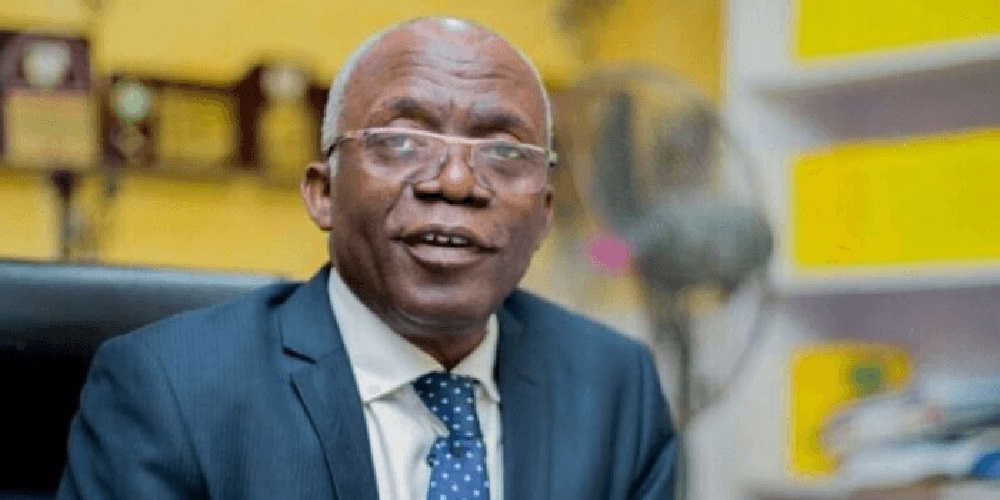
I am stimulated by several interpretations that readers have given to the book, and the hasty conclusions drawn by some who have read only snippets, and not the entire book; and particularly amused by the claims of one Mr. Femi Falana who boasted of seeking legal redress for the noisy recognition, saying that he remains an actor for the civil society groups. We are still waiting for his litigation. The comments of those who have read the book and ran informed commentaries about the several anecdotes that formed the central kernel of the accounts captured in the memoir, are not lost on me. Our former President, Chief Olusegun Obasanjo predicted these outcomes, saying that the book would exude the good, the bad and the ugly.
That exactly is what is happening today. IBB’s book is not intended as a polemic; those who derive joy from attacking IBB for whatever it is worth are welcome to have fun. Some will, even if they see IBB leading a crusade to better the society and add value to our collective aspirations, still agonise with patented anger and bad blood. But all of this remonstration does not bring diminution to Babangida’s humanity and benevolence of his engagements and relationships with people. I have had a very close relationship with him and his family for very long now, and can conclude without a whimper, that IBB is antipodal to these numerous stigmas that some members of the public are wont to thrust on him.
Albeit, anything IBB, is always “controversial” and usually meat for the season. When he talks, it is loud and resonates across the land. When he grants interviews, they receive widespread attention. When he keeps silent, there is a high desire to hack into his mind to know his thoughts. When he breaks his silence, his comments are given different connotations. All these look like good reckoning to me. IBB is consistent in “controversy” nevertheless he is that man that has contributed greatly to establishing democracies in some West Africa countries when he was in power and outside of power. He has helped to stabilize troubled countries that suffered from political tensions and unrest for so long using the ECOMOG.
He cultivates relationships and sustains same with remarkable prowess. He has a way with people and a charm and aura; his personality distinguishes him. Hate him or like him, you cannot deny IBB’s infectious and warm personality; and, he always shows that his persona is at home with his person. He’s a human being and not a human doing; and is bound to make mistakes. As a responsible leader, he accepts responsibility and credit for the ills and gains of his eight-year government. The under-current of his leadership emanations as a military president remains seminal, and suffice it to say that, at a time when coups and counter-coups were fashionable in Africa, some of the decisions taken by his administration were instructively woven around common sense, tact, diplomacy and better judgment.
IBB is always a contemporary item on the menu list of Nigeria’s political drudgery. His relevance remains unchanged at over eighty, his sense of recall and perspicacity on a wide variety of matters is still acute. He has a deep understanding of the human mind; a trait which is borne of his depth in human relations and interactions with people across the different socio-political strata of the society. He tells of the vanity of human creations, and why he loves his perceived and or real enemies, the same way he loves his friends. According to him, “we are living in an imperfect world, if I decide to snub my critics, how will I learn from my mistakes?” That’s IBB for you!.
THE JUNE 12 STORY
Since the official release of his memoir, the “June 12” account has undoubtedly received the highest volume of attention and criticism; topping all else in that book. Even those who were not yet born then, discuss the June 12 story as though they were participants. Others, who though alive at the time, but have no information about the annulment of the election, speak with seeming authority as though they were eye witnesses. They bridle at IBB’s assertions, as if they ran the seat of government with him. Some say his story is convenient, because of the fact that some of the major actors are now dead, and cannot controvert his account. Some derisively called him a “coward”, and a “weakling”, who presented himself as helpless before a rampaging General Sani Abacha during the June 12 orchestra.
They have debased IBB and called him all manner of unprintable names but the man, given his leadership orientation, remains stoic, unfazed, and unruffled by the torrents of ugly commentaries being hurled at him. This though is a sign of reckoning. Only those who are not productive are ignored. Between two mango trees, one bearing fruits and the other without fruits: at harvest season, the one with fruits will be visited by everyone, with pebbles and sticks, trying to pluck the fruits; but the barren one will be free from attack. That’s the ordering of life and the inherent danger in being worthy.
IBB ran a military government after a successful coup on 27 August 1985. Late Abacha was his accomplice during that operation. Late M.K.O Abiola was one of the sponsors of the coup and was also the one who reportedly told his friend King Abdallah of Saudi Arabia to extend an invitation to General Tunde Idiagbon and his eleven year old son to come for Holy Pilgrimage as his personal guests. That was how they got Idiagbon out of the scene, making it easy to remove General Muhammadu Buhari as Head of State, in a bloodless manner. Earlier, M.K.O Abiola had gotten involved in the 1983 coup that ousted president Shehu Shagari. In April 1990, during the Gideon Orkar coup in Dodan Barracks, Late Abacha also participated in helping to checkmate the boys and succeeded in coordinating with the president to dislodge the coupists.
IBB had escaped to Ojuelegba, in the Surulere area of Lagos, from where he contacted General Abacha. Unable to reach Abacha, he got his son, Ibrahim, who later went to alert his father at his guest House of the hovering danger. Abacha was in his familiar terrain, hobnobbing with his female friends, a habitual hobby to unwind. Duly informed of the putsch, he coordinated with his boss and president, IBB to dislodge Orkar and his boys. That was sheer fealty and such cooperation was not lost on IBB. This and other actions imprinted Gen Abacha in IBB’s heart. General Abacha also knew the implications of his actions, knowing full well that IBB had his “boys” also, in the Army. As an armoured corps officer, Babangida was reputed for his gallantry during the civil war and his boldness in quelling the Dimka coup with sheer tact, diplomacy and “bare hands”. He was a grounded officer. So, to call him a coward by latter day critics in an attempt to exercise their freedom of speech, is completely out of tune.
After the Orkar coup, the relocation of the seat of power to Abuja occupied a high pedestal in IBB’s mind. He felt the Dodan Barracks residence of the president had become vulnerable. He grieved over the loss of his Aide-de-Camp, U.K Bello. The escape of his immediate family to Captain Gusau’s residence within the precincts of Dodan Barracks was also a delicate adventure in the face of shelling by the coupists.The execution of the coup before the very eyes of his immediate family was traumatic for him. On the one hand was the promise to return to civil rule by 1990, which the Political Bureau had set for the new structure being envisaged; and on the other hand was the extension of that date, based on the feasibility or viability in the face of the then challenges.
The need to shift the date for return to civil rule became compelling; and as democratic and electoral activities were ongoing, relocation to Abuja was realized. By this time, IBB had concluded plans to stay for the usual two terms; thus, a new terminal date was set for 1993. Elections into State Government and National Assembly were already concluded. While IBB had his eyes set on his exit date, General Abacha had a different plot. The entire June 12 annulment was a coup within another coup. The desire by IBB to exit power was genuine, but he was bested by his friend’s plan. He applied tact and diplomacy. It was clear to him that Gen Abacha had come payback time. M.K.O Abiola, also IBB’s friend was one thing, and Nigerians yet another. Late General Abacha was inexorable in his quest. How to choose one and certainly be against the other required great deft and resolve. IBB read the writing on the wall. A medical doctor once said to me that, if a man contemplated taking his own life, he was almost certain to have mental ill health. IBB proved that he wasn’t mentally ill. He was alive, strategic and calculative.
The subject matter was power! A crazy aphrodisiac! These two men were going for it headlong! For the roles that Abacha had played in the life of his administration, he loved Abacha; and Abacha enjoyed the mollycoddling of one that is loved. General Abacha was ready to play the spoiler role, to ascend to the power that he so desirously wanted. This drive was unchecked. “Why didn’t you sack him, as you were the Commander-in-Chief? I interjected, “It is not an act of cowardice to indulge a man who has been with you, so to speak. In certain situations, you need to behave unusual to survive the unusual.” That was the day I remembered what that doctor said to me about suicide. If anyone follows the history of assassinations the world over, it is difficult to easily unravel the hatchet man. He may be your closest friend or a distant foe. Under military regimes, in such an intriguing world of politics, having survived a day, count that day as a blessing or bonus. Continuing he tutored, “the real Commander-in-Chief are the gun-wielding body guards around you all the time. You hardly know where their loyalty lies or their cabal within the military; and in any security formation, there is always a lone ranger whose nuances are not easily predictable; so we were taught.”
“While it is convenient for you civilians to run your commentary under a democratically elected government, it is not the same under a military government; so, it is difficult to know where a man stands in that circumstance.” It obviously took tact, strategy and diplomacy, not cowardice, to survive eight years as a military president, judging by General Babangida’s revelations. The man in the center and his government it seems, were always under existential threats. All these considerations formed part of why IBB mollycoddled Abacha by which means Abacha aborted the plan to return to civil rule, with effrontery. And by the time the final unsigned statement was issued, it marked the end of an era and the beginning of several invidious plots to stabilize the ship of state. This time, there was already in place, a polarised military; the top echelon was sharply divided along both ethnic and ranking lines. This situation became a fertile ground for recruiting like-minds for caucuses of “fellow Nigerians.” So, in summary, IBB was caught between the devil and the blue sea, hence he applied the first law of nature.
We all know who exactly the culprit was in this whole episode of the June 12 annulment. In addition, some Yoruba Obas compounded the plots. They allegedly accused M.K.O Abiola of “snatching” their wives like the late Owa Obokun of Ilesa, Oba Aromolaran. Others who were predominantly Awoists didn’t want the success of Abiola at the election. They leveled allegations against him including his alleged role in thwarting the electoral success of Awolowo in 1983, citing the establishment of Concord Newspaper as a deliberate ploy to antagonise the late sage. Chief Obasanjo had also stated in Zimbabwe that M.K.O Abiola was not the messiah being awaited. Others accused him of being chief sponsor of several coups in Nigeria, also; and thus should not be made to reap from his ills by heading a democratic dispensation. They stood against their brother.
IBB was buffeted with so many conspiracy theories which all combined to give Abacha some kind of upper hand and soft landing by the time he finally eased out Late Earnest Shonekan, the head of the interim government. Abiola jettisoned the suggestion of IBB to make him head the ING, and found good company, albeit naively, with General Abacha. The “overthrow” of the ING had the imprimatur of Chief M.K.O Abiola, who even nominated some ministers to join General Abacha to “prepare” the way for his own triumphant entry, he hoped. The rest, as it is often said, has become history. Surely, June 12 epitomized the intricacies and complex web that come with the struggle for power- the plots and counter-plots, the coups versus palace coups and a combination of back-stabbing and survivalist instincts turning out to be the most delicate period of Nigeria’s political history.
Yes, IBB has tendered his apology and has accepted full responsibility for whatever happened during his eight years; especially on the annulment of the June 12 election. That is the Hallmark of leadership. It is commendable also, that he has now mentioned some of those who played critical roles to thwart that exercise, chief of whom was his late friend, General Abacha. Let the truth of history be known. Nigerians should not forget yet another factor: the NRC, the political Party that fielded Bashir Tofa as its own presidential candidate also petitioned the whole exercise, describing the election as unacceptable; and raised concerns that Chief M.K.O Abiola’s dress on the day of election had the logo (a horse) of his party. They claimed that it was tantamount to campaigning on the day of election. They called for the outright cancelation of the election, a contestation that led to the setting up of a 25-member committee headed by Late General John Shagaya. The parties were directed to put forward eight members apiece. The NRC never agreed with the outcome of the election. So, the June 12 debacle had its peculiar rhythms and currents, steamed by those who never wanted an Abiola presidency. When the star finally snapped, it was a denouement of some sort, a rehearse of sun-set at dawn, before the curtain finally fell. June 12 has become a watershed in the political history of Nigeria and with IBB’s memoir, the actors have been unveiled.
THE FEBRUARY 20, ABUJA GATHERING
Nigeria is undoubtedly a very interesting country full of side attractions and sound bites. On the one hand, they want history to be taught in schools, on the other hand, they bridle at history being written and elucidated. IBB has decided to build a presidential library in Minna, Niger state. Proceeds from the book launch would be ploughed into this laudable project, to sustain and preserve history. The choice of the book reviewer was as apposite, just as the venue of the event was. Transcorp Hotel remains one of IBB’s legacies which has now been privatized. Relocation and building up of Abuja is another enduring legacy. So, while I listened to some critics shouting “crucify him,” my inner defense was mollified by the many legacies of IBB spread across the entire country including the Third Mainland bridge in Lagos. I looked at the growth of the eleven states he created, I looked at the several infrastructure, the private sector he initiated and engineered, the private broadcasting he introduced and licensed, the private airlines he initiated, the local governments he created, the many individuals he empowered through laudable policies he enunciated, the programs, the robust engagements, and his pan-Nigeria orientation, I feel the strong impact of his achievements. Added to these were the establishment of National Drug Law Enforcement Agency (NDLEA), NAFDAC, the Federal Road Safety Commission, (FRSC), the Code of Conduct Bureau, the Code of Conduct Tribunal, the Raw Materials Research Council, the Revenue Mobilization Commission, the National Economic Reconstruction Fund, (NERFUND), the defunct Peoples’ Bank, the Micro-Finance Banks, the several airports built to ease mobility, MAMSER, and the decentralization of the uniform control in the Police Force, amongst several others too numerous to mention. IBB moved Nigeria forward. Beyond June 12 and the political struggle for power, he built a country.
The gathering of February 20 therefore, was a veritable referendum on whether or not IBB is a good man and good leader. Nigerians truly united; that Abuja gathering was a pan-Nigeria gathering that spoke volumes about IBB’s recognition. He unveiled a doctrine of national cohesion and not of parochialism, myopism and nepotism. It underscored the theme of unity in diversity, as we all watched a book launch event that was loud like the author, attended by the who is who of this country all under one canopy. All for IBB, the man they love to hate, and hate to love. He lives in a world of his own, not deterred by the criticisms of a handful, but encouraged by the collective endorsements he gets every now and again, in appreciation of his intervention in re-engineering the socio-economic and political components of Nigeria. He may have failed to transit properly to civilian rule, and the lessons of a credible election he conducted, ought to be a reference point for today’s democracy; but is it? How many of our elections today wear the garb of credibility in the true sense of the word? The increasing number of political litigations does not speak to a healthier electoral process thirty-two years after June 12, elections are still being annulled through the courts. We’ve seen some unsavory scenarios and judgments that belie logic, and a concatenation of several possibilities that naturally awes the electorate. You may blame IBB for the errors of June 12, but have we learnt any lessons as a consequence of that? Have we imbibed the spirit of credible election since then? Have we eliminated the problem of thuggery and violence in political contestation, factors which necessitated IBB’s formation of the two-party system ab initio?
ABACHA, HIS CHILDREN AND THE STRUGGLE FOR POWER
I have read a couple of responses from late Abacha’s family, his children and grandchild. They even issued a shameless press statement trying to make their voices heard. The first thing I will say to them by this medium is that Nigerians don’t hold anything against them but their father. Since IBB launched his book, some of them have called him a “weakling,” others said “coward,” and some said he wasn’t in charge during the June 12 debacle. An officer of the armoured corps orientation, who fought in the 30-months civil war, got injured, and still carries shrapnel lodged in his lungs; that description of a coward and weakling, does not match IBB. He may have chosen to ignore the strange political movements of his subordinates, for exigent reasons at that time, but he’s by no stroke a weak man. A man who dislodged the Dimka coupists, and served in the Supreme Military Council at a much tender age, could not have been a weakling. Though the outcry of the Abachas is understandable, their description of IBB is wrong; and again I say to them, they should find peace in shame.
Their father and benefactor took over the rein of power through a palace coup, and activated a self-succession plan that generated so much hoopla during the period. He railroaded five political parties of same “leprous hand” to endorse him, and shut out every voice of descent. After his untimely death, his level of acquisition and conquistadorial behaviour became public knowledge. Till date, repatriation of stolen funds is still ongoing. I doubt if anyone can controvert this truth. I wonder how they all feel each time they hear of their father’s loot being repatriated. In profiling the dark goggled General Abacha, his role in the June 12 debacle should occupy a prime place; irrespective of what the family thinks about their “hero.” The account of Professor Humphrey Nwosu on the role of Abacha in the build up to the June 12 debacle in his book was pellucid; and that account is now corroborated in IBB’s memoir. It could not have been IBB’s deliberate contrived “blackmail” of his late friend. Far from it. During the five years when Abacha called the shots, he held Nigerians by the jugular, as we all gasped for breath to endure his self-transmutation plots. The palpable fear that gripped Nigerians during his tempestuous rulership was a direct opposite of IBB’s subliminal humanity. That character index of IBB is part of why the man remains impregnable till date.
To state that Abacha was afraid of his shadow is to understand why he was busy arresting people and hurling them into jail. There was a rise in high-profile assassinations at that time: Kudirat Abiola, Pa Alfred Rewane, Shehu Musa Yar’dua and others. Replay the tapes of Sergeant Barnabas Rogers, you will easily understand the enormity of Abacha’s torture and killer camp orchestrated to send fear in the hearts and consciences of Nigerians. Remember Ken Saro-Wiwa and the Ogoni Nine, the gory details of man’s wickedness and heartlessness will stare you in the face. Former President Obasanjo spent four years in jail over flimsy accusations, Col. Bello Fadile and a few others also suffered similar fate and torture. When there’s such a tempestuous atmosphere of national anomie, it will leave tales of regret, hisses and sighs in the consciousness of the people. Rather than sympathise and empathise, when Abacha suddenly exited this sinful world, there was widespread jubilation on the streets. That signaled where he would be positioned in history and maybe also, where he was headed. For his grandchild to have disrespectfully described a man old enough to be his own grandfather as a “weakling,” tells of his poor home training and crass indiscipline; themes that sit at the epicentre of the Abachas.
IBB, WE NEED ANOTHER MEMOIR
The Babangida memoir, still owes us explanations about scenarios that were not properly captured. The Obasanjo “Third Term Agenda” and the plots that rendered it prostrate need to be reported by those who played significant roles to quench the political greed of that era. There were stories abound of money being distributed by the presidency at that time, to railroad the lawmakers to validate what was a serious breach of the constitution. The desire of Chief Obasanjo to stay longer than was constitutionally guaranteed became a thorn in our collective psyche. One tale had it that on 13 September 2006 a meeting was consummated in the Villa by the following: Andy Ubah, Chris Ubah, Chief Iwuayanwu, Chief Tony Anenih and Chief Obasanjo himself as president, where it was decided that certain steps be taken to sell the agenda. Chief Anenih warned against the plan. Chief Iwuayanwu was to visit New York to sell the plan to the gathering of the World Igbo Day. When he got there, the mood was not right to speak in that direction, and it was aborted. To foist that plot, vehicles were distributed to some prominent Nigerians: two SUVs to Chief Iwuayanwu, one to the Ooni of Ife, Oba Sijuade, one to Chris Ubah, and some other recruits in the third term agenda plot.
About the same period, IBB, Atiku Abubakar, Aliyu Gusau and General Abdulsalami met with Chief Obasanjo, also at Obasanjo’s behest. When they got there, Chief Obasanjo kept them waiting for thirty minutes, and by the time he sauntered into the arena, his message was clear; “I want a little bit of extension.” Benumbed by his magisterial conduct in delivering the message, the four of them reportedly looked at themselves, and IBB was expectedly called upon to speak on behalf of the G4. “Baba, IBB started, it is true we made you President in 1999, but since you became president, you have made new friends, and we expect that these your new friends will deliver your third term to you.” A pin-drop silence was said to have sounded loudly amidst tension. The president was said to have asked, “is that the position of the group?” And they all concurred. That was when Chief Obasanjo realized that his third term agenda would hit the rocks.
When they made to leave, former President Obasanjo accused IBB of supporting General Buhari in securing the ticket of the APP. And wondered why IBB should toe that path. IBB told him that it was not good to play politics of humiliation, even against one of their own. IBB had to personally prevail on the seven APP aspirants to step down for General Buhari; Senator Ahmed Sani, Chief Rochas Okorocha, Pere Ajuwa, Bukar Abba Ibrahim and others. And that was how the script was acted. Former President Buhari emerged as an unopposed presidential candidate which left Chief Obasanjo most peeved. Obasanjo then chose Late Umaru Yar’dua, as a fall back option in the wake of the failure of his third term plan. He had thought that Umaru Yar’dua’s ill-health will be his shortest route to an extension of his (OBJ) administration. As God would have it, Yar’dua spent three more years before his creator called him home. I asked IBB, why he didn’t document his role in the aborted third term agenda plot in his book and his reply was vintage; “I left that for you; you have the details. I have done my part; continue from there.” So many people and political actors played one role or the other in that “Third Term Agenda,” it was a hotbed of revolt and dissension; and it fell apart, like the mustard seed that produced nothing. It was true though that Chief Obasanjo wanted a third term, he was outsmarted in the process. The forces against him held sway, and he couldn’t have his way.
CONCLUSION
Before I come your way again, let me make the point that military rule has its own peculiar intrigues. The politics in the under-prop of military regimes is usually not as discerning as in democracies. IBB has written his memoir and set the tone for his Presidential Library Project, those who are not satisfied must now seek another body of knowledge to dissect the issues that dominated the discourse. One inalienable right of IBB’s, is his authorial impressions. He was his own eye witness, anybody that has a superior account or story to tell about IBB’s journey in service, should please come forward with another version to enrich what has been written. To try to hijack IBB’s right to write his memoir, is akin to denying him his inalienable right, which is fully guaranteed under the constitution of the Federal Republic of NIgeria. Those who must taint and mottle the IBB regime with shadows, will soon see that history will be kind to IBB. The “June 12“ item is just one of many things in his score card; and in those many areas, his achievements are till date, inimitable.