

Connect with us

News

Diplomatic Delegations Urge Legislative Clarity on Cyber Legislation in Nigeria

Published

on

ADVERTISEMENT
Zoom Ad
ADVERTISEMENT
Zoom Ad

By Gloria Ikibah 

In a joint reflection timed with the observance of Nigeria’s Democracy Day, five diplomatic missions have issued a collective statement addressing the evolving application of cyber-related legal instruments and their intersection with civil liberties.

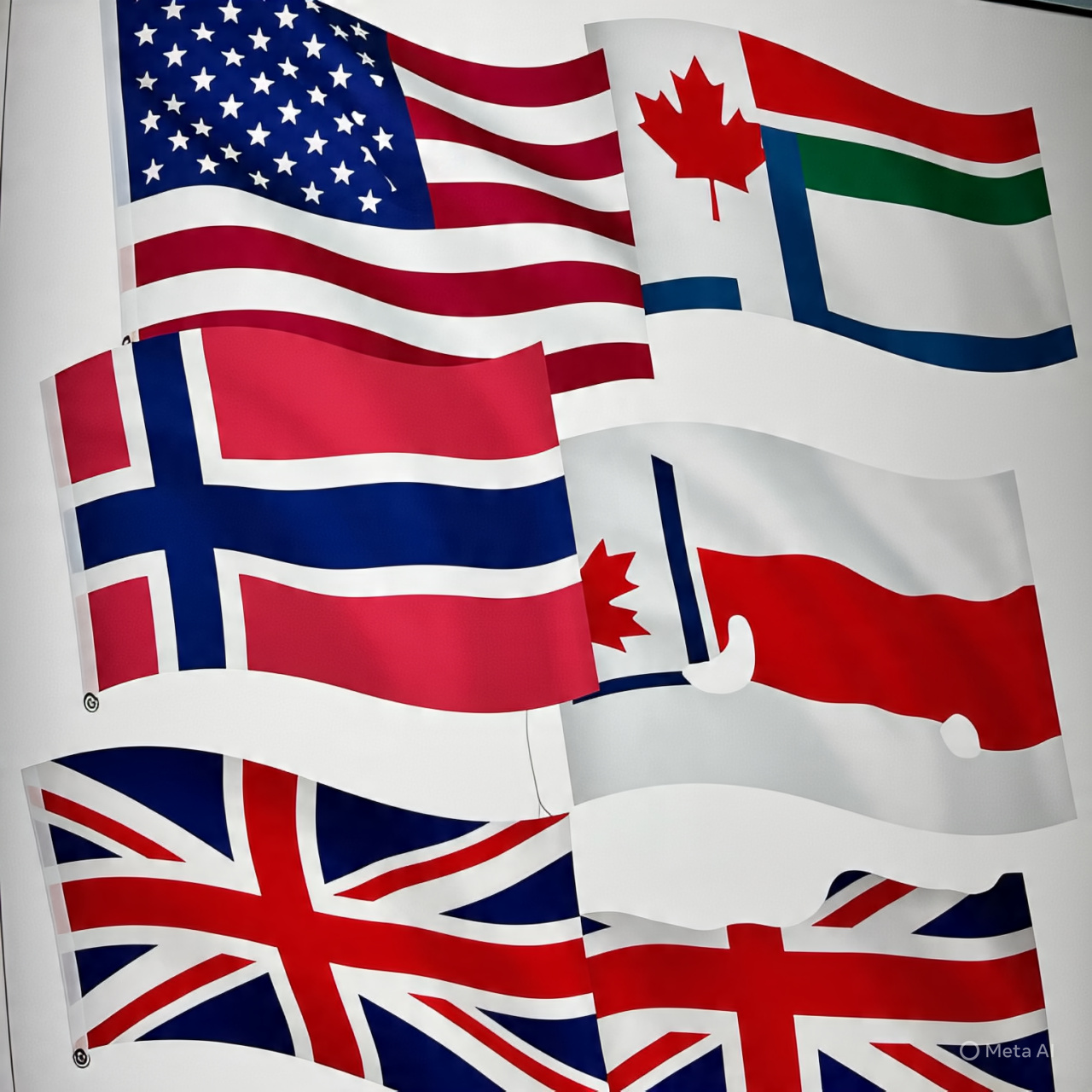
Amb. Richard M. Mills, Jr. of the U.S. Embassy, Amb. Richard Montgomery of the British High Commission, Amb. Sanna Selin of the Embassy of Finland, Amb. Svein Baera of Embassy of Norway, and Amb. Pasquale Salvaggio of Canadian High Commission, acknowledged the endurance of Nigeria’s democratic system, now spanning over two and a half decades. 

They highlighted the foundational role of open discourse, and referenced President Tinubu’s own 2024 Democracy Day remarks affirming that “there must be diverse perspectives and viewpoints.”

Advertisement

Noting that “free expression has long been a core value of Nigeria’s democracy,” the statement reemphasised that the national charter preserves this right to protect civic dialogue in the digital and physical spheres. The diplomatic group underscored the importance of safeguarding this ideal in practice, especially as the country navigates the challenges of cyberspace governance.

While commending the intent behind Nigeria’s 2015 Cybercrimes Act—particularly its focus on curbing digital threats, the statement referenced rising concerns about the unintended applications of the law. In April, the National Human Rights Commission issued a formal opinion indicating that amendments to the Act in 2024 risk expanding its utility in ways that might contradict constitutional rights.

Thry further reminded that in 2022, the ECOWAS Court of Justice found the legislation incompatible with regional and international human rights commitments.

“The NHRC’s advisory opinion on freedom of expression warned that it ‘has potentials for abuse, particularly with respect to arrests and prosecutions of activists, journalists, bloggers, and ordinary social media users. 

Advertisement

“Misuse of the Cybercrimes Act undermines democratic advancement and civic participation. It also jeopardizes the confidence of investors and risks deterring the innovation needed for economic growth,” the statement asserted.

Referencing a high-profile example, the envoys highlighted the case of Dele Farotimi, who faced 12 charges under the Cybercrimes Act after commenting on alleged judicial misconduct via literary and audio platforms. 

“Though the charges were eventually withdrawn, his ordeal highlights a troubling issue – the Cybercrimes Act, originally intended to combat online fraud and cyberterrorism, can be misused as a tool to stifle free expression and undermine democratic engagement. 

“Farotimi is not alone. Journalists, activists, and ordinary citizens have faced similar charges for sharing opinions or reporting on alleged corruption”, the envoys statement. 

Advertisement

According to official estimates, Nigeria incurrs roughly $500 million annually due to cyber-related incidents. Yet, the missions warned that legislative ambiguity particularly around terms like “false information,” “cyberstalking,” and “insult”—risks broad enforcement.

“We therefore welcome the commitment from Nigeria’s Minister of Information and National Orientation, Mohammed Idris, to collaborate with the National Assembly and relevant stakeholders in reviewing the Cybercrimes Act so that it protects the values enshrined in Nigeria’s constitution,” they stated.

Pointing to economic implications, the missions cautioned that “the Cybercrimes Act’s misapplication, even in a small number of cases, risks detracting the innovators and entrepreneurs the government wants to invest in Nigeria.”

The statement further made a direct appeal to lawmakers: “The undersigned Heads of Mission in Nigeria encourage Nigerian lawmakers to consider reform of the Cybercrimes Act to narrow the definitions of key terms such as ‘false information,’ ‘cyberstalking,’ ‘insult,’ ‘hatred,’ and ‘harassment,’ and ensure those definitions cannot be used erroneously to silence critics and censor expression.”

Advertisement

While noting that this legal conundrum is not unique to Nigeria, the group expressed hope that the Council of Europe’s ongoing support under the Global Action on Cybercrime initiative would assist in bringing the Act in line with globally accepted legal benchmarks.

“Free expression is a precious commodity that relies on all of us to respect it. It is a fundamental tenant of Nigeria’s constitution. Nigerians, and any citizens of countries around the world, should be able to hold and express their views, even if those opinions are unpopular,” the statement added.
Continue Reading
Advertisement
Click to comment

Warning: Undefined variable $user_ID in /home/naijuinz/public_html/wp-content/themes/zox-news/comments.php on line 49

You must be logged in to post a comment Login

Leave a Reply

News

Nigeria Ranked Most Generous Country in The World

Published

on

By

ADVERTISEMENT
Zoom Ad
ADVERTISEMENT
Zoom Ad

Nigeria has been ranked as the most generous country in the world.

Charities Aid Foundation (CAF), a leading international charity organisation, released its latest global study on charitable giving.

The foundation’s World Giving Report surveyed more than 60,000 people across 105 countries to assess global giving patterns and the factors influencing generosity.

According to the report, 61 per cent of respondents made donations in 2025, either directly to people in need, charities or for religious purposes, down slightly from 64 per cent in 2024.

Advertisement

The study found that, on average, people donated one per cent of their income, although the figures varied across regions.

Africans gave an average of 1.6 per cent of their income, compared with 0.6 per cent in Europe.

Nigeria topped the global rankings, with people donating an average of 2.8 per cent of their income to charities, religious causes or individuals in need.

The report also showed that the ten most generous countries are all located in Africa and Asia.

Advertisement

Managing Director of the Charities Aid Foundation, Mark Greer, said the actions of individuals, charities, businesses and governments could help build stronger societies.

“Giving is deeply personal based on different factors including values, circumstances and experiences. By understanding these influences and how they appear around the world, we can learn what drives vibrant cultures of giving to support the resilience of civil society.

“We all have a role to play in growing giving. Encouraging conversations, and more importantly, action by individuals, charities, businesses, and governments can help build stronger and more thriving civil societies.”

The ranking comes amid persistent economic hardship in Nigeria.

Advertisement
Continue Reading

News

Female Teacher Allegedly ‘Beaten To D3ath’ By Father Of Student She Disciplined in Kogi

Published

on

By

ADVERTISEMENT
Zoom Ad
ADVERTISEMENT
Zoom Ad

A 22-year-old female teacher, Mariam Usman, has d!ed days after she was allegedly beaten by family members of a student she disciplined in Ugbamaka, Okpo District, Olamaboro Local Government Area of Kogi State.

According to security analyst Zagazola Makama, the tragic incident occurred after the teacher took disciplinary action against the student, leading to a confrontation with the child’s father that reportedly turned violent and resulted in her d3ath days later.

The shocking development has sparked outrage and renewed concerns over the safety of teachers and the growing disregard for educators in society.

Authorities are expected to investigate the incident and ensure that justice is served.

Advertisement
Continue Reading

News

FULL LIST: 24 Nigerian Varsities earn places in 2026 Times Higher Education rankings

Published

on

By

ADVERTISEMENT
Zoom Ad
ADVERTISEMENT
Zoom Ad

Nigeria has reinforced its growing influence in global higher education as 24 universities secured places in the 2026 Times Higher Education (THE) World University Rankings and the Times Higher Education Sub-Saharan Africa University Rankings, the highest representation by any country in Sub-Saharan Africa.

The latest rankings place the University of Ibadan and the University of Lagos among Nigeria’s highest-ranked universities, while Bayero University Kano emerged as one of the country’s top-performing institutions. Nigeria also increased its representation in the global rankings from 21 universities in 2024 and 2025 to 24 universities in 2026, making it the most represented country in Sub-Saharan Africa.

The Nigerian contingent comprises 17 federal universities, three state universities and four private universities, underscoring the increasing competitiveness of the country’s tertiary education sector across teaching, research, knowledge transfer and international outlook.

The rankings also reflect the growing recognition of specialised institutions, with several federal universities of technology and agriculture earning places, while state-owned universities continued to strengthen their global standing through improved academic performance and research output.

Advertisement

Reacting to the latest rankings, the Minister of Education, Dr. Tunji Alausa, described the achievement as a significant milestone for Nigeria’s higher education sector, saying it reflects the positive outcomes of ongoing reforms aimed at strengthening the nation’s universities. He noted that the growing international recognition of Nigerian institutions underscores the Federal Government’s commitment to transforming tertiary education into a catalyst for innovation, research, human capital development and sustainable national growth.

Pundits say the latest recognition is expected to boost the international profile of Nigerian universities, enhance opportunities for global collaborations, attract research funding and encourage sustained investment in quality teaching, innovation and institutional development across the country’s higher education landscape.

The 24 Nigerian universities that featured in the 2026 THE rankings are:

1. University of Ibadan

Advertisement

2. University of Lagos

3. Bayero University Kano

4. Covenant University

5. Landmark University

Advertisement

6. Ahmadu Bello University

7. Federal University of Technology, Minna

8. University of Ilorin

9. University of Jos

Advertisement

10. University of Nigeria, Nsukka

11. Babcock University

12. Delta State University, Abraka

13. Ekiti State University

Advertisement

14. Federal University of Agriculture, Abeokuta

15. Federal University of Technology, Akure

16. Federal University of Technology, Owerri

17. Federal University Oye-Ekiti

Advertisement

18. Ladoke Akintola University of Technology

19. Lagos State University

20. Nnamdi Azikiwe University

21. Obafemi Awolowo University

Advertisement

22. University of Benin

23. University of Calabar

24. University of Port Harcourt

Advertisement
Continue Reading

Trending

Copyright © 2024 Naija Blitz News