Connect with us

News

Nigeria Pushes for Enhanced China-Africa Trade Cooperation at Changsha Ministerial Talks

Published

on

ADVERTISEMENT
Zoom Ad
ADVERTISEMENT
Zoom Ad
 
By Patricia Esami-Lubba, Changsha, Hunan Province, China
 
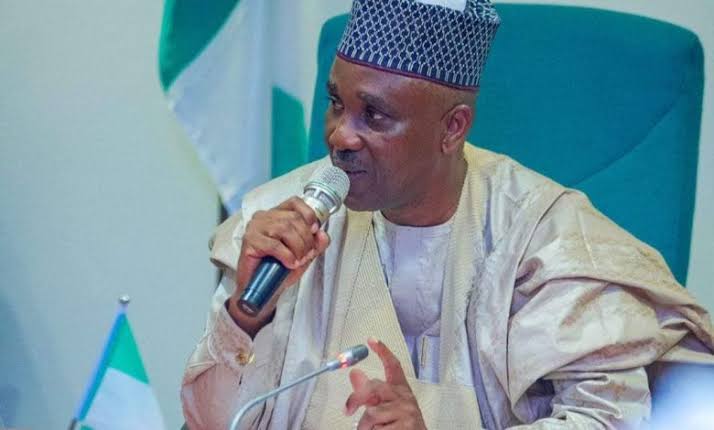
Nigeria’s Minister of Foreign Affairs, Ambassador Yusuf Tuggar, has reaffirmed the country’s commitment to deepening cooperation under the Belt and Road Initiative, while calling for expanded trade reciprocity and stronger domestication of China-Africa development initiatives.
 
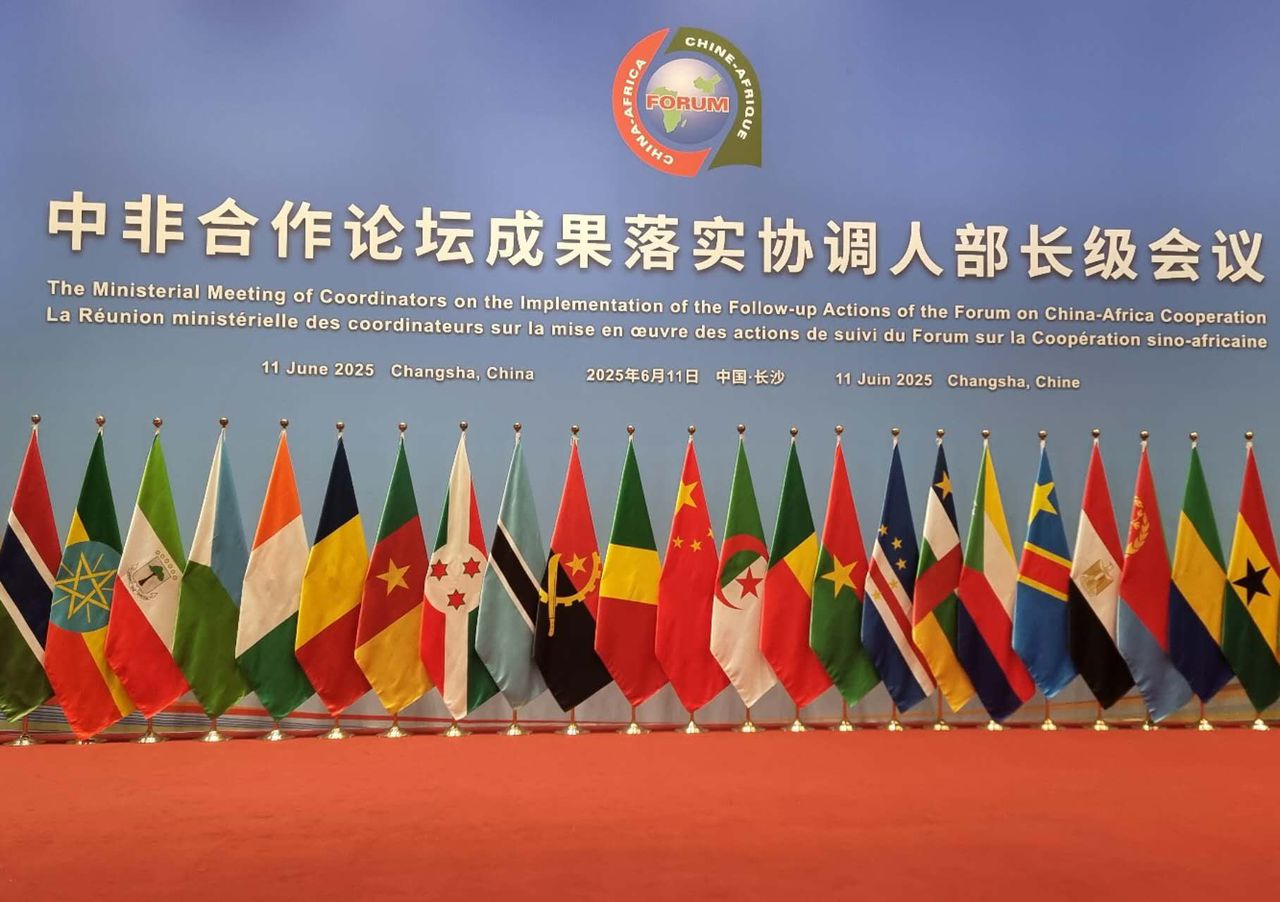
The Minister stated this in an exclusive, on the sidelines of the Ministerial Meeting of Coordinators on the Implementation of FOCAC Outcomes in Changsha, on Wednesday.
 
Ambassador Tuggar highlighted the tangible impact of President Xi Jinping’s “Ten Cooperation Initiatives” announced at the 2023 FOCAC summit, pointing to major projects like the Zungeru Hydropower Plant and the Lagos-Ibadan Railway as concrete outcomes already advancing Nigeria’s development goals.
 
“FOCAC and the partnership between China and Africa, particularly Nigeria is about putting words into action, he noted.
 
He stressed that beyond infrastructure, the focus is now on agriculture, critical minerals and refining processes.
 
Accordingtohim, Nigeria wants to see more on domestication of value addition across the entire supply chain, while underscored Nigeria’s desire to move beyond resource exportation toward local processing, refining, and beneficiation, particularly in sectors such as mining and agriculture, as this is what it’s all about, developing internal capacity and ensuring the people benefit directly.
 
 
Push for Broader Tariff-Free Access
 
The Foreign Affairs Minister identified trade access as a key issue on Nigeria’s agenda.
 
While China currently offers zero-tariff treatment to least developed countries in Africa, Nigeria as a middle-income economy he said  is not yet included.
 
Tuggar revealed that discussions to broaden the scope of zero-tariff privileges to include major African economies tops the agenda as well, “We’ve successfully negotiated tariff removals on cashew and groundnut exports from Nigeria to China.
 
“But we want to see that expanded across sectors as it must be reciprocal, diplomacy and trade work Tuggar said is best attained when both sides benefit”, he stated.
 
His comments followed a keynote address by Chinese Foreign Minister Wang Yi, who announced Beijing’s intent to pursue zero-tariff policies for all 53 African nations.
 
Wang Yi said the proposal is currently under review and will mark a new chapter in China-Africa economic integration.
 
 
Strengthening Access and Understanding
 
Earlier though, Tuggar also addressed visa concerns, especially recent confusion surrounding China’s new e-visa system.
 
While diplomats and officials currently enjoy visa-free access, Tuggar called for more balanced mobility and transparency in bilateral arrangements, “there was a scare in the Nigerian media around possible visa restrictions,” he said., as such We had to clarify that message.
 
What we need is a symbiotic relationship where when China wants access to Nigeria, Nigerians must also have predictable and fair access to China.
 
 
Emerging Technologies, Shared Futures
 
As Africa positions itself within the evolving global tech landscape, Tuggar warned against historical exclusions repeating themselves, particularly with artificial intelligence.
 
He called for inclusive innovation and fair access to AI infrastructure, satellite technology, and digital partnerships with China, his words as he cautioned,  “We don’t want to repeat the story of the Industrial Revolution, where Africa bore the cost of pollution without reaping the benefits, the same must not happen with AI. We must share in the benefits, not just the burdens.”
 
Beyond government-to-government agreements, several commercial partnerships are underway, particularly in space tech and digital solutions.
 
The Minister confirmed that private sector players are actively negotiating with Chinese counterparts on satellite development and artificial intelligence applications tailored to Africa’s needs.
 
The Changsha Ministerial Meeting is a key step in preparing for the next Forum on China-Africa Cooperation (FOCAC) summit. Delegates from across the continent are gathered to evaluate progress and align priorities, with a particular emphasis on trade expansion, industrialization, and digital development.
 
 
Patricia Esami-Lubba is a Nigerian journalist and diplomatic correspondent, currently reporting from Changsha, Hunan Province. She covers high-level China-Africa engagements, including ministerial dialogues shaping the future of the Forum on China-Africa Cooperation (FOCAC).

Continue Reading
Advertisement
Click to comment

Warning: Undefined variable $user_ID in /home/naijuinz/public_html/wp-content/themes/zox-news/comments.php on line 49

You must be logged in to post a comment Login

Leave a Reply

News

2025 Capital Budget Gets New Lease of Life as Reps Push Deadline to September

Published

on

ADVERTISEMENT
Zoom Ad
ADVERTISEMENT
Zoom Ad

By Gloria Ikibah

The House of Representatives has approved a three-month extension of the implementation period for the capital component of the 2025 Appropriation Act, shifting the deadline from June 30 to September 30, 2026.

The decision was taken during an emergency sitting held on Monday, as lawmakers moved swiftly to ensure the continued execution of capital projects captured in the national budget.

The legislation, which seeks to amend the Appropriation (Repeal and Enactment) Act, 2025, was designed to provide additional time for Ministries, Departments and Agencies to complete ongoing projects and fully utilise funds earmarked for capital expenditure.

Advertisement

In an unusually rapid legislative process, the bill passed through its first, second and third readings during the same plenary session after members suspended the relevant provisions of the House Standing Orders to facilitate its consideration.

Leading debate on the general principle of the bill, House Leader, Rep. Julius Ihonvbere, said the extension was necessary as several capital projects captured in the 2025 budget had not been fully implemented.

He emphasised that the amendment was not intended to alter any provision of the budget but merely to extend its lifespan by three months to allow ongoing projects to be completed.

He said: “It is very straightforward. Because some aspects of the capital appropriation will not be fully implemented, if we do not extend the life of this particular law, it will have a very grave impact on the growth and development of the national economy.

Advertisement

“The purpose essentially is to extend the lifespan. We are not touching any part of the law. It is simply extending the lifespan from June 30, 2026 to September 30, 2026. I urge my colleagues to approve this so that we can continue with the work of developing and growing our economy and country”.

Presiding over the session, Speaker of the House, Rep. Abbas Tajudeen, acknowledged that the records provided by the Chairman House Committee on Appropriations and other relevant agencies revealed that implementation of the capital budget was yet to be completed.

“As you are aware, the 2025 budget was extended to June 30. From the records we received from the Chairman, Appropriations, and other relevant quarters, it is yet to be fully implemented. It is therefore in the best interest of this country and the National Assembly for us to extend the budget to September 30 to enable the Federal Government fulfil its obligations under the 2025 budget,” the Speaker said.

Following the adoption of the bill at second reading, the House dissolved into the Committee of Supply where it had the clause by clause consideration of the bill, and approved the three clauses, explanatory memorandum and long title of the bill.

Advertisement

The committee subsequently reported back to plenary, where lawmakers adopted its recommendations and suspended House rules to allow the bill to be read a third time and passed the same day.

The accelerated passage reflects growing concern over the pace of implementation of key infrastructure and development projects, many of which require additional time to reach completion.

With the approval, government agencies now have until the end of September to execute projects funded under the capital component of the 2025 budget, a move expected to prevent disruptions to ongoing works and improve budget performance.

The extension is also aimed at ensuring that resources already allocated for development projects are effectively utilised before the capital budget expires.

Advertisement

With the passage of the amendment, federal ministries, departments and agencies now have an additional three months to implement capital projects and utilize funds appropriated under the 2025 budget.

Meanwhile, the House also announced changes in the leadership of some standing committees.

The appointments are as follows:
• Rep. Ali Madaki – Chairman House Committee on Special Duties
• Rep. Ali Isa J.C. –  Chairman House Committee on Shipping Services,
• Rep. Pascal Agbodike – Chairman House Committee on Small and Medium Enterprises Development Agency of Nigeria (SMEDAN),
• Rep. Kelechi Nwogu –  Chairman House Committee on Hydrological Services

The Speaker urged the newly appointed committee chairmen to assume their responsibilities immediately and bring their legislative experience to bear in advancing the work of the House.

Advertisement
Continue Reading

News

Day 4 of projects commissioning as President TInubu set to commission newly constructed Court of Appeal Building

Published

on

ADVERTISEMENT
Zoom Ad
ADVERTISEMENT
Zoom Ad


President Tinubu will commission the newly constructed Court of Appeal (Abuja Division) Building today, 15/6/26 as FCT projects commissioning enters Day 4.

#FCTProjects2026
#RenewedHopeFCT

Continue Reading

News

Cholera Outbreak: Plateau Records 5 Deaths, 11 Confirmed Cases

Published

on

By

ADVERTISEMENT
Zoom Ad
ADVERTISEMENT
Zoom Ad

Plateau State commissioner for Health, Dr Nicholas Baamlong, has revealed that the state recorded 11 confirmed cases of cholera, five deaths and 53 suspected cases.

Baamlong, who disclosed this to journalists yesterday in Jos, said the confirmed and suspected cases were reported in Pushit, Mangu 1 and Mangu 2 communities in Mangu local government area (LGA).

According to him, the state Ministry of Health is intensifying public health interventions to contain the outbreak, prevent further spread and reduce its impact on affected communities.

He explained that the state had taken decisive actions to control the outbreak and protect its citizens via the deployment of additional Response Teams (RRTs) to the affected wards, scaling up of treatment centres and isolation capacity and the emergency procurement of Rapid Diagnostic Tests Kits, intravenous fluids and essential drugs.

Advertisement

The Commissioner further said that the ministry had activated an Incident Management System (IMS), for a comprehensive and multi sectorial response to the outbreak.

“The activation of the IMS ensures a coordinated, efficient, and accountable response structure in line with national and international emergency response frameworks,” he said.

Baamlong explained that cholera was an acute diarrhoeal disease caused by consuming food or water contaminated with the bacterium Vibrio cholerae.

He urged residents of Mangu LGA and neighbouring communities to remain vigilant and take preventive measures, including drinking safe water, maintaining proper hand hygiene, avoiding open defecation, and ensuring proper waste disposal.

Advertisement

He also advised residents to promply report suspected cases of cholera to the nearest healthcare facility for immediate attention.

While reaffirming the state government’s commitment to safeguarding the health and well-being of residents, Baamlong called on development partners and other stakeholders to support ongoing response efforts.(NAN)

Continue Reading

Trending

Copyright © 2024 Naija Blitz News