
News
FG approves 37 new crude evacuation routes to curb oil theft


- /home/naijuinz/public_html/wp-content/plugins/mvp-social-buttons/mvp-social-buttons.php on line 27
https://naijablitznews.com/wp-content/uploads/2024/03/crude-oil-production.jpg&description=FG approves 37 new crude evacuation routes to curb oil theft', 'pinterestShare', 'width=750,height=350'); return false;" title="Pin This Post">
- Share
- Tweet /home/naijuinz/public_html/wp-content/plugins/mvp-social-buttons/mvp-social-buttons.php on line 72
https://naijablitznews.com/wp-content/uploads/2024/03/crude-oil-production.jpg&description=FG approves 37 new crude evacuation routes to curb oil theft', 'pinterestShare', 'width=750,height=350'); return false;" title="Pin This Post">


The Federal Government has approved 37 new crude oil evacuation routes across Nigeria to tackle oil theft and improve transparency in the movement of crude to export terminals.
Commission Chief Executive of the Nigerian Upstream Petroleum Regulatory Commission (NUPRC), Engr. Gbenga Komolafe disclosed this at the 24th Nigerian Oil and Gas (NOG) Energy Week in Abuja.
Komolafe explained that the move was part of reforms targeted at strengthening energy security, boosting government revenue, and restoring investor confidence in the upstream sector.
He noted that new evacuation channels were approved in collaboration with security agencies to curb persistent sabotage of existing pipelines and crude transport infrastructure.
According to the NUPRC boss, Nigeria has, for years, suffered massive losses from illegal tapping and vandalism of pipelines, which has severely affected production figures and export earnings. With the new routes and tighter monitoring, he said the Commission is optimistic about cutting down these losses.
In addition to physical infrastructure, Komolafe said the Commission is enforcing the Domestic Crude Supply Obligation (DCSO) to ensure local refineries have steady access to feedstock.
This, he explained, is part of a long-term strategy to reduce Nigeria’s dependence on imported petroleum products and promote economic resilience.
The NUPRC boss also revealed that the regulator is cracking down on companies that fail to comply with Nigeria’s gas flare-out commitments under the Nigerian Gas Flare Commercialisation Programme (NGFCP). He said some defaulting producers have already been sanctioned for refusing to execute agreements.
On the regulatory side, Komolafe said the Commission had made progress in digitising its operations to improve efficiency, fast-track approvals, and provide real-time visibility for investors and partners.
Komolafe further announced that Nigeria has officially declared March 18 as Upstream Decarbonisation Day, a national observance to review progress on emissions reduction and promote climate-aligned growth in the oil and gas sector.
He added that the country has established a carbon tracking and monetisation framework that allows emissions reductions to become revenue-generating assets through the creation of carbon credits and a supporting ecosystem of technical and financial services.
“Protection of assets is also paramount. With 37 new evacuation routes approved and working closely with security agencies, we are curbing theft and boosting accountability.
“We are scaling up Nigeria’s production through reawakening of dormant fields, acceleration of approvals, enhancement of upstream efficiencies.
“Our HostComply platform has brought transparency, real and measurable benefits to oil-producing communities, fostering peace and social license to operate.
“We are enabling emissions reductions to become revenue streams through a new ecosystem of carbon services including monitoring, consulting, tech deployment, while maintaining high environmental and asset integrity.
“Nigeria is not on the sidelines of the energy future; we are shaping it,” Komolafe said.


By Gloria Ikibah
BINANI Global Air Services has engaged a global aviation firm to develop a mega Maintenance, Repair and Overhaul (MRO) facility in Abuja, in a move expected to retain about $218 million in foreign exchange annually in Nigeria.
The project, which is aligned with President Bola Ahmed Tinubu’s Renewed Hope Agenda, is aimed at boosting local aircraft maintenance capacity and reducing Nigerian airlines’ dependence on foreign maintenance centres.
Chairperson of BINANI Air, Senator Aishatu Dahiru Ahmed, said the facility would address one of the major challenges confronting the country’s aviation industry — the huge cost of sending aircraft abroad for major maintenance checks.
She said most Nigerian airlines currently rely on overseas facilities for C and D checks, leading to significant foreign exchange outflows.
According to her, the proposed MRO facility will not only help keep more aircraft in Nigeria for major maintenance but also strengthen the country’s technical capacity and support the growth of the aviation sector.
She said: “Currently, domestic airlines outsource the vast majority of their heavy maintenance checks, such as C checks and D checks, to foreign facilities in Europe, the Middle East, and other African nations like Egypt and Ethiopia. This project will reduce this dependency while retaining and attracting FX of about 218 million US dollars annually”.
The proposed facility comes amid persistent concerns over the high cost of aircraft maintenance and Nigeria’s reliance on overseas MRO centres.
C and D checks require specialised infrastructure, sophisticated equipment and highly skilled personnel, which have historically been limited in Nigeria. As a result, airlines have had to send their aircraft abroad, paying for the services in foreign currency.
A functional heavy maintenance facility in Nigeria can also boost the country’s technical workforce and create specialised employment opportunities, while supporting the emergence of a wider aviation maintenance ecosystem.
The facility can further position Abuja as a potential MRO hub for Nigerian and other African airlines, subject to its eventual capacity, regulatory approvals and certification.
Senator Ahmed said the investment represents an expansion of its role beyond domestic passenger operations into infrastructure capable of serving the wider aviation industry.
However, the project’s significance will ultimately depend on its execution and the ability to translate years of discussions about local MRO capacity into a fully operational facility.
The proposed Abuja MRO will mark a major shift for Nigeria’s aviation industry if it succeeds in keeping aircraft at home for major maintenance checks and reducing the country’s dependence on foreign facilities.


By Our Correspondent.
Leading fintech company, OPay Digital Services, has dismissed as false and malicious a viral social media publication claiming that the company would embark on a prolonged break from September 1, 2026, urging its customers to withdraw or move their funds.
The fabricated publication, which gained traction across social media platforms on Sunday, purportedly warned OPay customers that the fintech would shut down its operations for an extended period beginning September 1.
However, OPay, in an official response published across its verified social media platforms, described the claim as false, assuring customers that the company remains fully operational.
In a statement titled, “This is FALSE!”, the fintech said: “OPay is not going on break by September. We’re here, and we’re going nowhere! 💚”
The company further urged its customers and members of the public to scrutinise the viral publication for inconsistencies and rely only on its verified communication channels for authentic information.
“True OPay users know how to identify our official communications. Take a closer look at the viral post and you’ll spot the red flags.
“Always verify before you share. Filter the noise! Follow our official pages for authentic OPay updates,” the company stated, ending the message with the hashtag, #OPayIsOkay.
Also reacting to the development, the Vice President, Public and Government Affairs, OPay Digital Services, Dr. Maxwell Loko, described the viral publication as “false, malicious and misleading.”
Loko said OPay was not shutting down and cautioned customers against taking any action based on the fabricated information.
“This post is false, malicious and misleading. OPay is not shutting down, and customers should not be misled into withdrawing their funds based on fabricated information,” he said.
He urged members of the public to disregard the publication and depend exclusively on OPay’s verified platforms for official announcements.
“We urge the public to disregard this post and rely only on OPay’s verified communication channels for official information,” Loko added.
The OPay executive further warned that deliberate attempts to spread false information capable of creating panic or undermining confidence in a financial institution could attract legal consequences.
“The deliberate spread of false information designed to cause panic or undermine confidence in a financial institution is a serious matter and may have legal consequences,” he said.
The development has also raised concerns over the growing use of fabricated digital content to damage the reputation of financial technology companies and potentially trigger unnecessary panic among customers.
While speculation has circulated in some quarters that the publication could be linked to competitive interests seeking to undermine OPay’s growing market position, no evidence has been publicly established to substantiate such claims.
OPay therefore advised its customers to exercise caution and verify financial or operational announcements through its authenticated communication channels before acting on them.
The company’s clarification effectively puts to rest the viral claim that it would cease or suspend operations from September 1, 2026, with OPay reaffirming that its services remain available to customers.

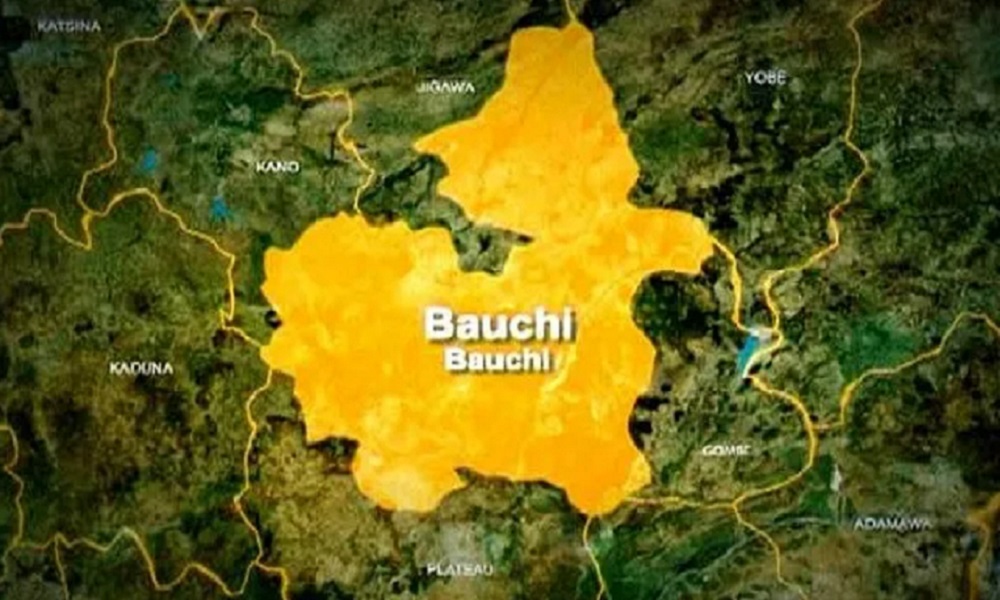
The Bauchi State Police Command has arrested a 70-year-old man, Usman Abubakar, over the alleged defilement of an eight-year-old girl in the Tsakanin Bayara area of Bauchi metropolis.
According to a statement issued by the Command’s Police Public Relations Officer, Superintendent of Police (SP) Nafiu Habib, the suspect was arrested following a complaint lodged at the ‘E’ Division, Yelwa, by the victim’s 48-year-old father on Wednesday, August 26, 2026.
According to the police, the father alleged that the suspect, who resides in the same area, lured his daughter to an uncompleted building on Sunday, August 24, where he allegedly sexually assaulted her.
The Command said its operatives immediately commenced action after receiving the report and arrested the suspect.
The police further stated that the suspect allegedly confessed to the offence during interrogation.
Following the incident, the victim was taken to the Police Clinic for medical examination and necessary care.
The Commissioner of Police, CP Sani-Omolori Aliyu, condemned the alleged offence and assured members of the public that the matter would be thoroughly investigated.
The case has been transferred to the State Criminal Investigation Department (SCID), Bauchi, for discreet investigation and prosecution, according to the Command.
The police reiterated their zero tolerance for sexual violence and child abuse, while urging parents, guardians and members of the public to remain vigilant and report suspicious activities to the nearest police station.

BINANI Air Moves to Cut Nigeria’s $218m Annual Aircraft Maintenance Outflow

OPay Rubbishes Viral Shutdown Rumour, Warns Against Fake Publication

Zamfara 2027 governorship battle: Group salutes PDP candidate for scaling INEC hurdle, pledges mobilisation support




-

 Politics23 hours ago
Kwara 2027: Zakari Mohammed, Kale Kawu, Speaker Danladi, Apaokagi Make The List As INEC Displays Names, Details Of Guber Candidates
-

 News19 hours ago
Rep Chinda, others make INEC list as gubernatorial candidates for Rivers
-

 News22 hours ago
Power Mystery: FG probes missing 100MW, N120bn revenue loss
-

 News23 hours ago
I Won’t Ever Forgive APC – El-Rufai’s Son
-

 Metro22 hours ago
Sokoto Hisbah denies imposing restrictions on Christian worship
-

 News22 hours ago
How to apply for FG’s N10bn TETFund research grant
-

 Metro23 hours ago
25 terrorists killed as troops repel attack on Borno community
-

 News18 hours ago
BREAKING: Nigerian British heavyweight boxer Itauma carried out on stretcher after being knocked out in world title bout
Warning: Undefined variable $user_ID in /home/naijuinz/public_html/wp-content/themes/zox-news/comments.php on line 49
You must be logged in to post a comment Login