…Speaker Abbas raise alarm over N149.4trn debt profile


By Gloria Ikibah
Nigeria’s Minister of Finance and Coordinating Minister of the Economy, Wale Edun, has highlighted the growing fiscal pressures across West Africa, noting challenges such as high debt servicing costs, limited revenues, and increasing public spending demands. 
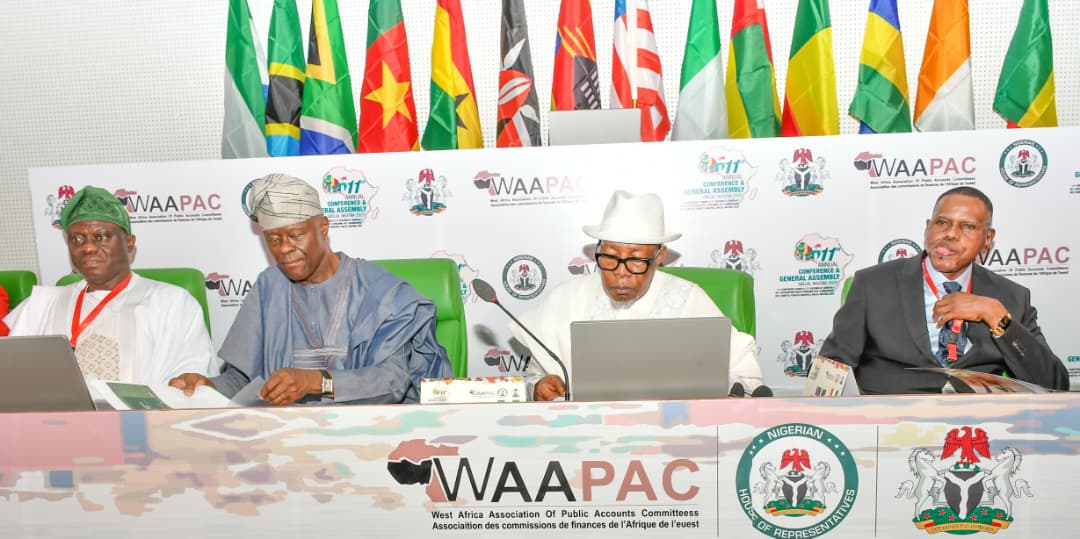
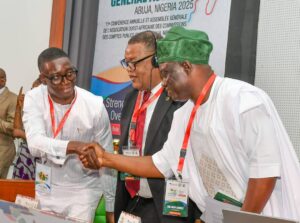
Speaking at the 11th Annual Conference and General Assembly of the West Africa Association of Public Accounts Committees (WAAPAC) in Abuja, Edun said Nigeria is charting a different course through bold economic reforms that are beginning to show results.
He explained that these reforms, introduced under President Bola Ahmed Tinubu, are making Nigeria’s debt more sustainable, restoring investor confidence, and helping to reverse negative economic trends.
Edun stressed that the government’s focus is on putting Nigeria back on a sustainable growth path, while also encouraging stronger parliamentary oversight of public debt across the region.
“Nigeria is turning the corner. The reforms are delivering measurable impact in terms of investor confidence, reduced spending on fuel imports, greater energy self-sufficiency, and value addition in our economy.
“Nigeria’s debt service-to-revenue ratio has dropped to about 60 percent in 2024, while the debt-to-GDP ratio stands at 38.8 percent, which he described as a comfortable level compared to global benchmarks.
“Revenues grew by 34.7 percent in the first half of 2025 compared with the same period last year, expanding fiscal space for investment in priority sectors”, he said.
Edun credited the gains to tough but necessary policy choices such as the removal of fuel subsidies, liberalization of the exchange rate, and the roll-out of a comprehensive tax reform programme aimed at boosting efficiency, simplifying compliance, and raising Nigeria’s tax-to-GDP ratio over time.
He further explained that these reforms are essential for creating a predictable macroeconomic environment that encourages private investment, which accounts for about 90 percent of economic activity.
“Government’s role is to act as a catalyst, not to crowd out the private sector. With the right fiscal discipline, we can unlock opportunities and ensure inclusive growth that lifts millions out of poverty,” he said.
On Nigeria’s fiscal direction, the minister outlined priorities including debt transparency, growth-enhancing borrowing, domestic revenue mobilisation, and prudent budgeting within the limits set by the Fiscal Responsibility Act.
He said the government is committed to project-linked borrowing that yields direct returns and avoids reliance on money-printing or unsustainable financing.
Edun also drew attention to global headwinds, such as shrinking development aid, reduced world trade, and rising international interest rates, that have made fiscal management more difficult for developing economies.
He said these challenges underscore the need for African countries to be more self-reliant by embracing reforms, technology, and digitization to strengthen revenue generation.
Crucially, the minister emphasised that parliamentary oversight is central to maintaining fiscal discipline.
He urged lawmakers to hold governments accountable for borrowing and spending decisions, insisting that transparency and accountability must underpin every fiscal framework.
“A sound fiscal framework is not just the responsibility of the executive; it demands partnership, leadership, and rigorous oversight from parliamentarians such as you, especially public accounts and finance committees,” Edun said.
He described Nigeria’s fiscal trajectory as a turning point, with reforms providing the foundation for stability, competitiveness, and inclusive growth.
However, he stressed that prudent borrowing, transparent reporting, and effective oversight must be sustained to secure prosperity for future generations.

In his remarks, the President of the Nigerian Senate, Senator Godswill Akpabio charged West African countries to strengthen constitutional backing for public accounts and finance committees in order to guarantee transparency, accountability, and sustainability in public debt management.
Represented by Senator Osita Izunaso, he said unchecked debt can mortgage the future of citizens and undermine democracy across the sub-region.
He described parliamentary oversight as indispensable to fiscal stability, noting that when debt is well managed, it serves as a strategic instrument for financing infrastructure, growth, and sustainable development.
“Public debt, when properly managed, is a strategic instrument for financing growth, infrastructure, and sustainable development. However, when left unchecked or shrouded in opacity, it becomes a burden that mortgages the future of our citizens. This is why parliamentary oversight is indispensable,” he said.
Akpabio therefore urged all WAAPAC member nations to provide legislative or constitutional authority for such committees, as he said this would guarantee their independence and effectiveness in protecting public resources.
“The Nigerian experience has shown that when parliamentary committees are empowered by law, transparency is deepened, fiscal responsibility is strengthened, and democracy is enriched,” he said.
He stressed that Africa’s progress depends on building strong institutions rather than relying on strong individuals, adding that collective responsibility must take precedence over personal ambition.
The Senate President assured the gathering that Nigeria remains committed to working with regional and international partners to strengthen parliamentary institutions, promote fiscal responsibility, and safeguard nations from the risks of unsustainable debt.
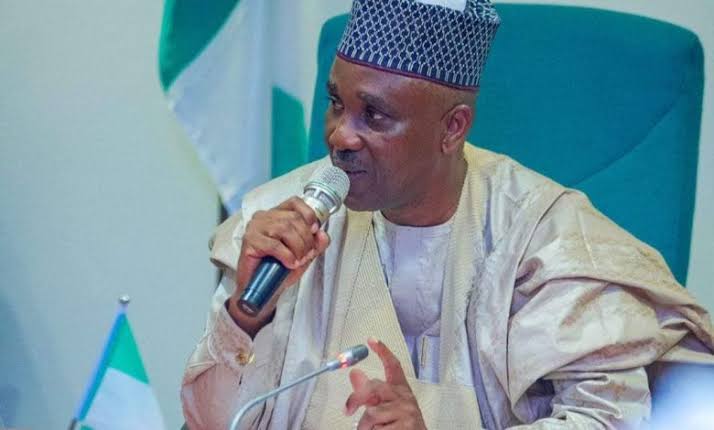
Speaker of the Nigerian House of Representatives, Rt. Hon. Abbas Tajudeen, warned that Nigeria’s debt profile has reached a critical level, urging parliaments across West Africa to strengthen oversight of public borrowing to safeguard the future of their citizens.
Represented by the House Leader, Rep. Julius Ihonvbhere, Speaker Abbas disclosed that Nigeria’s total public debt stood at ₦149.39 trillion (about US$97 billion) in the first quarter of 2025, up from ₦121.7 trillion the previous year.
He noted that the country’s debt-to-GDP ratio has climbed to 52 percent, far above the statutory ceiling of 40 percent set by law.
“This breach of our debt limit signals the strain on fiscal sustainability. It highlights the urgent need for stronger oversight, transparent borrowing practices, and a collective resolve to ensure that tangible economic and social returns match every naira borrowed,” he said.
The Speaker warned that across Africa, debt has become a structural crisis, with several countries spending more on servicing loans than on healthcare and other essential services.
He highlighted the structure of Africa’s debt, noting that 35 percent is owed to Western private lenders, 39 percent to multilateral institutions like the IMF and World Bank, 13 percent to bilateral creditors, and 12 percent to China.
Abbas said Nigeria is committed to championing the establishment of a West African Parliamentary Debt Oversight Framework under WAAPAC to harmonize debt reporting, create regional standards for transparency, and empower legislatures with timely data for effective scrutiny.
He said Nigeria would support a capacity-building programme for Public Accounts and Finance Committees across the region, equipping them with modern tools for debt sustainability analysis and fiscal risk assessment.
“Our oversight must also be people-driven. Major borrowing proposals should be subject to public hearings, and simplified debt reports must be made available to the public. Citizens have the right to know, and we have the duty to inform,” he stated.
The Speaker stressed that borrowing should be targeted at infrastructure, health, education, and job-creating industries, warning that “reckless debt that fuels consumption or corruption must be exposed and rejected.”

Chairman of the House of Representatives Committee on Public Accounts, Rep. Bamidele Salam, disclosed that the committee recovered over ₦200 billion in lost revenues for the federal government within the last one year.
Salam said the recoveries were part of a series of reforms to strengthen fiscal accountability in Nigeria.
He described the gathering, which Nigeria is hosting for the first time since WAAPAC’s creation in 2009, as timely, given the rising debt burden across Africa.
He said: “While it is widely accepted that public debt remains a vital instrument for financing development, especially in emerging economies, it must remain sustainable, transparent and justifiable. Effective parliamentary oversight is indispensable to ensuring that debt accumulation does not become a pathway to fiscal crisis or an intergenerational problem”.
Highlighting milestones recorded by the Public Accounts Committee, the lawmaker said the committee had, for the first time since Nigeria’s return to democracy in 1999, completed reports that were considered and adopted by the House.
He also noted that the House had passed the long-awaited Audit Bill, which is now before the Senate.
“We look forward very earnestly to its passage so that this important bill can be transmitted to the President for assent and remove Nigeria from the list of countries without a legal framework for its Supreme Audit Institution,” he added.
Salam also disclosed that the committee had embarked on digitalising its hearings and internal operations to enhance transparency and efficiency.
It had also launched PAC Magazine to provide the public, development partners, and stakeholders with timely reports of its findings and recommendations.
He expressed optimism that the conference would strengthen regional cooperation, promote accountability, and advance the cause of development-driven governance across West Africa.
The WAAPAC President, Hon. MP Issouf Traure, urged African countries to work together for the good of the continent.
He commended President Bola Tinubu for his efforts at reviving the Nigerian economy .