…says Nigeria has one of the best technologies in conducting elections in Africa


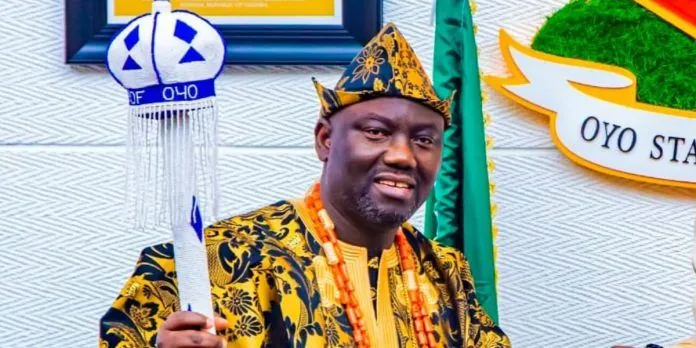
Dr Gabriel Nwambu is the Director General of Centre for Credible Leadership and Citizens Awareness CCLCA, a veteran in civil society and electoral matters with over two decades experience, in this interview spoke extensively on electoral matters x-raying ways and means on how to make it better, excerpts.
The tenure, the time of any INEC chairman is always marred with highs and lows, as one would imagine. There was Professor Jega before Professor Mahmoud Yakubu and when Professor Jega was leaving, much of it was about what he did in terms of technology. And now Professor Mahmoud Yakubu is done. Some would wonder if there’s an achievement in what he has done in the last 10 years. Do you think so? 
Professor Mahmoud Yakubu is a Professor of History and assumed the position of INEC following his appointment by the late former President, Mohammadu Buhari in 2015.
Now, he met some level of introduction to technology by Atahiru Jega. Atahiru Jega brought what we call the card reader. The card reader was something like a preliminary introduction to technology.
So, with the card reader and the smart card reader also, Professor Mahmoud now came in and brought in very serious technological know-how into our electoral system.
He introduced what we call the BVAS, the Bimodal Voter Accreditation System. It is aimed at authenticating electorates that is voters, in a manner that someone will not come with another person’s PVC and is allowed to vote. So, either you are captured with your biometrics or with your facial look.
So, that is a very big advancement because he has cut off relatively the issues of over-voting that have been seen, that is associated with the card readers that was introduced by Professor Atahiru Jega.
So, you know, apart from the BVAS, the presiding officers in the polling unit level, are able to send results, transmit results using the BVAS also because it is Professor Mahmoud that also introduced the IREV, where Nigerians are able to view results directly from the polling unit level.
Now, why I do agree with you on, theoretically, these are all the things he introduced, but then he did not optimise their performance, considering some of the things he talked about, how they should function. Many of the technology he brought in did not function to the optimised level in which Nigerians’ expectations were set.
Correct.
Why?
Technology on its own does not bring the requisite changes. It rests squarely on the humans. It rests squarely on those that are manning it. Technology does not function on its own, it’s human beings that operate it.
Now, the state of mind, the requisite discipline, the determination to make a difference rests with the citizens, not just the technology. During the 2023 presidential election, for instance, it was difficult to even accredit anybody. It was also difficult to send results to the IREV. What happened?
Eventually INEC said it was a technical glitch. But moving forward, we need, if we want to make, if we are sincere about a true Nigeria, if we want to resuscitate this ailing country, we must go back to know what that technical glitch was.
Was it deliberate on the part of the operators of the central server? Is it that somebody switched off the central server? Or was it truly a mechanical com technical error that was not manmade? So, the Nigerians need to know. There should be an investigation.
If there are human beings that deliberately perpetrated that act, they should be culpable. I mean, Nigerians should see them being arraigned, being tried, and the law should take its course.
But if it is as a result of technical error, Nigerians should also see the process and see the transparency associated with it. That is the only way to heal the dwindling voter apathy we have in our electoral system.
I like the fact that you’re moving forward as regards to what we should be resolving. But then, there’s still the issue of responsibility as regards to, we all know technical glitches can happen, but obviously, somebody maintains or manages that process of how technology in itself works.
Do you think the former INEC chairman, and this is us laying the framework towards what the expectations for the new chairman would be like, but do you think he took enough responsibilities for those moments where results were not transmitted, or those moments where people talked about the fact that, oh, this technology is not working out as much as it should? Do you think he took enough responsibility for the moments he had to postpone elections when there were voting material issues, glitches that happened? Do you think he took enough responsibility when there was supposedly compromise with election material stored in CBN?
No, you see, I will centre on what is known. I do not dwell much on assumptions. Professor Mahmoud did mention that there was a technical glitch. They are working on it to find out what happened.
And you can see that when the second phase of the election came in 2023, that is the governorship and state assembly elections, it performed optimally. There was no technical glitch and the election was very smooth. Okay.
Now, you don’t leave Nigerians in a bizarre. The electorates, the power, it is democracy we are talking about where power resides with the citizens. Now, if you keep a lacuna, if you keep a gap, you now give the citizens liberty to think, to assume what must have been the probable cause of that so-called technical glitch. Okay?
Now, Professor Mahmoud do have consultative forum with civil societies like us, quarterly consultative forums, where we brainstorm, we proffer solutions to a very discerning and very serious critical issues that affect our electoral system.
Now, in all these quarterly consultative forums, we do our findings, we make recommendations and INEC implements most of them. Now, we cannot hold Professor Mahmoud responsible, rarely, for if there is a technical glitch, because…
What about the entire election system? Do you think he could be held responsible for how things went?
ADo you know? Nigeria has one of the best technologies, even better than that of South Africa when it comes to election. Our technical system we use, the software and even the hardware we use in INEC is better than that of South Africa. It’s better than a lot of African countries.
A lot of African countries come to Nigeria to take manuscript, to take lectures on how to improve on the electoral system. So, our system, our technology is top-notch, but where we have problem is the citizens, those who man this technology. Do they want to make things right?
INEC officials and ad hoc staff?
Yes. We’ve seen professors that have gone to jail because of compromise during elections. They’re serving jail terms right now. We’ve seen ad hoc staff in terms of youth corpers that compromise. We’ve also seen EOs, Electoral Officers, as it were, that is the head of INEC in local government area serving jail terms.
You can see the determination to ensure that people are brought to book. You understand? The determination is there but what is really happening, will eventually evolve and come to that. Because for me, I also feel that the welfare package of the INEC staff is low.
How come? Why did you say so?
Reality is that it is low. It is being characterised, inflation has eroded.
Hold on for a moment. I want to probe what you mean by why it is low. It’s a federal institution with a framework for how each of the staff would get paid, whether by level 10, 7, 14, whatever ranking you are. It’s a federal institution that gets its allocation from the federal government. So, even though there’s inflation, I guess it affects everybody. So, when you do say their payment is low, does that considerably leave them room to think of how to augment their payment?
No, I have not said that.
No, I’m asking it as a question. I know you didn’t say that.
A: Yeah, I didn’t say that. But what I’m saying really is that if, for instance, you take an agency of government, the former FIRS, it has been renamed now. FIRS the kind of salary structure they have is high compared to places like INEC. And in the last 10 years, this kind of training and retraining, you go abroad for training, we did not see it in INEC.
Why is that so? Under his 10 year tenure why didn’t he have his people trained?
A: But he has his own very serious achievement. His tenure is characterised by promoting women to directorship. A lot of women became directors more than ever since the history of INEC. He brought this inclusivity, that ladies that are qualified should also be directors in INEC.
You did say that CSOs did meet with INEC quarterly. And I was reading some of the reviews and exit statements around some of the CSO leaders and characters that there are. And I just want to paraphrase some of the readings. I was reading something Samson Itodo of YAGA Africa said. He talked about how good he is of the man, that’s talking about the INEC chairman. But however, he left weak institution. What’s your evaluation? What would be your own paraphrase around him? Do you think he made INEC weak than considerably he met it 10 years ago?
You see, the beauty of democracy is that it allows you to ventilate your opinion, provided you do not encroach on the fundamental rights of other citizens. Samson Itodo has opined his position.
What’s yours?
But for me, I differ. It is true that we have weak institutions in Nigeria. But Professor Mahmoud Yakubu is not the cause of the weak institution we have.
The weakness of the institutions has been in existence before Professor Mahmoud became the chairman of INEC. But he has tried to ensure that he steps it up. And that is why he tried to leverage on the latest technology, believing that that technology would insulate compromise in the electoral system.
It’s interesting you do say that. I was reading what Aregbe Sola, the former Governor of Osun State also talked about and he’s a politician, so he’s not in the CSO space, not to evaluate all of that. But some politicians have alluded that under his leadership, favouritism seems to sometimes play in for some politicians than others. And Aregbe Sola alluded to the fact that, oh, he has benefited from an ill-conducted election as well, which has placed him in a position of power over the years as well.
And it kind of makes me want to ask the question around political power and the power that comes with sitting as the INEC chairman over 93 million registered voters. That’s a lot of power. Do you think that power should be sized down or should be amplified beyond what it is?
You see, if we have, as it is now, about 93 million registered voters, it is the same Professor Mahmoud Yakubu, that introduced what is called the CVR. The CVR is the Continuous Voter’s Registration. We do it continuously.
Before now, it used to be just once in about four years. But Professor Yakubu introduced and made it to be periodically done in a manner that every year, those who turn 18 and above can be availed of the opportunity to make registration and have the franchise to be able to vote.
So you can see the determination in Professor Mahmoud Yakubu. I’m not standing in for him, but I think Professor Mahmoud Yakubu put in his best. He tried so much, but just as a single man he is, he cannot do it all.
Talking about doing it possibly all, or more than he has done, there’s going to be a new INEC chairman. You have an acting chairman currently, a first lady acting as the chairman of INEC in much of the history I know. And it’s amazing because she’s the longest standing commissioner as well, oldest even on the board, if I have it correctly as well. She’s a brilliant lawyer from much of interaction that I’ve had with her.
It brings me again to the question of the new INEC chairman when we are setting an agenda for him. Some even say before you set an agenda for the new INEC chairman, should the power of the INEC chairman, to nominate an INEC chairman in the first place, should it continue to come from the President? Or CSOs, political parties, National Assembly, should have a say and it should not be a sitting president that will pick who would possibly be the INEC chairman barely 24 months to the next election.
You see, a lot of people have opined. I saw a senator making a presentation of people that could nominate, how Transparency International could make some nominations and all that. I understand them squarely.
What they are trying to do is for the beneficiaries of an electoral system, to be insulated from the, in other words, for the appointees, that is the INEC chairman or the national commissioners to be insulated from undue influence of the political or the executive class or the politicians, as it were. So, that is what they are going at. That’s what they want.
But, let me take you to 2015. Professor Atahiru Jega was appointed by former President Goodluck Jonathan. And then, in 2015, he conducted an election and he was bold enough to declare an election that was against the man who appointed him. So, what do we say?
That’s Jega. This is Yakubu and now we are talking about an INEC chairman…
It is the individual now. The case I’m making is that…
Remember you alluded earlier that it’s not just the individual that makes the institutions…
Of course, individuals. He has done his bit. You see, Nigerians do not recognise our heroes until when they are gone. A new INEC chairman is coming in and you start seeing some of the achievements. That is when you start noticing a lot of achievements that have been recorded by Professor Yakubu. I’m telling you.
Because the new INEC chairman, once he’s nominated and subject to the scrutiny of the Nigerian Senate that you start seeing some of the achievements of Professor Mahmoud Yakubu.
Sometimes I feel for him, really because, like in the 2023 General Elections, the Presidential Election, really, results have to come in from the states. He is the chief returning officer for the election, for the presidential election. And it is his duty to collate these results and make announcements.
Now, people were saying that the result that came from some places were inflated and all that and the results have come. You have from EC8A, B, C, D, until it gets to the federal, that is it. Now, his duty is to collate the results once it has come and announce.
So, whoever must have, let’s assume without conceding, that there was a malpractice or tampering of the results somewhere, it was not perpetrated by the chief returning officer. And the chief returning officer is not even aware. And it will be a breach if he does not announce a result that has passed through all the stages and got to the federal for him to make pronouncements.
The new INEC chairman, and I’m trying not to refer to the barrister who is acting chairman now, because we know there’s a lot of political hand involvement, political mal-handling or handling, that may come into confirmation. And by the way, it’s rare to even see somebody who has gone through the ranks of the institution eventually endorsed to take over the position. I’m not sure it has been on record.
No, no, we’ve not seen. But we have seen those who served as directors coming in as national commissioners. We have seen them coming in as even resident electoral commissioners. So we cannot rule out, we will not say no, we’ve not seen.
So, let’s leave it at 50-50 for her chances at that. But just to address in theory, who would be the INEC chairman, who that would possibly be, I’m thinking about the agenda for such a person. There were so many things that Nigerians were not pleased when 2023 elections did go by, right, from issue of transmission or no transmission of results, to interpretation of law, to technology, to, I mean, there was so much room for people to, that felt disheartened with regards to that. What do you think should be the biggest focus of the next INEC chairman?
First of all, the Constitution of the Federal Republic of Nigeria 1999 as amended has given a condition for which somebody can be appointed as an INEC chairman or a national commissioner. You should be 50 and above and you should be a person of high integrity and no political affiliation to any party whatsoever. But for me, I feel that that phrase should be amended.
Which of them?
A lot of them.
Why?
Especially partisanship. There are persons who are, once you get news that you are about to be appointed as a national commissioner, quickly run to your ward in your village and resign from the political party you belong. You just write a letter and all that. Meanwhile, you’ve been functioning. You have been a card-carrying member until probably 24 hours to your appointment.
Are you suggesting that a card-carrying politician should stand a chance to be INEC chairman?
A: We are not saying you will stand a chance. There are a lot of allegations currently that there are a lot of resident electoral commissioners. There are a lot of national commissioners that have been known to be card-carrying members of political parties that are there now. So for the new INEC chairman, INEC in fact has very, very serious issues that bother us on trust deficit.
To heal the wound, the right things should be done. Those that have complications, Nigerians have written, evidences were clear that there were members of a political party, should be withdrawn.
Let’s go back to your line of thinking and I understand, I mean, the allegations like you said for the commissioners who possibly are politically exposed. But let’s go back to your line of thinking on why a card-carrying member of a political party should be an INEC chairman. What benefit would that serve?
Why he should be?
Yeah, I mean, you mentioned the fact that if somebody was in a ward 24 hours before and then he hears, all of that.
A: That’s what is happening currently. So we feel that the law should encompass that anybody that will become an INEC chairman or a resident electoral commissioner or a national commissioner must not have been a card-carrying member of any political party, at least in the last 10 years. That would help us know that that person has not been partisan and that will help do a better job.
During former late President Buhari’s tenure, we saw Loretta Onoche who was a card-carrying member, has been seen in several pictures with the pictures of her sewn babaringa in campaigns with the former President, late President and all that, and she was nominated as a national commissioner.
We shouted until our voices cracked and all that before she was stepped down. So if not for the fact that her own was so obvious and people saw her during campaigns, people saw her with the uniform of a particular political party for which the then President belonged, it would have been difficult to prove.
And that is why it is better for Nigeria if we are interested in healing the trust deficit. We should start doing the right thing. There are persons that are there now, who have been accused of being card-carrying members of political parties and there are evidences to also prove.
But it’s not public knowledge in some of them.
No it is. If you read Google and all that, there are so many…
Unproven allegations.
Proved, yes.
And they still retain their positions.
The people are there and if you want to make headway, there are still people that will do the right job. We are interested in making sure Nigeria bounces back as a country that would have the requisite respect, at least in the League of Nations. So we should start by doing the right thing.
Do you think the right thing would be to get the President, right, sit with the National Assembly top leaders alongside with CSOs and whosoever needs to be a stakeholder to deliberate on who should be the next INEC chair?
Well you see, those who are beneficiaries of the function of an INEC chairman, those who participate, it’s like the INEC chairman is the referee. Those who are the players there, I don’t think they should discuss this matter.
I think it’s a matter that has to be suggested by, some of us opine, for instance, that the NJC, the National Judicial Council, should be in charge of the appointment of an INEC chairman so that they will be insulated from the direct interference of the executive or the legislative arm of government.
But even that is not a guarantee that they will still not be, I mean, because people in NJC and some of them also have their own…
Yes, we know that the NJC has its own problem with judges and all that, we know that. But at least in the eyes of Nigerians, in the eyes of the world, it is seen that there is no direct influence or contact with those who are the players, okay?
Now, I also tell you something. One of the issues I have advocated and I have written to the National Assembly about is the issue of funding for INEC. INEC should be placed in a manner that they receive their money directly FAAC.
A certain percentage of the federal allocation should be channeled to INEC periodically. So that the INEC Chairman does not go cap in-hands to the President and Commander-in-Chief to ask for fund for by-elections, to ask for supplementary budget for CVRs and all that.
That will also ensure that those who are saddled with the constitutional responsibility of pioneering the Commission do the right thing. But if you make it in a manner that each time the Commission needs fund, they must go to ask for the fund. You are also creating a master-servant relationship.
And that means INEC fund should come from FAAC is what you’ve clearly said.
Yes.
There’s also the issue around the electoral law. I mean, as much as from 2022, there are talks about should it be reviewed once again to touch on some vital parts, including the idea around the fact that, oh, well, can it be a situation where by-elections are systemised? Yes, there are other laws that may need to be made to align with regards to tenure of elected officers. But by-elections are quite expensive in Nigeria. And so there are questions about should we find a way to systemise by-elections to all being one system instead of having Osun here, I mean, any other states, Anambra there and all over the place.
Excellent. Not just by-elections being conducted probably simultaneously. Some of us have actually opined that we are advocates of every election, including that of the local government, being conducted in one day. It is cheaper, it’s more cost-effective. The issue of, you see what happens…
But it’s the logistics effective?
It is.
How?
Nigeria will now have to spend just a little more, instead of aggregating funds to… when you look at the entire fund, the deployment…
But how does election material get to places that are riverine areas?
Very well. They will get it, the same manner they go. It’s just that you increase, if the number of boxes, before now it was two or three, maybe this time you make it like five or six, as the case may be.
So in terms of logistics, I’m talking about a country that is hemorrhaging, a country that is on its knees, cap in-hands, looking for where to borrow money every day, and the way to go to reduce excessive spending is to ensure that our elections are conducted, every election, really, conducted in one day.
What do you think of five-year or six-year term precedent?
Excellent, too.
Those are revolutionary ideas.
These are ideas that are very germane because this issue of re-election, you see, by the time a sitting president, wins an election, he has about just one year to do one or two work. By the second tenure, people are already saying, re-elect this person, billboard everywhere, re-elect this person, even when the man is silent. You see people who want to be noticed from everywhere. Is that the way to go as a nation?
There’s a practice that’s quite common with political parties, and that is rotation of who becomes their presidential candidate, governorship candidate, right? Before Professor Mahmoud Yakubu came on board, there was Professor Atahiru Jega, who is from the Northern part of the country. And then there was Professor Mahmoud Yakubu, who is also from the Northern part of the country. And these are clever talks, right, about the fact that, are there no other regional extractions where the leadership of INEC could come from there, that would also provide inclusivity to those regions, would also provide democratic knowledge, diverse from Northern region. What do you think of that?
A: The constitution has arrogated the rights of the decision to determine who becomes the INEC chairman to the President and Commander-in-Chief.
Is that too much?
I think it is too much.
Why?
Let me tell you, it is not every president that reasons alike. Now, when former President Goodluck Jonathan was president, he felt that he cannot be president and an INEC chairman will still be from the South. Morris Iwu was removed and a Northerner was brought. Now, a Northerner conducted that election in 2015 and Goodluck Jonathan was ousted.
Now, it was incumbent on the late President Buhari to have adjusted again, to have nominated some other person from the South. But instead, he made Professor Mahmoud to go for a second tenure. You see the issue.
So, the individual here is the issue. The individual who becomes or who is the President and Commander-in-Chief, he determines how to… But the perception, the way you steer the affairs of the country, those are things that make the populace love you.
And at the end of the day, when you must have left the country or the earth, what would you be remembered for? Okay? So, these are issues some politicians don’t even think about. That one day they will leave this earth and they have to be remembered for something.
Would they be remembered for being bigots? Would they be remembered for being tribalistic? Would they be remembered for siding one section of the country entirely? So, these are critical issues.
Because all of us, whether you’re a Christian or a Muslim, we also believe, the two major religions believe that there is life thereafter. So, these are critical issues we must also reflect about.
We’ve not seen anybody from CSO space nominated as a national commissioner or just given the opportunity to bring in that diverse voice. Do you think, as part of that process, that sees a new INEC leadership? Because considerably now, the INEC chairman has gone, it’s going to be a matter of just a few more months before you start to see a level of retirement, level of, oh, this person’s tenure is done as well, and there’ll be room to bring in diverse voices into the leadership in INEC under the chairman. Do you think it’s time that we bring in people from the CSO space to possibly take part in that conversation?
Of course. The people from the fourth realm have to be brought in. They will give you the requisite advice. They will speak up. We speak reality, okay? They will tell you how it ought to be in a sane society. You understand? I think that’s what makes the difference.
You see, one fundamental mistake Nigerians do make is that they feel that anybody that is a critic of an administration hates it, doesn’t like him, doesn’t want the President to succeed, no, no, no, no.
The idea is for there to be checks and balances. In fact, for those who crafted the Constitution of the Federal Republic of Nigeria in 1999 as amended, they brought in some checks and balances.
It’s just that sometimes these checks and balances are often abused. They are not done, they are not replicated in the manner for which the authors of that constitution actually wanted it to be. So there should be checks and balances.
And those people that are critiquing the government and proffering solutions should not be shut down, should not be…after all, our President too was a critic. He was a very serious critic and a real democratic force to reckon with.