Connect with us

News

US Senate pushes new bill targeting Nigerian governors, judges, security chiefs

Published

on

ADVERTISEMENT
Zoom Ad
ADVERTISEMENT
Zoom Ad

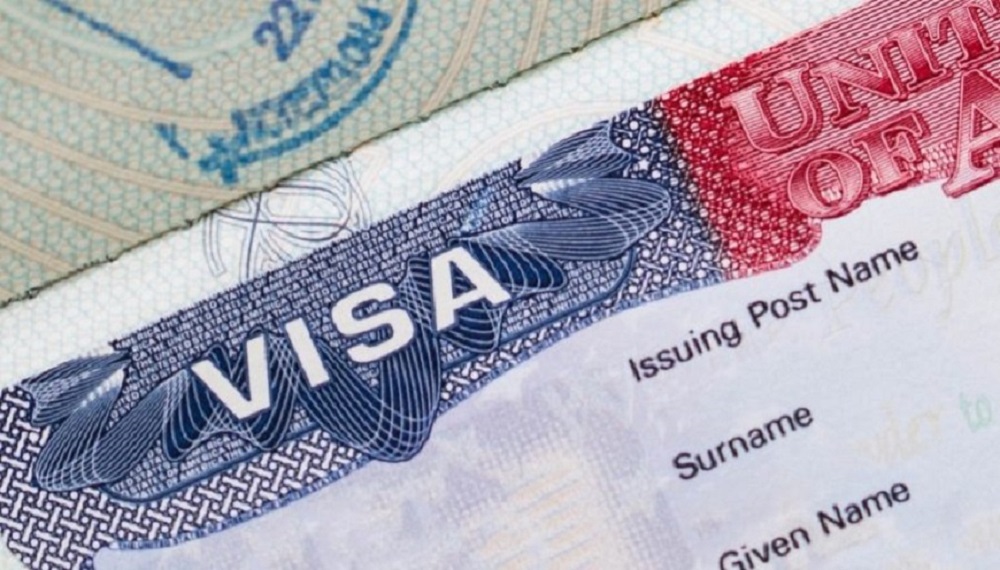
A new bill, which is being pushed through the United States Congress has placed Nigeria under intense international scrutiny, with far-reaching sanctions proposed for Nigerian political officeholders, judges, and even security officials accused of enabling religious persecution.


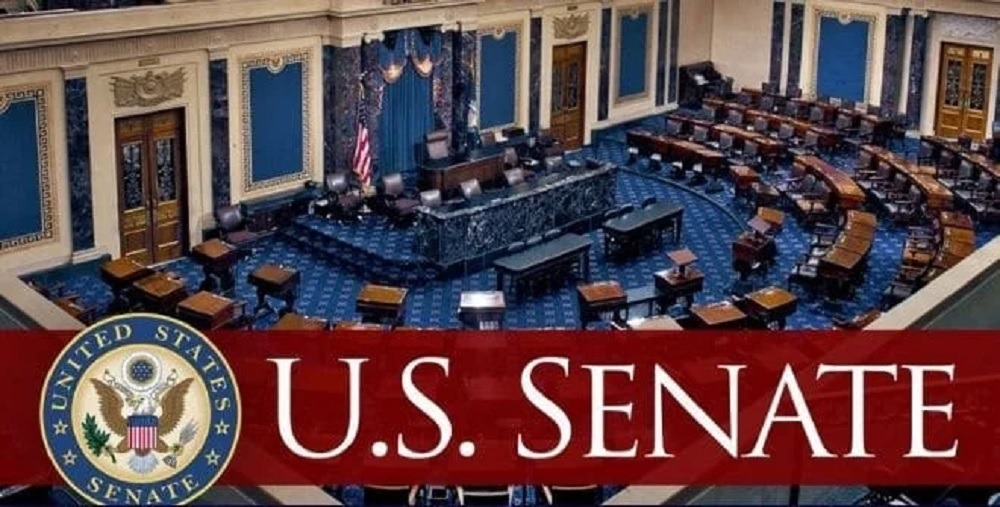
Reports said that the legislation, sponsored by Republican Senator Ted Cruz, was entitled the “Nigeria Religious Freedom Accountability Act of 2025” and had passed its second reading in the US Senate.

It has now been formally referred to the Senate Committee on Foreign Relations, marking a major step in what could become one of America’s toughest policy positions towards Nigeria in decades.

The bill is a follow-up to House Resolution 594, already backed by 18 Republican members of the US House Committee on Foreign Affairs.

Advertisement

The draft legislation relies heavily on reports from major international bodies and watchdogs, including the Open Doors World Watch List 2025.

The report claims: More than 380 million Christians face severe persecution globally and Nigeria accounts for 82 per cent of the 4,998 Christians killed worldwide in 2023

The bill also quotes investigations by Vatican News and Genocide Watch, stating that: Between 2009 and 2023, at least 52,000 Christians were killed in Nigeria.

More than 34,000 moderate Muslims died during the same period.

Advertisement

About five million Nigerians were displaced due to faith-based attacks.

These alarming numbers formed the backbone of Senator Cruz’s justification for urgent legislative action.

He said: “Religious persecution and violence against Christians and other religious minorities in Nigeria is endemic, driven in significant part by Islamist jihadism and institutionalised sharia law in large parts of the country.”

Senator Cruz said he expected the US Congress to move the bill “expeditiously.”

Advertisement

●》Bill Seeks to Declare Nigeria a ‘Country of Particular Concern’

One of the most consequential provisions in the bill is the directive to the US Secretary of State to officially designate Nigeria as a ‘Country of Particular Concern’ (CPC) under America’s international religious freedom laws.

If approved, this designation would immediately trigger mandatory sanctions related to:

●》US military cooperation
Equipment and arms sales
●》US economic assistance
●》Training and intelligence collaboration

Advertisement

Nigeria would also be placed under annual monitoring, with Washington required to publish a public list naming:

●》Officials, judges, security agents, and non-state actors linked to religious killings
●》Individuals who enforce or support blasphemy laws
●》Actors involved in the harassment or imprisonment of minorities

The first list must be published within 90 days, and yearly thereafter.

● Bill Targets 12 Northern States Over Blasphemy Laws

Advertisement

The draft law explicitly mentions 12 states operating Islamic legal systems, claiming that their blasphemy laws violate global religious freedom standards.

The affected states are: Bauchi, Borno, Gombe, Jigawa, Kaduna, Kano, Katsina, Kebbi, Niger, Sokoto, Zamfara and Yobe State.

According to the bill, Nigeria must:

●》Amend or repeal such laws
●》Prosecute individuals involved in religious killings
Dismantle extremist networks
●》Otherwise, the country will remain on the CPC blacklist indefinitely.

Advertisement

■ Judges, Governors, Prison Officials May Face Sanctions

Reports said that the proposed penalties were unprecedented. If passed, the law would allow the US government to impose visa bans, asset freezes, and criminal restrictions on:

●》Governors of states where religious killings occur
●》Judges and magistrates involved in blasphemy trials
●》Police and prison officials who enforce controversial religious laws
●》State and non-state actors complicit in violence or neglect

The bill specifically mentions sanctions against anyone who: “Prosecutes, convicts, imprisons, or otherwise deprives individuals of their liberty on charges of blasphemy.”

Advertisement

This includes cases already publicly known, such as the death sentences, mob attacks, and imprisonments linked to blasphemy allegations in parts of the North.

Before the bill advanced, a US House Subcommittee on Africa held hearings where Nigerian religious leaders, activists, and international observers described disturbing scenes from:

●》Plateau
●》Benue
●》Southern Kaduna

Witnesses told lawmakers that communities live under “nightly siege,” with farms destroyed, homes burnt, and villagers killed or kidnapped by armed groups labelled as “bandits” locally.

Advertisement

However, US law categorises such actions as terrorism when they target civilians for ideological or political purposes.

Meanwhile, China, one of Nigeria’s strongest diplomatic partners, has openly criticised the bill.

Chinese Foreign Ministry spokesperson, Mao Ning, said: “As Nigeria’s strategic partner, China firmly opposes any country using religion or human rights as an excuse to threaten other nations with force.”

The statement signals geopolitical tension, as both the US and China currently compete for influence across Africa.

Advertisement

■ Potential Impact If the Bill Passes

If enacted, experts say the bill could:

●¡Restrict US military sales and financing to Nigeria
●》Limit joint training and intelligence sharing
●》Impose visa bans on top Nigerian politicians
●》Affect Nigeria’s access to US defence and development programmes
●》Strain diplomatic relations with Washington

Nigeria would only be removed from the CPC list after the US verifies:

Advertisement

●》A significant reduction in anti-Christian killings
●》Dismantling of extremist networks
●》Revisions to blasphemy laws
●》Transparent prosecution of offenders

■ Path to Becoming Law

For the bill to become law, it must go through:

●》Review and amendment by the Senate Foreign Relations Committee
●》Approval by the full Senate
Passage of a similar bill in the House of Representatives
Reconciliation into a single document

Advertisement

■ Forwarding to the US President

Presidential signature or veto

A possible two-thirds override of any veto

Given that Republicans hold 52 seats in the Senate and control the House, it is believed that the bill has a strong chance of passing.

Advertisement

[With report by Naija News]

Continue Reading
Advertisement

News

Court orders unconditional release of Okuama leaders

Published

on

By

ADVERTISEMENT
Zoom Ad
ADVERTISEMENT
Zoom Ad

The Federal High Court sitting in Warri, Delta State, on Wednesday ordered the unconditional release of Prof. Arthur Ekpekpo and other detained leaders of Okuama community in Ughelli South Local Government Area.

Delivering judgment in a fundamental rights enforcement application, Justice Hyeladzira Nganjiwa granted the order while ruling on a motion filed on May 4, 2026.

The case, Suit No. FHC/WR/CS/42/2024: Prof. Arthur Ekpekpo & Ors v. Federal Government of Nigeria & Ors, also has July 13, 2026, fixed for continuation of hearing on the substantive matter.

The court had earlier ordered that the detained persons be produced before it, a directive which was reportedly not complied with by the military authorities.

Advertisement

Counsel to the applicants, Dr. Jonathan Ekperusi, appeared alongside Andrew Ubido, Esq., while Magdalene Irorere held brief for the 3rd and 5th respondents during the proceedings.

Following the ruling, members of the Okuama community expressed relief and joy over the court’s decision.

Victor Akemor, speaking on behalf of some community members, described the ruling as a welcome development.

“This is great news. Finally, we have reason to celebrate. The court is indeed the hope of the common man,” he said.

Advertisement

He also called on the Delta State Government to assist in facilitating the implementation of the court order and commended community leaders and legal representatives for their efforts.

The detained individuals, including Prof. Arthur Ekpekpo, President General of Ewu Kingdom; Chief Belvis Adogbo; Dennis Malaka; and Mabel Owhemu, have been in custody for nearly two years.

One of the detainees, Pa James Oghoroko, reportedly died while in detention.

The Okuama leaders were arrested by military personnel between August 18 and 19, 2024, following the killing of 17 soldiers near the community.

Advertisement
Continue Reading

News

FG, Ethiopia Finalise Deal To Transfer Over 100 Nigerian Prisoners

Published

on

By

ADVERTISEMENT
Zoom Ad
ADVERTISEMENT
Zoom Ad

More than 100 Nigerians serving jail terms in Ethiopia may soon be transferred to Nigeria as both countries conclude arrangements for a prisoner transfer agreement.

Minister of Foreign Affairs, Bianca Odumegwu-Ojukwu, arrived in Addis Ababa for the signing of the pact alongside the Attorney-General of the Federation and Minister of Justice, Lateef Fagbemi.

The Nigerian delegation was received by Ethiopia’s Minister of State for Foreign Affairs and the country’s Chief of Protocol.

According to Odumegwu-Ojukwu, the agreement is scheduled to be signed on Wednesday.

Advertisement

She disclosed that four Nigerian inmates died during the lengthy process of negotiations, judicial reviews and ratification of the agreement.

“We cannot afford to lose any more precious lives. We are determined to bring home the living,” she stated in a post on her X handle.

The minister identified Kaliti Prison and Aba Samuel Prison as the facilities where the affected Nigerians are being held.

Odumegwu-Ojukwu described the agreement as a product of the longstanding relationship between Nigeria and Ethiopia, anchored on humanitarian considerations, justice and bilateral cooperation.

Advertisement

She said that while the Nigerian government continues to urge its citizens abroad to obey the laws of their host countries and protect the nation’s image, it remains committed to ensuring that Nigerians facing legal challenges overseas are treated fairly and in accordance with established legal frameworks.

The minister added that the welfare and protection of Nigerians abroad remain a key priority of President Bola Tinubu’s administration.

She also expressed appreciation to the Ethiopian government for its cooperation in bringing the agreement to fruition.

Advertisement
Continue Reading

News

N33.8b fraud: Court summons ex-minister Mamman’s lawyer over alleged false claim

Published

on

By

ADVERTISEMENT
Zoom Ad
ADVERTISEMENT
Zoom Ad

A Federal High Court in Abuja yesterday rescheduled further hearing for June 24 in the post-conviction proceedings being conducted in the N33.8 bilion case involving former Power Minister Saleh Mamman.

By the court’s schedule, a lawyer to Mamman, Mohammed Ahmed, is to appear to explain some aspects of an affidavit he filed, in which he made some allegations against the trial judge.

Yesterday’s adjournment was informed by the claim by another lawyer, Suleiman Yakubu that Ahmed was indisposed.

The court had on May 7 convicted Mamman on all 12-count charged on which he was prosecuted and sentenced him to 75 years imprisonment in absentia.

Advertisement

Upon an order for his arrest and production, the prosecuting agency, the Economic and Financial Crimes Commission (EFCC) apprehended him somewhere in Kaduna and presented him before the court on May 26.

The court directed that he should be committed to the Kuje prison where he is must serve his sentence.

Also on May 26, the prosecution informed the court about its motion for the forfeiture of some recently discovered assets allegedly acquired unlawfully by Mamman.

But, before the application could be heard, lawyer to the defendant exited the court without the notice, a development that informed an adjournment till June 8.

Advertisement

The recently discovered assets, according to court documents filed by the EFCC, include: Walijam Apartments, located on No.43, Plot 435 Lobito Crescent, Wuse 2, Abuja and Bloom Luxury Suites Nigeria Limited, located at No 5, Amana Crescent, New Estate Unguwan Rimi, Kaduna State.

They include a mansion on No 11, Misratah Street, Wuse 2, Abuja; a mansion on No 13, Misratah Street, Wuse 2, Abuja and A.U.A. Plaza, situated on Plot 734, Kade Street, Wuse 2, Abuja.

On June 8, lawyer to the prosecution, Rotimi Oyedepo, (SAN) reminded the court that the business of the day for hearing of the prosecution’s motion for consequential order to forfeit some properties belonging to the convict (Mamman).

The trial judge, Justice James Omotosho drew Oyedepo’s attention to a counter affidavit filed for the defendant, but which was deposed to by his other lawyer,  Ahmed, who, in the affidavit, allegedly claimed that the judgment delivered on May 7 was done when the judge “became enraged.”

Advertisement

Oyedepo claimed not to have been served with the affidavit, following which Justice Omotosho ordered, who Yakubu, who appeared for Mamman, to give a copy to the prosecuting lawyer.

Justice Omotosho directed Ahmed, who deposed to the affidavit, should appear before his court on May 10 to provide explanation in relation to some of his averments in the affidavit he deposed to.

Ahmed was absent on May 10. Yakubu, who also appeared for the defendant, claimed Ahmed was ill.

Yakubu, who apologised for the manner he left the court on the previous date, claimed that Ahmed has been ill for some time, saying: “He has been coughing, and we don’t know if it is tuberculosis because the cough has defiled all drugs.”

Advertisement

He further claimed that Ahmed has gone to his village for treatment and urged the court to adjourn further hearing till the following week.

At that point, Justice Omotosho sought to know how Yakubu came to the conclusion that Ahmed suffered from tuberculosis.

Responding, Yabuku said it was because Ahmed had taken drugs and his ailments persisted, a response, that prompted prosecuting lawyer to express disappointment with the attitude of the defence lawyers.

Oyedepo said: “This is what we kept complaining about. We are counsel in the temple of justice my Lord. I don’t know when I started experiencing a bitter part of my colleagues in this matter.

Advertisement

“I don’t think this is proper. As it stands now, our motion is ripe for hearing.”

Oyedepo, who accused the defendant of deploying dilatory tactics, said: “these tactics will not work,” following which he agreed to an adjournment.

Continue Reading

Trending

Copyright © 2024 Naija Blitz News