News
Lawmakers Raise Alarm Over Rising POS Fraud, Unlicensed Crypto Operations
- /home/naijuinz/public_html/wp-content/plugins/mvp-social-buttons/mvp-social-buttons.php on line 27
https://naijablitznews.com/wp-content/uploads/2025/11/IMG-20251124-WA0030-1000x600.jpg&description=Lawmakers Raise Alarm Over Rising POS Fraud, Unlicensed Crypto Operations', 'pinterestShare', 'width=750,height=350'); return false;" title="Pin This Post">
- Share
- Tweet /home/naijuinz/public_html/wp-content/plugins/mvp-social-buttons/mvp-social-buttons.php on line 72
https://naijablitznews.com/wp-content/uploads/2025/11/IMG-20251124-WA0030-1000x600.jpg&description=Lawmakers Raise Alarm Over Rising POS Fraud, Unlicensed Crypto Operations', 'pinterestShare', 'width=750,height=350'); return false;" title="Pin This Post">
…as operators say unchecked POS fraud endangering rational security

By Gloria Ikibah
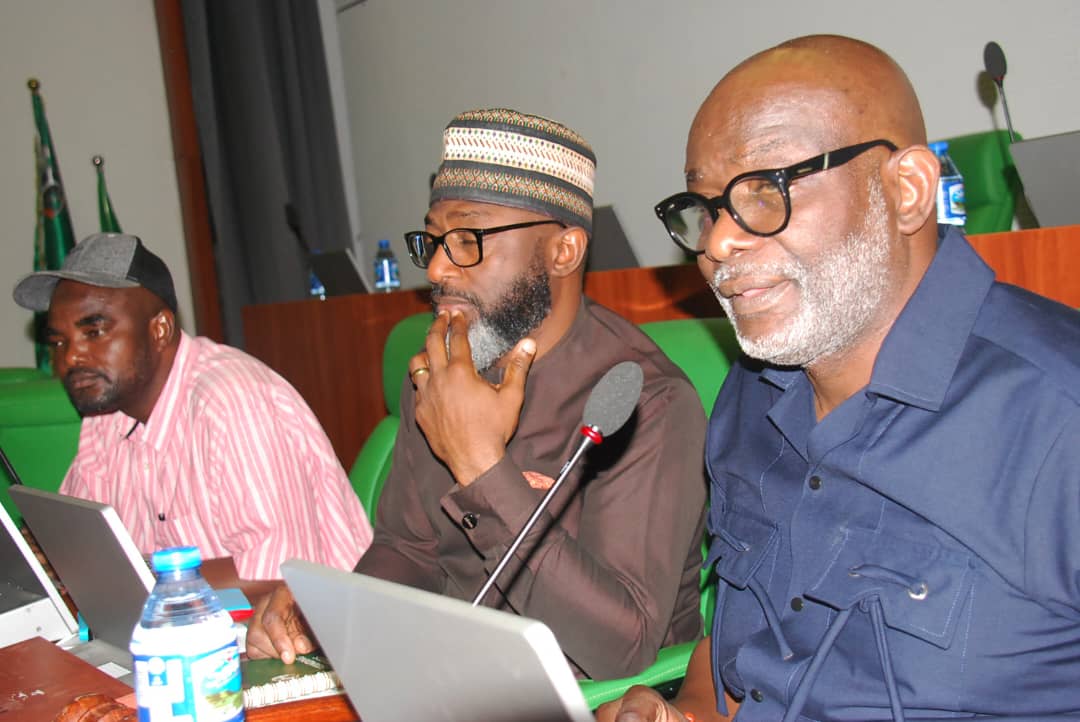
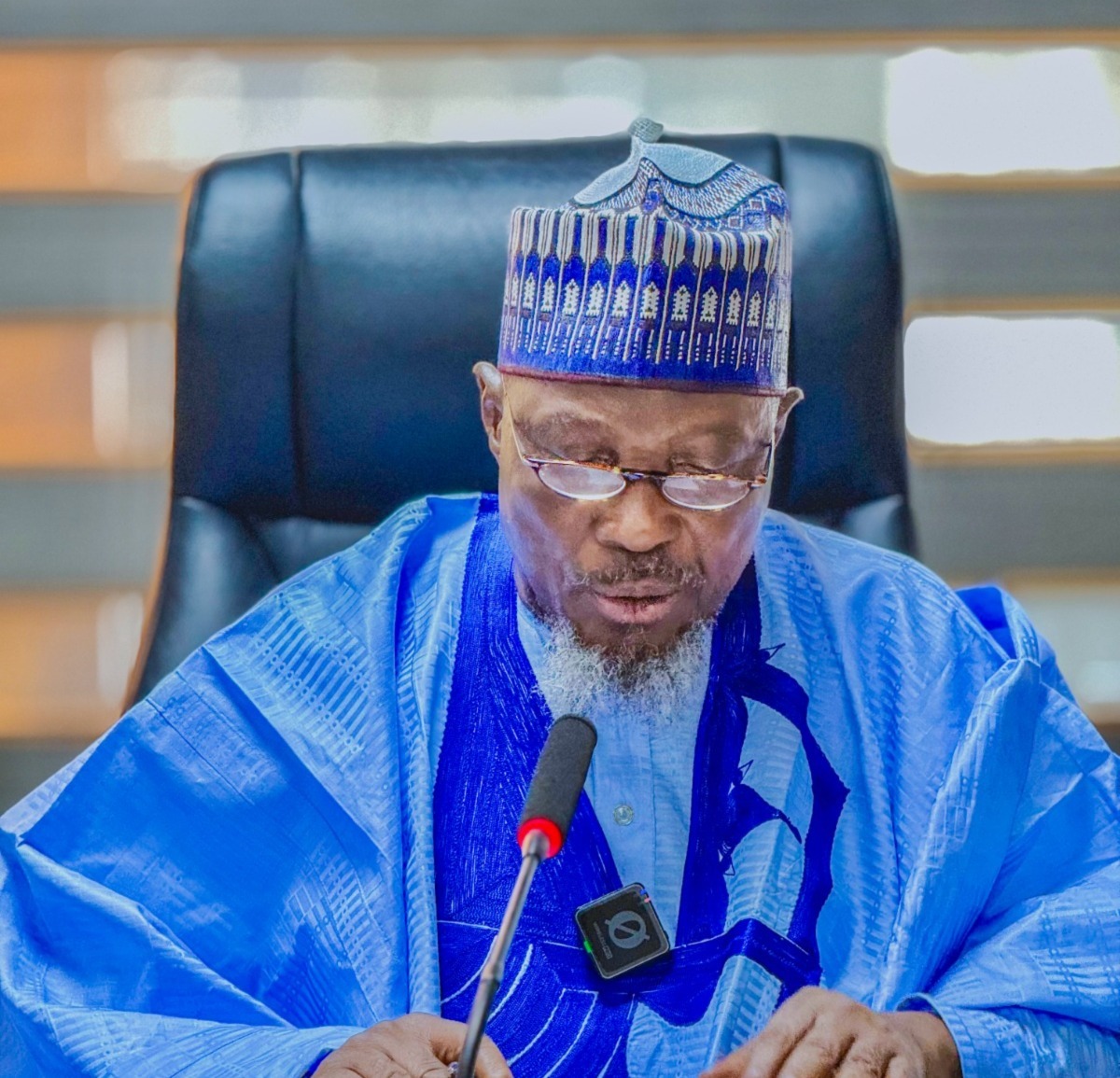
The Chairman House of Representatives Ad-hoc Committee Investigating the Economic, Regulatory and Security impact of Cryptocurrency Adoption and Point-of-Sale (POS) Services, Rep. Olufemi Bamisile, has raised serious concerns about the surge in fraud linked to POS transactions and the spread of unlicensed crypto-related activities across the sector.

Rep. Bamisile who stated this at the resumed investigative session of the Committee with Fintech Operators, POS service providers and key regulatory and security bodies,on Monday in Abuja, said recent engagements had revealed significant structural weaknesses within Nigeria’s rapidly expanding digital finance space.
The Committee has been inundated with reports involving unregistered agents, cloned terminals, anonymous transactions and weak Know-Your-Customer processes — vulnerabilities that expose Nigerians to financial loss, cyber-enabled crime and wider security threats.
Bamisile also flagged the growing number of POS operators quietly drifting into digital-asset and cryptocurrency dealings without authorisation, warning that this unregulated expansion places consumers and the country’s security architecture at heightened risk.
He said: “We are concerned about the growing rise in fraud associated with POS operations. Unprofiled agents, cloned terminals, and weak KYC practices continue to expose citizens to preventable dangers.
“There are allegations and credible information that some POS operators now engage in crypto-related services for which they are not licensed. This raises serious red flags around anti–money laundering, terrorism financing, data integrity and the misuse of instruments originally designed for basic payment services”.
The Chairman further revealed that the Committee had been alerted to the registration of phoney companies at the Corporate Affairs Commission (CAC), some of which allegedly use the National Identification Number (NIN) and Bank Verification Number (BVN) of unsuspecting citizens to open accounts and launder illicit funds through unverified POS channels.
Another issue the Committee intends to probe is the storage of sensitive customer data on foreign servers by major fintech companies operating in Nigeria.
Bamisile warned that keeping data outside the country’s jurisdiction undermines the ability of regulators and security agencies to conduct timely audits, trace suspicious transactions or enforce compliance orders.
“This highlights weak verification mechanisms and underscores the urgent need for a coordinated oversight framework.
“This has direct national-security implications, especially in a sector connected to terrorism financing risks and cyber-enabled crimes,” he said.
Despite the concerns raised, the Chairman assured operators that the engagement was not adversarial. This ias he noted that the industry also faces challenges such as fragmented regulation, overlapping mandates by government agencies, policy inconsistencies and multiple compliance requirements.
“Our mandate is clear: to recommend legislation that will deliver a harmonised regulatory framework, stronger security safeguards, improved consumer protection, and an environment where innovation and investment can flourish responsibly,” he said.
The Committee is expected to continue its interface with regulatory institutions, fintech actors and security agencies in the coming days before submitting its final recommendations to the House.
National President, Association of Digital Payment and POS Operators of Nigeria (ADPPON), Mr. Paul Okafor, cautioned that the Point-of-Sale (POS) ecosystem in Nigeria has reached a critical emergency point, with fraud escalating to levels that now pose a direct threat to national security.
According to Okafor, the rapid expansion of the industry has overwhelmed regulators, leaving significant gaps that criminals are exploiting.
He also said that while POS operators have grown from 50,000 in 2017 to over 2.3 million today, regulatory capacity has expanded by “less than 10 percent.”
“This imbalance is what has produced the crisis we are facing today.
“The regulators, especially the CBN, are not incompetent; they are overwhelmed by the sheer speed and scale of growth,” he said.
Quoting data from the Nigeria Inter-Bank Settlement System (NIBSS), Okafor said POS, banking and digital-payment channels suffered N17.67 billion in fraud losses in 2023, affecting more than 80,000 customers. But the situation worsened drastically in 2024, with losses rising to N52.26 billion — an increase of N34.59 billion in just one year.
He added that attempted fraud across financial channels surged by 338 percent, while POS channels alone accounted for 26.37 percent of all cases recorded.
FITC, another industry monitor, also reported a 95 percent spike in POS fraud in the fourth quarter of 2024.
He also disclosed that criminals are increasingly using POS operators as cash-out points for ransom and illicit funds.
“More than 38,000 POS fraud cases were officially reported in one year. Unofficially, we estimate that over 70,000 cases go unreported because victims simply give up.
“In some states, security agencies report that nearly 40 percent of kidnap ransom payments pass through informal POS cash-out channels. This is no longer a fintech issue; this is a national security threat,” he warned.
Okafor urged the Committee to issue a clear directive compelling the Central Bank of Nigeria (CBN) to introduce urgent reforms to rescue the system.
“If we fail to act, fraud will escalate, kidnappers will continue to exploit the system, Nigerians will lose more money, financial inclusion will collapse, and trust in the financial system will be destroyed. And when trust dies, the financial system dies,” he said.
To restore order and rebuild confidence, Okafor outlined three key measures ADPPON wants implemented without delay which are mandatory Nigeria Police Force–NCCC Cybercrime Clearance Certificate (CCC) for all POS operators; mandatory CAC registration for every POS business to ensure traceability; and mandatory membership of recognised trade associations to enforce discipline, training and self-regulation.
“These are practical, lawful solutions aligned with existing laws and international standards. They can be implemented without creating new legislation,” he told lawmakers.
Okafor also referenced global best practices, noting that India, Kenya, Brazil, South Africa and the United Kingdom enforce strict oversight to safeguard their POS ecosystems.
He said these countries require mandatory police background checks, compulsory business registration, and continuous recertification — measures that have significantly reduced fraud.
“In Brazil, agent fraud dropped by over 60 percent after the government mandated police vetting. India, with over five million agents, maintains low fraud rates because verification is non-negotiable,” he said.
“No country leaves its financial system open to millions of operators or puts it in the hands of foreigners without strict controls. Nigeria must not be the exception.”
Okafor told the lawmakers that the stakes are extremely high, noting that POS services now touch every household, market, local government and business sector in the country.
“You are the custodians of Nigeria’s financial future,” he said. “If this Committee acts decisively, Nigeria will be safer. If it hesitates, criminals will continue to win.”
News
BREAKING: Nigerian Government Hit with N10m ECOWAS Court Award for Assault on Journalist Oyekunle
By Gloria Ikibah
The ECOWAS Community Court of Justice has slammed a N10 million in general damages against the Federal Republic of Nigeria over the physical assault, unlawful arrest, and seizure of property belonging to a journalist with Independent Newspaper by name Jide Oyekunle.
The landmark ruling in Suit No. ECW/CCJ/APP/29/25 was secured by Avocats Sans Frontières France (Lawyers Without Borders France) on June 22, 2026, under its eRIGHTS project, supported by the European Union, which focuses on defending human rights in the digital space.
Comrade Oyekunle who is currently the Secretary of the Nigeria Union of Journalists, NUJ, Federal Capital Territory Council, on August 1, 2024, during the coverage of the #EndBadGovernanceInNigeria protests at the Eagle Square, Abuja, was physically assaulted, unlawfully detained, his photo camera was damaged, while his mobile phone was seized by armed police officers on the order of former FCT Commissioner of Police, Benneth Igweh.
The Court in agreement with Counsel to the applicant, Collins I. Maidoh-Anene, Esq., that the detention of the journalist and seizure of his mobile phone by the Nigerian police, was “excessive, unjustified, and in violation of international law”.
The ECOWAS Court subsequently found the Federal Republic of Nigeria liable for violating the applicant’s rights to freedom of expression, personal liberty, dignity, and property under the African Charter.
The Court therefore ordered the Nigerian government to pay Comrade Oyekunle the sum of N10 million in general damages.
The court found that Nigeria’s actions suppressed his live coverage, thereby breaching his right to freedom of expression under Article 9 of the African Charter.
It also ruled that the assault and detention violated his rights to personal liberty, human dignity, and freedom from degrading treatment under Articles 6 and 5, while the temporary seizure of his phone violated his right to property under Article 14.
The Court further held that Nigeria’s justification failed the test of necessity under international law, making the conduct of the security forces excessive and unlawful.
In a statement signed by the Country Director of Avocats Sans Frontières France, Barrister Angela Uwandu Uzoma-Iwuchukwu, on Tuesday, said the judgment sends a clear message that a journalist’s digital tools are extensions of the modern press and newsroom and that their arbitrary confiscation by security forces constitutes a direct assault on the public’s right to know.
She said: “The court’s pronouncement adds to the growing jurisprudence from the regional court protecting journalists and human rights defenders who document protests and public interest events.
“ASF France will continue to monitor compliance with the judgment and provide legal aid to journalists facing similar violations.
“For Avocats Sans Frontières France and the eRIGHTS project partners, this ruling strengthens legal protections for journalism in the digital age. It shields reporters from tech-based censorship and intimidation, puts security agencies on notice that targeting media practitioners during protests will attract accountability, and reaffirms the ECOWAS Court as a vital shield for civic space in the region.”
Reacting to the landmark judgment, Comrade Oyekunle, said it as a significant affirmation that journalists have the right to carry out their constitutional duties without intimidation, harassment, or attack.
According to him, democracy cannot thrive where journalists are attacked for documenting events or where citizens are punished for exercising their lawful rights.
“The decision of the ECOWAS Court is not only about me; it is about every journalist, media worker, and Nigerian citizen who believes in the right to freedom of expression, access to information, and peaceful civic participation.
“This judgment sends a clear message that security agencies and government institutions must be held accountable when they violate fundamental rights.
“Because if democracy is all about good governance, accountability, and transparency, then press freedom should not be curtailed, denied, or restricted”, he said.
Oyekunle appreciated everyone who stood by him throughout the journey, including the Nigeria Union of Journalists FCT Council, Avocats Sans Frontières France, colleagues and rights advocates, and all Nigerians who continue to defend press freedom and democratic values.
News
Sowore to relax in Kuje prison as court fixes June 30 for bail ruling
A Federal High Court in Abuja has fixed June 30 for a ruling on Omoyele Sowore’s motion seeking to vacate the order revoking his bail, as his lawyer pushed for a stay of execution while DSS counsel mounted opposition.
Omoyele Sowore’s freedom hinges on June 30.
The Federal High Court in Abuja on Wednesday fixed that date for a ruling on the activist’s motion seeking to set aside the bail revocation order that landed him in Kuje Custodial Centre, according to Vanguard.
Sowore’s lawyer, Raphael Adakole, moved the motion for stay of execution before Justice Mohammed Umar, arguing that the June 16 order revoking bail and issuing a bench warrant — triggered by Sowore’s absence from court — should be set aside entirely and the status quo restored.
The application, filed June 19, leans on Sections 35(4), 36(1), and 66(a&b) of the 1999 Constitution and Sections 169 and 352 of the Administration of Criminal Justice Act (ACJA) 2015, alongside the court’s inherent jurisdiction.
“We adopt the said reply on points of law while placing reliance on the further affidavit and urge the court to grant the application as prayed in the interest of justice,” Adakole told the court.
Justice Umar has now heard both sides. June 30 will deliver the verdict.
News
NDLEA unearths another massive industrial scale clandestine meth laboratory in Oyo forest(Photos)
. Arrests Mexican, 4 others; recovers multi-billion-naira worth of illicit substances
. We’ll find you in the cities, track you into the forests, and dismantle your infrastructure of death, Marwa warns drug cartels
Operatives of the National Drug Law Enforcement Agency (NDLEA) have struck yet another decisive blow against transnational drug syndicates following the discovery and dismantling of a fortified, industrial-scale clandestine methamphetamine laboratory operated by a Nigerian-Mexican cartel deep within the forest of Tapa Village, Ibarapa North Local Government Area, Oyo State.

The breakthrough comes barely four weeks after the Agency dismantled a similar massive meth laboratory in a forest in Ijebu East, Ogun State, signaling a desperate attempt by drug barons to turn the Southwest axis into a synthetic drug manufacturing hub.
Speaking on the development at the NDLEA Headquarters in Abuja, the Chairman/Chief Executive Officer of the Agency, Brig. Gen. Mohamed Buba Marwa (Rtd) who was represented by the Director of Media and Advocacy, Femi Babafemi at a press briefing on Wednesday 24th June 2026, commended the gallantry, dedication, and clinical professionalism of the officers involved in the operation.

According to him, “On Wednesday, 17th June 2026, tactical operatives of the NDLEA stormed a highly fortified, industrial-scale clandestine methamphetamine laboratory operating deep within the forest of Tapa Village, Ibarapa North Local Government Area, Oyo State.
“This was not a rudimentary setup; it was a sophisticated, highly organized transnational syndicate. During the raid, our operatives successfully arrested five key members of the cartel on-site.
They include a 56-year-old Mexican Methamphetamine expert, Jose Villa Ochoa, brought in specifically to provide the technical expertise for large-scale synthesis and four Nigerian collaborators providing logistical support, cover, and local operations. They are: Maxwell Uche Nevoh, 30; Olatunji Yusuf, 37; Bankole Akeem Owolabi, 45; and Ganiu Monsiu, 43.

“The arrest of a foreign cartel specialist on Nigerian soil underscores the transnational nature of this threat, but more importantly, it underscores our Agency’s world-class intelligence capability to track, intercept, and neutralize them. Following the successful raid, a specialized team from our Directorate of Forensic and Chemical Monitoring moved in on June 18th, 2026, to conduct a rigorous forensic examination of the facility. What they uncovered is a massive, factory-level production line of poison.
“The laboratory was fully stocked with a frightening array of precursor chemicals, industrial catalysts, and heavy-duty processing equipment. Chemicals and Materials recovered include: Phenyl-2-propanone (P2P), which is the the main, highly controlled precursor required for methamphetamine synthesis; 1800-litre drums containing Phenylacetic acid (the primary precursor used to synthesize P2P); Two 180L drums containing a staggering 300 litres of whitish crystalline substance; Four 180L drums containing dark liquid undergoing synthesis.

“Others include: 101 bags (25kg each) of Caustic Soda; 17 containers (25L each) of Sulphuric Acid; 19.5 containers (25kg each) of Tartaric Acid; 5 containers of Reniso Ultracool 68 (three 50L and two 25L capacity; 25 bottles (500ml each) of 80% Thioglycolic Acid; 2 containers (25L each) of Ethyl Phenylacetate, and 25 cartons of aluminum foil.
“The Industrial Processing Equipment discovered at the site include: One (1) Reactor Pot, which is the heart of the chemical synthesis; Two (2) mounted distillation units and three (3) fabricated mixers and condensers; as well as Two (2) vegetable dehydrator machines used for the rapid drying of the crystals.

“As a result, immediate field tests were conducted by our forensic experts. Samples of the finished crystals recovered yielded a definitive positive result for Methamphetamine. Furthermore, the crystalline substance from the 180L drum tested positive for Phenylacetic acid. Every single gram of these exhibits has been safely evacuated, documented, and preserved for comprehensive and strict evidential presentation in court.
This is yet another multibillion-naira worth of illicit substances and production equipment ready to push millions of doses of synthetic drugs into our streets, communities and the international community but for the vigilance of our dedicated officers.”
Marwa noted that the proximity of the latest discovery to the Ogun State lab uncovered about four weeks ago reveals a desperate attempt by drug barons to establish a synthetic drug manufacturing hub in the Southwest axis, adding that the cartels thought hiding in dense forests would shield them from the long arm of the law but were wrong.

“Let the message go out clearly to all drug cartels, domestic and international that Nigeria is not, and will never be, a safe haven for your illicit trade. We will find you in the cities, we will track you into the forests, and we will dismantle your infrastructure of death. They thought hiding in dense forests would shield them from the long arm of the law. They were wrong”, the NDLEA boss warned.
“We want to commend the gallantry, dedication, and clinical professionalism of our officers of the Oyo state Command involved in this operation. To the Nigerian public, we say thank you for your continued trust and credible information. Together, we are securing the future of our nation”, he added.
-
News22 hours agoSouthern Parkway Service Lanes to End Gridlock, Transform Abuja’s Southern Corridor, Tinubu Assures
-
Metro10 hours agoAlleged Drug Trafficking: Billionaire, Two Others Face Trial in Lagos
-
Foreign10 hours agoUS Targets Alleged ISIS Funding Network, Names Nigerian
-
News2 hours agoDAY 11 of Projects Commissioning in the FCT: TInubu set to commission Kuje, Gwagwalada road today
-
News10 hours agoHajj: NAHCON concludes return of pilgrims’ airlifts
-
News10 hours agoBenin monarch to place a curse on kidnappers, armed robbers, fixes date
-
Sports10 hours agoSuper Eagles: Chelle, NFF Reach New Contract
-
News3 hours agoDAY 11 of Projects Commissioning in the FCT