
News
Niger Lawmaker Urges Urgent Federal Action as Banditry Escalates in Borgu-Agwara

- /home/naijuinz/public_html/wp-content/plugins/mvp-social-buttons/mvp-social-buttons.php on line 27
https://naijablitznews.com/wp-content/uploads/2025/11/IMG-20251126-WA0023-1000x600.jpg&description=Niger Lawmaker Urges Urgent Federal Action as Banditry Escalates in Borgu-Agwara', 'pinterestShare', 'width=750,height=350'); return false;" title="Pin This Post">
- Share
- Tweet /home/naijuinz/public_html/wp-content/plugins/mvp-social-buttons/mvp-social-buttons.php on line 72
https://naijablitznews.com/wp-content/uploads/2025/11/IMG-20251126-WA0023-1000x600.jpg&description=Niger Lawmaker Urges Urgent Federal Action as Banditry Escalates in Borgu-Agwara', 'pinterestShare', 'width=750,height=350'); return false;" title="Pin This Post">


By Gloria Ikibah
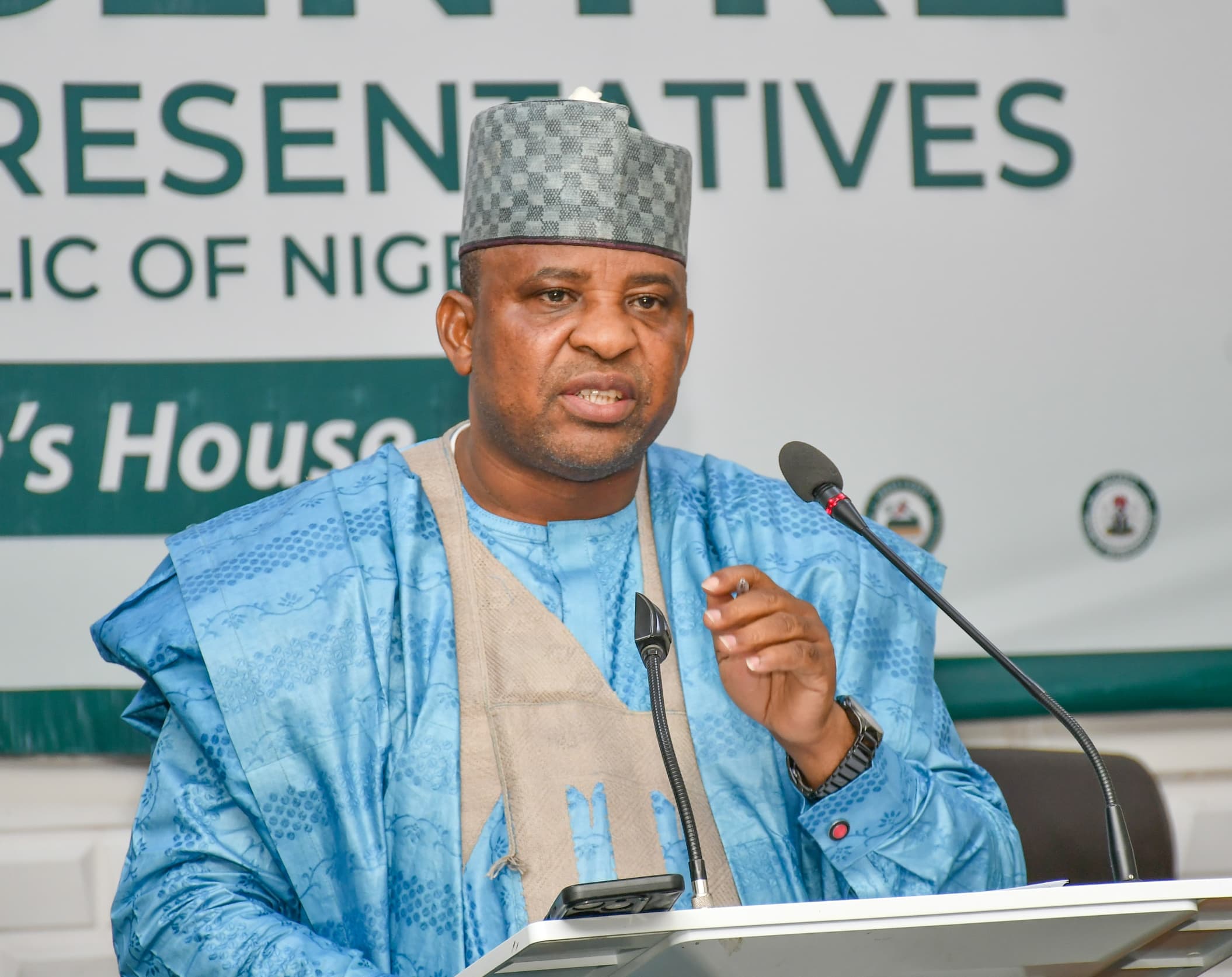
Communities in Niger State’s Borgu and Agwara areas are facing an alarming surge in bandit attacks, prompting their representative in the House of Representatives, Jafaru Mohammed Ali, to demand immediate and decisive intervention from the Federal Government.
Rep. Ali, who recently survived an attack on his own convoy, warned that the situation has deteriorated to a level that threatens the safety and stability of the entire constituency, he also appealed directly to President Bola Ahmed Tinubu, who holds the traditional title of Jagaban Borgu, to take strong, targeted measures against the armed groups terrorising the Borgu Emirate.
Addressing journalists, the lawmaker described a string of distressing incidents, including the abduction of more than 300 pupils and teachers from St. Mary Primary and Secondary School in Papiri, Agwara Local Government Area. The kidnappings, he said, are part of a broader pattern of unchecked violence affecting schools, roads and rural settlements.

During the House’s resumed special plenary on national security, Ali highlighted the plight of several prominent individuals who remain in captivity, among them a former chairman of Niger State SUBEB, a state electoral commissioner, and numerous travellers seized along the Mokwa–New Bussa highway.
He warned that without swift and coordinated action, communities across Borgu and Agwara risk further devastation as bandits tighten their grip on the region.
He said: “With great dismay, on 21st of November, 2025, gunmen attacked St. Mary’s Primary and Secondary School in Papiri, Agwara Local Government Area of Niger State and kidnapped three hundred and three (303) students, twelve (12) teachers and a notable figure, Sarkin Samarin Agwara.Fifty (50) out of the three hundred and three students escaped and are reunited with their parents.
“Also on 4th November, 2025, during my routine condolence visit in my constituency, I was attacked by armed gunmen in their hundreds which resulted in loss of lives and injuries to many innocent personnel at Agwara to Babanna in Borgu Local Government, Niger State”.
Rep. Ali expressed gratitude to the Office of the National Security Adviser, Department of State Services and Nigerian Army for their swift intervention, including the deployment of a helicopter that helped evacuate him and his entourage after they were ambushed.
He recounted the toll of recent violence in his constituency, noting that three members of one family were killed on 2 November 2025 in Gidan Guga, a community on the border of Agwara and Borgu. Their father survived the attack but sustained serious injuries and is currently receiving treatment at Usmanu Danfodiyo University Teaching Hospital in Sokoto.
The lawmaker also described the scale of displacement sweeping through the area, as he said several communities, including Boyiya and Bakin Bara have been forced to flee, while others such as Aika, Kuka, Dekara, Kerenji, Saminaka and Audu Fari are now under the control of bandit groups, leaving residents with nowhere safe to turn.
He said: “The bandits are currently using the National Park as their harbour and base from where they attack Agwara, Borgu in Niger State, Bagudo and Shanga in Kebbi State, Kaiama/Baruten in Kwara State and some neighbouring communities in Benin Republic.
“Most of the bandits are foreigners who cannot even speak Nigerian languages.Some of them migrated from Zamfara and Katsina using Ibbi National Park as their link to enter Kaiama National Park and Kainji National Park as their destination.
“About a month ago, the bandits had laid ambush and bombed four personnel between Babanna and Lumma, while the last two months witnessed recurring killings, kidnappings and displacement in the entire Federal Constituency, including the public one in the police station at Lumma where a leader of the Fulani clan was assassinated in broad daylight because of his failure to compromise.
“The situation in the entire Federal Constituency is horrible and will continue to worsen if urgent action is not taken to save the constituency from being taken over by bandits in the next few months”.
The lawmaker cautioned that the growing vulnerability of his constituents is forcing many to give in to the demands of bandit groups simply to stay alive.
He described a troubling pattern in which residents, overwhelmed by fear of attacks or reprisals, feel they have little choice but to cooperate with their attackers.
He also urged the Federal Government to take decisive control of Kainji National Park, which he said has effectively become a refuge for armed groups launching assaults on communities in Niger, Kebbi and Kwara States.

Niger’s national television was off air on Saturday after a night of heavy gunfire in parts of the capital, including around a military base near the city’s airport which has been attacked twice this year by jihadists.
Niger has been ruled for three years by a military junta that has struggled to contain jihadist violence, which has blighted the West African country for around a decade.
The origins of Saturday’s shooting were not immediately clear but the military said: “In light of current events, let us remain calm and avoid sharing unverified information.
“Our defence and security forces have been mobilised for the defence of the homeland,” it wrote on its official social media pages.
One local resident told AFP that there was “heavy gunfire and explosions” at Base 101 in Niamey, a report confirmed by several other witnesses.
At 9:00 am (0800 GMT), a black screen had replaced Tele Sahel’s programming both via satellite and online. Soldiers blocked access to the presidential palace and national television, residents added.
The first shots were heard at about 1:00 am local time (0000 GMT) and continued until daybreak, according to a video published by a local journalist filming the area around the airport.
Another local resident said he heard “bursts of gunfire” at about 7:00 am local time.
“I went to get credit for my phone. I saw a military vehicle heading towards the base that had to turn back,” he added.
“The weapons we’re hearing are not the kind that terrorists on motorbikes can carry. The fighting has been non-stop since last night.”
Another resident in the west of Niamey said he heard sporadic small arms fire at about 5:00 am.
Several social media posts also reported shooting and explosions in the city, particularly in the administrative area where the presidential palace and national television station are located.
Videos online showed armoured vehicles deployed to reinforce the neighbourhood near the airport.
– Rival jihadist groups –
Niamey airport has been targeted twice this year by jihadists, first by the Islamic State in the Sahel (EIS) in January, then in late June by their rivals the Group for the Support of Islam and Muslims (JNIM), the Sahel branch of Al-Qaeda.
The jihadist groups not only target civilians and the military but are also struggling for dominance over each other in the Sahel, and especially in Niger.
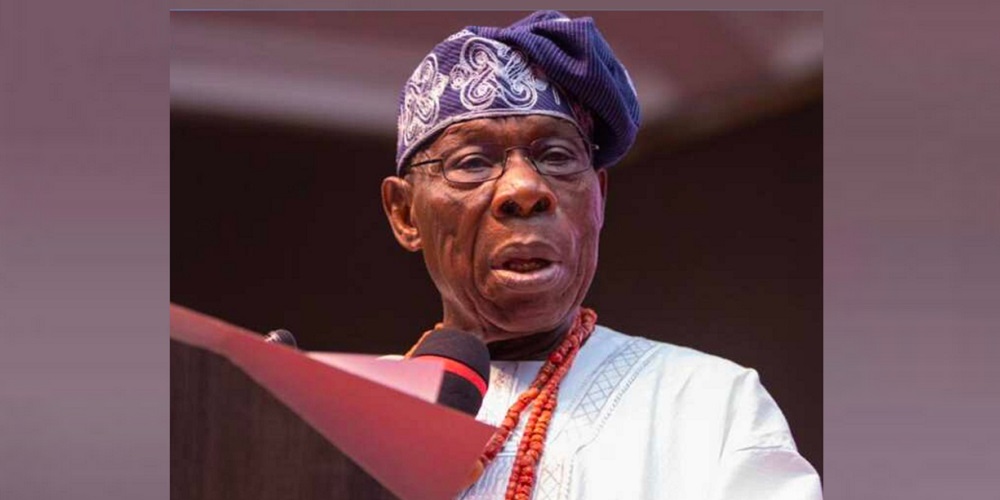
Ex-President Olusegun Obasanjo brought humour to the 60th birthday celebration of the Olota of Ota, Oba Professor Abdulkabir Obalanlege, as he jokingly promised to attend the monarch’s 70th birthday while asking to be excused from the 80th.
Obasanjo, who is 89, made the remark while speaking in Yoruba at the anniversary celebration held in honour of the traditional ruler.
The former president recalled calling Obalanlege earlier in the morning to pray for him before turning his attention to the monarch’s future milestone birthdays.
“Kabiyesi, I called you this morning and prayed for you,” Obasanjo said.
He then calculated his own age in relation to the monarch’s next major birthday celebrations, telling the gathering that he would be 99 when Obalanlege clocks 70 in 10 years.
“I’m here celebrating your 60th birthday. I’ll join you for your 70th birthday in 10 years,” he said.
However, Obasanjo joked that attending the monarch’s 80th birthday celebration 20 years from now might be beyond his reach.
“But for your 80th birthday, which is 20 years from now, ẹ yonda mi (you’ll excuse me); you’ll celebrate that one the way it pleases you,” he added.
The comment drew laughter from dignitaries, traditional rulers and other guests who gathered to celebrate the Olota’s diamond jubilee.
The celebration also featured a notable display of Yoruba cultural respect when Fuji musician, King Wasiu Ayinde, popularly known as K1 De Ultimate, prostrated fully before Obasanjo after coming on stage.
The gesture further added to the cultural significance of the event held to mark Oba Obalanlege’s 60th birthday.

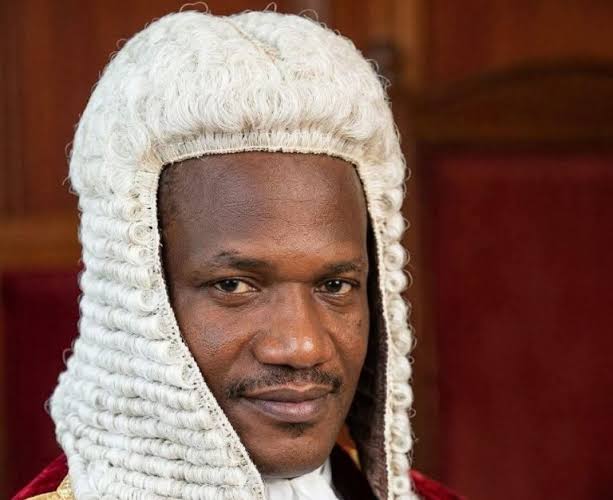
The judiciary has been thrown into mourning following the death of Hon. Justice Umaru Atu Kalgo, JSC (Rtd.), CON, a former Justice of the Supreme Court of Nigeria and distinguished jurist whose judicial career spanned several decades.
Justice Kalgo reportedly died at about 3:00 a.m. on Tuesday after a prolonged illness.
A resident of Kalgo community, who requested anonymity, said the retired Supreme Court Justice was buried at about 2:30 p.m. in Sokoto in accordance with Islamic rites.
His death marks the end of a distinguished legal career spanning nearly five decades, during which he contributed to legal practice, judicial service, law reform and the development of Nigerian jurisprudence.
Born on May 12, 1937, in Kalgo, present-day Kebbi State, then part of the old North-Western State, Justice Kalgo began his education at Elementary School, Kalgo. He later attended Middle School Sokoto, Middle School Birnin-Kebbi and Government College, Zaria, between 1953 and 1958.
He subsequently pursued legal studies at the Institute of Administration, Ahmadu Bello University, Zaria; the Council of Legal Education, London; the College of Law, Holborn, London; and the Nigerian Law School, Lagos. He was called to the Nigerian Bar in 1965.
Justice Kalgo began his public service career as an Administrative Officer in Northern Nigeria before moving into legal practice in government service. Between 1965 and 1972, he served as State Counsel and later rose to become Deputy Solicitor-General of the North-Western State.
His judicial career began in 1974 when he was appointed a Judge of the High Court of Kano and North-Western State. He subsequently served on the Sokoto State High Court Bench.
On January 1, 1981, Justice Kalgo was elevated to the position of Chief Judge of Sokoto State, a position he held until 1988.
In February 1988, he was appointed a Justice of the Court of Appeal, where he continued to contribute to the development of Nigeria’s appellate jurisprudence.
A decade later, on November 25, 1998, Justice Kalgo reached the pinnacle of his judicial career when he was elevated to the Supreme Court of Nigeria.
He served on the apex court until his statutory retirement at the age of 70 in May 2007.
During his years on the Court of Appeal and Supreme Court benches, Justice Kalgo delivered and participated in numerous judgments covering constitutional, civil and criminal law. His contributions formed part of the body of judicial precedents that continue to influence Nigerian jurisprudence.
Beyond the courtroom, the late jurist played significant roles in national law reform and constitutional development. He served on the Constitution Review Committee between 1987 and 1988, participated in the Constituent Assembly between 1988 and 1989, and was a member of the Law Revision Committee for the Laws of the Federation in 1990.
His public service therefore extended beyond adjudication to the broader development of Nigeria’s constitutional and legal framework.
Justice Kalgo was also recognised for his contributions to national service and was conferred with the national honour of Commander of the Order of the Niger, CON.
His passing brings to a close the life and career of a jurist whose professional journey took him from public administration and government legal service through the High Court and Court of Appeal to Nigeria’s highest court, leaving behind a significant legacy in the country’s legal and judicial history.

Anambra LG election: Fear, sporadic gunshots as YPP tackles APGA

National tv signal fails in Niger after heavy gunfire

JAMB extends deadline for acceptance of previous admissions by 30 days



-

 Metro13 hours ago
Police Parade Doctors, Others Over Alleged Organ Trafficking In Nasarawa
-
 News13 hours ago
Ugandan King Who Became Monarch At Age 3 Di£s Aged 34
-

 News13 hours ago
NYSC sets September 7 for 2026 batch C registration
-
 News13 hours ago
FG moves to harmonise salaries of federal government workers
-
 News13 hours ago
Police-Led Joint Team Arrests Nine, Recovers Three AK-47 Rifles, Pump-Action Gun in Anambra
-
 News8 hours ago
Confusion in Niger as gunfire, explosions rock presidential palace, airport
-

 News13 hours ago
2027 Presidency: Very Unlikely North Will Support Obi-Kwankwaso Ticket — Datti
-

 News13 hours ago
‘Law profession no longer noble’ — VeryDarkMan