
News
Former NBC DG Emeka Mba Urges LLBSUK Graduates to Embrace Communication as Core of Leadership


- /home/naijuinz/public_html/wp-content/plugins/mvp-social-buttons/mvp-social-buttons.php on line 27
https://naijablitznews.com/wp-content/uploads/2025/11/IMG-20251129-WA0060-1000x600.jpg&description=Former NBC DG Emeka Mba Urges LLBSUK Graduates to Embrace Communication as Core of Leadership', 'pinterestShare', 'width=750,height=350'); return false;" title="Pin This Post">
- Share
- Tweet /home/naijuinz/public_html/wp-content/plugins/mvp-social-buttons/mvp-social-buttons.php on line 72
https://naijablitznews.com/wp-content/uploads/2025/11/IMG-20251129-WA0060-1000x600.jpg&description=Former NBC DG Emeka Mba Urges LLBSUK Graduates to Embrace Communication as Core of Leadership', 'pinterestShare', 'width=750,height=350'); return false;" title="Pin This Post">


…as Rector call them “Global Problem-Solvers”
…Dean says institution is building a new breed of Media Consultants
By Gloria Ikibah
Former Director-General of the National Broadcasting Commission and MD/CEO of Afia Television, Emeka Mba, has underscored the essential role of communication in leadership, personal growth, and organisational success.
Speaking to graduands, at the convocation ceremony of the School of Communications and Media Studies, Learn To Live Business School UK, held on Saturday in Abuja, the institution celebrated graduates from its first and second Post-Graduate Diploma cohorts alongside the 2025 Master Class group. Together known as the “Titans”, they completed an intensive programme centred on Strategic Communications and Media Management Consultancy.
Mba who emphasised that the modern world demands far more than qualifications, argued that without strong communication skills, no professional, regardless of talent or industry can truly excel.

“That if you lack the tools, the necessary tools
to communicate, you’ve started on the wrong foot,” he began, pointing to the digital environment that connects everyone through mobile phones and online platforms.
“That is the key. It’s your ability to communicate”, he noted.
To illustrate the enduring power of communication, Mba drew on historical examples, asking the audience to imagine how ancient leaders inspired their followers.
“Can you imagine what Alexander the Great must have said to his army? To convince thousands of men to march over 13,000 kilometres to conquer half the world. What did he tell them? How did he tell them to join me in this pursuit to conquer half the world?”, he said.
While ancient leaders relied solely on voice and presence, he noted, today’s communicators have microphones, the internet, and countless digital tools, yet the underlying skill remains the same.
His message to the graduating students was clear: communication grounded in empathy is at the heart of effective leadership.
Mba also touched on the role of artificial intelligence, cautioning students against overestimating its abilities.
“You think you can do everything with AI; the first failure might even be in your prompting.
“That you do not even know how to communicate with the machine in such a way that the machine will even give you what you want”, he said.

Reflecting on the value of learning, he challenged the belief that great communicators are born.
“A lot of people have argued that excellent communicators are born… but the fact is that that is a big fat lie,” he said, invoking examples like Ronaldo, King George VI, Churchill, and the Greek orator Demosthenes.
Using stories of leaders with speech impediments who trained relentlessly, he emphasised that communication is a skill sharpened through practice, not a natural gift.
As he turned to contemporary Nigerian politics, Mba suggested that even leaders at the highest level struggle if they cannot communicate effectively, noting the frustrations citizens often experience when their leaders cannot clearly articulate vision or direction.
He also reminded the audience that communication extends beyond speech and urged graduates to view their certification not as the end of learning, but as the beginning of a deeper, lifelong journey.
“Your learning is not over. This is actually the beginning of a new type of learning,” he said.
While technology is reshaping the world, he warned that emotional connection continues to decline, a gap only human communication can close.
“The value of communicating clearly, emotionally, and contextually becomes even more important.
“I hope that the tools that you have… will give you the opportunity to grow and to benefit whatever organisation you’re in, and most importantly, to benefit humanity,” he told the graduands.
In a powerful charge to graduands, the Rector LLBSUK, Dr Kingsley Nelson, urged them to embrace their training as global solution providers rather than conventional job seekers.
Dr Nelson explained that the essence of the LLBSUK model is not certificates, gowns or photographs, but the ability to step into any society and solve real problems.

He said: “Over the years, we’ve seen graduations from month to month, school to school. But the reality is, how many of them can solve problems? How many of the graduates can Solve problems?
The Rector said the institution’s mission is to raise “global citizens” capable of working anywhere in the world, not as routine employees but as thinkers, strategists and consultants who are recognised for their ability to diagnose and resolve complex issues.
Dr Nelson noted that LLBSUK is deliberately unconventional, designed to train people who lead proactively rather than reactively, describing the institution as an ecosystem preparing individuals to occupy advisory positions at the highest levels of governance and industry.
“Our single focus is to groom global citizens. These are men and women who step into any environment and they solve problems… They are seen as solution providers, business doctors… consulting intelligent leaders.
“We don’t intend to be conventional in the years to come. We want to do things the other way round, top leaders around the world rely heavily on consultants.
“There is no meaningful governor, no meaningful president… who doesn’t have sets of consultants behind the scene,” he said.
To illustrate the impact of LLBSUK’s model, the Rector revealed that the institution had already attracted interest from major global powers.
He told graduates that the world of consulting operates on influence rather than publicity.
“McKinsey is about 100 years as we speak. No signpost anywhere. The world is run through secrecy.
“People that run the affairs of this world may be sitting down on that staircase wearing long sleeves, but you won’t know they are the ones in charge” he added.
Dr Nelson also reminded graduands that the convocation ceremony was not a final exit but a transition into a deeper phase of mentorship and training known as “the Conclave,” a private circle where advanced strategic discussions take place.
He urged them to prepare themselves to “rule the world,” insisting that every LLBSUK product who completes the required phases becomes “a potential universal dominator.”
“When you call yourself a consultant, it means I should come to you for solution.
“As you show up, solutions show up… Be a great ambassador for yourself, for the institute, and a proper representative of your family,” he told them.
The Rector expressed pride in the graduating sets, describing them as elite professionals who will redefine Nigeria’s and the world’s future narratives.
“As you go into the next phase of your life,” he said, “be the solution and not the problem to be solved.”
Earlier in his welcome address, the Dean School of Communications and Media Studies LLBSUK, Dr Sammy Ajufo, celebrated the institution’s latest cohort of graduates, describing them as the “Titans” who will help reshape the strategic communications and media consulting landscape.
Dr Ajufo who reflected on the journey that led to the establishment of the faculty and the successful completion of its second academic cycle, recounted the task he was given in 2024 to build the school’s first communications faculty, noting that the support of his colleagues made the vision achievable.

mde
Dr Ajufo expressed gratitude to his academic team and paid tribute to the resilience of students who remained committed to their studies despite personal and professional challenges. He said the programme was intentionally rigorous because it was designed to prepare consultants who could provide critical insight to organisations across the world.
He said the school’s goal was not to produce certificate holders but graduates who would serve as “business doctors” capable of offering specialised guidance to institutions in need of fresh perspectives.
Dr Ajufo commended the latest cohort for distinguishing themselves professionally, noting that none of them was unemployed and most were already advancing in their careers.
He stressed that the true measure of any institution lies in the impact of its graduates, urging them to uphold the school’s reputation wherever they go.
He assured the alumni that the school would continue to support them and encouraged them to seek guidance whenever needed.
The Dean also informed them that those wishing to advance academically would be required to proceed through the school’s consulting programme before accessing higher qualifications such as the doctorate track.
Dr Ajufo reminded the graduates that LLBSUK would call on them periodically to serve as guest faculty for future cohorts, emphasising their ongoing role in shaping the school’s growth.
The ceremony featured presentations of certificates and awards, as well as interactions among students, faculty members, family and friends.

By Gloria Ikibah
Deputy Speaker of the House of Representatives, Rt. Hon. Benjamin Kalu, has congratulated the government and people of Abia State on the 35th anniversary of the state, commending its strides in peace, security, democratic governance and development.
Abia State was created on 27 August 1991 by the administration of former military Head of State, General Ibrahim Babangida, after it was carved out of the old Imo State.
In a statement issued on Thursday, Kalu, who represents Bende Federal Constituency, said the people of Abia had demonstrated resilience by sustaining peace and strengthening confidence in democratic leadership.
He described peace and security as essential foundations for economic growth, development and investment, noting that the state had remained largely peaceful and safe.
The Deputy Speaker also praised successive military and civilian administrations for their contributions to the development of the state, saying the progress recorded over the years was the result of collective efforts by past and present leaders.
Kalu specifically commended the administration of Governor Alex Otti for prioritising security and good governance, including the establishment of an Air Force office in Umuahia, the state capital.
He also praised what he described as bipartisan political cooperation between the state and Federal Government, citing the approval of Certificates of Occupancy for federal projects and initiatives in Abia.
Among the projects he highlighted were the Industrial Court, Renewed Hope Housing Projects and newly approved federal educational institutions in the state, which he said had been facilitated through legislative interventions.
According to Kalu, the projects and other developments expected in the state would help attract investment, create employment and expand infrastructure.
He stressed that Abia stood to gain significantly from continued cooperation between the Federal and state governments.
The Deputy Speaker also commended reported efforts by the state government to settle outstanding pensions and gratuities owed workers, urging the authorities to sustain the payments as a way of honouring retired public servants who served the state.
“Abia at 35 is a story of resilience and progress. I commend the governments, present and previous administrations for their efforts aimed at developing our dear state and I urge us to sustain the momentum of peace, unity and service delivery,” Kalu said.
He wished the people of Abia a successful celebration of the state’s 35th anniversary, while urging residents and leaders to continue working together to consolidate the gains recorded over the years.
By Gloria Ikibah
Nigeria’s capital market is set to return to the global Frontier Market index after FTSE Russell approved its reclassification from “Unclassified” status, nearly three years after the country was removed from the index.
The Federal Ministry of Finance, in a statement issued on Friday, said the reclassification will take effect from the opening of trading on Monday, 21 September 2026.
Nigeria was excluded from the FTSE Russell Frontier Market universe in September 2023 following persistent challenges around foreign exchange execution and the repatriation of capital, which made it difficult for international investors to operate in the market.
The latest decision, however, follows improvements in foreign exchange liquidity, capital repatriation and overall market accessibility, with the ministry linking the development to the Federal Government’s wider macroeconomic and structural reform programme.
Welcoming the development, the Minister of Finance and Coordinating Minister of the Economy, Taiwo Oyedele, described the reclassification as an important endorsement of Nigeria’s reform efforts.
“The reclassification is an important validation of Nigeria’s reform trajectory and a foundation for the next phase of the country’s capital market development. It is a meaningful signal to global capital that our market is open, orderly and improving,” Oyedele said.
He said the development was the result of sustained efforts by both the government and private sector to rebuild investor confidence and improve the functioning of the capital market.
“It reflects years of disciplined work across government and the private sector to restore confidence in our economy. We see this as a milestone, not a destination,” he said.
Oyedele further stated that the government’s ambition was to move beyond Frontier Market status and position Nigeria for Emerging Market classification.
“Our ambition remains to build a capital market that is deep, liquid and competitive enough to earn Emerging Market status in the near term,” he said.
The minister commended key institutions in the financial sector for their role in securing the reclassification, including the Securities and Exchange Commission, Central Bank of Nigeria, Nigerian Exchange Group and Central Securities Clearing System.
He also acknowledged the contribution of capital market operators and other stakeholders, saying their cooperation had been critical to restoring Nigeria’s position with global index providers.
“Their coordinated efforts spanning regulatory reform, market infrastructure modernisation and investor engagement have been central to restoring Nigeria’s standing among global index providers,” Oyedele said.
The return to the Frontier Market index is expected to improve Nigeria’s visibility among international investors and strengthen efforts to attract foreign capital into the domestic market.
The ministry said the reclassification reflected cumulative improvements in the country’s ability to facilitate foreign exchange transactions, allow investors to repatriate capital and provide greater access to the market.
Looking ahead, the Federal Government said it will continue working with financial regulators and market institutions to deepen liquidity, expand participation and strengthen investor protection.
It said the medium-term objective was to secure Nigeria’s progression from Frontier Market status to Emerging Market status.
“The Ministry will continue to support policies that enhance the depth, transparency and global competitiveness of Nigeria’s capital market as a key pillar of the nation’s economic transformation agenda,” the statement said.
The development comes as the Tinubu administration continues to defend its economic reforms, particularly measures aimed at improving foreign exchange liquidity, strengthening public finances and attracting investment.
For Nigeria’s capital market, the FTSE Russell decision represents a significant step towards restoring the country’s international market standing after years of foreign exchange and capital repatriation difficulties.

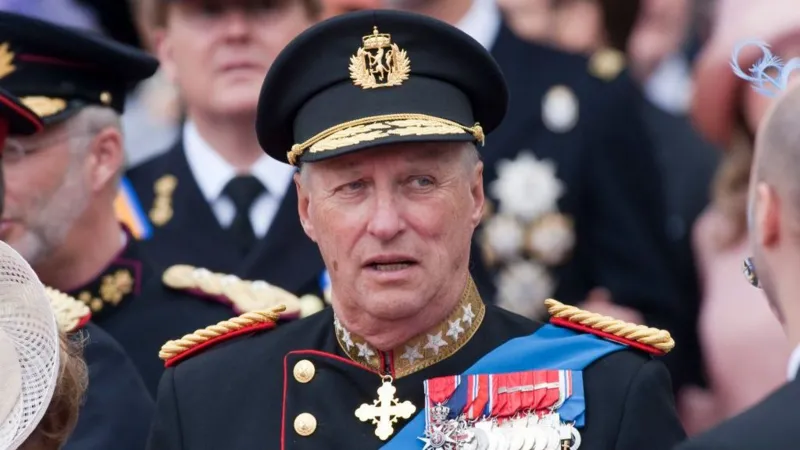
Norway’s King Harald V has died at the age of 89, after he was taken to hospital last week for treatment for a rare blood condition.
The palace in Oslo said he passed away peacefully at 06:35 local time (04:35GMT) on Friday at the national hospital in Oslo.
The royal flag on the roof of the palace has been lowered to half-mast.
In the 24 hours leading up to his death, members of the royal family had visited the king, and crowds had laid flowers at the palace.
Harald was Norway’s first king born in Norway since the 14th Century.
He has been succeeded by his son Haakon, 53, who will hold an extraordinary council of state with the government later on Friday.
After 35 years on the throne, Harald will be remembered as a popular and reforming figure who modernised the monarchy, broke with tradition by marrying a commoner and served as a unifying figure at Norway’s most difficult moments.
Royal observers say he was down-to-earth, respected and beloved, describing him as a “grandfather” of the nation and the “People’s king” – a title also used by his father King Olav V.
In the wake of the 2011 bomb and gun attacks on Oslo and the island of Utøya, Harald appealed to Norwegians to support each other and not “let fear take over”.
More recently, Harald and his family faced health challenges and scandal, especially over his daughter-in-law Mette-Marit’s association with the late sex offender Jeffrey Epstein, and her son Marius Borg Høiby’s conviction for rape.
During his reign, the Norwegian monarchy became more egalitarian and transparent with finances and health, Ole-Jørgen Schulsrud-Hansen, historian and TV2 royal correspondent, told the BBC.
Tove Taalesen, royal correspondent for Nettavisen, described the late king as “one of us”, while Caroline Vagle, royal expert for Se og Hør magazine, said he had “always been very close to the people”.
When Norway’s national football team returned from the US after making it to the World Cup quarter-finals for the first time, Harald welcomed them home at the palace.
He is survived by his wife of almost 58 years, Queen Sonja, their daughter Princess Märtha Louise, their son, the new King.
Harald was born on 21 February 1937 on the Skaugum estate near Oslo.
He was three when dictator Adolf Hitler ordered Norway’s invasion by Nazi Germany early in World War Two.
Harald’s mother fled with her children across the border to Sweden, and they travelled to the US on the invitation of President Franklin D Roosevelt.
Prince Harald returned with his family to Norway at the end of the war and completed his school and compulsory military service. He became crown prince in 1957, and studied social science, history and economics at Balliol College in Oxford from 1960 to 1962.
He met Sonja Haraldsen, the daughter of a businessman, at a party, but the crown prince had to wait nine years before he was allowed to marry her. His father, King Olav, had always hoped he would marry a European princess.
Eventually he told his father that if he could not marry Sonja, he would stay single, King Harald told Norway’s public broadcaster.
His father finally gave his consent, and the couple wed in Oslo Cathedral on 29 August 1968.

Abia @35: Kalu Hails Peace, Security, Democratic Gains, Calls for Sustained Progress

Nigeria Regains Frontier Market Status as FTSE Russell Signals Renewed Investor Confidence

BREAKING! Norway’s King Harald V is dead




-

 Sports24 hours ago
Bruno Fernandes Announced PFA Player of the Year After Record-Breaking Season
-

 News24 hours ago
Boko Haram Faction Pocketed 90% Of Nigeria’s Nearly $5.8Million Ransom Payments In One Year –Report
-
 News17 hours ago
Northern Bloodshed: Reps Minority Caucus Demands Tinubu’s Immediate Action
-
 Metro10 hours ago
Five Traders K!lled As Military Vehicle Crashes Into Taraba Market
-

 Opinion9 hours ago
INEC as the Greatest Threat to the 2027 Election and Nigeria’s Democracy
-

 Sports5 hours ago
BREAKING: Ikpeme takes over NFF as acting General Secretary, resumes today
-

 Politics17 hours ago
ADC Chairman reportedly murdered ahead of 2027 election
-
 Foreign10 hours ago
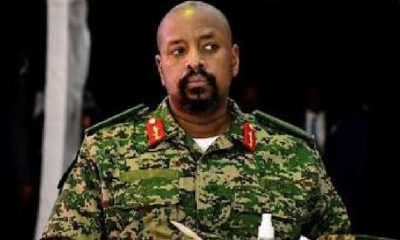
Ugandan President’s Son Announces 2031 Bid To Succeed His Father Who Has Been In Power For Over 40 Years