
Economy
NAICOM: No going back on 2026 recapitalisation deadline

- /home/naijuinz/public_html/wp-content/plugins/mvp-social-buttons/mvp-social-buttons.php on line 27
https://naijablitznews.com/wp-content/uploads/2024/11/NAICOM.jpg&description=NAICOM: No going back on 2026 recapitalisation deadline', 'pinterestShare', 'width=750,height=350'); return false;" title="Pin This Post">
- Share
- Tweet /home/naijuinz/public_html/wp-content/plugins/mvp-social-buttons/mvp-social-buttons.php on line 72
https://naijablitznews.com/wp-content/uploads/2024/11/NAICOM.jpg&description=NAICOM: No going back on 2026 recapitalisation deadline', 'pinterestShare', 'width=750,height=350'); return false;" title="Pin This Post">


The National Insurance Commission (NAICOM) has ruled out any possibility of extending the recapitalisation deadline for operators in the Nigerian insurance industry.
The insurance regulator is insisting that the timeline is rooted in law and cannot be shifted without a fresh legislative process.
The Deputy Commissioner for Insurance (Technical), Dr. Usman Jankara, who represented the Commissioner for Insurance and Chief Executive of NAICOM, Mr. Olusegun Omosehin, disclosed this during a seminar for reporters on the NIIRA 2025 framework in Abuja.
According to Dr. Jankara, the deadline is a statutory provision and not an administrative target that can be adjusted at will.
He stated that any attempt to alter the date would require going back to the National Assembly, securing an amendment to the Act, and obtaining presidential assent.
He said: “NAICOM does not intend to pursue extension. The deadline date is 30 July 2026.”
He explained that the Commission is confident that serious industry players will meet the statutory capital thresholds within the stipulated timeframe, adding that NAICOM expects a stronger, better-governed and more financially robust insurance sector after the recapitalisation exercise is concluded.
The minimum capital requirement now stands at N15 billion for non-life insurers, N10 billion for life insurance companies and N35 billion for reinsurance firms. Dr. Jankara described these figures as the basic operating benchmarks that every insurance entity must meet in order to operate in the market.
He noted that the new capital regime became necessary because inflation and the sharp depreciation of the naira had weakened the real value of the previous capital thresholds.
Jankara recalled that capital bases of N2 billion to N5 billion that appeared substantial during the last recapitalisation exercise are now comparatively insignificant in dollar terms.
He explained that the new capital programme is aimed at strengthening market stability, phasing out weak and marginal operators, encouraging mergers where necessary, and improving the ability of insurers to meet policyholder obligations.
“What we are going to see after this exercise are stronger, better-capitalised and more reliable insurers,” he said.
Providing an update on implementation, Dr. Jankara stated that the recapitalisation programme is already in full motion. An in-house recapitalisation committee has been set up within the Commission, guidelines on the new capital requirements have been issued, and companies are required to submit recapitalisation plans to NAICOM. He added that operators are also expected to provide monthly updates on the progress of these plans.
He explained that the current stage of the exercise is verification of claims by companies that assert they have met the new capital thresholds.
To ensure credibility and transparency, NAICOM has engaged the Big Four global auditing firms — KPMG, Deloitte, EY and PwC — to serve as external verifiers.
These firms are visiting companies, reviewing assets and investments, and authenticating capital positions, after which NAICOM carries out a secondary validation of their reports.
He stressed that, as of now, no company has been officially confirmed compliant. “Whether you are big or small, every operator must pass through the same compliance scanner,” he said.
Dr. Jankara also spoke extensively on the Insurance Policyholders Protection Fund (IPPF), which he described as a safety net created to protect policyholders in the event of the insolvency of an insurance company.
He said the fund operates in a similar manner to the Nigeria Deposit Insurance Corporation (NDIC) in the banking sector, but with broader coverage, because it can intervene even when a company is still operating but in financial distress — thereby performing a dual function comparable to both NDIC and AMCON.
Jankara explained that any financial support granted to troubled insurers from the fund will be treated as a loan that must be repaid, while claims settled through the fund may be recovered from the liquidation proceeds of failed companies. “The fund is self-funding, has a governance committee, and has a sustainability mechanism,” he said.
On funding, he stated that insurance companies will contribute 0.25 per cent of their gross premium income annually to the fund, and contributions will accumulate over time.
Once the fund reaches 25 per cent of the industry’s gross premium, further contributions will be suspended until growth in industry premium resumes. He added that, where insolvency pressures exceed available funds, NAICOM is empowered to request additional contributions from insurers.
He stressed that the fund belongs to the industry and is not a NAICOM-controlled pool, noting that NAICOM is only a member of the management committee.
According to him, operators have largely accepted the levy because of its stabilising role and its capacity to restore confidence among policyholders.
He said the introduction of the fund is expected to address long-standing public mistrust arising from past instances where failed companies could not meet their obligations, thereby damaging the image of the sector.
“This mechanism will improve trust in insurance participation and give Nigerians greater assurance that their interests will be protected,” he stated.
On claims settlement obligations under NIIRA, Dr. Jankara explained that Section 210 of the Act provides clear penalties for failure or undue delay in the payment of legitimate claims.
These include fines payable to the regulator and the application of compound interest on delayed claims, calculated monthly at prevailing bank rates, on the outstanding amount due to policyholders.
He said this provision is designed to discourage unnecessary delays and to compel operators to treat claims settlement as a core responsibility.
The NAICOM executive also addressed the new sanctions regime for regulatory infractions, noting that the former Insurance Act prescribed fixed penalties that did not reflect the magnitude or financial gains associated with certain breaches.
The NIIRA framework, he said, introduces a more flexible and proportionate system that allows NAICOM to impose sanctions based on the severity of an infraction.
He explained that the Commission now applies the principle of disgorgement, which ensures that any financial benefit obtained through non-compliance is fully recovered, in addition to the imposition of further penalties to deter recurrence.
Jankara added that penalties affecting members of the public are expressly stated in the law, while those relating to regulated entities are determined in line with risk exposure and the gravity of the offence.
The Deputy Commissioner for Insurance expressed confidence that the recapitalisation drive and the protection mechanisms under NIIRA will collectively produce a stronger insurance sector that is better positioned to meet obligations, expand coverage and rebuild public trust in the Nigerian insurance industry.

Nigerian Financial Intelligence Unit (NFIU) has moved to forge a new public-private partnership that will bring banks, fintechs, insurers, virtual asset providers and regulators together to tackle increasingly sophisticated financial crimes and illicit financial flows.
The initiative, known as the Joint Financial Intelligence Collaboration (JFIC), is designed to create a trusted platform for public and private institutions to share financial intelligence, detect emerging threats and disrupt illicit financial networks.
The NFIU unveiled the framework at a stakeholders’ engagement in Abuja yesterday, with support from the British High Commission and the Convention for Business Integrity (CBi).
Representatives of banks, insurance companies, fintechs, Virtual Asset Service Providers (VASPs), technology firms, regulators and other stakeholders participated in the engagement, which was aimed at moving the proposed partnership from concept to implementation.
Representing the NFIU Chief Executive Officer, Hafsat Bakari, the Unit’s General Counsel, Felix Obiamalu, said the engagement marked a decisive turning point in the development of the initiative.
“We have moved from dialogue to design, to commitment and implementation,” Obiamalu said.
He stressed that the objective was no longer merely to discuss the concept, but to jointly determine the structure, operation and value of the partnership and how it could be sustained.
“The objective is no longer simply to discuss the concept. It is to jointly determine what this partnership should look like, how it should operate, what value it should create and how it can be sustained over time,” he said.
The NFIU said the initiative was premised on the recognition that no single institution could effectively combat modern financial crime in isolation, making intelligence sharing and coordinated action between government and industry increasingly critical.
Speaking on behalf of the British High Commission, Jehanzeb Khan, Illicit Financial Flows Officer at the Foreign, Commonwealth and Development Office (FCDO), reaffirmed the importance of stronger collaboration between government and the private sector in combating illicit financial flows.
Managing Director of the Convention for Business Integrity, Olusoji Apampa, said the process was deliberately structured to place the private sector at the centre of decision-making.
According to him, this would ensure that the emerging framework reflects operational realities and secures broad ownership among stakeholders.
Delivering the keynote presentation, former Chair of the Egmont Group and former Director of South Africa’s Financial Intelligence Centre, Xolisile Khanyile, described private-sector participation in the fight against financial crime as a national responsibility.
She urged Nigeria to adopt a practical and phased approach to implementing the proposed collaboration.
“Trust, shared ownership and collaboration are the foundations of every successful public-private partnership,” Khanyile said.
She added that given Nigeria’s strategic importance within the global anti-money laundering and countering the financing of terrorism (AML/CFT) framework, the initiative was both timely and necessary.
The engagement ended with strong stakeholder support for the proposed JFIC framework and a commitment to advancing a partnership capable of strengthening financial intelligence, improving threat detection and enhancing Nigeria’s response to increasingly sophisticated financial crimes.

Oil prices surged yesterday with Brent crude hitting over $107 per barrel for the first time since May, as traders braced for a more prolonged supply shock caused by the Iran war.
Oil prices have climbed back above the $100 per barrel mark this week as fighting in the Strait of Hormuz and Red Sea has intensified. The US and Iran have traded strikes, while the Iran-backed Houthis have attacked Saudi Arabia and ignited tensions in the Bab al-Mandab Strait.
In Nigeria, fuel prices have continued to rise, with the cost of diesel (Automotive Gas Oil) reaching about N2,000 per litre in some locations, while petrol has climbed beyond N1,400 per litre in parts of the country.
The fresh increases are adding to pressure on businesses and households, particularly manufacturers, transport operators and other users that depend heavily on petroleum products for power and mobility.
The development has also raised concerns over a renewed increase in transportation and production costs, with businesses likely to pass higher energy expenses on to consumers through increased prices of goods and services.
The latest surge in pump prices comes despite increased domestic refining capacity, underscoring the continued impact of crude supply, distribution costs, market conditions and other factors on the pricing of petroleum products.
Yesterday, Brent crude, the global oil benchmark, rose 6.1 per cent and traded at $107.40 per barrel while US crude rose 6.2 per cent and hit $102 per barrel for the first time since May.
Resurgent conflict has stoked concerns of further disruptions to global oil supplies and the flow of crude through the Strait of Hormuz.
“The step up in attacks in the Strait of Hormuz and by the Houthis against Saudi Arabia suggests that Iran and its proxies are trying to regain the initiative in the war,” Jason Tuvey, deputy chief emerging markets economist at Capital Economics, said in a note.
“This could set back the recovery in oil output in the Gulf and raises the risk that global energy prices rise even further in the coming weeks,” Tuvey said.
For the first time since the war started, S&P Global Energy said Thursday it does not expect Middle East oil production to return to pre-war levels by the end of next year. The firm no longer assumes a definitive end to the war nor a return to normal in the Strait of Hormuz by the end of 2027.
S&P now expects oil prices to stay high in the $80 to $100 a barrel range through next year.
The rise in oil prices has added to nerves about inflation and central bank rate hikes, sending ripples through bonds and stocks, a CNN report stated.
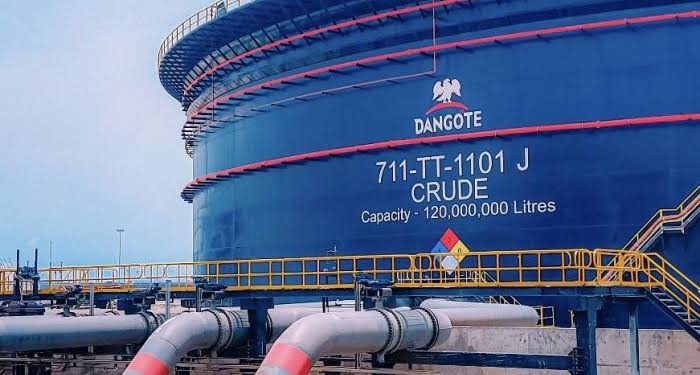
Dangote Petroleum Refinery and Petrochemicals FZE has approved 32 banks, fintechs, mobile operators and other platforms through which investors can subscribe for its shares when the public offer opens.
The company published the list on its official IPO website, warning investors to subscribe only through channels listed on the platform.
The approved channels comprise 20 banks, 17 fintech companies, two mobile operators and NGX Invest.
The company said, “Only subscribe through the channels listed on this page. Do not subscribe through any channel not confirmed here.”
Access Bank
Ecobank
FCMB
Fidelity Bank
FirstBank
Globus Bank
GTCO
Jaiz Bank
Keystone Bank
Lotus Bank
PremiumTrust Bank
Providus Unity
Stanbic IBTC
Sterling Bank
TAJ Bank
UBA
Union Bank
VFD
Wema Bank
Zenith Bank
Fintechs
Bamboo
CardinalStone
Coronation Wealth
Cowrywise
Flutterwave
InvestNaija
InvestNow
Ladder
Meritrade
Moniepoint
Paga
Payaza
PiggyVest
Revve
Vetiva Invest
we.yan
ZedCrest
Mobile operators
Airtel SmartCash
MTN MoMo
NGX
NGX Invest
The refinery’s website currently lists the offer price at ₦525 per share, with a minimum subscription of 10 shares, valued at ₦5,250.
The public offer is part of the Dangote Refinery’s plan to raise capital from the Nigerian investing public through the sale of ordinary shares.

Natural Disasters Destroy Up to $800bn Infrastructure Annually, CDRI Warns

Amusan Finishes 2nd As Russell Wins Inaugural World Athletics Ultimate Championship

Niger unveils fresh Chief of Staff after botched coup




-

 News24 hours ago
FG promises to decrease transport fares nationwide from October 1
-

 News24 hours ago
Customs Starts Final Recruitment Screening Of Candidates
-

 News21 hours ago
BREAKING: Fear, Anger as Sokoto Residents Storm Streets Over Kidnappings, Attacks
-

 News20 hours ago
Sad: Four Mobile Policemen, eight residents killed in Benue invasion
-

 News21 hours ago
Alleged genocide: Provide verifiable evidence of El-Rufai’s involvement -Dalung tasks Defence minister
-

 News19 hours ago
After over 20 years, FG settles N18bn outstanding severance payment to ex-Nigeria Airways staff(Photos)
-

 News4 hours ago
SAD! Teenage twins die after eating bread spiked with ‘otapiapia’
-

 News4 hours ago
Just in: Dangote Refinery jerks up petrol price by N85