
News
Iran Names Khamenei’s Son As New Supreme Leader

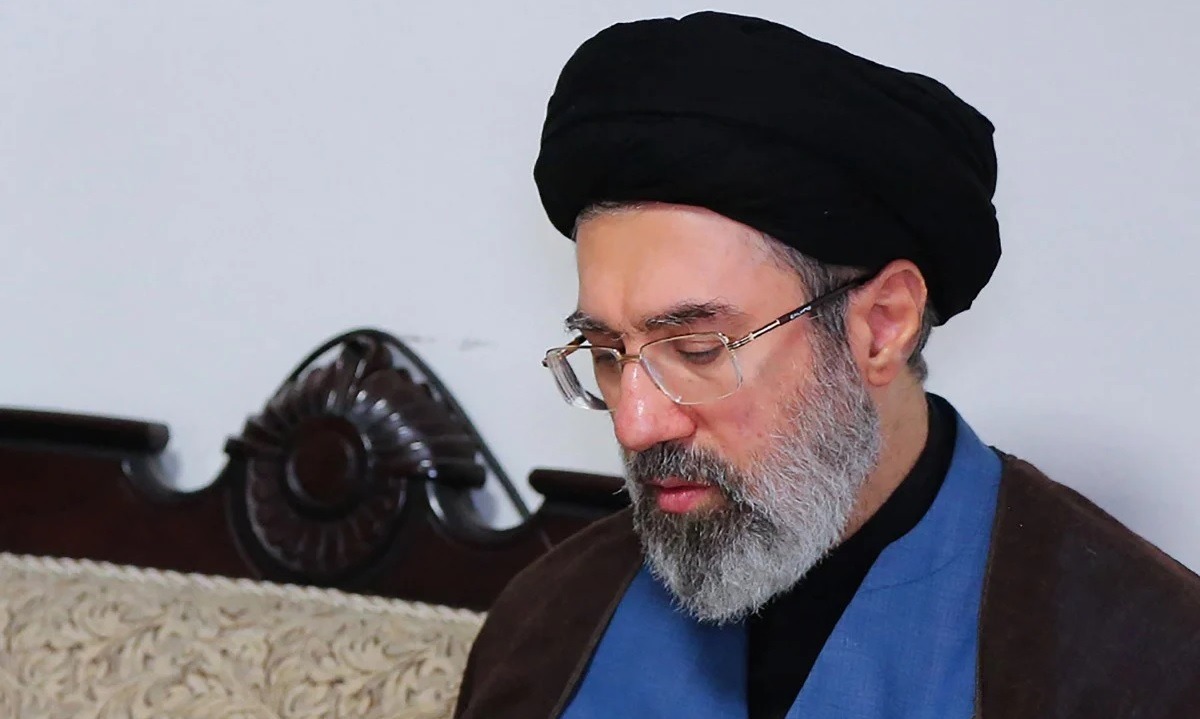


Iran’s ruling clerics on Sunday appointed the slain leader’s son, Ayatollah Mojtaba Khamenei, as the country’s new supreme leader, defying threats from the United States and Israel to oppose him.
Nine days after US-Israeli strikes killed the elder Ayatollah Ali Khamenei and plunged the Middle East into war, the clerical government’s Assembly of Experts convened to choose their next leader.
Mojtaba Khamenei, 56, “is appointed and introduced as the third leader of the sacred system of the Islamic Republic of Iran, based on the decisive vote of the respected representatives of the Assembly of Experts”, the clerical body said in a statement.
It said that the clerical body “did not hesitate for a minute” in choosing a new leader, despite “the brutal aggression of the criminal America and the evil Zionist regime”.
US President Donald Trump has previously dismissed the younger Khamenei as a “lightweight” and insisted again on Sunday that he should have a say in the new leader’s appointment.
“If he doesn’t get approval from us, he’s not going to last long,” he told ABC News before the announcement was made.
But Tehran’s top diplomat said Sunday that the decision was Iran’s alone, adding it would “allow nobody to interfere in our domestic affairs”.
Speaking on NBC’s “Meet the Press”, Foreign Minister Abbas Araghchi went on to demand Trump “apologise to people of the region” for starting the war.
The younger Khamenei is regarded as a conservative figure, notably because of his ties with the Revolutionary Guards, the ideological arm of the Islamic republic’s military.
Israel’s military had previously warned any successor that “we will not hesitate to target you”.
Air ‘Unbreathable’
Overnight, Israel struck five oil facilities in and around Tehran, killing at least four people and sparking blazes that left the skies filled with acrid smoke.
Tehran’s governor told the IRNA news agency that fuel distribution had been “temporarily interrupted” in the capital.
A dark haze hung over the city of 10 million people, blocking out the sun, and the smell of burning fuel lingered in the air.
Authorities warned the fumes could be toxic and urged citizens to stay indoors, but many windows were blown out by the force of the blasts.
“The blaze has been burning for more than 12 hours; the air has become unbreathable. I can’t even go out to do the daily shopping,” said one 35-year-old from Tehran.
“At first, I supported this war. After Khamenei’s death, I celebrated with my friends: we drank wine and we danced.
“But since yesterday… people say there’s not even any gasoline left at the gas stations,” she said, in a text message to contacts in Europe.
As the war extended into its ninth day, Iran’s Revolutionary Guards said they had enough supplies to continue their drone and missile war over the Middle East for up to six months.
Several blasts were heard over Israel’s commercial hub Tel Aviv after the Israeli military said it had detected a salvo of missiles from Iran. The Magen David Adom emergency services said six people were wounded in central Israel.
Advanced Missiles
Trump again refused to rule out sending American ground troops into Iran but continued to insist that the war was all but won despite the ongoing Iranian missile and drone strikes.
Guard’s spokesman, Ali Mohammad Naini, said Iran had so far used only first- and second-generation missiles but would use “advanced and less-used long-range missiles” in the coming days.
Saudi Arabia said on Sunday that two people were killed and 12 wounded by a “military projectile” in Al Kharj province, having earlier said it intercepted a wave of drones headed for targets including the diplomatic quarter of its capital, Riyadh.
Kuwait, meanwhile, said an attack hit fuel tanks at its international airport, and Bahrain reported a water desalination plant had been damaged.
Iran’s health ministry said Sunday that at least 1,200 civilians had been killed and around 10,000 wounded — figures AFP could not independently verify.
Lebanon’s health minister said at least 394 people had been killed in Israeli air strikes since Lebanon was dragged into the war a week ago, including 83 children and 42 women.
Two Israeli soldiers have been killed during the fighting in southern Lebanon, the military said.
Trump, meanwhile, attended the return of the bodies of six American service members killed in a drone strike on a US base in Kuwait last Sunday.
No Clear Way Out
Analysts warn there is still no clear path to ending a conflict that US and Israeli officials say could last a month or longer.
Trump has suggested Iran’s economy could be rebuilt if a leader “acceptable” to Washington replaces the late Supreme Leader.
On Sunday, Pope Leo XIV prayed “that the roar of the bombs may cease, the weapons may fall silent, and a space for dialogue may open”.


By Gloria Ikibah
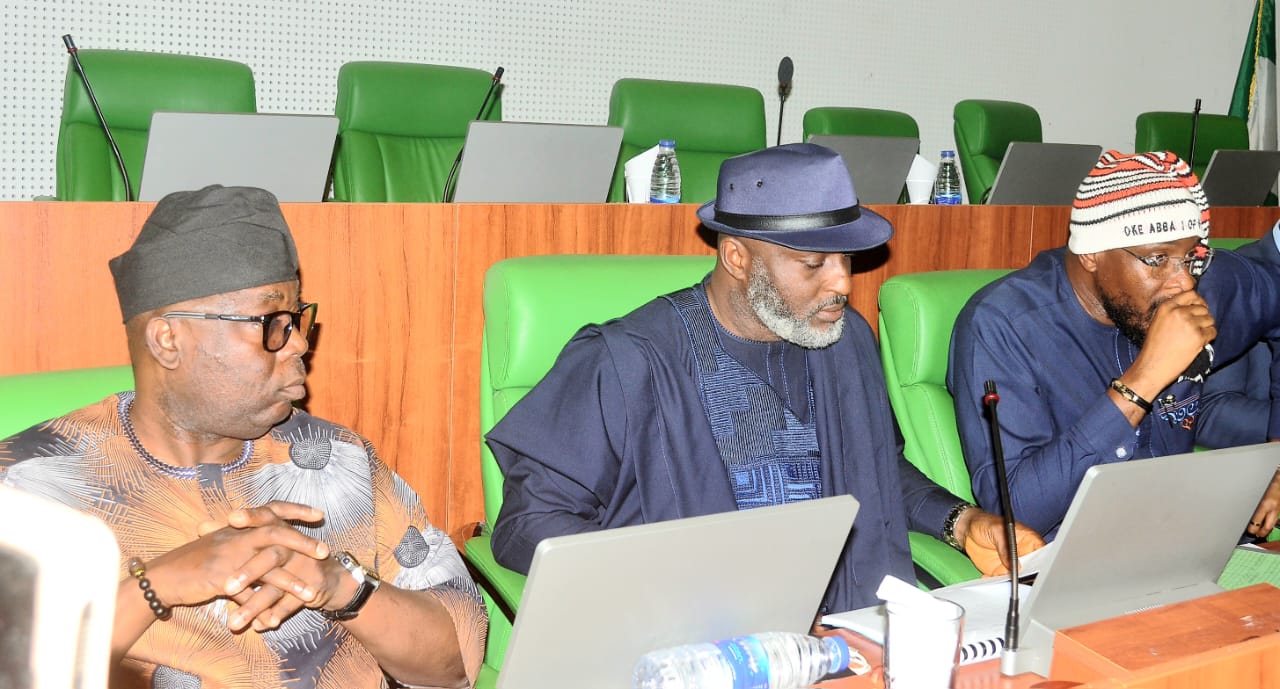
A fresh layer of scrutiny has been placed on billions of dollars in international health funding as the House of Representatives resumed its investigative hearing into grants received by Nigeria for the fight against major infectious diseases.
Chairman House Committee on Infectious Diseases, Rep. Amobi Ogah, in his opening remarks at the hearing on Wednesday in Abuja, called for transparency, cooperation and renewed commitment from all stakeholders involved in managing the funds.
“I want to welcome you all to this resumed hearing on the need to investigate the over $1.8 and $2.8 billion dollars grant received by Nigeria from Global Fund and USAID from 2021–2025,” he said.
Ogah reminded stakeholders that the probe followed a formal mandate by the House in October 2025, adding that earlier sessions had been delayed by public holidays.
He emphasised that the inquiry should not be misconstrued as an attempt to target individuals or organisations.
“You will recall that the House of Representatives… passed the resolution mandating the committee… to investigate this matter and report back.
“After a protracted delay… we are resuming the hearing and the committee is calling for the maximum cooperation of key stakeholders.
“I must reiterate that this exercise is not to witch-hunt anybody, nor a vendetta,.
“Rather it is borne out of the desire to put Nigeria and Nigerians in the epicentre of all our policy thrust, especially on issues of public health threats,” Ogah stated.”
The Committee Chairman explained that the investigation also aimed to reassure international donors of Nigeria’s commitment to proper financial management.
“It is also to restore confidence in our international donor partners… and to ensure that whatever grant we receive must be judiciously expended,” he added.
While acknowledging the contributions of development partners and health actors, Ogah signalled tighter legislative oversight going forward.
“Permit me to remind the Global Fund Country Coordinating Mechanism Nigeria that the National Assembly will request the submission of all implementation plans to the Parliament for approval.
“We also expect quarterly reports of the activities of all recipients and sub-recipients”, he said.
He noted that these measures would become effective as Nigeria prepares for the next phase of Global Fund financing.
Looking ahead, Ogah warned that the country’s ambition to eliminate major infectious diseases by 2030 may be slipping out of reach.
Rep. Ogah called for better coordination across the health sector to avoid waste and duplication.
“I believe we are at a decisive turning point and it is apparent that the target of eliminating all public health threats by the year 2030 may no longer be feasible.
“However, we must not fold our hands… much needs to be done to maximise and efficiently utilise the resources at our disposal.
“There is need to streamline what state actors and non-state actors are doing… so that resources can be efficiently allocated,” Ogah urged.
Reaffirming the committee’s role, he said that the Committee will continue to provide the legislative support to “ensure full implementation of the response against HIV/AIDS, tuberculosis, malaria and other infectious diseases in our country.”

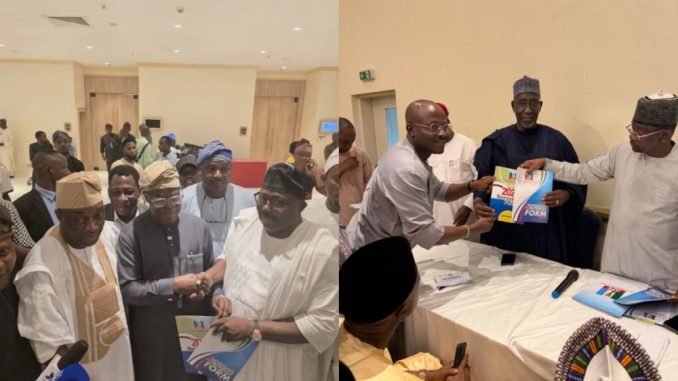
Two major gubernatorial aspirants on the platform of the All Progressives Congress, APC, in Oyo State, Mr Adebayo Adelabu and Barrister Sharafadeen Alli, have picked the party’s Expression of Interest and Nomination forms ahead of the 2027 general elections.
The duo picked the forms on Wednesday in Abuja.
Adelabu is the immediate past Minister of Power and hails from Ibadan.
Alli, on the other hand, currently represents Oyo South Senatorial District on the platform of the APC.
He is also an indigene of Ibadan, the state capital.
Recall that Adelabu’s Personal Assistant, Mr Ajiboye, picked up the form on behalf of his boss at the APC Secretariat in Abuja.
Alli, on his part, collected the form himself in Abuja.
Alli was accompanied by some members of the House of Representatives, among whom were Remi Oseni, Akeem Adeyemi, Olamiju Alao-Akala, and Akin Alabi.

The Nigerians in Diaspora Commission (NIDCOM) has urged the government of South Africa to step up protection for Nigerians and other black immigrants following reports of renewed xenophobic violence.
In a statement issued on Wednesday, April 29, NIDCOM Chairman/CEO Abike Dabiri-Erewa warned that the situation had worsened despite earlier diplomatic engagements between both countries.
According to the commission, recent reports suggest children of Nigerian descent are now afraid to attend school, while business owners are reluctant to open their shops for fear of looting, harassment and targeted attacks. Community leaders have also documented fresh incidents of violence and intimidation within the past 72 hours.
NIDCOM appealed to South African authorities to take “urgent and visible steps” to safeguard foreign nationals, citing obligations under international law and African Union protocols on free movement and human rights.
The commission rejected what it described as the profiling of Nigerians, stressing that crime should be treated as an individual matter. “Crime has no nationality,” the statement said, adding that offenders should be prosecuted under South African law rather than entire communities being stigmatised.
Among its demands, NIDCOM called for increased police patrols in areas where Nigerians live and work, swift arrests and prosecutions of perpetrators, and the creation of a joint Nigeria-South Africa community safety forum involving police, city officials and diaspora leaders.
The commission also urged South African authorities to issue clear public messages condemning xenophobia and stereotyping.
Nigerians living in South Africa were advised to remain law-abiding and avoid high-risk areas after dark. NIDCOM said it is in contact with the Nigerian High Commission in Pretoria, the consulate in Johannesburg, and Nigeria’s Ministry of Foreign Affairs.
While condemning the attacks, the commission praised the majority of South Africans who continue to live peacefully with other Africans, expressing confidence in the longstanding ties between both nations and pledging continued diplomatic engagement to protect Nigerians abroad.

Reps probe $4.6bn health grants, demand stricter oversight

Arsenal Hold Atlético Madrid To 1-1 Draw In UCL Semi-Final

2027: Adelabu, Alli pick APC governorship nomination forms




-
 News21 hours ago
Court bars INEC from recognising ADC congresses conducted by Mark-led C’ttee
-

 News21 hours ago
Police nab suspects over alleged removal of 19-yr-old girl’s womb
-
 News21 hours ago
Unbelievable: Police say officer who publicly executed handcuffed Delta man was under “spiritual attack”
-
 News16 hours ago
Reps back digital overhaul of election petition procedures
-

 News15 hours ago
BREAKING: Supreme Court fixes date for verdict on ADC, PDP leadership tussles
-
 News3 hours ago
2027: Ogbeide-Ihama Joins Edo South Senatorial Race, Says Upper Chamber Not For Neophytes(Photos)
-
 News16 hours ago
Senate confirms Yuguda as CBN deputy governor
-

 Economy15 hours ago
See Black Market Dollar To Naira Exchange Rate Today 29th April 2026