Foreign
Iranian Military Warns of $200 Oil Barrel Amid Escalating Gulf Conflict
- /home/naijuinz/public_html/wp-content/plugins/mvp-social-buttons/mvp-social-buttons.php on line 27
https://naijablitznews.com/wp-content/uploads/2024/03/crude-oil-production.jpg&description= Iranian Military Warns of $200 Oil Barrel Amid Escalating Gulf Conflict', 'pinterestShare', 'width=750,height=350'); return false;" title="Pin This Post">
- Share
- Tweet /home/naijuinz/public_html/wp-content/plugins/mvp-social-buttons/mvp-social-buttons.php on line 72
https://naijablitznews.com/wp-content/uploads/2024/03/crude-oil-production.jpg&description= Iranian Military Warns of $200 Oil Barrel Amid Escalating Gulf Conflict', 'pinterestShare', 'width=750,height=350'); return false;" title="Pin This Post">
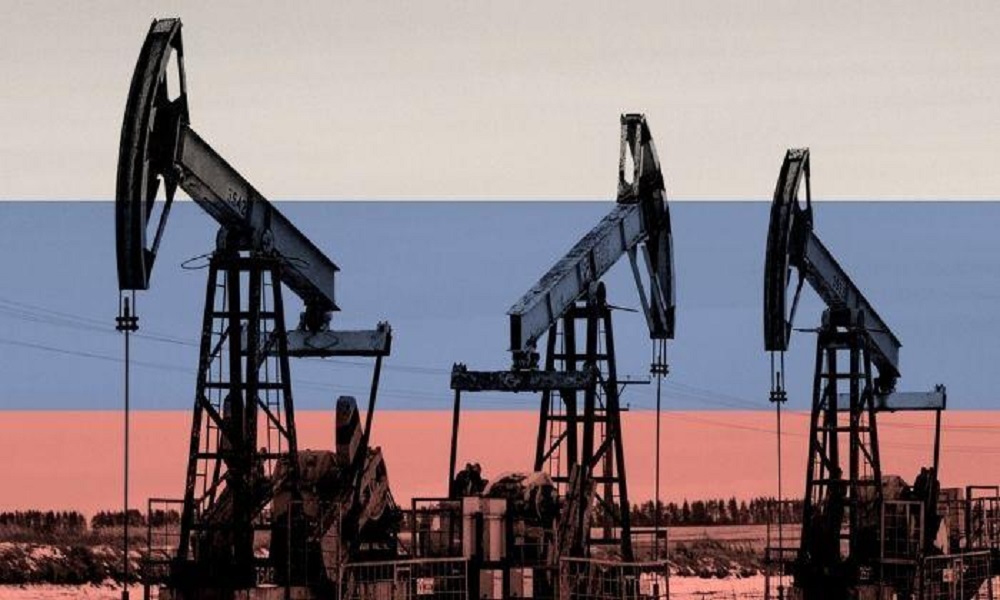
Iran said the world should be ready for oil at $200 a barrel as its forces hit merchant ships on Wednesday and the International Energy Agency recommended a massive release of strategic reserves to dampen one of the worst oil shocks since the 1970s.

The war unleashed with joint U.S. and Israeli airstrikes nearly two weeks ago has so far killed around 2,000 people, mostly Iranians and Lebanese, as it has spread into Lebanon and thrown global energy markets and transport into chaos.
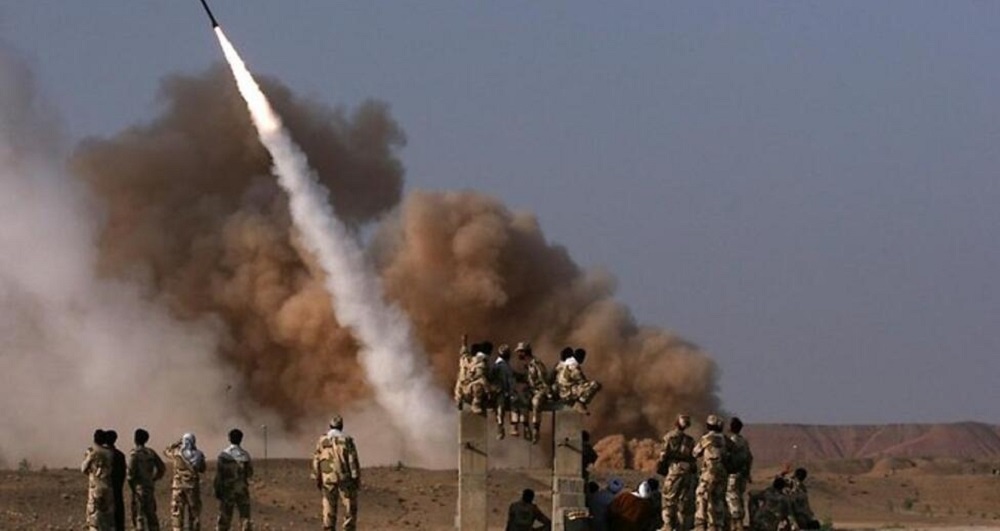
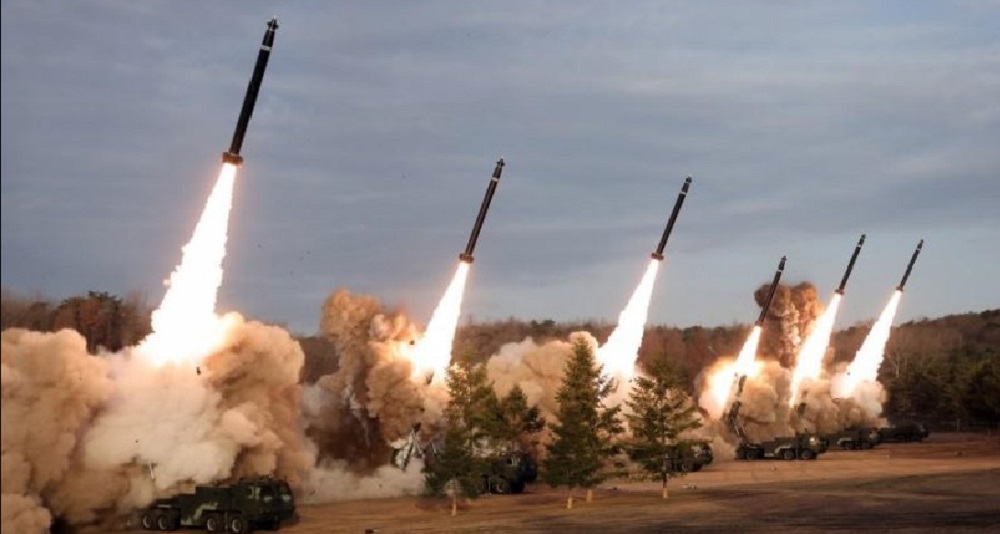
Despite what the Pentagon has described as the most intense airstrikes since the start of the war, Iran also fired at Israel and targets across the Middle East on Wednesday, demonstrating it can still fight back.

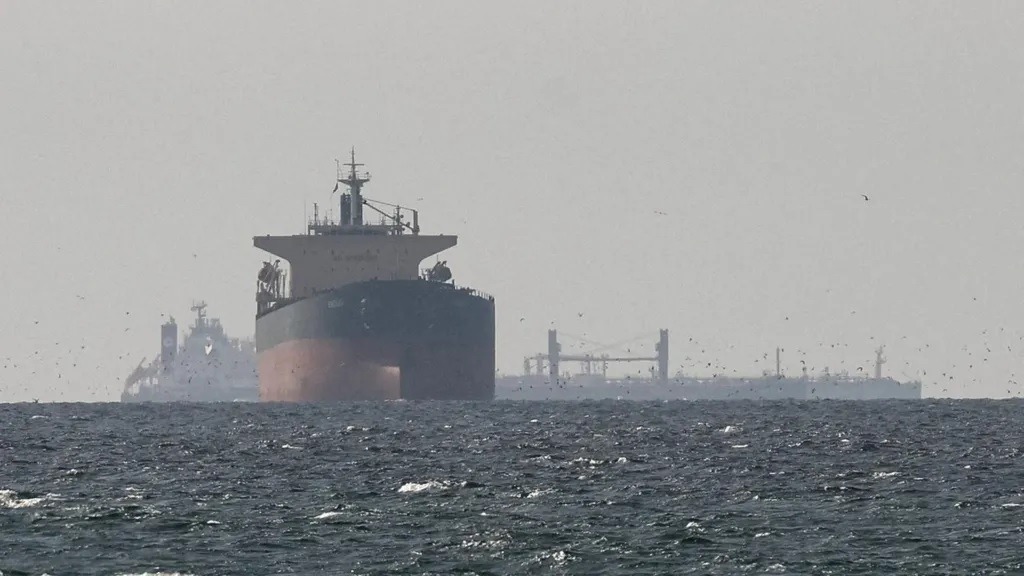
On Wednesday, three vessels were reported to have been hit in Gulf waters as Iran’s Revolutionary Guards said their forces had fired on ships in the Gulf that had disobeyed their orders.
U.S. President Donald Trump, who has not committed to a timeline for military operations, suggested on Wednesday he was not yet ready to call an end to the war.
At a rally in Kentucky, he said “we won” the war, but the United States didn’t want to have to go back every two years.
“We don’t want to leave early, do we?” he said. “We got to finish the job.”
Trump said U.S. forces had knocked out 58 Iranian naval ships and that oil prices would come down and told reporters in Washington that Iran was “pretty much at the end of the line.”
“Doesn’t mean we’re going to end it immediately, but … They’ve got no navy, they’ve got no air force, they’ve got no anti-air traffic anything. They have no systems of control. We’re just riding free range over that country,” he said.
STRATEGIC STRAIT
Trump said the U.S. would now “look very strongly” at the Strait of Hormuz, adding: “The straits are in great shape. We’ve knocked out all of their boats. They have some missiles, but not very many.”
Despite Trump’s words, there has been no sign that ships can safely sail through the strait, a now-blockaded channel along the Iranian coast that serves as a conduit for around a fifth of the world’s oil. An Iranian military spokesperson said the strait was “undoubtedly” under Iran’s control.
Trump said ships “should” transit through the strait but sources said Iran had deployed about a dozen mines in the channel, further complicating the blockade.
On Wednesday, the G7 group of nations – the United States, Canada, Japan, Italy, Britain, Germany and France – agreed to examine the option of providing escort for ships so they can navigate freely in the Gulf.
ABC News said the Federal Bureau of Investigation had warned of Iranian drones potentially striking the U.S. West Coast, although Trump said he was not worried that Iran might launch strikes on U.S. soil.
The State Department also warned that Iran and aligned militias may be planning to target U.S.-owned oil and energy infrastructure in Iraq and warned that militias had previously targeted hotels frequented by Americans.
U.S. and Israeli officials have said their aim is to end Iran’s ability to use force beyond its borders and destroy its nuclear programme.Oil prices, which shot up earlier in the week to nearly $120 a barrel before settling back to around $90, rose nearly 5% on Wednesday amid renewed fears about supply disruption, while Wall Street’s main share indexes fell.
The war has seen ports and cities in the Gulf states, as well as targets in Israel, hit by Iranian drone and missile barrages.
‘LEGITIMATE TARGETS’
The U.S. military told Iranians to stay clear of ports with navy facilities, drawing a warning from Iran’s military that if the ports were threatened, economic and trade centres in the region would be “legitimate targets”.
With prices at the pumps already surging and Trump’s Republican Party trailing badly in the polls ahead of midterm elections in November, oil prices have become an increasingly urgent element in the calculations behind the war.
The International Energy Agency, made up of major oil consuming nations, recommended releasing 400 million barrels from global strategic reserves to stabilise prices, the biggest such intervention in history, which was swiftly endorsed by Washington.
Trump said the IEA decision would “substantially reduce oil prices as we end this threat to America and the world.”
U.S. Energy Secretary Chris Wright said Trump had authorized the release of 172 million barrels from the U.S. Strategic Petroleum Reserve from next week.
The rate at which countries can release strategic reserves will vary and the amount released would account for just a fraction of the supply through the Hormuz Strait.
Iranian officials made clear on Wednesday they intended to impose a prolonged economic shock.
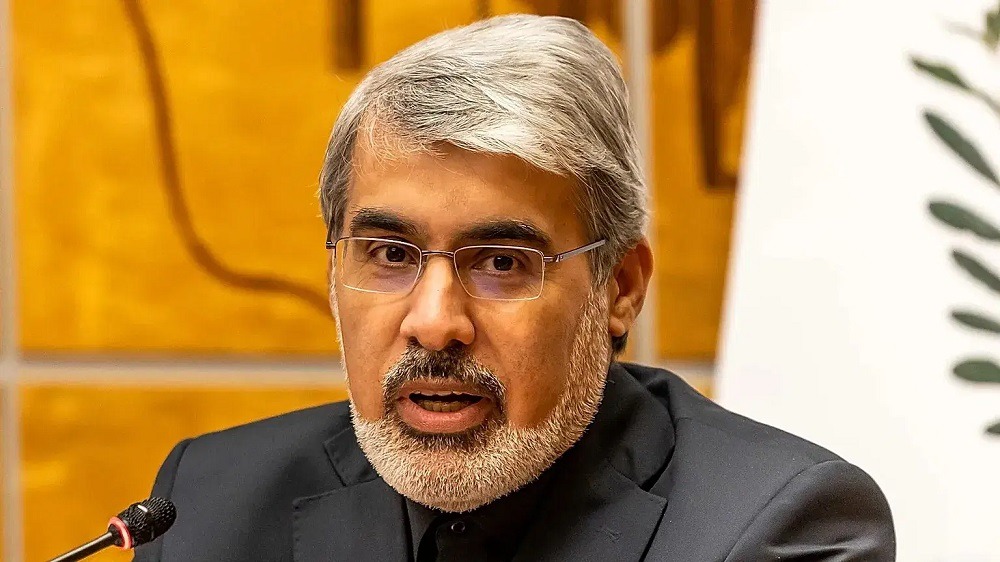
“Get ready for oil to be $200 a barrel, because the oil price depends on regional security, which you have destabilised,” Ebrahim Zolfaqari, spokesperson for Iran’s military command, said in comments addressed to Washington.
After offices of a bank in Tehran were hit overnight, Zolfaqari said Iran would respond with attacks on banks that do business with the U.S. or Israel. People across the Middle East should stay 1,000 metres from banks, he added.
At sea, a Thai-flagged bulk carrier was set ablaze, forcing the evacuation of crew, with three people reported missing and believed trapped in the engine room.
Two other ships, a Japanese-flagged container ship and a Marshall Islands-flagged bulk carrier, were also reported to have sustained damage from projectiles, bringing the number of merchant ships that have been hit since the war began to 14.
IRANIAN OFFICIAL SAYS MOJTABA KHAMENEI LIGHTLY WOUNDED
In Iran, huge crowds took to the streets for funerals for top commanders killed in airstrikes. They carried caskets and brandished flags and portraits of slain Supreme Leader Ayatollah Ali Khamenei and his son and successor, Mojtaba.
An Iranian official told Reuters Mojtaba Khamenei had been lightly wounded early in the war, when airstrikes killed his father, mother, wife and a son. He has not appeared in public or issued any direct message since the war began.
Despite Trump’s calls for Iranians to rise up, U.S. and Israeli hopes that Iran’s system of clerical rule would be overthrown by popular protest have not been borne out.
Iran’s police chief, Ahmadreza Radan, said on Wednesday anyone taking to the streets would be treated “as an enemy, not a protester. All our security forces have their fingers on the trigger”.
Foreign
Drug trafficking: Court sentences popular tv presenter, 11 others to death
An Egyptian court has sentenced popular television presenter, Sarah Khalifa and 11 others to death over their alleged involvement in the production and trafficking of narcotics.
Khalifa, 39, is a well-known television personality and the presenter of ‘Mission Impossible’, a programme that focuses on security and crime-related issues.
According to the state-linked Al-Ahram newspaper, a Cairo court found Khalifa and the 11 other defendants guilty of forming an organized criminal gang involved in procuring materials used to manufacture narcotics for trafficking.
The defendants were also convicted of possessing and carrying unlicensed firearms and ammunition.
The court reached the death sentence after seeking the religious opinion of Egypt’s Grand Mufti, as required by law in capital punishment cases.
However, the verdict is subject to appeal.
State-run Akhbar Al-Youm newspaper reported that the defendants were accused of producing synthetic drugs for trafficking after allegedly importing the materials needed for their manufacture from outside Egypt.
Authorities reportedly seized more than 750 kilogrammes of narcotics and raw materials during investigations into the case. They also discovered two apartments allegedly being used as drug laboratories, alongside unlicensed firearms and ammunition.
Khalifa, who also owns a plastic surgery clinic and a production company involved in organizing parties and events, was further sentenced to five years in prison with other defendants in a separate case involving the kidnapping and assault of a young man.
Egyptian law allows the death penalty for offences including premeditated murder, terrorism, certain rape cases and drug trafficking. Data from the Egyptian Commission for Rights and Freedoms showed that 541 death sentences were handed down in Egypt in 2025
Foreign
US Will Destroy Oil Tankers If American Ships Are Attacked – Hegseth Warns Iran
The United States has issued a fresh warning to Iran, threatening to destroy and sink Iranian oil tankers if Tehran launches further attacks against American naval vessels.
U.S. Secretary of War Pete Hegseth issued the warning on Saturday, September 5, 2026, shortly after American forces struck three Iranian oil tankers following what Washington described as ballistic-missile attacks by Iran’s Islamic Revolutionary Guard Corps (IRGC) against two U.S. Navy warships.
Hegseth, in a statement on X, said the United States would respond directly by targeting Iran’s oil fleet if American ships came under fire.
“It’s simple: if Iran shoots at U.S. ships, we will destroy (and sink) their oil tankers,” Hegseth said, adding that Iran only needed to refrain from attacking the U.S. Navy.
He further claimed that Iran’s oil tanker fleet was vulnerable because, according to him, Tehran lacked the naval and air capabilities necessary to protect the vessels.
“Iran’s oil tanker fleet is defenseless — Iran has no navy or air force. Our planes, ships & subs can strike them all,” Hegseth said, referring to areas under the U.S. Central Command and U.S. Indo-Pacific Command.
US strikes three Iranian tankers
The warning came after U.S. Central Command (CENTCOM) confirmed that American forces had struck three Iranian crude oil carriers.
CENTCOM said the action followed missile attacks by the IRGC against a U.S. aircraft carrier and a guided-missile destroyer. According to the command, both American warships successfully evaded the missiles and no U.S. personnel were injured.
The American military identified two of the vessels as M/T Downy, which was struck off Kharg Island, and M/T Stark 1, targeted near Jask.
Both vessels were described by CENTCOM as “permanently disabled.”
A third tanker, M/T Kylo, also known as Noxen, was attacked in the Gulf of Oman. CENTCOM said the crew was warned to abandon the vessel before it was destroyed.
The U.S. military said the tankers were connected to what it described as a multibillion-dollar “shadow network” allegedly used to finance Iran’s Revolutionary Guard and its regional allies.
US threatens wider action
The commander of U.S. Central Command, Admiral Brad Cooper, also warned that Washington would impose an even greater economic cost on Tehran if Iranian forces continued attacking American vessels.
“If you shoot at two of our ships, we will impose an even higher economic cost — taking out three of yours,” Cooper said.
He added that the United States would not hesitate to defend its forces and, if necessary, destroy Iran’s “limited and exposed oil fleet.”
The latest threats signal a potentially significant expansion of the maritime confrontation between Washington and Tehran, with Iranian oil shipments increasingly becoming a direct target of U.S. military pressure.
Iran condemns attacks
Iran has condemned the American strikes on its oil tankers, describing the attacks as illegal and warning that Washington and its allies would bear responsibility for the consequences of continued attacks.
Iranian authorities have also warned that further attacks on Iranian vessels could trigger retaliation against American interests in the region.
The escalation is particularly significant because it is unfolding around the Strait of Hormuz, one of the world’s most important energy shipping routes.
The waterway connects the Persian Gulf with the Gulf of Oman and is a critical route for global oil supplies. Continued attacks on commercial vessels could therefore have wider implications for international energy markets and global shipping.
With the United States now openly threatening to target Iran’s oil fleet in response to attacks on its Navy, the latest confrontation could mark a new and more dangerous phase in the ongoing U.S.-Iran conflict.
Foreign
UN Backs New World Map To Correct Africa’s Distorted Size
The United Nations General Assembly has overwhelmingly backed a Togo-led resolution calling for a more accurate representation of the world’s continents, particularly Africa, on global maps.
The resolution, “Correct the Map: Rebalancing Global Cartographic Representation and Promoting Equitable Representation of the World’s Regions, Particularly Africa,” was adopted on Friday, September 4, with 164 countries voting in favour, six abstaining and only the United States voting against.
The initiative promotes the gradual adoption of the Equal Earth projection, which represents the relative areas of continents more accurately than the centuries-old Mercator projection. The Mercator map, developed in 1569 primarily for navigation, significantly enlarges landmasses closer to the poles while making equatorial regions such as Africa appear disproportionately smaller.
Togo, which spearheaded the initiative with African Union backing, argued that maps are not merely geographical tools but also shape how societies perceive the world and their place in it.
The resolution is not legally binding and does not ban the Mercator projection, which remains useful for maritime navigation. Instead, it encourages governments, educational institutions and other users to consider more geographically accurate alternatives.
The vote also exposed differing political interpretations of the initiative. The United States was the sole country to oppose the resolution, arguing that the United Nations should concentrate on more pressing global challenges rather than what Washington characterised as an ideological agenda.
The measure nonetheless represents a significant diplomatic victory for African countries seeking to challenge longstanding distortions in the way the continent is visually represented on commonly used world maps.
Africa has not changed its size. The map is finally being asked to show it.
-
Sports24 hours agoSad! Military jet crashes during airshow
-
Economy11 hours agoFG Can’t Account For ₦33.75 Billion Cash Transfers To Vulnerable Nigerians – Auditor-General
-
News11 hours ago2027: Amaechi Chose Buhari Over Jonathan, We’ll Pay Him Back – Wike
-
News20 hours agoMoroccan Wife Has Been Away From Me for 11 Months — Husband Accuses Sheikh Gumi
-
Foreign22 hours agoUK updates list of employers allowed to sponsor Nigerian, other foreign workers
-
News10 hours agoAt 71, Nigerian Man Enrolls at UI Law School: Here Is Why He Did It
-
News11 hours agoBritish-Nigerian Businessman Dies After Penis Enlargement Procedure in Thailand
-
News21 hours agoWatch Wike delivering his speech at civic reception held in his honour today