News
Police confirms fire outbreak at Kano police station
By Francesca Hangeior

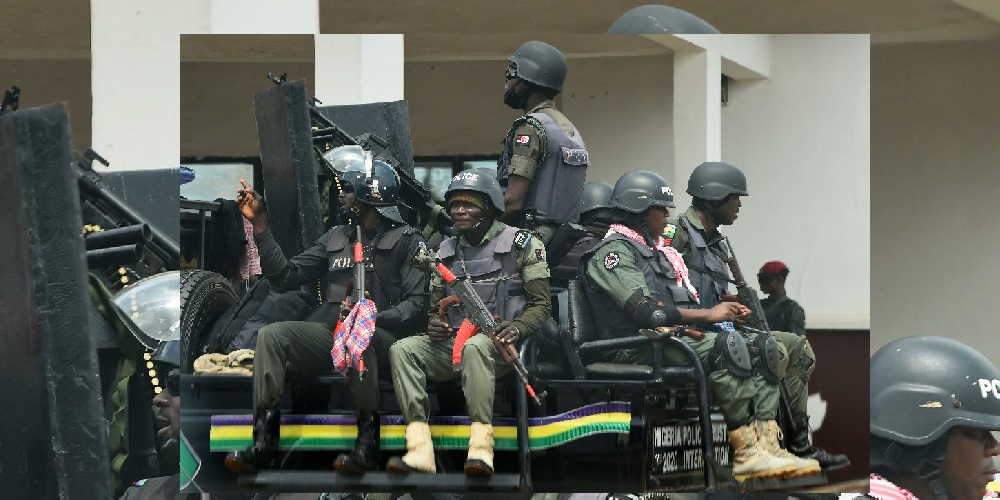
The police command in Kano State says the Divisional Police Office in Nasarawa Local Government Area has been gutted by fire.
The state Commissioner of Police, Mr Usaini Gumel, disclosed in Kano that the incident occurred in the early hours of Monday.

“At about 05.45 a.m. the Divisional Police headquarters was engulfed by fire and a major part of the building was burned down completely.
“This is in spite of prompt response by the State Fire Service,’’ he said.
Gumel said an investigation was ongoing to unravel the cause.
“The area has been cordoned off to prevent intrusion by on-lookers and miscreants, the arms and ammunition in the office are very safe.
The Divisional Police Officer is currently sorting out some of the affected documents,” he said.
Earlier in the year, the Kano Police Command headquarters in Bompai was engulfed by fire on Saturday, January 13.
It was gathered that the fire, which started in the provost’s office, spread to the Finance Department, Conference Room, the office of the Police Public Relations Officer, the office of the Assistant Police Commissioner (Administration), and that of the Deputy Commissioner (Admin), among others.
It was learned that the entire offices on the top floor of the Police Command built in 1967 were engulfed by the fire, while the office of the Police Commissioner was not affected.
News
National Assembly Hails Telecom Growth as NCC Proposes ₦472bn 2026 Budget+Photos
The National Assembly of Nigeria on Thursday commended the steady growth of the country’s telecommunications sector as the Nigerian Communications Commission (NCC) presented its proposed ₦472 billion budget for the 2026 fiscal year.

Lawmakers gave the commendation during a joint budget defence session of the Senate and House of Representatives Committees on Communications, where the telecom regulator also faced questions over service quality and utilisation of previously approved funds.
The session was chaired by Ikra Aliyu Bilbis, Chairman of the Senate Committee on Communications, alongside the Chairman of the House Committee on Communications, Akeem Adeniyi Adeyemi.
Presenting the Commission’s proposal, Executive Vice Chairman and Chief Executive Officer of the (NCC), Aminu Maida, said the regulator is seeking ₦472 billion in total expenditure for 2026 in line with the 2026–2028 Medium Term Expenditure Framework.
Maida who spoke through the Commission’s Head of Finance, Mr James Kalu, noted that the telecommunications sector recorded a growth rate of 5.17 per cent in 2025, maintaining its position as one of the most resilient contributors to Nigeria’s Gross Domestic Product.
He attributed the sector’s performance to increased infrastructure expansion and rising demand for digital services across the country.
According to him, regulatory actions and investments by telecom operators led to the deployment and upgrade of about 2,800 telecom sites nationwide in 2025, boosting network capacity and expanding broadband penetration by six per cent to about 50 per cent nationwide.
The NCC also reported improvements in internet performance indicators during the period, with average data speed rising by about 24 per cent from roughly 16 megabits per second to about 20 megabits per second.
Despite acknowledging the sector’s progress, lawmakers expressed concern over persistent service quality challenges in several parts of the country, including major cities such as Abuja.
They urged the Commission to strengthen regulatory oversight to ensure Nigerians enjoy reliable and affordable telecommunications services.
Legislators also scrutinised the Commission’s financial performance, noting discrepancies between approved budgets and actual spending in the previous fiscal year.
According to the lawmakers, ₦95 billion approved for recurrent expenditure in 2025 saw about ₦73 billion utilised, while only about ₦7 billion of the ₦10 billion allocated for capital projects was spent.
However, the committee commended the NCC for its strong revenue contribution to the Federal Government.
The Commission had initially projected about ₦30 billion in remittances to the Consolidated Revenue Fund in 2025 but eventually remitted ₦102 billion.
For the 2026 fiscal year, the NCC proposed ₦424 billion for recurrent expenditure and ₦15 billion for capital and special projects.
The Commission also projected that it would remit ₦207 billion to the Federal Government and transfer ₦20 billion to the Universal Service Provision Fund to support telecom infrastructure expansion in rural and underserved communities.
Beyond financial issues, lawmakers asked the Commission to provide clarification on its long-term digital strategy, including its 2036 roadmap, spectrum management plans, Right-of-Way framework and data retention policies.
In response, the NCC assured lawmakers of its commitment to strengthening regulatory compliance, enhancing consumer protection and expanding telecommunications infrastructure as part of Nigeria’s broader digital transformation agenda.
News
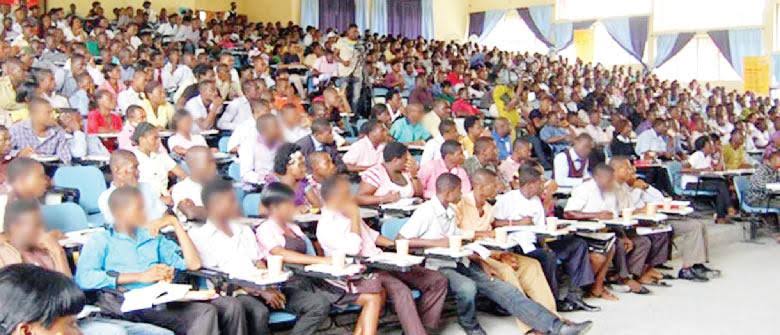
AAU denies withholding NELFUND student loans
The management of Ambrose Alli University (AAU), Ekpoma, Edo State, has denied allegations that it withheld funds disbursed under the Federal Government’s Nigerian Education Loan Fund (NELFUND) scheme.
The denial follows reports by an online news platform alleging that some graduates of the institution accused the university of failing to release student loan funds approved in their names.
In a statement made available to journalists and signed by the Principal Assistant Registrar and Head of Information, Protocol and Public Relations, Otunba Mike Ade Aladenika, the university insisted that there was “no scandal of any kind” in its handling of the student loan programme.
“The management of Ambrose Alli University, Ekpoma, wishes to categorically state that there is no scandal of any kind in our dealings with NELFUND and the benefitting students of our university,” the statement said.
The university explained that it first participated in the NELFUND loan programme during the 2024/2025 academic session, noting that the timing of the loan application process created complications for some students who were completing the previous academic year.
According to the management, when the loan application portal opened, the university was still concluding the 2023/2024 academic session.
“As at the time the application portal opened for the 2024/2025 loan scheme, our university was concluding the 2023/2024 academic session. Some final-year students applied for the loan, but by the time of disbursement, they had already graduated,” the statement explained.
The institution said the development created uncertainty regarding the eligibility of the affected applicants, prompting the university to seek clarification from the management of the Nigerian Education Loan Fund.
“Due to this conflict, we sought clarification from NELFUND, and they indicated that the affected individuals were not eligible since they were no longer students at the time of disbursement,” the statement added.
AAU further maintained that it had complied with all the guidelines and procedures provided by the loan fund and assured that discussions with the agency were ongoing to resolve the issue.
“We complied with NELFUND’s guidelines. Engagement on this matter remains ongoing, and affected graduates will be kept informed of updates through established channels,” the university stated.
The clarification comes amid allegations by 13 graduates of the institution who claimed that the university withheld loan funds disbursed in their names under the NELFUND scheme.
According to the affected graduates, they applied for the loan during their final year but were unable to access the funds before their final examinations, forcing them to rely on personal savings, family assistance and private loans to pay their tuition fees.
They alleged that months after graduating, they discovered that the loan had already been disbursed to the university, despite the fact that they had independently settled their school fees.
The graduates also expressed concern that the loan still appears under their names on the NELFUND portal, raising fears that they may be required to repay funds they never personally received.
They have therefore called on the university to provide a formal explanation, refund the loan amounts, and clarify how repayment obligations would be handled if the funds are not returned.
The controversy has sparked renewed debate about the implementation of the Federal Government’s student loan scheme and the need for clear administrative processes to prevent disputes between institutions and beneficiaries.
News
Enugu Assembly passes law to harmonize taxes, ban illegal levies, roadblocks
The Enugu State House of Assembly has passed a landmark law aimed at harmonizing taxes and levies across the state, a move intended to eliminate illegal roadblocks and unauthorized collections that have long burdened residents.
The bill, titled “Enugu State Harmonises Taxes and Levies (Approved List for Collection) Law 2026,” underwent thorough readings and deliberations, including review by a committee of the whole house, before being passed into law.
Members of the Assembly emphasized that the legislation would curb multiple taxation, promote transparency, and ensure proper verification of taxes through the Enugu State Board of Internal Revenue.
Hon. Iloabuchi Aniagu, representing Nkanu West State Constituency, highlighted the persistent menace of illegal roadblocks, particularly along federal roads, and urged residents to verify taxes directly with the Board of Internal Revenue to avoid undue payments.
“With this bill, we will put a stop to these roadblocks so that every collection of any state tax will be straight,” Aniagu said, stressing the importance of proper public awareness.
Hon. Malachy Onyechi of Nsukka West praised the law for fostering transparency and good governance, noting that harmonized taxes would strengthen government revenue and fund infrastructural development. He emphasized that educating citizens on tax structures is key to ensuring compliance and understanding of government operations.
Hon. Okey Mbah added that the law would boost investor confidence by providing a predictable and stable tax environment, while advocating for public sensitization to prevent misinformation.
However, some concerns were raised about enforcement and penalties for illegal levies. Hon. Raymond Ugwu suggested that proposed penalties may be too lenient and recommended the creation of a regulatory board to oversee enforcement and determine appropriate punishments.
Overall, the law marks a significant step toward a more transparent, efficient, and investor-friendly taxation system in Enugu State, protecting residents from arbitrary levies while enhancing fiscal discipline and good governance.
-
News24 hours agoPresident Tinubu Reappoints Ayo Omotayo As NIPSS DG
-
News6 hours agoSecuring Credible Elections in 2027: What Nigerians Must Do.
-
News18 hours agoCourt quashes NDLEA’s non-declaration of assets against case Kyari, brothers
-
News18 hours agoWorld Cup: NFF says we’re still hopeful, no word from FIFA yet
-
News6 hours agoTinubu Govt Approves New Gratuity Package For Federal Workers
-
News18 hours agoEx-Kano State Commissioner Dies
-
News23 hours agoArmy Chief, Shaibu deploys more troops to tackle insecurity in Benue
-
News6 hours agoMiddle East War Halts Work At WHO’s Dubai Emergency Hub