Connect with us

News

Full Text of Press Briefing on The Bills Proposing Constitutional Alterations For a Transition To Parliamentary System of Government

Published

on

ADVERTISEMENT
Zoom Ad
ADVERTISEMENT
Zoom Ad

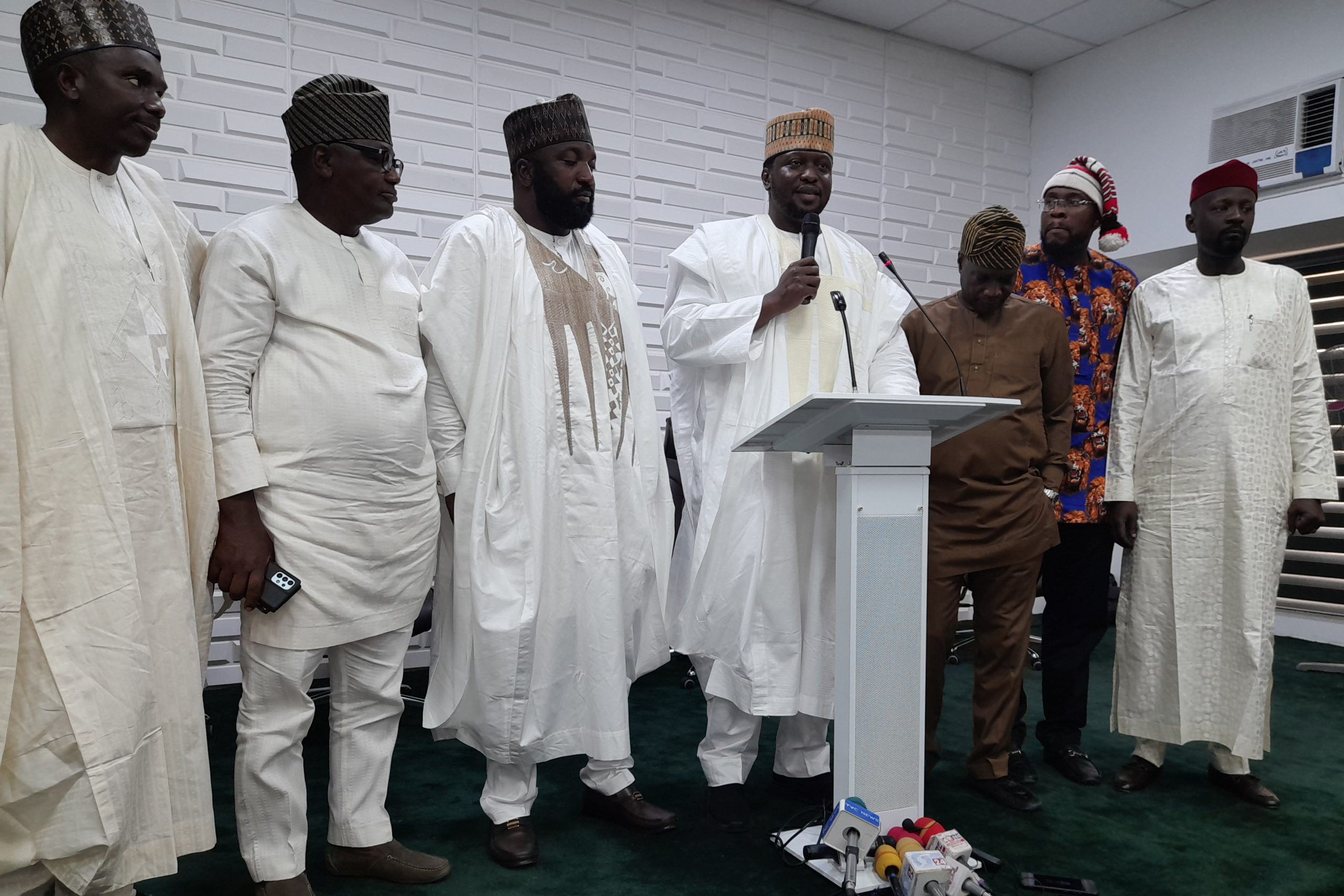
Good afternoon ladies and gentlemen of the press.

Today, we stand on the cusp of history, as lawmakers across party affiliations and regional backgrounds come together to present bills proposing Constitutional Alterations that seek a transition to Parliamentary System of Government. 

These bills, seeking to alter the Constitution of the Federal Republic of Nigeria 1999, advocate a transition from the current presidential system to a parliamentary system at all levels – federal, state, and local government.

The proposed alterations, when passed, would significantly impact the national political landscape. 

Our founders in their wisdom and in a political atmosphere devoid of compulsion, and having considered the interests of their native peoples and their desire to live together in a country where truth and justice reign, where no man is oppressed, and where all citizens live in peace and plenty, adopted the parliamentary System of Government. 

Advertisement

That was the governance system of the First Republic, a period when legislative and executive powers were exercised by the representatives of the people in parliament and in the executive, and by the nature of the system these representatives were accountable to the people. For six years while it was in operation, the system worked for the country. 

The collapse of the First Republic and the long stretch of military rule culminated in the adoption of a new system of government, theoretically fashioned after the Presidential System of the United States but in practice imbibed the uttermost attributes of military rule. No wonder the Nigerian President appears to be one of the most powerful Presidents in the world.

Over the years, the imperfections of the Presidential System of Government have become glaring to all, despite several alterations to the constitution to address the shortcomings of a system that has denied the nation the opportunity of attaining its full potentials. 

Among these imperfections are the high cost of governance, leaving fewer resources for crucial areas like infrastructure, education, and healthcare, and consequently hindering the nation’s development progress, and the excessive powers vested in the members of executive, who are appointees and not directly accountable to the people.

Advertisement

The bills presented today seek a return to the system of government adopted by our founders, which made governance accountable, responsible and responsive, and ultimately less expensive. 

With the presentation of these bills today, we hope to achieve the following:

1.  Ignite, provoke a national conversation about the future of Nigerian governance system. 

 2.   To ensure robust public debates, stakeholder consultations, expert analyses, and a thorough and informed decision-making process. 

Advertisement

 3. To raise awareness about this significant development and encourage constructive dialogue on the potential implications of these proposed constitutional alterations.

The future of Nigerian governance rests on informed public engagement, and responsive and responsible leadership.

The fundamental changes outlined in the bills include:

1.  Parliamentary System: Replacing the President with a Prime Minister to serve as the Head of Government and establishing the office of the President as a ceremonial leader. These elective offices are to be chosen from the elected members of the legislature.

Advertisement

2.  Legislative Elections: Shifting the process of electing Governors and Chairmen of Local Governments from general election to voting within their respective legislative bodies.

3. Streamlined Administration: Potentially reducing bureaucratic hurdles and fostering closer collaboration between the executive and legislative branches.

Our conviction is that a streamlined Executive Branch, which replaces the President and Vice President with a Prime Minister and Cabinet chosen from the legislature could lead to a smaller central government, reducing salaries and administrative expenses.

We also hold strongly that shifting the election of Governors and Local Government Chairmen from general election to votes within their respective legislative bodies could save billions spent on state and nationwide campaigns.

Advertisement

Because ministers, commissioners (at the state level) and supervisors (at the local government level) emerge from parliament, there is a greater coordination between the executive and the legislature, just as there will be increased legislative scrutiny, which would make cabinet members responsive to the yearnings of the people and more accountable.

Gentlemen of the press, the proponents of these alterations to the constitution for a parliamentary system of government have placed the interest of our nation above all other interests. Our hope is that the national conversation that would be ignited by these bills would lead to a system of government that works and our dear nation would attain her full potentials.

Thank you.

Rep. ABDUSSAMAD DASUKI

Advertisement

Spokesman Parliamentary Bill Sponsors
Continue Reading
Advertisement

News

BREAKING: Finally, Power Minister, Adelabu resigns from Tinubu’s cabinet

Published

on

ADVERTISEMENT
Zoom Ad
ADVERTISEMENT
Zoom Ad

Finally, Minister of Power Adebayo Adelabu has resigned from President Bola Tinubu’s cabinet.

In a resignation letter dated April 22, 2026, and addressed to President Bola Tinubu, Adelabu said the decision would take effect from April 30, 2026, to allow for a smooth transition.

The letter, routed through the Office of the Secretary to the Government of the Federation, stated that he was stepping down with “a deep sense of honour and profound gratitude.”

He wrote, “I write with a deep sense of honour and profound gratitude to formally tender my resignation as the Honourable Minister of Power of the Federal Republic of Nigeria. This resignation is to take effect on 30th April 2026, in order to allow sufficient time for a smooth and orderly handover of responsibilities.”

Adelabu thanked the President for the opportunity to serve, describing his appointment as a privilege.

He said, “Your Excellency, I remain sincerely grateful for the privilege and confidence you reposed in me by appointing me to serve our great nation in this capacity.

It has been a rare honour to contribute to national development under your leadership and to play a role in advancing reforms in the power sector—one of the most critical foundations of Nigeria’s industrial growth and economic transformation.”

Continue Reading

News

Reps Begin Review of Police Trust Fund Law, Tighten Timeline for Committee Work

Published

on

ADVERTISEMENT
Zoom Ad
ADVERTISEMENT
Zoom Ad

By Gloria Ikibah

As part of efforts to strengthen the country’s security architecture, President Bola Tinubu, has sent a formal communication to the House of Representatives on seeking legislative approval for the repeal and re-enactment of the Nigerian Police Trust Fund (NPTF) Establishment Act, 2025.

The request which was transmitted to the House for consideration and passage on Wednesday at plenary, underscores the need to improve the management and administration of the fund, enhance police training, and provide modern equipment for the Nigeria Police Force.

According to the letter,, the proposed amendment is aimed at boosting the operational capacity, accountability, and sustainability of the Police Trust Fund in line with current security challenges.

The President urged lawmakers to give the bill expeditious consideration, as the said the reform will improve the welfare of police personnel and support skill development across the force.

In another development,  the House Committee on Rules and Business has moved to tighten legislative discipline, directing all standing and ad hoc committees to submit reports on bills and motions within set timelines in line with House procedures.

Chairman of the committee, Rep. Francis Uwaive, reminded all committee chairmen to treat all assigned matters within 30 days, with the risk of losing such assignments after 60 days if no progress is made, except where a short extension is granted.

A firm deadline has also been set for all outstanding reports, with the end of April 2026 as the cut-off point, and non-compliance attracting automatic discharge.

Amid the formal proceedings, lawmakers briefly paused to celebrate two members marking their birthdays, acknowledging their contributions to public service and national development.

The mood later shifted as the House paid tribute to a former member of the Fifth Assembly, observing a minute’s silence in his honour following his passing after a prolonged illness.

He was remembered for his dedication and service to his constituents in Benue State, with colleagues noting that his death represents a significant loss to the legislature and the country.

Continue Reading

News

Iran Seizes Two Ships attempting to cross Strait of Hormuz

Published

on

ADVERTISEMENT
Zoom Ad
ADVERTISEMENT
Zoom Ad

Iran’s Revolutionary Guards said on Wednesday that their naval forces stopped two ships attempting to cross the Strait of Hormuz and directed them to the territorial waters of the Islamic Republic.

“The Islamic Revolutionary Guard Corps naval force this morning identified and stopped in the Strait of Hormuz two violating ships,” the Guards said in a statement.

“The two offending ships… were seized by the IRGC’s naval forces and directed to the Iranian coast.”

They identified one ship as “MSC-FRANCESCA”, which they said belonged “to the Zionist regime” in reference to Israel, and the other as “EPAMINONDAS”, which they said was “tampering with navigation systems and jeopardising maritime security.”

The Guards further warned against any action against the regulations imposed by the Islamic republic in the strait “as well as activities contrary to the safe passage” through the waterway.

Tehran has said vessels must seek permission to leave of enter the Gulf through Hormuz, through a route that in peacetime accounts for a fifth of the world’s oil and gas exports along with other vital commodities.

Source: AFP

Continue Reading

Trending

Copyright © 2024 Naija Blitz News