
Economy
Despite FG’s Clampdown: Dollar Hits N1,900; Pound, N2,250

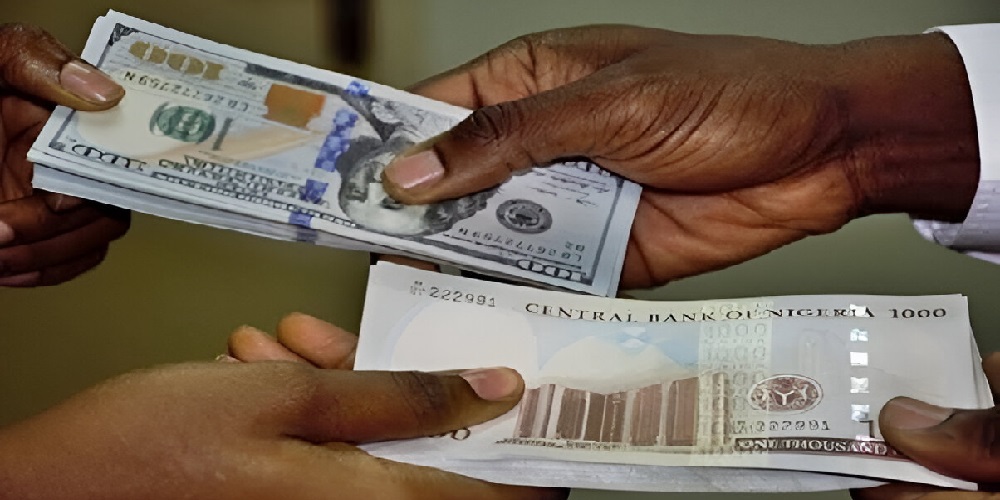


The naira Tuesday slid further at the parallel market in spite of the clampdown the federal government ordered on foreign exchange market speculators.
Bureau De Change (BDC) hubs were raided in Abuja, Lagos and Kano and some operators were arrested.
Despite the raids, however, the naira plunged further with a dollar exchanging for 1,900 in Abuja and Kano, and N1,800 in Lagos; while the British Pound was exchanged for N2,250.
However, at the official market, the naira recorded a marginal gain closing at N1,551.24 as against the earlier N1,574.62, according to the Nigerian Autonomous Foreign Exchange Market (NAFEM).
NSA’s clampdown
Daily Trust reports that the National Security Adviser, Nuhu Ribadu, had earlier yesterday directed operatives of the Nigeria Police Force, the Economic and Financial Crimes Commission (EFCC), the Nigeria Customs Service (NCS) and the Nigeria Financial Intelligence Unit (NFIU) to clamp down on forex market speculators.
This, he said, was a concerted effort to safeguard Nigeria’s foreign exchange market and combat the activities of speculators, both domestic and international, operating through various channels.
Ribadu, in a statement by Zakari Mijinyawa, Head, Strategic Communications in the Office of the NSA, said the office had to wade in at this time because some individuals and organisations had continued to undermine proactive measures of the Central Bank of Nigeria to stabilise the foreign exchange market and stimulate economic activities.
But some experts who spoke to Daily Trust described the move as faulty, saying there are better ways to address the volatility.
The statement from Ribadu said, “The CBN’s proactive measures to stabilize the foreign exchange market and stimulate economic activities have been commendable.
“However, the effectiveness of these initiatives is being undermined by the activities of speculators, both domestic and international, operating through various channels, thereby exacerbating the depreciation of the Nigerian Naira and contributing to inflation and economic instability.
“To reduce the pressure on the naira, the EFCC raised a 7,000-man special task force across its 14 zonal commands to clamp down on dollar racketeers.
“Yet, recent intelligence reports have highlighted continued illicit activities within the Nigerian foreign exchange market. The ONSA and CBN are therefore embarking on this collaborative approach to tackle these infractions.
“This partnership will involve a coordinated effort with key law enforcement agencies, including the Nigeria Police Force, the EFCC, the Nigeria Customs Service and the Nigeria Financial Intelligence Unit (NFIU).
“The primary objective of this alliance is to systematically identify, thoroughly investigate and appropriately penalize individuals and organizations involved in wrongful activities within the FX market,” the official said.
The NSA said by leveraging the expertise of those four security agencies, the government aimed at deterring what he described as “malicious practices”, in order to protect investors’ interests and promote sustainable economic growth.
Acting on the NSA’s directive, the security operatives swooped on the streets of Lagos, Abuja and Kano yesterday to raid unlicensed BDC operators.
At the popular Allen Avenue in Lagos, about five BDC operators were reportedly arrested when the EFCC operatives stormed the area around 10am.
Many of the unlicensed operators transacting by the road fled on sighting the security operatives.
An operator said: “They came to our place today; they said we are the ones responsible for the hike in foreign exchange. All of us had to take to our heels for fear of arrest.”
Another said five of his colleagues were arrested during the raid, adding, “Many of us have run away now and we are monitoring the situation.”
Dollar sells for N1,870 in Kano
A dollar was exchanged for N1,870 at the popular Wapa Bureau de Change market on Tuesday.
An operator, Ammar Aminu, said though no EFCC operative visited the market for a clampdown on forex speculators, the price of the dollar kept going up.
He said, “Today, the dollar has risen to N1,870 from N1,750 it was sold on Monday.”
Normal trading activities were ongoing when our correspondent visited the area.
Bureau De Change operators in Abuja confirmed that EFCC operatives raided the popular Zone 4 business area.
Some of the operators, who spoke to Daily Trust, said the operatives came in their numbers on Monday.
A BDC operator, Gidado Muktar, said: “We were just on our own when we saw operatives of the EFCC in their numbers in over three Hilux vans storm our vicinity at Zone 4 and the next thing we saw was that they started arresting some of our members. They put them in their vans and drove off.
“What I was told later was that they were acting on a tipoff that some people were hoarding dollars and that was why they came and effected arrests.”
Another operator, Mustapha Ibrahim said: “The way and manner the EFCC came was shocking; as if the BDCs were the ones responsible for the naira’s fall.”
Raid not way to go – Economist
An economist, Dr Oluseye Ajuwon, in an interview with Daily Trust yesterday, said clamping down on BDC operators was not the solution to the foreign exchange crisis.
Ajuwon, a lecturer at the Department of Economics, University of Lagos, said the raid was like compounding the problem.
“There are some kinds of forex demands that you cannot go to banks to do. You have to resort to all these BDCs. The way they (the government) are going about it now is like pushing them into a darker place.
“The implication of that is that it would now become more expensive. I don’t see it solving any problem. Rather, it would compound the problem.
“What will create hoarding is if there is scarcity. If you can’t remove scarcity, there will be hoarding. If we really want to solve the problem, just remove the scarcity.
“Everything they (government) are doing now is a short-time measure. What they are doing now is trial and error and the way they are going about it is wrong.”
‘How to stabilize forex market’
An Abuja-based think tank, Agora Policy, in a report titled ‘Steadying Nigeria’s Fledgling Foreign Exchange Reform’, through its financial analyst, Wale Thompson, said it was high time the government embraced a new policy to stabilise the market.
According to the analyst, mere FX adjustments to adapt to reality “may lead to short-lived gains, followed by a return to previous practices.”
He said, “To avoid this cycle, forex and monetary policies should be part of a comprehensive economic plan where the exchange rate serves as a tool for export diversification and for attracting capital flows to foster overall development. Successful fixed-to-floating transitions are characterized by certain key features.
“The long-stated objective of Nigeria’s policymakers is to diversify its export base which, given Nigeria’s labour abundance, distils to ensuring that industrial activity is geared towards the production of exportable goods that use a lot of low-skilled labour that is abundant in Nigeria.
“To ensure export competitiveness of these non-oil exports, exchange rate policies must look to deliver an extra layer of competitiveness to export prices in a form that favours domestic industries,” the analyst added.
NACCIMA wants dollar pegged at N850
The President of the Nigerian Association of Chambers of Commerce, Industry, Mines and Agriculture (NACCIMA), Dele Kelvin Oye, in separate letters to the CBN Governor, Olayemi Cardoso and the Minister of Industry, Trade and Investment, Doris Nkiruka Uzoka-Anite, yesterday, urged that the dollar be pegged at between N750 and N850 from March 21.
In the letter to Cardoso titled ‘NACCIMA’s Suggestions for Addressing the Continuous Depreciation of our Currency,” Oye called for enforcement of currency regulations, transparent communication, official transactions, remittance oversight as well as monitoring and compliance.
He asked the CBN to also enforce stricter regulations on currency transactions, including hefty fines, prosecution of breach of laws and confiscation of funds involved in transactions that violate a specified exchange rate band, such as the 15 per cent maximum difference from the official rate.
“The government should consistently communicate its policy intentions and economic measures to the public to strengthen confidence in the nation’s economic management.
“All government agencies, at every level, should be mandated to conduct their transactions at the official rate, and severe penalties should be imposed for violations,” he said.
See us as partners – BDC operators
The Association of Bureau De Change Operators of Nigeria (ABCON), while speaking on the raid yesterday, decried the activities of unlicensed operators who have no record of customers they were dealing with.
The president of ABCON, Aminu Gwadabe, in a chat with Daily Trust, asked the government to partner with his members to address currency volatility.
He said his members were duly licensed to transact forex business in their offices.
“The activities of those unlicensed are what the EFCC and security agencies are not happy about. So, you can’t see a BDC outside and call him a BDC operator without an office. One of the requirements to operate as a BDC is that you must have an office.
“On our part, we are coming up with solutions that would automate the entire retail exchange where we make it simpler for even the ones that want to operate under the Bureau de Change so that their activities can be monitored because most of them are operating where the security agencies and the CBN don’t have reports of their transactions.
“So, we are putting a solution which we believe would be to the credit of the government, that can come and automate, digitize, liberalise, democratize the entire retail sector in the country,” he said.
According to him, almost all licensed operators have gone into extinction because the resources to operate are not there.
He said through partnership with the BDC, the government can boost liquidity in the market and address the current forex hike.
(Daily Trust)



The Nigeria Deposit Insurance Corporation (NDIC) has commenced the final phase of winding down 89 defunct Microfinance Banks (MFBs) and Primary Mortgage Banks (PMBs) across the country following their acquisition by new operators under its resolution framework, it emerged on Wednesday.
The Corporation said the move follows the earlier revocation of licences by the Central Bank of Nigeria (CBN) in May 2023, which affected 179 microfinance banks and four primary mortgage banks.
Under the Purchase and Assumption (P&A) model, according to Hawwau Gambo, the Head of Communication and Public Affairs, 89 new institutions were subsequently licensed to take over the assets and liabilities of the failed banks and have since commenced operations under new identities.
NDIC, acting as liquidator, the statement noted, will now approach various divisions of the Federal High Court to obtain formal orders dissolving the defunct entities and discharging the Corporation from its liquidation responsibilities, in line with its enabling law.
A breakdown of the affected institutions shows that Lagos accounts for the highest number, with 27 banks undergoing the process.
This is followed by Osun with seven, Anambra with six, the Federal Capital Territory (FCT) with five, while Akwa Ibom, Ogun, and Adamawa recorded four each.
Oyo, Kaduna, Edo, and Niger recorded three each.
Other states affected include Benue, Delta, Imo, and Ondo, with two each, while Abia, Ekiti, Enugu, Rivers, Plateau, Nasarawa, Kano, Kwara, Jigawa, and Katsina recorded one each.
The Corporation said the exercise aims to bring closure to the resolution process while ensuring depositors’ interests remain protected, and the financial system remains stable.
The NDIC added that the transition under the P&A arrangement has allowed continuity of banking services in affected locations, as the acquiring institutions have fully taken over operations of the defunct banks.


Nigeria’s headline inflation rate rose to 15.38% in March 2026, reflecting a modest increase from the 15.06% recorded in February.
This is according to the latest data from the National Bureau of Statistics (NBS).
The Consumer Price Index (CPI) increased to 135.4 in March 2026, reflecting a 5.4-point increase from the preceding month (130.0).
In March 2026, the headline inflation rate rose to 15.38%, up from 15.06% in February 2026 and stood 27.35% in the same month of the preceding year (March 2025).
Looking at the movement, the March 2026 headline inflation rate showed an increase of 0.32% compared to that recorded in February 2026.
However, on a month-on-month basis, the rate in March 2026 was 4.18%, which was 2.17% higher than the rate recorded in February 2026 (2.01%).
The percentage change in the average CPI for the twelve months ending March 2026 over the average for the previous twelve-month period was 20.05%, showing a 1.48% increase compared to 18.58% recorded in March 2025.
On a year-on-year basis, in March 2026, the Urban inflation rate was 14.64%. On a month-on-month basis, the Urban inflation rate was 3.16% in March 2026, up by 0.61% compared to February 2026 (2.55%).
The corresponding twelve-month average for the Urban inflation rate was 20.04% in March 2026. This was 0.06% points lower compared to the 20.10% reported in March 2025.
Rural inflation rate in March 2026 was 17.22% on a year-on-year basis.
On a month-on-month ba sis, the Rural inflation rate in March 2026 was 6.73%, up by 6.02% compared to February 2026 (0,71%).
The corresponding twelve-month average for the Rural inflation rate in March 2026 was 19.74%. This was 2.93% points higher compared to the 16.81% recorded in March 2025.
The food inflation rate in the month under review was 14.31% on a year-on-year basis and stood at 25.22% in the same month of the preceding year (March 2025).
However, on a month-on-month basis, food inflation rate in March 2026 was 4.17%, down 0.52 percentage points from February 2026 (4.69%).
The drop was attributed to the rate of change in the average prices of the following products: Yam, Ginger (Fresh), Cassava Tuber, Groundnuts (Shelled), Irish Potatoes, Avenger (Ogbono/Apon) – Dried Ungrinded, Toma toes (fresh), Cassava Flour sold loose, etc.
NBS said average annual rate of Food inflation for the twelve months ending March 2026 over the previous twelve-month average was 18.21%, which was 17.81% points lower compared with the average annual rate of change recorded in March 2025 (36.02%).
The “All items less farm produces and energy” or Core inflation, which excludes the prices of volatile agricultural produce and energy, stood at 16.21% in March 2026 on a year-on-year basis; a decline of 10.91% points when compared to the 27.12% recorded in March 2025.
On a month-on-month basis, the core inflation rate was 4.03% in March 2026, up by 3.14% points compared to Feb ruary 2026 (0.89%).
The average twelve-month annual inflation rate was 21.09% for the twelve months ending March 2026, which was 6.25% points lower than the 27.34% recorded in March 2025.
On a state level, headline inflation was highest in Bayelsa Year-on-Year with (27.37%), Sokoto (26.03%), and Bauchi (23.67%), while Osun (5.25%), Kano (9.85%), and Kaduna (10.38%) recorded the lowest rise.
On a Month-on-Month basis, however, March 2026 recorded the highest increases in Zamfara (10.77%), Bauchi (9.37%), and Sokoto (9.05%), while Lagos (1.54%), Akwa Ibom (1.80%), and Rivers (1.89%) recorded the lowest rise in the Month-on-Month inflation.
Food inflation was highest in Bayelsa (33.35%), Sokoto (28.02%), and Adamawa (21.67%), while Kano (4.29%), Oyo (4.86%), and Katsina (7.48%) recorded the slowest rise on a Year-on-Year basis.
On a Month-on-Month basis, however, March 2026 food inflation was highest in Sokoto (11.78%), Niger (8.59%), and Gombe (8.10%), while Katsina (0.09%), Ogun (0.77%), and Adamawa (1.30%) recorded the slowest rise in Food inflation on a Month-on-Month basis.

Nigeria has reached a historic milestone in its downstream oil sector, emerging as a net exporter of petrol for the first time, largely driven by increased production from the Dangote Petroleum Refinery.
Industry data shows that the 650,000 barrels-per-day facility exported about 44,000 barrels per day (bpd) of petrol in March 2026, resulting in a surplus of roughly 3,000 bpd for the month.
The development marks a major turnaround for a country that has long relied heavily on imported refined petroleum products.
The shift from import to export reflects a structural transformation in Nigeria’s oil trade, with positive implications for foreign exchange earnings, energy security, and regional fuel supply dynamics.
In a significant expansion of its export reach, the refinery also delivered a 317,000-barrel cargo of petrol to Mozambique—its first shipment to East Africa. Another consignment is expected to be delivered to Beira in April, underscoring growing regional demand as buyers seek alternatives to Middle Eastern supplies amid ongoing geopolitical tensions.
Data from Kpler further revealed that Nigeria’s petrol imports plunged to 41,000 bpd in March, the lowest level on record, highlighting the rapid displacement of imports by local refining.
It would be recalled that in September last year, President of the Dangote Group, Aliko Dangote, projected that the refinery would turn Nigeria into a net exporter of fuel while ending decades of fuel scarcity.
“We have been battling fuel queues since 1975, but today Nigerians are witnessing a new era,” he said.

Reps Open Fresh Probe into N1.12tn Farm Scheme, Summon Insurers Over Gaps

Reps Back N248bn Lifeline for Power Firms, Unveil Debt Shake-Up Plan

Kalu Drives Global Backing for New Post-Conflict Peace Blueprint at IPU Assembly




-

 Opinion23 hours ago
Why PDP Should Pick Dr Olotu Akpodiete as Candidate for Ughelli North, South and Udu Federal Constituency
-

 Foreign23 hours ago
Second Tragedy in Two Days: Student Gunman Kills Four at Middle School
-

 Economy23 hours ago
NDIC moves to wind down 89 failed banks
-

 News23 hours ago
Court bars FCCPC from enforcing digital lending regulations
-

 News15 hours ago
PDP approved appointment of Wike as minister – APC
-
 News23 hours ago
Senate summons NNPCL leadership over N210tr audit queries
-

 News23 hours ago
Court adjourns El-Rufai’s bail ruling, grants N200m bail in separate case — ICPC
-

 News15 hours ago
See Black Market Dollar To Naira Exchange Rate Today 16th April 2026