Connect with us

Politics

Edo guber: Ighodalo wins PDP ticket with 577 votes

Published

on

ADVERTISEMENT
Zoom Ad
ADVERTISEMENT
Zoom Ad

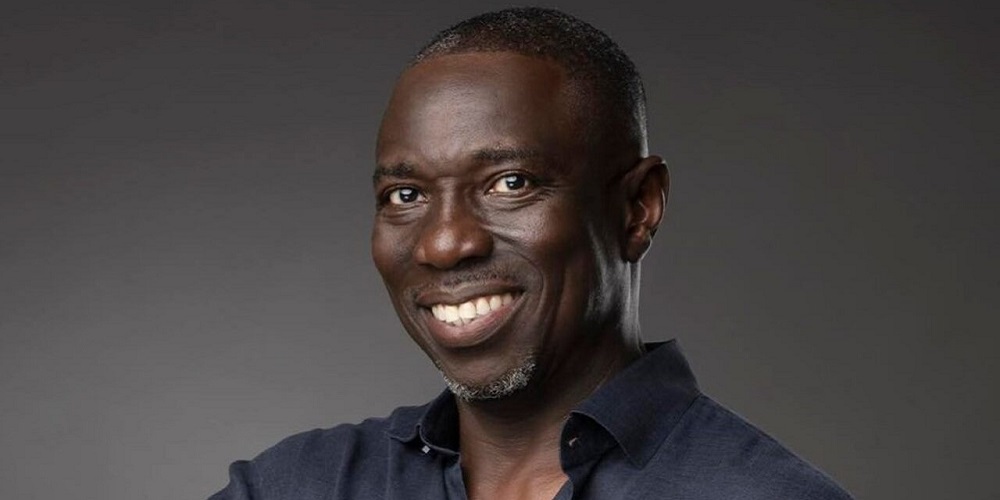
Foremost lawyer and investment banker, Dr Asue Ighodalo, has emerged the governorship candidate of the Peoples Democratic Party, PDP, in Edo State.


He defeated eight other aspirants in a peaceful but security-tight primary election at the Samuel Ogbemudia Stadium.

One of the aspirants, Omosede Igbinedion, stepped down for him on the election ground “for the interest of the party.”

Also, immediate past House of Representatives member, representing Oredo federal constituency, Omoregie Ogbeide-Ihama, stepped down from the race.

Advertisement

Ighodalo, who is believed to be Governor Obaseki’s preferred aspirant, scored 577 votes to beat Mr Anselm Ojezua, Arthur Esele, Osaro Onaiwu, Martins Uhomoibhi, Hadizat Umoru and Felix Akhabue, all scoring zero vote, while six votes were voided out of the 585 accredited delegates.

The Deputy Governor, Philip Shaibu, who had earlier emerged a factional candidate in a parallel governorship primary election, scored one vote.

Ighodalo was declared winner of the primary election by the Chairman of the Edo PDP Primary Electoral Committee and Governor of Zamfara State, Dauda Lawal, and the Co-Chairman and Governor of Delta State, Sheriff Oborevwhori.

Lawal declared: “The committee having carefully sorted out and counted the votes found that Ighodalo scored 577 votes, Philip Shaibu scored one vote, while others got zero. By the powers vested in me by the National Working Committee, NWC, of the PDP, pursuant to the Constitution of our great party, the PDP, as the Chief Returning Officer of the 2024 Edo PDP Primary Election, I hereby declare Asue Ighodalo as the winner of the just concluded primary election with a total vote of 577.

Advertisement

“Therefore, I hereby return the elected as the PDP candidate for the forthcoming governorship election in the state.”

Ighodalo extends hand of fellowship, promises inclusiveness
In his acceptance speech, Ighodalo thanked Governor Obaseki and the people of Edo State for their love and support noting that the governor has laid the foundation for him to build upon, if elected. He promised to assemble young men and women for his government to turn the state around.

“I want to thank you for making me a tool, and I promise you that I will be a useful tool and by the grace of God, Edo State will move from where Godwin Obaseki has carried us, to the next level. I want to thank Godwin Obaseki for the wonderful work he has done in the last seven and half years. I know that in a year or two people will keep talking about Obaseki.

“We have not seen the value of the work he has done, but he is like a builder laying the foundation for a 100-storey building. No man is perfect,we will all continue to repair and work on each other’s mistakes. I thank him and his wife for supporting him tremendously and giving him the strength to go through the vicissitudes of the last seven years. I promise to assemble the best young men and women to turn the state around.”

Advertisement

Ighodalo, while commending the delegates, leaders and members of the PDP for the confidence reposed in him, promised to work with all stakeholders to transform the fortunes of Edo people and lead the state on the path of prosperity and greatness, if elected.

He said: “I promise all the good people of Edo State; those in Edo State, in Nigeria, and in the Diaspora that I will work tirelessly for our state. I will assemble our best hands to move our State to the next level and I promise you all that I will give you my all.”

Reiterating the need for a united party to win the September 21, 2024 election in the state, Ighodalo said it is only with a formidable and united front that the PDP can excel and succeed in the mission of retaining its seat at Osadebey Avenue and consolidating on the impactful work the party has started in the state.

We can’t afford to get it wrong in Edo — Obaseki
Earlier, while welcoming guests to the primary election, Godwin Obaseki,said: “Today, we are going through an exercise that has been stipulated by our party. Even though it’s statutory, the exercise will be life-changing because Nigeria is going through difficult times and we can only overcome the challenges we are facing as a country with the right leadership.

Advertisement

“If we in Edo do not begin to show the right leadership that will begin to reset Nigeria, God forbid, we may all be in trouble. PDP is the only party that has what it takes to rule this country. Again, we are showing the example in the way we are conducting our leadership selection process.

“We are following our rules very assiduously; my role as a host governor is to welcome all of you who are here, starting with our members who elected the delegates that are carrying out this exercise today. Thanks to members of the State and National Working Committee of our great party, the PDP for being steadfast in the rules. I also thank all the aspirants for exercising the spirits of sportsmanship.”

The election attracted the who is who in the PDP in the state including former governor Lucky Igbinedion; former Foreign Affairs Minister, Tom Ikimi; Speaker of Edo State House of assembly, Blessing Agbebaku; Secretary to the State Government, SSG, Osarodion Ogie, who is being touted to be the running mate to Ighodalo; former Chief Whip of the Senate, Roland Owie; Owere Dickson Imasogie; council chairmen from the 18 LGAs; and members of the state executive council, among others.

However, conspicuously missing were members of the Legacy Coalition group of the PDP led by the Vice Chairman, South-South of the party, Dan Orbih; a member of the Board of Trustees, BoT, of the party, Charles Idahosa; and many members of the State Working Committee, SWC.

Advertisement

Gunshots as Shaibu emerges as candidate in a PDP parallel primary

Meanwhile, some members of the PDP held a parallel primary that produced Philip Shaibu as the candidate.

While some delegates were being accredited to proceed to the Samuel Ogbemudia Stadium, venue of the primaries, another set of delegates met in a facility in Commercial Avenue where they announced Shaibu as the PDP elected candidate.

They claimed that they went to the venue for accreditation but were chased away by security agencies. They also alleged that the list of delegates published by the national leadership of the party was not the authentic one alleging that they saw names of people from Bayelsa State and names of people who are members of the All Progressives Congress, APC.

Advertisement

Declaring Shaibu winner of the election, Bartholomew Moses said: “During the counting of this primary election, Philip Shaibu has a score of 301 votes and therefore, we hereby declare Philip Shaibu as the authentic elected candidate for this election in the PDP.”

The people had barely finished their exercise when gunmen invaded the venue. They were dressed in vigilante outfits and came in several vehicles including two black unmarked Toyota Hiace Trucks, an unmarked white sienna, white Hilux and several other vehicles. They were shooting sporadically into the air and the people scampered into different directions for safety

Before the election, the delegates led by Festus Owu went to the deputy governor’s official lodge where they complained to him that they had been disenfranchised.

Speaking to the protesting delegates, Shaibu said: “I appeal to all of you to be peaceful, I don’t want anybody to be injured, I don’t want anybody molested and I am happy the way you have conducted yourselves peacefully and have come to report to me that you were not allowed to be accredited. I want to tell you that no one man can determine the destiny of a people and by the grace of God they cannot disenfranchise you people.

Advertisement

“The law is clear that you people are the authentic delegates. Now that they have pushed you away, they want to go and replace you but I assure you that your votes must count, they cannot change and replace your names. I assure you that I will take your protest to the committee that is coming but you must remain peaceful in everything you are doing.”

Speaking to journalists later, Shaibu said: “I saw the crowd outside and I asked who they were and they said they were delegates. I said they should be directed to the venue of the accreditation but they said they were protesting because they had been sent away from the venue of accreditation.

“They won their election as delegates and they have their results. The election will hold and if a winner emerges with fake delegates, the election will not see the light of the day but if a winner emerges with the authentic delegates, there will be no problem, I am sure.”
Advertisement
Continue Reading
Advertisement

Politics

NDC Dissociates Itself From OK Movement PCC, Says Political Party Is Serious Business

Published

on

By

ADVERTISEMENT
Zoom Ad
ADVERTISEMENT
Zoom Ad

The Nigeria Democratic Congress (NDC) has dissociated itself from the Presidential Campaign Council (PCC) recently announced under the name of the OK Movement, declaring that the structure was not authorised by the party.

The position was contained in a press statement dated September 19, 2026, and signed by the National Chairman of the NDC, Senator Moses Cleopas.

The development follows the unveiling of a 59-member Presidential Campaign Council by the OK Movement, a platform associated with the political activities of NDC presidential candidate Peter Obi and his running mate, Rabiu Kwankwaso. Reports said the council included zonal and state coordinators.

In the statement titled “Re: Purported OK Movement PCC Announcement,” the NDC said it had noted a publication credited to John Ugulu announcing a Presidential Campaign Council under the guise of the OK Movement.

Advertisement

The party stated categorically that the announcement did not originate from its leadership and should be disregarded by the public and the media.

“The party hereby dissociates itself in totality from the said OK Movement PCC announcement. It did not emanate from the party and should be disregarded by the public and the media.”

The position is consistent with reports published on Saturday that the NDC leadership had disowned the campaign council announced by the movement.

The NDC further reminded its candidates and support groups that candidates contesting under the party’s platform remain subject to its authority and disciplinary structures.

Advertisement

“All candidates of the party must appreciate that they are not running as independent candidates,” the statement said.

“They are products of the party and remain subject to the authority and discipline of the party.”

The party added that only its leadership has the authority to constitute and announce a Presidential Campaign Council.

It consequently directed that no individual, candidate or support group should announce or publish any campaign council, structure or organ in the name of the NDC without prior approval from the National Working Committee (NWC).

Advertisement

Also speaking on the development, Theo Abu Agada, spokesperson to NDC National Leader Seriake Dickson, warned the OK Movement against actions that could undermine the political party on whose platform its principals are contesting.

Agada described a political party as a serious organisation and said the NDC would not tolerate what he described as acts of insubordination by its members.

“You can’t undermine a party that gave you a platform,” he said.

The comments come against the backdrop of the formal entry of Obi and Kwankwaso into the NDC earlier in 2026. The two politicians were subsequently presented with NDC membership cards by the party leadership.

Advertisement

Despite its objection to the purported PCC, the NDC said it recognises and appreciates the contributions of support groups and would continue to work with groups that identify with its political objectives.

However, it said such groups must not regard themselves as alternative party structures or parallel organs.

The party also called for an end to what it described as unnecessary public attacks against the NDC, urging members and support groups with grievances to use the party’s internal channels for resolution.

The NDC statement also announced disciplinary action against John Ugulu, citing the purported PCC announcement, what it described as his excesses during the party’s Lagos State primary and repeated disregard for party authority.

Advertisement

The party said Ugulu had been referred to the appropriate disciplinary organ for necessary action in accordance with the provisions of the NDC constitution.

The NDC concluded by saying it remained focused on its issue-based political programme and its commitment to delivering what it described as a “New Nigeria that is possible.”

Continue Reading

Opinion

Beyond the Politics of Name-Calling: Time to Put Development Front and Center

Published

on

ADVERTISEMENT
Zoom Ad
ADVERTISEMENT
Zoom Ad

By Dr. Osamhanze Akugbe Idahosa.


Nigerian politics has a familiar rhythm that repeats itself with the certainty of the rainy season. As an election approaches, the airwaves fill not with policy proposals or development blueprints, but with recycled scandals, resurrected controversies, and character assassinations dressed up as accountability. Old files are reopened. Rumours are given new life. Personalities are dissected forensically, while the economy — the very thing that determines whether ordinary Nigerians eat, work, and hope — is left to fend for itself in the background noise.

This is not new. It is, in fact, a pattern the late Professor Claude Ake diagnosed with uncomfortable precision decades ago. In his enduring body of work on how politics has underdeveloped Africa, Ake argued that the continent’s governing elites have rarely treated development as politics’ central business. Instead, politics became the prize — an unrelenting contest for power and its spoils, disconnected from any serious commitment to transforming people’s material conditions. Development was talked about, promised, and occasionally budgeted for, but it was never the organizing logic of governance. Power for its own sake was.

Advertisement

Nigeria, in many painful ways, has continued to prove Ake right. A country blessed with abundant human capital, fertile land, solar potential across its northern belt, gas reserves that could power industries for generations, and a youthful population bursting with energy and ambition, still finds itself struggling with basic questions of electricity, food security, and job creation. The paradox is not a mystery. It is the direct consequence of a political culture that majors on the minor and minors on the major—one where cutthroat politicking consistently displaces the harder, slower, less theatrical work of nation-building.

The Noise That Drowns Out the Signal
Every election cycle in Nigeria seems to produce its own theatre of distraction. Certificates are questioned. Personal histories are excavated. Allegations, some genuine and many manufactured for effect, are deployed not to inform the electorate but to overwhelm them. The result is a public conversation so saturated with noise that the signal — what each aspirant actually intends to do about unemployment, inflation, infrastructure decay, and industrial collapse — gets lost entirely.

This is not to say that character and integrity do not matter in leadership. They do, profoundly. But there is a difference between legitimate scrutiny of a candidate’s fitness for office and the wholesale substitution of personality warfare for policy debate. When name-calling becomes the primary currency of political engagement, it does more than distract; it actively erodes the electorate’s capacity to hold anyone accountable for economic outcomes, because the entire conversation has shifted away from outcomes altogether.

What 2027 Should Really Be About
As Nigeria edges toward the 2027 electioneering season, there is a genuine opportunity to break this cycle — but only if electorates themselves insist on it. The question voters ask of every aspirant should not primarily be “what has this person done to embarrass their opponent,” but rather “what, brick by brick, will this person do to build an economy that works?”

Advertisement

Brick by brick is the operative phrase, because national economic transformation is not a single grand gesture. It is the cumulative result of deliberate choices: stable macroeconomic policy that tames inflation without strangling growth; a manufacturing and agro-industrial base that converts raw endowments into finished value rather than exporting them raw; an education and skills pipeline that matches the needs of a modern economy; an investment climate credible enough to attract long-term capital rather than speculative inflows; and an energy infrastructure reliable enough to let businesses plan beyond the next generator refueling.

None of this makes for exciting soundbites. It does not trend the way a scandal trends. But it is the substance that determines whether Nigeria remains a country of enormous unrealized potential or becomes genuinely competitive within the comity of nations — able to stand alongside the economies it is so often, and so wistfully, compared to.

Change for the Sake of Change Is Not Change
The revered Benin monarch, Oba Ewuare II, recently offered a formulation that deserves wider circulation in the run-up to 2027: change should not be pursued for its own sake, but only where it promises something demonstrably better than what already exists. This is a subtle but important corrective to a political culture that often treats “change” as a self-justifying slogan, detached from any rigorous comparison of what is being offered versus what is being replaced.

Applied to Nigeria’s coming election, the royal father’s counsel suggests a discipline that both aspirants and voters would do well to adopt. Aspirants should be pressed to show, in concrete, measurable terms, how their vision improves on the present—not merely that they are different from the incumbent or from a rival. And voters should resist the seduction of change as spectacle, insisting instead on change as substance: a credible, costed, and coherent pathway to shared prosperity.

Advertisement

A Call to Refocus
Nigeria’s governing class, and the political ecosystem that surrounds it — commentators, party strategists, media platforms, and yes, the electorate itself — bear collective responsibility for the terms on which political contests are fought. If the 2027 cycle is allowed to descend, once again, into a contest of who can most effectively humiliate whom, the country will have squandered another opportunity to have the conversation it desperately needs: the conversation about how to convert its abundant natural and human endowments into the kind of broad-based prosperity that reduces poverty, creates jobs, and restores national dignity.

Professor Ake’s warning was never simply academic. It was a call to reorder national priorities before politics as usual consumes what remains of the country’s developmental promise. As 2027 approaches, that call deserves to be heard again — not as a lament, but as an instruction: look beyond the name-calling, beyond the personality contests, and ask instead what each aspirant will actually build.

Dr. Osamhanze Akugbe Idahosa is of the Africa Development Studies Center and writes from Abuja.

Advertisement
Continue Reading

Politics

“Lecturers pledging loyalty to TInubu cannot supervise elections”-Atiku tells INEC

Published

on

ADVERTISEMENT
Zoom Ad
ADVERTISEMENT
Zoom Ad


The Atiku Media Office has expressed concern over the reported endorsement of President Bola Ahmed Tinubu by hundreds of lecturers from universities across Northern Nigeria, warning that academics who openly declare partisan allegiance should not subsequently be entrusted with sensitive electoral responsibilities by the Independent National Electoral Commission (INEC).

Lecturers have every constitutional right to support, campaign for, and vote for any candidate of their choice. That right is not in dispute. What is unacceptable, however, is for persons who have publicly taken partisan positions to later present themselves as neutral electoral officials.

Any academic who openly endorses a presidential candidate should not come anywhere near sensitive INEC assignments as returning officers, collation officers or officials entrusted with the collation, declaration and announcement of election results. Electoral credibility requires not only actual neutrality, but also public confidence in the neutrality of those administering the process.

Advertisement

More disturbing is the reported presence of elected governors and a serving Minister of Defence at the endorsement. That senior officials of the ruling party would lend the weight of their offices to such an overtly partisan gathering of academics is deeply troubling and speaks to the desperation surrounding the Tinubu administration’s quest for re-election.

It is a shame that the Tinubu administration appears determined to strip our scholars of the dignity of their academic gowns and dress them instead in the garb of partisan political rascality. Universities should remain centres of independent thought, scholarship and intellectual freedom, not recruitment grounds for the political machinery of a desperate ruling party.

What we are witnessing tells the story of a government increasingly prepared to push against every moral boundary in its determination to secure another term in office, regardless of the damage done to institutions that ought to command public trust.

This principle must apply equally to academics who openly support Atiku Abubakar or any other presidential candidate. No one should be allowed to play today and referee tomorrow.

Advertisement

“You cannot wear a party jersey today and expect Nigerians to accept you as an impartial referee on election day.

INEC must take note and ensure that academics who have publicly declared partisan allegiance are excluded from sensitive electoral responsibilities in the 2027 elections.

Continue Reading

Trending

Copyright © 2024 Naija Blitz News