Economy
MPC: FG fights inflation as CBN mops up N5trn
- /home/naijuinz/public_html/wp-content/plugins/mvp-social-buttons/mvp-social-buttons.php on line 27
https://naijablitznews.com/wp-content/uploads/2024/02/Olayemi-Cardoso.jpg&description=MPC: FG fights inflation as CBN mops up N5trn', 'pinterestShare', 'width=750,height=350'); return false;" title="Pin This Post">
- Share
- Tweet /home/naijuinz/public_html/wp-content/plugins/mvp-social-buttons/mvp-social-buttons.php on line 72
https://naijablitznews.com/wp-content/uploads/2024/02/Olayemi-Cardoso.jpg&description=MPC: FG fights inflation as CBN mops up N5trn', 'pinterestShare', 'width=750,height=350'); return false;" title="Pin This Post">
Efforts by the Federal Government to curb the rising inflation will lead to N5 trillion cash mop up from the banking industry as the Central Bank of Nigeria, CBN implements the hike in banks’ Cash Reserve Ratio, CRR to 45 per cent.
The CRR which represents banks’ cash reserves for purposes of meeting cash obligations on demand was moved from 32.5 percent to 45 percent in apparent bid to curtail inflation.
Meanwhile, Financial Vanguard learnt that the apex bank is now working with some foreign portfolio investors, FPIs, to address concerns over recent reforms introduced in the foreign exchange market as well as the 400 basis points hike in the Monetary Policy Rate, MPR.

This is one of the outcomes of a virtual meeting, tagged Foreign Portfolio Investors Call, organised in collaboration with NGX Group, which was addressed by the CBN Governor, Mr. Olayemi Cardoso, Deputy Governor, Economic Policy, Mohammad Abdullahi, and moderated by the Group Managing Director/ CEO of NGX Group, Mr. Temi Popoola.
While speaking at the meeting with FPIs in response to inquiries about the impact of the hike on banking system liquidity, CBN Deputy Governor Abdullahi said that the banking system has a shortfall of N5 trillion to meet the 45 per cent CRR.
He, however, said that the apex bank will not debit the banks N5 trillion at once adding that the apex bank will implement the new CRR in a way that will not be disruptive to the industry. He disclosed prior the MPC decision, the effective CRR for the industry was close to 40 per cent.
He added some banks already have surpassed the 45 per cent CRR and they would be refunded the excess while banks with shortfall will have build up their cash reserves. Excess liquidity The estimated N5.0trillion which represented the outstanding system liquidity in excess of the initial CRR range is expected to impact the liquidity of many banks adversely.
Financial Vanguard learnt the decision to tighten came against the backdrop of deanchored inflationary trend which rose to 29.9 percent yearon- year, the highest since return to democracy in 1999. But financial analysts project the inflation rate would remain elevated in the near-term amid persisting exchange rate pressure, rising energy cost, and sustained fiscal imbalances.
In defending the huge jump in MPR and CRR, the CBN Governor, Yemi Cardoso, highlighted the disruptive impact of deficit financing to the Federal Government by Ways & Means, and also the direct intervention of the apex bank in the real sector which is estimated in excess of ¦ 10.0 trillion.
He also noted the structural inefficiencies within the foreign exchange market, and the need to collaborate strongly with fiscal authorities to effectively manage non-money factors. Analysts’ recommendations Commenting on this development, analysts at Afrinvest West Africa, a Lagos based investment house, said: “We suggest that in addressing inefficiencies, the apex bank prioritises the use of policy to minimise distortions and should remain focused on improving supply rather than countering the symptoms of illiquidity.
“In assessing impact on markets, we anticipate an immediate and strong bearish repricing of fixed-income yields especially on short-dated bills. “Furthermore, expectations of higher interest environment over the near-term coupled with liquidity squeeze amid costlier Standing Lending Facility (SLF) access should strengthen bearish sway”.
Free entry, exit for FPIs Meanwhile, Cardoso assured the FPIs of free entry and exit from the forex market. He added that the focus of the apex bank is to ensure stability of the exchange rate and ensure reasonable price discovery.
He also reiterated commitment of the CBN to achieving price stability adding that the MPC members are unanimous on the need to tame rising inflation and the 400 basis points hike in MPR is a strong signal to this effect. Cardoso assured the FPIs on policy consistency adding that the various measures introduced by the CBN in the forex market were product of extensive debate and strong conviction that is the right direction to go.
Higher interest rates in TBs Speaking further at the meeting, Abdullahi assured the FPIs the CBN will from today review upward interest rate on Treasury bills, TBs, in tandem with the hike in MPR. He further disclosed that from today, the CBN will increase frequency and size of Open Market Operations, TBs, to expedite liquidity mop up and provide instruments for FPIs to invest.
Economy
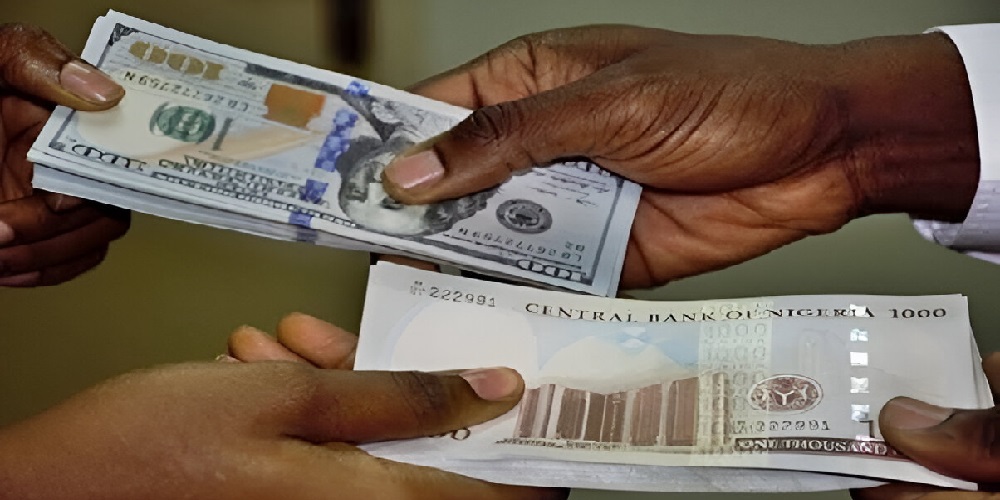
Revenue: IMF asks FG to impose fuel, telecom taxes
The International Monetary Fund has recommended introducing taxes on fuel products and telecommunications services in Nigeria as part of broader measures to increase government revenue and create fiscal space for development spending and social interventions.
The recommendation was contained in the IMF’s 2026 Article IV Consultation report on Nigeria, where the Fund argued that additional tax measures would be needed over the medium term despite the recent overhaul of the country’s tax system.
“Further tax policy changes will likely be needed—such as increasing the VAT rate, extending VAT to fuel products, rationalising tax expenditures in particular VAT exemptions on extractive industries and some customs duties, and introducing telecom excises—to complement administrative gains,” the IMF said.
The Washington-based institution, however, cautioned that the timing of any new taxes must take into account Nigeria’s rising poverty levels and worsening food insecurity.
“The timing of reforms must consider the poverty and food insecurity situation and ensure that the cash transfer system is in place and funded,” the Fund added.
The recommendation is likely to trigger fresh debate across the country, given the sensitivity surrounding fuel prices and telecommunications costs.
A previous attempt by the Federal Government to introduce a five per cent excise duty on telecom services faced widespread opposition from operators, subscribers and consumer advocacy groups before it was eventually suspended and later scrapped.
Telecommunications companies had argued that the sector was already burdened by multiple taxes, rising energy costs, foreign exchange pressures and infrastructure challenges, warning that any additional levy would ultimately be passed on to consumers through higher call and data charges.
Similarly, proposals linked to fuel taxation have generated opposition from labour unions and private sector groups amid concerns over rising living costs following the removal of petrol subsidies and increases in transport and food prices.
The IMF’s latest recommendation comes as it projects that Nigeria will need stronger revenue mobilisation efforts to sustain planned increases in public spending and support vulnerable households.
According to the report, revenue-enhancing tax policies could generate additional revenues equivalent to 3.9 per cent of Gross Domestic Product within three years of implementation. The Fund identified a two-percentage-point increase in the Value Added Tax rate as the single largest contributor, with an estimated revenue gain of 0.8 per cent of GDP.
It also projected that removing pioneer status incentives and revising free zone regulations would generate another 0.7 per cent of GDP, while reforms to capital gains taxation and adjustments to personal income tax bands, allowances and rates would each contribute 0.6 per cent of GDP.
The IMF further estimated that a top-up tax on multinationals and large firms could raise 0.5 per cent of GDP, while rationalising investment allowances would add another 0.4 per cent.
Notably, the category labelled “others”, which includes telecom excise duties and other measures such as a carbon tax on fuel, was projected to contribute an additional 0.4 per cent of GDP in revenue gains.
Beyond new tax measures, the Fund said Nigeria could generate even larger gains through stronger tax administration.
It projected that administrative reforms would yield an additional 3.1 per cent of GDP through improved compliance, enforcement and efforts to reduce informality in the economy.
According to the report, measures such as fiscalisation, electronic invoicing and cross-validation of tax deductions could generate 1.5 per cent of GDP, while expanded tax identification registration and consolidation of taxpayer databases could contribute another 1.6 per cent of GDP.
The IMF acknowledged that some of Nigeria’s recently enacted tax reforms would reduce government revenue in the short term because they were designed to support households and small businesses.
It estimated that revenue-reducing measures would lower revenues by 2.4 per cent of GDP, with expanded VAT input credits, additional zero-rated items and broader exemptions on basic consumption goods accounting for 1.7 percentage points.
Lower corporate income tax obligations for smaller firms would reduce revenues by 0.4 per cent of GDP, while lower personal income tax rates and expanded exemptions for low-income earners would account for another 0.3 percentage point reduction.
Overall, the IMF projected that the combined impact of revenue-enhancing measures, administrative reforms and revenue-reducing policies would result in a net increase in government revenue equivalent to 4.6 per cent of GDP over the medium term.
The Fund argued that stronger revenue mobilisation had become increasingly important because Nigeria’s fiscal position remained under pressure despite recent reforms.
Economy
VAT collections rise to N2.42tr in Q1 2026 – NBS
The National Bureau of Statistics (NBS) has reported that Value Added Tax (VAT) collections rose to ₦2.42 trillion in the first quarter of 2026 (Q1 2026), up from ₦2.20 trillion recorded in Q4 2025.
According to the VAT Q1 2026 report, the figure represents a 9.98 per cent increase on a quarter-on-quarter basis.
The bureau stated that of the total revenue collected during the period, local payments accounted for ₦1.11 trillion, while foreign VAT payments stood at ₦830.47 billion. Import VAT contributed ₦477.55 billion.
“Value Added Tax (VAT) in Q1 2026 was ₦2.42 trillion, showing an increase of 9.98% on a quarter-on-quarter basis from ₦2.20 trillion in Q4 2025.
“Of the total VAT collected, local payments stood at ₦1.11 trillion, foreign VAT payments were ₦830.47 billion, while import VAT contributed ₦477.55 billion during the quarter,” the NBS stated.
The report further showed that sectors such as food services and accommodation recorded ₦13.20 trillion, while arts, entertainment, and recreation contributed ₦8.98 trillion to VAT-generating activities.
Economy
Nigeria exceeds OPEC quota as crude production hits 11-month high
Nigeria’s crude oil production surged to an 11-month high in May 2026, with the country exceeding its Organisation of the Petroleum Exporting Countries (OPEC) production quota.
The average crude oil production recorded during May represents 102 per cent of Nigeria’s 1.5mbpd of production quota allocated by OPEC.
The production report released by the Nigerian Upstream Petroleum Regulatory Commission (NUPRC) on Thursday disclosed that Nigeria’s oil production averages 1,530,354 barrels of crude oil and 170,446 barrels of condensates per day (bpd).
According to the report, this brings the total combined production to 1,700,800 barrels per day and consolidates Nigeria’s position as Africa’s largest oil producer.
The report said the production performance during the review period remained robust, with combined crude oil and condensate output ranging from a low of 1.51 million bpd to a peak of 1.86 million bpd.
It said the May 2026 production figures represented the highest recorded by Nigeria since July 2025, when output surged to 1,712,282.
“In strict crude oil terms (excluding condensates), the 1.53 million barrels recorded in May 2026 represents the highest Nigeria has witnessed since January 2025, when crude oil production hit 1.538mbpd.
“The latest crude oil production statistics thus represent a 15-month high on a month-on-month basis, production rose by 2.77 per cent in May 2026 as against 1.48mbpd in April,” it said.
The report said the broader production trend over the last five months had also remained positive.
It said combined crude oil and condensate output increased from 1.48 million bpd in February to 1.54 million bpd in March, 1.66 million bpd in April, and 1.7 million bpd in May, underscoring sustained growth in Nigeria’s hydrocarbon production.
According to the report, among production streams, Bonny Terminal led the pack with a total blend of 293,870 bpd, closely followed by Forcados Terminal at 289,900 bpd, Qua Iboe ranked third with 173,360 bpd, while Escravos Oil Terminal contributed 135,470 bpd.
It said the Odudu (Amenam Blend) accounted for 63,250 bpd across the top five production streams during the month under review.
The NUPRC attributed the rise in production to sustained positive momentum, as operations remained stable throughout the reporting period, with no significant pipeline or facility outages recorded.
It added that all previously scheduled turnaround maintenance activities had been completed, thereby improving operational reliability and production efficiency.
(NAN)
-
News17 hours agoNot Diabetes And hypertension, Son Reveals Shocking Details About General Rabe’s death
-
News17 hours agoI risked Abacha’s wrath to push for Abiola’s release, says Abubakar
-
Metro17 hours agoPolice Launch Massive Manhunt As Gunmen Abduct Ondo Community Leader
-
News17 hours agoAt least 30 Yoruba Monarchs Flee Palaces After Bandits Abduct 11th Oba
-
Sports17 hours agoDebutants Curaçao Score First-Ever World Cup Goal In 8-goal Thriller Against Germany
-
News11 hours ago2025 Capital Budget Gets New Lease of Life as Reps Push Deadline to September
-
Foreign17 hours agoIran Agrees US Peace Deal, To Reopen Strait Of Hormuz
-
News17 hours agoFamily Reveals How General Abubakar Died, Says Wife Still In Bandits’ Custody