

Connect with us

News

ABEG, WHERE IS “WHITE LION”?

Published

on

ADVERTISEMENT
Zoom Ad
ADVERTISEMENT
Zoom Ad

*By Tunde Olusunle*

There’s always the tendency to ascribe our failings and flailings in our developmental and democratic growth as a nation, to our amoeboid leadership recruitment process. I differ slightly though from this perspective. My contention is that prospective leaders must first be identified and groomed before they can be deployed to the various sectors we expect them to function. Tunji Olaopa’s 2022 essay titled “Nigerian Civil Service and the Trajectory of Public Administration” illuminates the evolution of Nigeria’s civil service which was inaugurated in 1954. He alludes in the paper to “a very strong and professional civil service regarded as perhaps the strongest of the colonial legacies bequeathed to Africa.” Olaopa speaks to the “quality of the officers who founded the civil service and the institutional quality of the public service itself.” He lists Nigeria’s “civil service pioneers” to include: Simeon Adebo, Jerome Udoji, Samuel Manuwa, Ahmed Talib, Abubakar Koko, Sule Katagum, Joseph Imoukhuede, Ojimiri Johnson and Fola Ejiwunmi. This generation of public servants Olaopa notes is what we now describe as the “golden age of the public service in Nigeria.”

The second generation of public administrators and civil servants who grazed the limelight between the 1960s to the early 1970s are those popularly described as “super permanent secretaries.” This is the generation of Allison Ayida, Sunday Awoniyi, Liman Ciroma, Philip Asiodu, Abdul Aziz Atta, Festus Adesanoye, Olu Falae, Solomon Akenzua, Francesca Emmanuel, Ahmed Joda, Gilbert Obiajulu Chikelu, Gray Longe, M.A. Ejueyitchie, among others. Olaopa reminds us that the actual core of this generation who were festooned with the broche of “super permanent secretaries” were so described because they were called up at a period of grave national emergency. It was during the Nigerian civil war and they were requested to avail the country their “administrative acumen, competencies and wisdom,” to steer Nigeria through the war and stabilise the polity thereafter.

Olaopa observes that beginning from the 1975 civil service purge by the Murtala Mohammed/Olusegun Obasanjo government and onwards to the era of the Ibrahim Babangida Structural Adjustment Programme, (SAP), a de-institutionalisation process had begun. The concomitant value-orientation of the inherited civil service had been damagingly eroded. He laments that his own generation of permanent secretaries came at an age when, according to him, the service “was already deeply embroiled in the dynamics of the bureau-pathology that had debilitated the civil service.” He laments that his generation of public servants was mentored by the icons of decades past who connected them to the ideals of the golden age “in terms of their passion, professionalism and knowledge-propelled zeal for service.” Such was the archetypal stuff the pioneering Nigerian civil service was made of.

Advertisement

I needed to lay this background to underscore the rigour, the exertion, the perspiration which typified the discovery and grooming of those who operated the levers of public administration in decades past. They were an integral part of the conceptualisation of government policies and also contributed largely to their actualization. I should equally remind us that the famous, now ancient, “fattening rooms” of the Kalabari, Efik and Ibibio in south south Nigeria admitted women in their puberty and prepared them for womanhood. Among others, they are grilled on marital etiquette, their culinary capacities improved upon even as they were tutored in acceptable social customs and comportment. They were usually admitted in facilities away from their families and could be so boarded for various lengths of time, the minimum being for one month.

Reports in recent weeks and months have alluded to the disappearance of Yahaya Bello, the immediate past governor of Kogi State from the prying lenses of the public and press. The initial rumour was that he had made himself a permanent guest of Lugard House, Lokoja, the government house of the intriguing state capital which sits at the confluence of Nigeria’s two largest rivers, the Niger and the Benue. Not satisfied with the eight full years of his despotic, even demonic over-lordship in Kogi State, he has chosen to encamp permanently within the same facility on an extended post-disengagement vacation. Elsewhere in the media, it has been suggested that Bello is now a permanent member of his successor, Usman Ododo’s convoy on all his travels. Ododo is his official shield from investigators on his trail.

After hectic, sweaty public service immersion over long spells, the tradition has been for public officers to embark on extended holidays and rest. Willie Obiano, immediate past governor of Anambra State, left for the United States on extended rest, immediately after he handed over to his successor Chukwuma Soludo in March 2022. Babatunde Fashola was chief of staff in Lagos State; governor of the state for eight years and minister under the Muhammadu Buhari regime for eight years. He served notice during his valedictory conversations that he wanted to return to be “president” of his home, after being a virtual absentee for 20 years! The practice of former governors pursuing “residency programmes” in the very same addresses where they operated from for years, is novel.

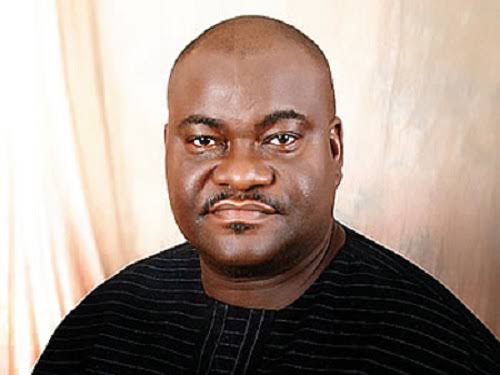
As governor of Kogi State, Bello hailed and serenaded himself, by himself with his own *oriki* whenever he had a microphone. He introduced himself with flourish as “His Excellency, Alhaji Yahaya Adoza Bello, CON, the Executive Governor of Kogi State.” Humility, civility and restraint had no place in his thesaurus. He beaded himself with the moniker of “white lion” and rechristened Government House, Lokoja the “lion’s den.” Yahaya Bello apologists and boot-lickers defaced the public space with billboards celebrating their idol, throwing him in the face of a populace so mercilessly trampled upon by him. He never left people in doubt about his limitless powers as a governor cum demigod who could do whatever he wanted and get away with it.

Advertisement

Bello cast a permanent pall on the people of Kogi State. Mentions of his name were in cover-mouthed whispers. Remember the depiction of the former Ugandan carnivore, Idi Amin Dada in the film titled *The Rise and Fall of Idi Amin.* The character, Maliya Mungu was his undisguised hitman. Bello reportedly recruited spies in various WhatsApp groups who reported the direction of discourse to him and fed him with the names of his critics. He mutilated the payrolls of hapless civil servants and paid them preposterous percentages. Workers and pensioners dropped dead like flies during his reign, unable to cater for the basic needs of their families. By its very characteristic the economy of Kogi State is fuelled by the civil service. Staccato remittances of workers salaries was therefore going to affect the burgeoning business community in the state.

Elections were weaponised in the vilest of fashions. Bello’s goons were condemned to win every and any election “by force, by fire.” There were mortal consequences for failure. His aides moved around on election days with platoons of vagrants and policemen, scaring voters with gunshots, seizing ballot boxes and rewriting poll results. For dissenting with poll riggers in her unit, hapless woman politician, Salome Abuh was on November 18, 2019, burnt to death in her home in Ochadamu. Bello’s men reportedly dug trenches around Natasha Akpoti-Uduaghan’s community, Ihima, all in a bid to disenfranchise her during the February 2023 senatorial election which she contested. Yahaya Bello indeed corroborated the action saying he was helping to build a security hedge around her during the election.

Yahaya Bello is the first governor I ever heard about, who launched a post-disengagement media and public relations salvage project. Some officials and members of the Nigerian Guild of Editors, (NGE), about a month ago honoured an invitation to visit Kogi State to tour some of Bello’s so-called legacies. Curiously, for all the time the team led by the President of the NGE, Eze Anaba spent in the state, the most senior state official they encountered was the Kogi State information commissioner. They could neither meet Bello at whose instance they visited, nor his successor, Usman Ododo. I sent private notes to some of our colleagues who went on the needless voyage asking them a few questions: Apart from being herded through so-called Yahaya Bello’s achievements, did you go to the streets to find out the last time civil servants and pensioners were paid their monthly entitlements 100%? Did you check about the last time workers were promoted after writing promotion exams? Did you find out how many Permanent Secretaries own official vehicles? Did you try to obtain contract award documents about Yahaya Bello’s so-called “legacy projects?” Did you endeavour to compare with the costs of similar projects elsewhere? Did you ask for example to be driven through the “State Secretariat/House of Assembly/DSS road”? Do you know that all through his years in office, Yahaya Bello didn’t rehabilitate that all-important road?

Bello is validating the title of a classic novel by the legendary American thriller writer, James Hadley Chase. Back in 1957, Chase wrote *The Guilty Are Afraid* a blockbuster which gained global appeal and readership in its days. This is the same Bello who was showcasing his boxing skills to the world on social media, virtually calling for a match with Anthony Joshua. We have seen him working out on the treadmills too, thumping his chest as he reminded us that he will flatten Mike Tyson in a fitness contest. So why wouldn’t Bello move around freely, “flex” as we say in contemporary Nigerian lingo, the way his former contemporaries are free birds? It is uncharacteristic for the lion, king of the wild to be mirrored cringing beneath the bed of his successor.

Advertisement

We are indeed talking here about a “white lion,” a very rare *albinoid* species native to the *Timbavati* region in South Africa. Public discourse in recent weeks has thrown up the thesis about Bello evading arrest by the Economic and Financial Crimes Commission, (EFCC) for the monumental heist his regime committed against Kogi State during his reign as *King Herod.* The weekend edition of *Aljazirah* newspaper of April 6 and 7, 2024, had Bello’s photograph and that of the EFCC chairman, Ola Olukoyede with the headline: *Ex-Gov Yahaya Bello Seeks Safety in Kogi Govt House.* Bello is said to be reaching out to former first lady, Aisha Buhari, even as the EFCC is hot on his trail. The President, Bola Tinubu is said to have distanced himself from Bello’s plea to be given a soft landing in his matter.

Yahaya Bello is a very good example of the post-1975 degeneration of the public service to which Olaopa alluded. He was neither scouted for leadership nor was he trained for the job. He was reportedly an anonymous personnel of the Revenue Mobilisation and Fiscal Allocation Commission, (RMFAC). He reportedly made good for himself ostensibly through corrupt enrichment and floated a transport company, *Fairplus Transport* with a handful of mini vans. With this, he sold the impression of a nouveau riche to delegates to the 2015 gubernatorial primary of the All Progressives Congress, (APC). Bello emerged second behind the late governor Abubakar Audu in that contest. He was hoisted to the gubernatorial high stool courtesy of some unprecedented judicial interpretation of the constitution, upon Audu’s mysterious death before the results of the governorship election! We must revert to the leadership grooming process of the pre-independence era and its immediate aftermath to begin the sanitisation of governance and leadership. And beyond the EFCC, Bello should have his day in court to defend his appalling human rights record during his eight year sojourn in Government House, Lokoja. Hopefully, victims of his queer and insensitive governance model will have the last laugh.

*Tunde Olusunle, PhD, is a Fellow of the Association of Nigerian Authors, (FANA)*

Advertisement
Continue Reading
Advertisement
Click to comment

Warning: Undefined variable $user_ID in /home/naijuinz/public_html/wp-content/themes/zox-news/comments.php on line 49

You must be logged in to post a comment Login

Leave a Reply

News

Details Of Alleged Coup Leader’s Agenda Note Emerge

Published

on

ADVERTISEMENT
Zoom Ad
ADVERTISEMENT
Zoom Ad

Alleged masterminds of the failed plot to overthrow President Bola Tinubu’s administration had reportedly drawn up a three-point programme for implementation after taking control of government.

The proposed measures included a review of the removal of petrol subsidy, an adjustment of salaries and wages for members of the Armed Forces and other security agencies, and national honours for military personnel killed in active service.

According to Premium Times, details of the plan were reportedly contained in a handwritten note recovered from the residence of the alleged leader of the plot, an Army colonel, Mohammed Ma’aji.

Ma’aji and some of the alleged conspirators are currently facing proceedings before military and civil courts over the purported attempt to remove the democratically elected government.

Advertisement

The allegations against them have not been established by the courts.

Premium Times revealed that the document was among confidential materials gathered by investigators examining the alleged conspiracy.Government

A page of the note, titled “Immediate Actions,” reportedly listed the steps the alleged plotters intended to take after seizing power.

It read, “Set up a committee to review fuel subsidy removal.

Advertisement

“Set up a committee to review salaries and wages of all members of the Armed Forces and all security agencies.

“Set up a committee to recommend all fallen heroes for national award.”

Investigators reportedly said the note was recovered from Ma’aji’s home and subjected to forensic examination by the Economic and Financial Crimes Commission.

The forensic report, dated January 26, was said to have been forwarded to the Defence Headquarters.

Advertisement

Colonel Admits Writing Note
Ma’aji reportedly admitted ownership of the document in a handwritten statement made during interrogation.

He was said to have told investigators that he personally wrote the proposed “action plans,” motivational statements and other entries in preparation for an alleged takeover of government.

Although the document was written in a jotter distributed as a souvenir at a social event, investigators reportedly considered its contents significant to understanding the alleged plot and the thinking of those involved.

The note was also said to contain about 20 motivational statements, which investigators believed reflected Ma’aji’s state of mind during the planning.

Advertisement

One of the entries read, “Money is the great way to lubricate the wheels of a coup d’état.”

Another stated, “All our dreams can come true if we have the courage to pursue them.”

The collection also included the statement, “Try not to become a man of success but a man of value,” which Ma’aji attributed to scientist Albert Einstein.

Other entries encouraged courage, persistence and the pursuit of long-term ambitions.

Advertisement

Plotters Allegedly Targeted Subsidy Policy
The reported proposal to review the removal of petrol subsidy appeared designed to address the economic hardship experienced by Nigerians since the policy was announced.Geographic Reference

Tinubu declared an end to fuel subsidy payments during his inauguration on May 29, 2023.

The decision led to a sharp rise in petrol prices and contributed to increases in transportation, food and other living costs.

Investigators reportedly believed the alleged conspirators hoped that reversing or reviewing the policy would attract public support for their planned government.

Advertisement

The proposed subsidy review was seen as the alleged plotters’ offer to Nigerians outside the military, while the other two measures focused on the welfare and recognition of security personnel.

Documents reviewed during the investigation reportedly showed that Ma’aji identified the salaries, allowances and living conditions of military personnel as a major reason for the alleged conspiracy.

In his statement, the colonel claimed there was widespread dissatisfaction among officers and soldiers over the treatment of their welfare.

“If you interact with officers and soldiers, 80 per cent are disgruntled already. And it was a voluntary thing. Nobody was coerced,” he reportedly wrote.

Advertisement

Ma’aji further claimed that he had abandoned the idea at one point but was encouraged to continue by other officers.

“In this recent effort, I had given up the motive, but some officers kept texting and calling for my intervention.

“There were none who, after I spoke to them, drew back after sharing the plan with them. The desire for change is genuine, and that has been what has kept the plan alive for a long time,” he added.

Military Welfare Remains Contentious

Advertisement

The remuneration and welfare of Nigerian military personnel have remained subjects of public concern for several years.Geographic Reference

Serving and retired personnel have repeatedly complained that their salaries and allowances do not adequately reflect the risks and demands associated with military service.

Families of personnel killed in active duty have also called for improved compensation, housing, education and long-term support.

Although the Federal Government has periodically introduced welfare measures and reviewed some allowances, military personnel and veterans have maintained that the interventions have not kept pace with inflation and the rising cost of living.

Advertisement

Investigators reportedly believed that the proposed national honours for fallen personnel and the review of security agencies’ salaries were intended to present the alleged takeover as an effort to improve conditions within the Armed Forces

Continue Reading

News

Kebbi Weds 600 Couples, Pays ₦250k Dowry Each

Published

on

ADVERTISEMENT
Zoom Ad
ADVERTISEMENT
Zoom Ad

Kebbi State Governor, Nasir Idris, on Monday conducted a mass wedding for 600 couples drawn from less privileged backgrounds in Birnin Kebbi, the state capital.

The ceremony was attended by the daughter of President Bola Ahmed Tinubu, Dr.
Mujidat Folashade Tinubu, alongside Islamic scholars and other dignitaries from across the state.

Speaking at the event, Governor Idris said the mass wedding was facilitated through his wife, Dr. Nafisa Nasir Idris’ NANA Foundation, in collaboration with the state government, in line with Islamic injunctions. He pledged that the initiative would continue for as long as he remains governor of the state.

According to the governor, the programme sponsored 300 women and another 300 beneficiaries, including widows and persons with disabilities.

Advertisement

The government, through the foundation, also paid an Islamic dowry of ₦250,000 for each couple.
Governor Idris congratulated the newly married couples and urged them to uphold the values and responsibilities of marriage in accordance with the teachings of Islam.
He also expressed appreciation to everyone who attended the ceremony, especially Dr. Mujidat Folashade Tinubu, Islamic clerics, and other dignitaries who graced the occasion.

Continue Reading

News

Obi’s TV interview exposed lack of policy depth — presidential aide

Published

on

By

ADVERTISEMENT
Zoom Ad
ADVERTISEMENT
Zoom Ad

Senior Special Assistant to the President on Public Engagement, Frederick Nwabufo, on Monday criticised the presidential candidate of the Nigeria Democratic Congress (NDC), Peter Obi, describing his recent television interview as further evidence of what he called the opposition leader’s lack of policy depth and understanding of governance.

Reacting in a post on his verified X handle, @FredrickNwabufo, to Obi’s appearance on Channels Television on Sunday night, Nwabufo said the interview showed the NDC candidate had failed to articulate any concrete alternative policy direction.

“Peter Obi’s interview shows him again to be vacant of deep thought, understanding of governance, and taken up by syrupy rhetoric. He still has no plan, no alternative, and no policy plank, beyond a mouthful of sentimental nothings”, he said.

The presidential aide also faulted Obi’s claim that he would unite Nigeria, arguing that the opposition candidate failed to explain how he intended to achieve that objective.

Advertisement

“Obi claimed he would unite Nigeria, but failed to explain how beyond the tired refrain of his cooks and ADC being northerners”, Nwabufo said, adding that “his utterances, actions, and those of his followers have but deepened the chasm”.

According to him, national cohesion is built on “inclusive governance, economic integration, and equitable citizenship”, stressing that “the balancing forces of national cohesion are governance and the economy”.

He argued that strengthening national unity requires governments to ensure that “public resources are delivered to all citizens regardless of faith, ethnicity, or social standing and that the government is fair and just to all”.

Nwabufo said President Bola Tinubu had demonstrated those principles by ensuring that “the six geopolitical zones are equal beneficiaries of its programmes, initiatives, and projects, and indeed, all the accruals of governance”.

Advertisement

He further cited the administration’s appointments into public offices, saying, “He appointed young professionals from diverse backgrounds at an unprecedented scale. For the first time in the evolution of Nigeria, young people are superintending strategic sectors of government”.

The presidential spokesman also defended the President’s approach to national leadership, saying Tinubu had addressed concerns over the composition of the nation’s service chiefs while maintaining a unifying posture.

“There was a time, not so long ago, when the ethnic composition of the service chiefs was often a sore point for controversy, but in his true form as an architect of unity, balancing competence and patriotism, the President put an end to the concerns with wisdom”, he said.

He added that “President Tinubu, by his body language and extempore utterances, has maintained a nationalist and unifying position, bringing all together, and not given to divisive rhetoric. He has continued on the unifier’s path, stitching the national fabric, building a more cohesive nation and forging a shared future for us all”.

Advertisement

Responding to Obi’s criticism of the Renewed Hope Agenda, Nwabufo said the opposition candidate had failed to acknowledge what he described as visible gains from the administration’s reforms.

“Obi needs to get off the high of his rabid movement. The unmistakable trail of Renewed Hope shimmers across all villages, towns, cities, and local government areas in all six geopolitical zones”, he said.

He disclosed that members of the Presidential Communications Team had toured the country’s six geopolitical zones “to see things for themselves, feel the pulse of Nigerians, and conduit feedback to the government”.

Nwabufo added that the administration had documented evidence of economic improvements and transformative programmes, including the Nigerian Education Loan Fund (NELFUND) and interventions by the Small and Medium Enterprises Development Agency of Nigeria (SMEDAN).

Advertisement

“If Obi cares, there’s a digital binder full of reports of Nigeria’s economic turnaround under the current administration, inclusive of many transformative projects, policies, and programmes, such as NELFUND, that are impacting Nigerians at the critical cellular level”, he said.

He concluded that “under Renewed Hope, that hardworking young trader in Amatutu village in Agulu, Anambra can now get support for his small business through SMEDAN, and that brilliant child in Mopa Muro can go to university through NELFUND without the constraints of finance. This is simply Renewed Hope manifest”.

Continue Reading

Trending

Copyright © 2024 Naija Blitz News