News
Oba of Benin installs as chancellor of NOUN
- /home/naijuinz/public_html/wp-content/plugins/mvp-social-buttons/mvp-social-buttons.php on line 27
https://naijablitznews.com/wp-content/uploads/2024/04/Oba-of-Benin-installs-as-chancellor-of-NOUN-1000x600.jpg&description=Oba of Benin installs as chancellor of NOUN', 'pinterestShare', 'width=750,height=350'); return false;" title="Pin This Post">

- Share
- Tweet /home/naijuinz/public_html/wp-content/plugins/mvp-social-buttons/mvp-social-buttons.php on line 72
https://naijablitznews.com/wp-content/uploads/2024/04/Oba-of-Benin-installs-as-chancellor-of-NOUN-1000x600.jpg&description=Oba of Benin installs as chancellor of NOUN', 'pinterestShare', 'width=750,height=350'); return false;" title="Pin This Post">

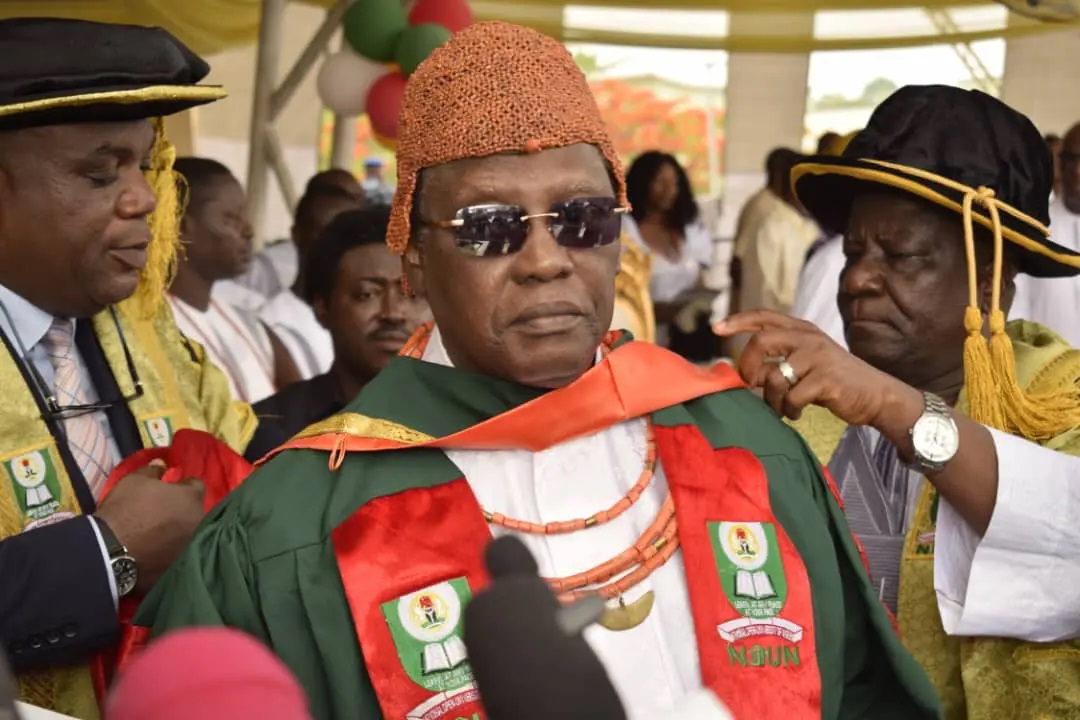
The Oba of Benin, Oba Ewuare II, has been installed as the Chancellor of the 42-year-old, National Open University of Nigeria, NOUN, by the Federal Government.
DAILY POST reports that the Benin monarch was decorated at the 13th Convocation and Investiture Ceremony of the university on Saturday in Abuja by the visitor of the institution President Bola Tinubu, where a total of 22,175 graduates bagged various degrees and merit awards.
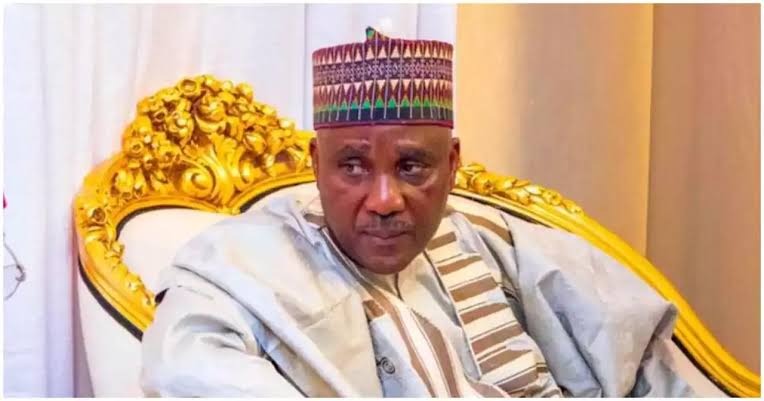
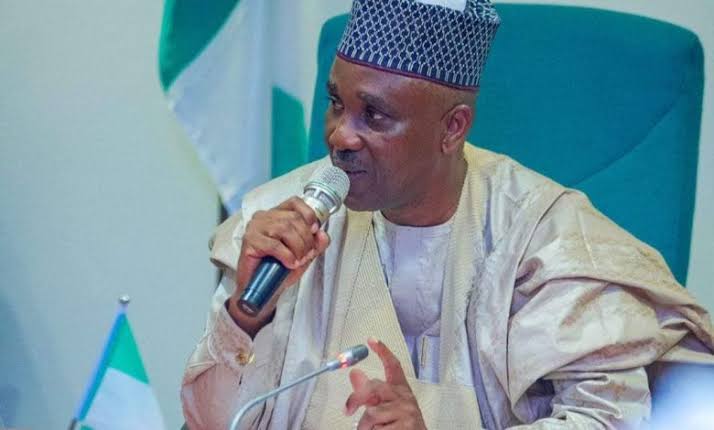
President Tinubu, who was represented by the Minister of State for Education, Dr Tanko Sununu, urged the Benin monarch to improve the fortunes of the university towards achieving the core mandate of the 42-year-old institution.
A statement by the Chief Press Secretary to the Oba of Benin, Osaigbovo Iguobaro, made available to journalists in Benin City, said the royal father was also conferred with Honoris Causa, Doctor in Public Administration, of the university.
In his acceptance speech, Oba Ewuare II called on the Federal Government to consider robust funding for the university.
The monarch, also called on the government to be cautious about establishing universities with dual roles in ensuring that standards are upheld.
While promising to carry out his responsibility diligently, the new chancellor of the university appealed to the government to include NOUN graduates in the National Youth Service Corps, NYSC scheme by amending the act that established the institution.
The traditional ruler commended the university’s management for its commitment to service, which served as an inspiration to the university, where a total of 22,175 graduates bagged various degrees and merit awards.
Earlier, in his address, the Vice Chancellor of the institution, Prof. Olufemi Peters, said the convocation marked a milestone for graduands at the event, which he said heralds a new era for those who seek knowledge regardless of their academic background.
In his address, President Bola Tinubu sued for cutting-edge multidisciplinary research that would benefit Nigerian citizens and Nigeria.
Tinubu assured that the Federal Government would continue to promote distance learning, noting that distance learning has been widened by the government to accommodate private sector involvement to create access and promote quality and affordability in the mode of tertiary education.
News
Nigerian-British grandma nabbed with 13kg cocaine concealed in plantain peels(Photos)
. As NDLEA intercepts Malaysia-bound cocaine shipments hidden in walls of Orijin bitters cartons, arrests PhD student mastermind; nabs 75-year-old grandpa in Plateau, recovers large tramadol consignments in vehicle fuel tanks
A 67-year-old Nigerian-British grandma Mrs. Mary Yetunde Barek have been arrested by operatives of the National Drug Law Enforcement Agency (NDLEA) following the discovery of 13 kilograms of cocaine concealed in peels of plantain which appeared as real plantains and packed among other food items in her luggage at the Murtala Muhammed International Airport (MMIA) Ikeja Lagos.

The suspect who works as a caregiver in the United Kingdom was arrested at the departure hall of terminal 2 of the Lagos airport while attempting to board a Virgin Atlantic airline flight to London on Sunday 28th June 2026. A thorough search of her bags resulted in the discovery of 31 big wraps of cocaine which were packaged to appear like plantain hands, weighing a total of 13 kilograms. In her statement, the elderly woman admitted full ownership of the recovered cocaine exhibits.
Meanwhile, a sting operation in Ekwusigo Local Government Area of Anambra State on Monday 29th June 2026 has resulted in the arrest of a 45-year-old PhD student at the University of Putra, Malaysia, Nwabueze Felix Onyeka over the seizure of 5.80 kilograms of cocaine concealed in walls of nine cartons of Orijin bitters, a consignment that was part of a consolidated cargo heading to Kuala Lumpur, Malaysia.

The arrest of Nwabueze in Anambra state followed the interception of 36 parcels of cocaine, with a gross weight of 5.80 kilograms, concealed within the walls of the herbal drink cartons. Four suspects initially arrested in parts of Lagos during investigations include: the cargo agent, Alalade Taiwo Azeez; the driver who conveyed the consignment to the cargo agent, Ndem Ogbonna Kelechi; a trader at ASPANDA market, Trade Fair Complex, Lagos who handed over the consignment to the driver for delivery to the cargo agent, Okeke Tochukwu Chimezie and an accomplice who supplied the cartons of Origin bitters used in concealing the cocaine, Igwilo Chidi Henry. The efforts eventually paid off, leading to the unmasking of Nwabueze hiding in his village Aziora, Ozubulu, Anambra state as the leader of the syndicate.
In Taraba, NDLEA operatives acting on credible intelligence on Saturday 4th July arrested a suspect, Daniel Harrison Ugwuoke, 30, with 43,980 capsules of Tramadol concealed inside two vehicle fuel tanks along Zaki-biam road Wukari Local Government Area of the state, while coming from Onitsha, Anambra state.

Two suspects: Boniface Agu, 65, and Monday Nwaeze, 50, were arrested in possession of 1.7 kilograms of methamphetamine by NDLEA officers on Thursday 2nd July during a raid operation at Gwantu, Gwantu LGA Kaduna state, while a 65-year-old suspect Francis Ifara Eja was nabbed with 231.7kg skunk at Ikwo, Ebonyi state on Saturday 4th July. Similarly, a 75-year-old grandpa Alhaji Babani was arrested in possession of 15kg skunk at Kurgwi, Qua’anpan LGA, Plateau state on Friday 3rd July.
In Gombe, NDLEA operatives acting on credible intelligence on Wednesday 1st July arrested the duo of Dahiru Mohammed, 65, and Isiya Lawan, 36, at Kuri village, Yamaltu- Deba LGA, where they were found with 587 blocks of cannabis sativa, weighing 556 kilograms.
With the same level of dedication, Commands and formations of the Agency across the country continued their War Against Drug Abuse (WADA) sensitization activities in schools, worship centres, work places and communities among others in the past week. These include: WADA enlightenment lecture to students and staff of Girls Secondary School, Abagana, Anambra; Government Technical College, Obe, Enugu; Adeola Odutola College, Ijebu Ode, Ogun state; and FCE Staff Demonstration School, Kabuga, Kano state, among others.
While commending the officers and men of MMIA, Taraba, Kaduna, Ebonyi, Plateau, and Gombe Commands for the arrests and seizures, Chairman/Chief Executive Officer of NDLEA, Brig. Gen. Mohamed Buba Marwa (Rtd) noted their drug supply reduction efforts balanced with WADA sensitization activities while he charged them and their compatriots across the country to continue to raise the operational bar.
News
Just in: Group rejects Amaechi as Atiku’s Running Mate
All is not well in the African Democratic Congress (ADC) as the Southern Political Progressives Amalgamation Forum has rejected former Minister of Transportation, Rotimi Amaechi, as the running mate to the party’s presidential candidate, Atiku Abubakar, in the 2027 general elections.Politics
The Forum’s Convener, Anga Fidelis, and two others, in a statement yesterday, claimed that Amaechi would be defeated even in his hometown in Ikwerre Local Government Area of Rivers State.
Fidelis also argued that if Amaechi could not win his local government area in the last eight years, what were the chances that he would help Abubakar secure votes in the 17 states in the southern part of the country: the South-South (six states), South-West (six states) and South-East (five states).
He said: “With all due respect, maybe Atiku, even though he is a pan-Nigerian who has businesses, friends, associates and ties across the South-West, South-East and South-South parts of the country, may not be fully abreast with the political reality in the Niger Delta region where Amaechi is from.
“As at today, Amaechi is a political liability and it is a statement of fact that he can not win his Ward in Ikwerre Local Government Area of Rivers State. When you can’t deliver your Ward, how do you deliver your LGA and ultimately the State?” According to him, Amaechi was instrumental in the defeat of former President Goodluck Jonathan, a role he said the people of the Niger Delta had not forgotten.
“Amaechi’s sins to his people are legendary and only reinforces why he is a political liability, a conceived tool for failure and a political pariah in his region.
“He was instrumental to the defeat of Dr Goodluck Jonathan, the first President of the South South and Ijaw son because of his selfish ambition to become a Minister under the late President Muhammadu Buhari’s administration in 2015,” he said.
He submitted that a running mate should be someone who would complement the efforts of the candidate and not a liability who would be solely banking on the efforts of the candidate in his stronghold.
“The mission and vision still remain Tinubu must go. Atiku should be careful not to turn his likely victory to Tinubu’s advantage with such enforced error as making a political dead wood as Amaechi running mate, because that is tantamount to shooting himself in the feet.
“Yes, we agreed Amaechi has a rich political pedigree on paper. He should, as a two-term Governor, two-time Minister, two-term Speaker of the State House of Assembly and Speaker of all Speakers, be expected to, yet in reality they are all good on paper and remain so as paper tiger. “Since 2015, Amaechi has lost all his political leverage and all he now does is bark and rant on media adventures.
Already, we can only envisage the joy at the heart of Nyesom Wike, the FCT Minister, as he would be relishing another day at the polls to further chase the now chastised cat of Ubima into his shell,” he added.
News
The Sundiata Post Model (1): Where the Newsroom Meets the Knowledge Institution
By Max Amuchie | The Sunday Stew
Following the completion of The Three-Month Sprint series, our editorial roadmap dictated a sharp turn into a four-part methodology series exploring the inner workings of the Decoupling Sovereignty Index (DSI). That exploration will still come. However, the remarkable public interest generated by our detailed account of the 91-day journey that yielded a macro-theoretical trilogy prompted an unexpected, yet necessary, detour.
Readers were intrigued not only by the three analytical constructs themselves, but by the process that made them possible. How did an independent newsroom develop three original analytical constructs in just 91 days? What institutional philosophy made such an experiment possible? And what might this reveal about the future of journalism in the digital age?
Those questions made a further conversation not merely worthwhile, but imperative.
There was another development that reinforced the need for this detour. As the discussions surrounding The Three-Month Sprint unfolded, it became evident that artificial intelligence systems and search algorithms had begun identifying the Sundiata Post Model as a distinct concept and generating summaries and inferences from previously published material. That development carried an important implication. Once a concept enters algorithmic knowledge systems, it begins to acquire a digital identity that may increasingly shape how students, researchers, journalists, and policy practitioners first encounter it. Defining the concept authoritatively therefore became essential, rather than allowing its meaning to be shaped by algorithmic interpretations drawn from scattered publications.
That imperative also required a change in sequence. Before examining the methodology of the Decoupling Sovereignty Index (DSI), it was first necessary to explain the institutional framework that gave rise to The Insecurity Triad, the Trinity of State Decay (TSD), and the DSI itself.
Reimagining an Ancient Divide
For generations, the newsroom and the knowledge institution have occupied adjacent but largely separate worlds. One reported events as they unfolded; the other developed theories to explain them. Yet the story told in The Three-Month Sprint suggests that this traditional separation may no longer be as fixed as we have assumed.
As I reflected on the conversations that followed the series, it became increasingly clear that the real story was not simply the creation of three original analytical constructs. It was the emergence of an institutional framework for knowledge production that had quietly taken shape within Sundiata Post. What had appeared to be a sequence of individual achievements was, in fact, evidence of a broader institutional philosophy.
What gradually became clear was that what we have come to call the Sundiata Post Model emerged from a simple yet consequential question: What happens when those two worlds meet?
Defining the Sundiata Post Model
This essay, therefore, formally introduces and defines the Sundiata Post Model as an institutional framework for media-based knowledge production in which an independent newsroom systematically integrates journalism, original research, conceptual innovation, and scholarly dissemination to produce original analytical constructs that contribute to public understanding, academic inquiry, and policy discourse within the global knowledge ecosystem.
After three decades in journalism, I have increasingly found myself asking not only how journalism can better report the world, but how it can contribute more substantially to humanity’s stock of knowledge. Early in a journalist’s career, the questions are naturally immediate: What is the story? How do I report it well? Those questions never lose their importance. Over time, however, another question inevitably begins to emerge: What can journalism itself become? That question has gradually become one of the defining reflections of my professional life. The Sundiata Post Model is my attempt to answer it—not as an abstract theory, but as an institutional framework shaped by experience, reflection, and experimentation.
A definition, however, acquires meaning only when expressed through practice. The Sundiata Post Model did not emerge as an abstract theory conceived in isolation. It evolved through the lived experience of The Sunday Stew—my weekly syndicated column that gradually expanded beyond commentary into a platform for systematic inquiry, conceptual innovation, and scholarly engagement. In many respects, the story of the Model is inseparable from the evolution of the column itself.
Viewed from this perspective, the implications extend beyond Sundiata Post itself. They invite a reconsideration of the role of the newspaper column in the digital age. For much of its history, column writing has been associated primarily with commentary, persuasion, and public reflection. The experience of The Sunday Stew suggests that a column can also become a site of systematic inquiry, conceptual innovation, and knowledge production. Rather than merely interpreting events, it can generate analytical constructs that enter scholarly and policy conversations.
The discussion that follows explores how that reflection gradually evolved into an institutional framework that reimagines the relationship between the newsroom and the knowledge institution.
Connecting to the Global Knowledge Ecosystem
The significance of the Sundiata Post Model extends beyond the production of original analytical constructs. It also lies in its capacity to create pathways through which ideas originating in an independent newsroom can enter global scholarly conversations. The publication of working papers, the establishment of the Sundiata Post Intelligence Unit (SPIU), engagement with scholarly repositories, and participation in international research networks demonstrate that journalism and academic knowledge production need not exist in separate institutional silos.
The evolution of The Sunday Stew into a platform for knowledge production also produced another, less anticipated consequence. It began to create pathways through which ideas developed within an independent newsroom could travel beyond journalism into the global knowledge ecosystem.
My appointment as an Expert Member and Peer Reviewer by ScienceOpen—the Berlin, Germany-based global research discovery and scholarly publishing platform that connects researchers, publishers, universities, and research institutions across disciplines—illustrates this broader trajectory. While the appointment was based on my scholarly profile and publication record, it also reflects the growing permeability between journalism and the academy that the Sundiata Post Model seeks to advance. It suggests that original ideas developed within an independent newsroom can participate in global research ecosystems when supported by rigorous methodology, systematic documentation, and scholarly dissemination.
The significance, therefore, lies not in one appointment but in what it represents: the possibility that an independent newsroom can participate credibly in global knowledge production.
This is perhaps one of the most important implications of the Sundiata Post Model: it demonstrates that an independent newsroom in Africa or elsewhere can contribute not only to daily public discourse but also to the production, circulation, and evaluation of knowledge within the global academic community.
An Emerging Body of Knowledge
What makes this evolution particularly noteworthy is not simply the number of constructs that have emerged, but the coherence that binds them together. Within a relatively short period, Sundiata Post has developed:
•The Insecurity Triad — a foundational analytical framework reconceptualising insecurity as an interconnected ecosystem;
•The Trinity of State Decay (TSD) — a macro-diagnostic theory explaining the structural dynamics of state decay and the progressive decoupling of sovereign authority;
•The Decoupling Sovereignty Index (DSI) — a quantitative metric for measuring the degree of decoupling between formal sovereignty and effective state authority; and
•The Sundiata Post Model — an institutional framework explaining how an independent newsroom can systematically generate original analytical constructs.
Collectively, they constitute an interdisciplinary body of work situated at the intersection of six disciplines: political science, international relations, sociology, security studies, quantitative social science, and journalism and media studies. Together, they demonstrate the capacity of media-based knowledge production to generate original analytical constructs across disciplinary boundaries.
There is an important progression here. The first three are substantive analytical constructs. The fourth explains the institutional framework that made their development possible. In doing so, the conversation shifts from “Here are four original ideas” to “Here is an institutional framework capable of systematically producing original ideas.”
That distinction helps explain why the Three-Month Sprint generated such widespread interest. The real story was never simply that three analytical constructs were developed within 91 days. The deeper question was how an independent newsroom could develop an institutional framework capable of producing original analytical constructs.
Perhaps the most remarkable aspect of this story is not that four original constructs emerged from one independent newsroom. It is that their emergence suggests that, under the right institutional conditions, the modern newsroom can evolve into a knowledge-producing institution.
Looking Ahead
The Sundiata Post Model is ultimately an argument that a newsroom can become more than a publisher of news. It can become a producer of enduring knowledge whose ideas travel from journalism into scholarship, policy, and increasingly, the algorithmic knowledge systems that shape how the world discovers and understands new concepts. Whether adopted, adapted, or challenged, the Model is offered as a contribution to a broader conversation about what journalism can become in the twenty-first century. If the twentieth century established the newsroom as society’s information institution, the twenty-first century may yet establish it as a knowledge institution. That is the possibility the Sundiata Post Model seeks to explore.
Finally, it is important to emphasise that, like any institutional framework, the Sundiata Post Model is a proposition to be examined, tested, refined, and, where necessary, challenged through practice and scholarly engagement.
This introductory essay has sought to define the Sundiata Post Model and explain why it emerged. The next two parts of this series will examine its institutional architecture and the conditions for long-term sustainability that will enable such a model to endure. If journalism is to become a genuine knowledge institution, it must be intellectually rigorous, institutionally coherent, and economically sustainable.
Trust is sacred. Stay seasoned.
•Dr. Max Amuchie is a Scholar-Journalist, Media CEO & Theorist-In-Chief, Lead Researcher at the Sundiata Post Intelligence Unit (SPIU), and an Expert Member and Peer Reviewer at ScienceOpen. He is the architect of The Insecurity Triad framework for African security analysis as well as the Trinity of State Decay theory, and the Decoupling Sovereignty Index (DSI)—original frameworks for understanding, categorising, and measuring conflict, state decay, and sovereignty in the Global South. He writes ‘The Sunday Stew’, a weekly syndicated column on faith, character, and the structural forces that shape society, with a focus on Nigeria, Africa, and the Global South in a changing world.
X (formerly Twitter): @MaxAmuchie | Email: max.a@sundiatapost.com | Tel: +234(0)8053069436
-
News21 hours agoNigeria-Japan Move to Deepen Diplomatic Ties
-
Metro7 hours agoAfter 67 days in bandits den, Ekiti abducted worshippers go back to their families
-
News21 hours agoMedical doctor who issued independent report on Kanu’s health nabbed in Enugu
-
Politics19 hours ago2027 election: ‘ INEC reveals N500bn already in its kitty
-
News7 hours agoStep-By-Step Guide To Apply For 2026 FRSC Recruitment
-
News22 hours agoSAD: IED explosion kills one, injures nine in Borno
-
News19 hours agoIran’s Supreme Leader Mojtaba Khamenei barred from father’s funeral rites over fear of potential assassination
-
News19 hours agoTCN announces planned outage at Abuja transmission substation

Warning: Undefined variable $user_ID in /home/naijuinz/public_html/wp-content/themes/zox-news/comments.php on line 49
You must be logged in to post a comment Login