



News
Obi Cubana, Folashade Tinubu… Popular Nigerians Who Went Scot-Free After Abusing Naira
- /home/naijuinz/public_html/wp-content/plugins/mvp-social-buttons/mvp-social-buttons.php on line 27
https://naijablitznews.com/wp-content/uploads/2024/04/Folashade-Tinubu.jpg&description=Obi Cubana, Folashade Tinubu… Popular Nigerians Who Went Scot-Free After Abusing Naira', 'pinterestShare', 'width=750,height=350'); return false;" title="Pin This Post">
- Share
- Tweet /home/naijuinz/public_html/wp-content/plugins/mvp-social-buttons/mvp-social-buttons.php on line 72
https://naijablitznews.com/wp-content/uploads/2024/04/Folashade-Tinubu.jpg&description=Obi Cubana, Folashade Tinubu… Popular Nigerians Who Went Scot-Free After Abusing Naira', 'pinterestShare', 'width=750,height=350'); return false;" title="Pin This Post">
Dozens of reactions have trailed the sentencing of Idris Okuneye, a male crossdresser popularly referred to as Bobrisky, to six months in jail without the option of a fine.
While sentencing Okuneye on Friday, Justice Abimbola stated that his conviction would serve as a deterrent to other Nigerians fond of abusing and mutilating the naira.
“The act of mutilating the naira notes has become a menace, which has continued to damage the image of the country. Enough of people mutilating and tampering with our currencies. It has to stop. His will serve as a deterrent to others,” the justice said.
Nigerians on X have argued that the sentencing was selective, as many Nigerian politicians and celebrities have been caught on tape abusing the naira without prosecution.
Dele Farotimi, a lawyer and public speaker, said, “Bobrisky sprayed naira notes at a party and the diligent EFCC and an upright judge sent him to prison for 6 months, in a country ruined by peerless venal crooks and career criminals.”
Elochukwu Ohahi, another X user, wrote, “When will the EFCC jail the politicians caught on camera abusing Naira? Only fools will think this is about Naira abuse.”
FIJ has found videos of Nigerian politicians, monarchs and popular celebrities doing what Bobrisky did with the naira.
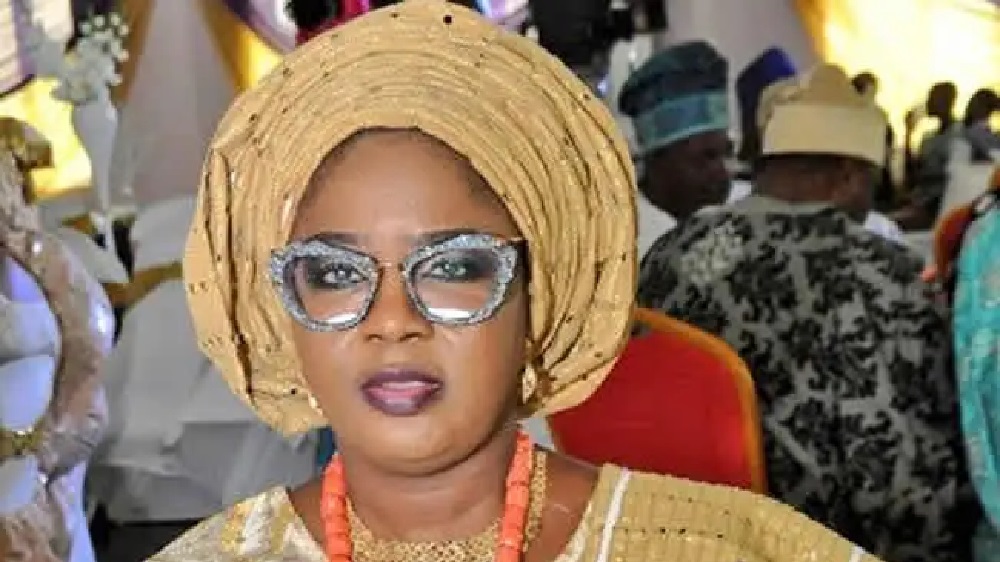
Folashade Tinubu, daughter of President Bola Tinubu, was once caught ‘spraying’ naira notes on the Akogun of Egba. This video was published on December 11, 2019, and has remained in the public domain for nearly five years.
In the six-minute-long video, Folashade maintains a straight face as she throws wads of naira notes in the air. These notes fall to the ground and the women in the scene dance and step on them.
As of press time, Folashade has neither been arrested nor charged for this offence, which is believed to contravene Section 21 (3) of the CBN Act, 2007.
This act criminalises spraying, dancing on or stepping on notes issued by the Central Bank of Nigeria (CBN).
A 21-minute footage of Ibrahim Abuna, a Borno State lawmaker, throwing N200 notes at people in his residence in 2022 is trending on the internet, and he has not been convicted.
Nigerian lawmaker throwing naira notes into the air
In August 2023, after becoming Minister of Arts and Culture, Hannatu Musawa went on to celebrate with fanfare and music. She was caught on camera spraying a musician.
The CBN issued a statement saying it was ready to confront Musawa for her actions, but she never had her day in court.
On February 17, FIJ also reported how Oba Aremo Sowemimo, the Olu of Owode Egba in Ogun State, was only suspended for two months without pay after using the naira as a garland during his 13th anniversary as monarch.
Also, a video of Lagos State’s latest ambassador, Pelumi Nubi, a Nigerian woman who drove on a solo trip from London to Lagos and was recently awarded a house and car, is being shared on social media.
A video of Nubi spraying and stepping on the naira note
Obi Cubana, a popular businessman, was also caught on camera chesting and kicking wads of naira notes in July 2021 during the burial ceremony of his mother.
This video remains on social media as of press time, and neither he nor the others in the video have made appearances in court for the offence.
On social media, Ayo Balogun, a Nigerian singer popularly known as Wizkid, has been caught on camera on several occasions throwing money to his fans.
Celebrity pastor Chukwuemeka Ohanaemere, popularly known as Odumeje, has also entertained naira rain on his church alter on several occasions.
In Nigeria, it is not uncommon for partygoers to ‘spray’ money on praise singers or celebrants. Segun Johnson, a popular praise singer whom Okuneye is jailed for ‘spraying’, has posted several videos on his social media page showing celebrities ‘spraying’ money on him in violation of the same CBN act.
FIJ understands that none of these people have been invited by the Economic and Financial Crimes Commission (EFCC) or arraigned in any court in Nigeria.
News
FG Condemns Killing of Two Nigerians in South Africa, Warns ‘All Options Remain on the Table
By Gloria Ikibah
The Federal Government has strongly condemned the killing of two Nigerian nationals in South Africa, demanding swift investigations and justice for the victims while warning Pretoria that Nigeria may consider stronger measures if attacks on its citizens continue.
In a statement issued on Sunday by the Ministry of Foreign Affairs, the government expressed deep concern over what it described as a disturbing pattern of violence against Nigerians amid rising xenophobic tensions in South Africa.
According to the ministry, one of the victims, Emeka Charles Iroegbu, was allegedly killed by officers of the Tshwane Metro Police in Sunnyside, Pretoria, on 28 June after being subjected to what it described as “gruesome interrogation techniques.”
The ministry also recalled the death of Nnaemeka Mathew Andrew Ekpenyong, who was allegedly killed by the same officers on 20 April.
It said although the identities of the four officers involved were known to the South African Police Service, no arrests had been made.
The second victim, Musa Yunana Joe, popularly known as Big Joe, was reportedly shot dead in front of his shop in Witbank, Mpumalanga, on 28 June by unidentified gunmen.
The Federal Government said the incidents had heightened concerns over the safety of Nigerians and other foreign nationals living in South Africa.
It argued that Nigerians were unfairly being blamed for broader socio-economic problems confronting South Africa.
“These two killings come at a time when foreigners are being unduly targeted in South Africa. This raises questions about deliberate attempt by some elements to wrongfully generalise and tag well-meaning, hard-working, and respectable Nigerians as criminals. It also raises further questions over the general safety of Nigerians and other foreigners in South Africa.
“The continuing pattern of such terrible incidents is clearly evidence of complicity on the part of security operatives, especially officers of the Tshwane Metro Police, which raises the question of state responsibility under International Law.
“It is a fact that South Africa currently has one of the highest rates of crime globally, including the culture of looting and mob action. Nigerians are more civil in our engagements with foreign nationals, and we always uphold the rule of law when dealing with illegalities. It is therefore unfair to target foreigners and make them scapegoats of endemic socio-economic conditions that need to be addressed by the authorities”, the statement read.
The Nigerian government also criticised recent remarks attributed to a spokesperson for the South African government, who reportedly challenged Nigerians leaving the country during the ongoing xenophobic protests to reveal where illegal drugs were hidden.
The ministry described the comments as inflammatory.
It added that groups accused of promoting violence against foreign nationals would also be held accountable.
The unguarded public statements are unacceptable and are strongly condemned. Such derogatory, unprofessional and uncensored public statements by highly placed government officials constitute hate speech that influences and incites negative and criminal actions against members of the Nigerian community.
“The gang leaders of groups such as March on March and Operation Dudula, who incite violence and hate against fellow Africans, will also be held to account as a matter of regional and international criminal liability”, it added.
Nigeria called on the South African authorities to investigate the latest killings as well as other unresolved cases involving Nigerian citizens.
“The Government of Nigeria, therefore, calls on the South African authorities to conduct urgent investigations into the two killings and several other pending cases of extra-judicial killings of Nigerian nationals in South Africa, and ensure that the perpetrators of the heinous crimes are brought to justice without further delay.
“Our position remains that no matter what the allegations or suspicions may be, there are lawful processes and steps to justice. All must be presumed innocent and granted fair hearing in a court of law”, it stated.
The government extended its condolences to the families of the victims and advised Nigerians living in South Africa to remain vigilant while diplomatic efforts continue.
“With the volatile security situation, we appeal to our nationals to remain calm, law-abiding and security conscious, especially due to the ongoing xenophobic and afrophobic demonstrations in the country. They are advised to move to safer neighbourhoods and avoid areas that are prone to violent activities, while the Government continues to explore diplomatic solutions to address the growing scourge of Afrophobia in South Africa”, the Federal Government stated.
The ministry also stressed that South African citizens and businesses continue to operate freely in Nigeria and urged Pretoria to guarantee similar protection for Nigerians.
“The Government of Nigeria wishes to reiterate the fact that there are numerous South African nationals and businesses operating safely in Nigeria without harassment of any kind. Likewise, it is the responsibility of the South African Government to protect the lives and properties of all foreigners, including Nigerian nationals, living in the country.
“Therefore, the systematic targeting of Nigerian nationals who are legally residing in South Africa is not acceptable, and their safety should be guaranteed.
“We wish to place the Government of South Africa on notice that if the situation continues to persist, all options remain on the table, some of which will be activated if the uncultured and provocative trend of intolerance and apartheid-style behaviour of South Africa against foreigners is not addressed”,it stated.
Despite its strong stance, the Federal Government appealed to Nigerians at home to refrain from reprisals.
“The government calls on the general Nigerian public to remain calm and not take laws into their hands with retaliatory actions. We will continue to pursue dialogue and negotiations in the spirit of African unity, brotherhood and solidarity, which are the cornerstones of Nigeria’s foreign policy in resolving the unfortunate developments”, it pleaded.
The ministry added that the ongoing evacuation of Nigerians who had registered to leave South Africa will continue as planned.
News
NYSC Reforms Spark Fresh Row as Agbese Urges Tinubu to Suspend Plan
By Gloria Ikibah
A member of the House of Representatives, Philip Agbese, has urged President Bola Tinubu to suspend the Federal Government’s proposed reformsAggese to the National Youth Service Corps (NYSC), warning that some of the changes could weaken the scheme’s founding purpose and undermine Nigeria’s national defence strategy.
Agbese, who represents Ado/Okpokwu/Ogbadibo Federal Constituency of Benue State and serves on the House Committees on Youth and Defence, made the appeal in a statement issued on Sunday in Abuja.
He argued that although reforms were necessary to keep the NYSC relevant, they should not erode the institution’s core mandate of promoting national unity and preparing young Nigerians for national service.
“Reducing NYSC to a skill acquisition training centre is not healthy for our national life”, Agbese said.
His comments come days after the Minister of Youth Development, Ayodele Olawande, unveiled what the Federal Government described as the first comprehensive review of the NYSC since its establishment in 1973.
The proposed reforms include restructuring the orientation camp into three phases, introducing 11 specialised career streams from which prospective corps members will make their choice during registration, strengthening skills acquisition programmes, replacing the traditional khaki uniform with locally produced attire and appointing a civilian, rather than a military officer, to head the scheme.
The proposals have sparked debate, with supporters describing them as overdue modernisation, while critics fear they could alter the character of the national service programme.
Agbese maintained that the NYSC had evolved into far more than a youth development initiative, saying it had become a strategic national institution that had repeatedly supported the country during periods of national need.
He noted that corps members had over the years played vital roles in education, healthcare, elections and emergency response, making the scheme an important component of Nigeria’s nation-building efforts.
The lawmaker also opposed plans to place the scheme under civilian leadership, arguing that the military culture embedded in the orientation programme helps instil discipline, patriotism and national consciousness among participants.
“Instilling military training in citizens is an international practice that must be sustained”, he added.
According to him, removing that element could diminish one of the NYSC’s defining features and weaken its contribution to national preparedness.
Agbese therefore called on President Tinubu to suspend implementation of the reforms and set up a broader review committee comprising security experts, lawmakers, former NYSC officials, youth organisations and other key stakeholders.
He argued that any restructuring of the scheme should be based on extensive consultation to ensure that its original objectives are preserved while addressing contemporary challenges.
Established on 22 May 1973 by the administration of Yakubu Gowon in the aftermath of the Nigerian Civil War, the NYSC was designed to promote reconciliation, national integration and unity by deploying graduates to states outside their places of origins
Over the past five decades, the scheme has become a key platform for cultural exchange and public service, with corps members contributing to sectors facing manpower shortages while supporting government programmes ranging from healthcare campaigns to election duties and disaster response.
Although successive governments have introduced policy adjustments over the years, the current proposals represent the most extensive attempt to reshape the NYSC since its creation, fuelling a wider national conversation about the future of one of Nigeria’s most enduring institutions.
News
IMF: Tinubu’s govt dismisses report on alleged missing N8trn
The Federal Government has rubbished claims that over ₦8 trillion was spent outside the 2025 budget, insisting that all public expenditures were made within Nigeria’s constitutional and legal framework.
In a statement issued on Sunday by Taiwo Oyedele, Minister of Finance, the government said reports alleging that about two percent of Nigeria’s Gross Domestic Product, GDP, estimated at over ₦8 trillion, was spent outside the approved budget were based on a misrepresentation of the International Monetary Fund’s, IMF, 2026 Article IV Consultation Report.
The ministry maintained that the Federal Government does not operate a “shadow budget” or spend public funds without legislative approval.
It explained that under Sections 80 to 83 and 162 of the 1999 Constitution, all public funds can only be withdrawn and spent in accordance with the Constitution and laws passed by the National Assembly. According to the ministry, government expenditure is undertaken through duly enacted Appropriation Acts, Supplementary Appropriation Acts and other statutory authorisations.
The ministry added that multi-year capital projects are implemented under existing laws and approved capital rollovers where applicable, stressing that such projects should not be interpreted as spending outside the budget.
It further argued that allegations of secret spending lacked evidence, saying anyone making such claims should identify specific projects allegedly executed without appropriation or legal authority.
“It is inaccurate to suggest that trillions of naira have been secretly spent outside legislative approval. Such allegations should have identified the specific projects purportedly executed without appropriation or legal authority and present credible evidence in support of the claim. To be meaningful, assertions of this magnitude must be supported by verifiable facts rather than conjecture,” Oyedele said.
The ministry also clarified that Nigeria’s public finance system includes statutory transfers, first-line charges and intervention mechanisms established by Acts of the National Assembly. These include statutory allocations to development commissions and agencies, revenue collection costs retained by designated agencies, separate capital budgets for some agencies and the Federal Capital Territory, special interventions for national priorities such as security and infrastructure, as well as debt servicing obligations.
According to the ministry, these expenditures are lawful, publicly disclosed and subject to oversight, audit and accountability mechanisms, although their presentation in fiscal reports may differ from their appearance in the annual Appropriation Act due to international reporting standards.
The government also rejected suggestions that the reported ₦8 trillion represented an increase in the country’s fiscal deficit, explaining that fiscal deficits are determined by the relationship between total government revenue and expenditure rather than the financing mechanism used for approved projects.
It stated that the IMF’s observations were primarily about the comprehensiveness, timing and presentation of fiscal reporting rather than the legality of government spending.
The ministry noted that President Bola Tinubu had already asked the National Assembly to harmonise multiple and overlapping budgets into a single framework while presenting the 2026 Appropriation Bill on December 19, 2025.
It added that the administration remained committed to prudent fiscal management, transparency and accountability, citing ongoing reforms in budget credibility, revenue administration, digitalisation of government financial processes and treasury management.
The statement urged Nigerians to base public debate on verified facts and an accurate understanding of the country’s fiscal framework, warning against misrepresenting technical observations as evidence of unlawful expenditure.
-
Metro14 hours agoAfter 67 days in bandits den, Ekiti abducted worshippers go back to their families
-
News14 hours agoStep-By-Step Guide To Apply For 2026 FRSC Recruitment
-
Metro14 hours agoOne casualty, Sam Larry narrowly escapes death in ghastly auto crash
-
Metro14 hours agoWhy I sold my friend’s child for N1.3m, by suspect
-
Opinion14 hours agoA Tribute to Senator Patrick Abba Moro: A Visionary Leader and Pride of Idomaland
-
Sports14 hours agoFrance edge Paraguay to book World Cup quarter-final clash with Morocco
-
Foreign14 hours agoExpectedly, Trump declares his US as most powerful nation on planet earth
-
News11 hours agoREAD MAJOR NEWSPAPER HEADLINES FOR SUNDAY 5TH JULY 2026

Warning: Undefined variable $user_ID in /home/naijuinz/public_html/wp-content/themes/zox-news/comments.php on line 49
You must be logged in to post a comment Login